Pharmacopeia — Investor Day (November 2007)
22 slides from Pharmacopeia's investor day presentation, Nov 14, 2007
Slide 1: Internal Clinical Development Programs
Internal Clinical Development Programs René Belder November 14, 2007
Slide 2: PS433540 Dual Acting Receptor Antagonist (DARA)
PS433540 Dual Acting Receptor Antagonist (DARA)
Slide 3: Dual Acting Receptor Antagonist - DARA
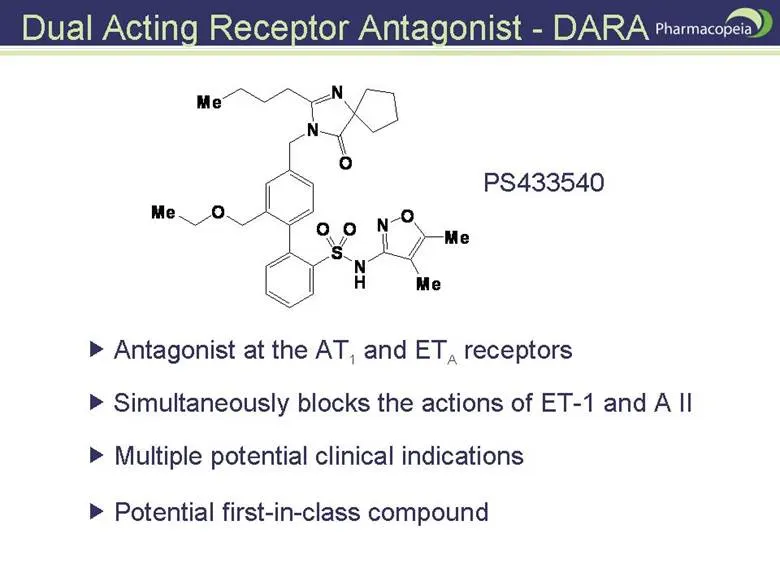
Dual Acting Receptor Antagonist - DARA Antagonist at the AT1 and ETA receptors Simultaneously blocks the actions of ET-1 and A II Multiple potential clinical indications Potential first-in-class compound PS433540 S N H O O O N Me Me N N O Me O Me
Slide 4: Clinical and Preclinical Rationale
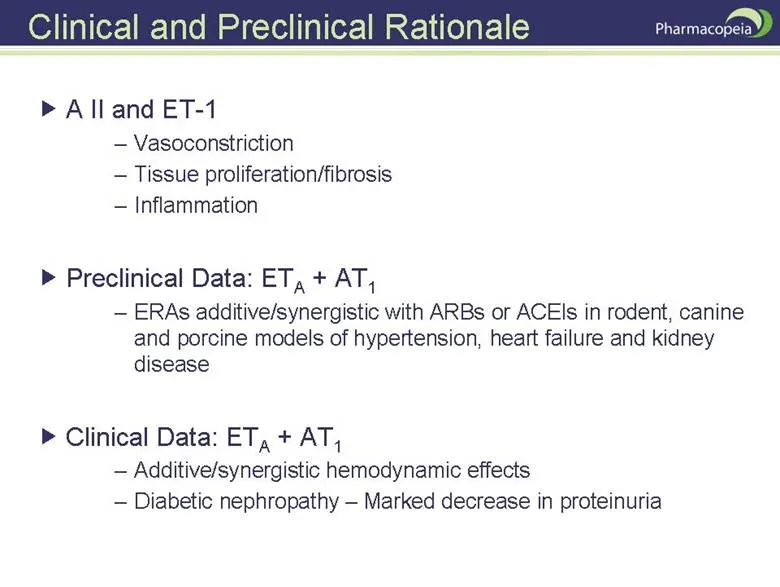
Clinical and Preclinical Rationale A II and ET-1 Vasoconstriction Tissue proliferation/fibrosis Inflammation Preclinical Data: ETA + AT1 ERAs additive/synergistic with ARBs or ACEIs in rodent, canine and porcine models of hypertension, heart failure and kidney disease Clinical Data: ETA + AT1 Additi
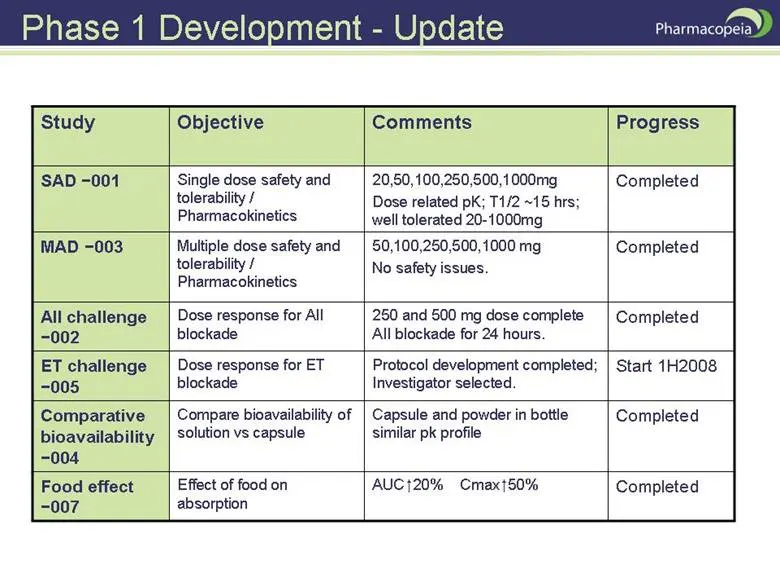
Slide 5: Phase 1 Development - Update
Phase 1 Development - Update Completed AUC 20% Cmax 50% Effect of food on absorption Food effect -007 Completed Capsule and powder in bottle similar pk profile Compare bioavailability of solution vs capsule Comparative bioavailability -004 Completed 250 and 500 mg dose complete AII blockade for 24 h
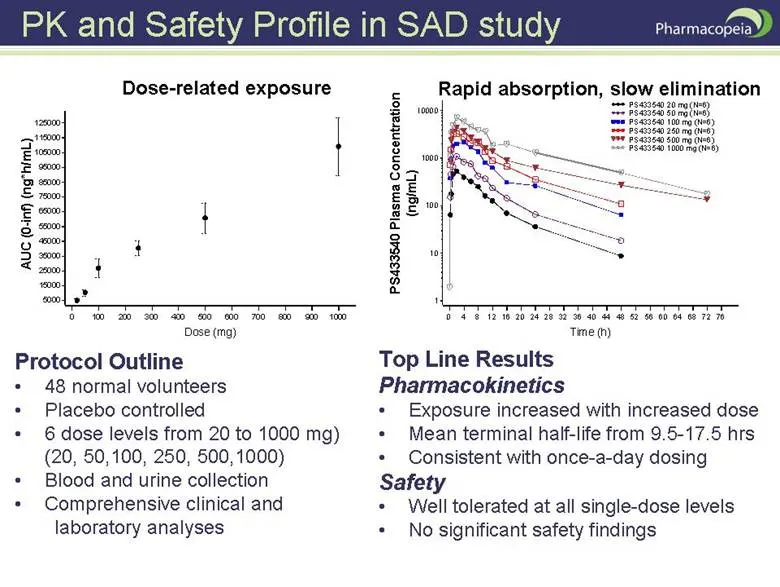
Slide 6: PK and Safety Profile in SAD study
PK and Safety Profile in SAD study Protocol Outline 48 normal volunteers Placebo controlled 6 dose levels from 20 to 1000 mg) (20, 50,100, 250, 500,1000) Blood and urine collection Comprehensive clinical and laboratory analyses Top Line Results Pharmacokinetics Exposure increased with increased dose
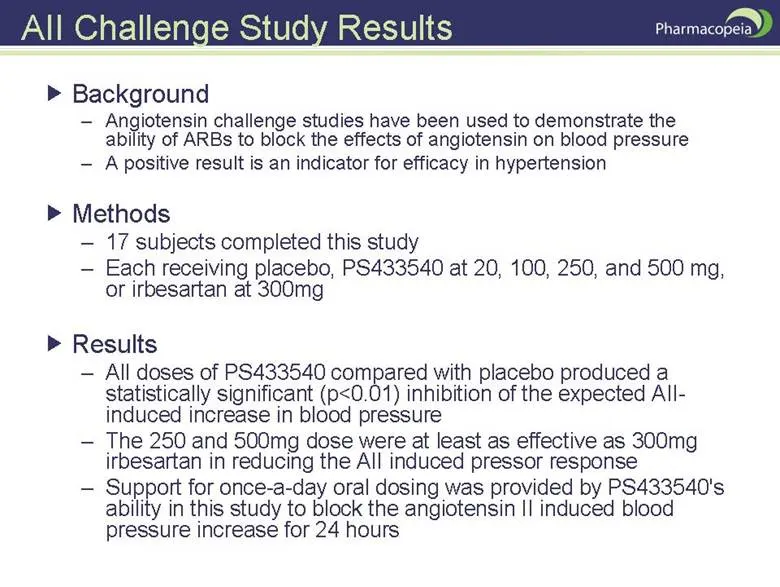
Slide 7: AII Challenge Study Results
AII Challenge Study Results Background Angiotensin challenge studies have been used to demonstrate the ability of ARBs to block the effects of angiotensin on blood pressure A positive result is an indicator for efficacy in hypertension Methods 17 subjects completed this study Each receiving placebo,
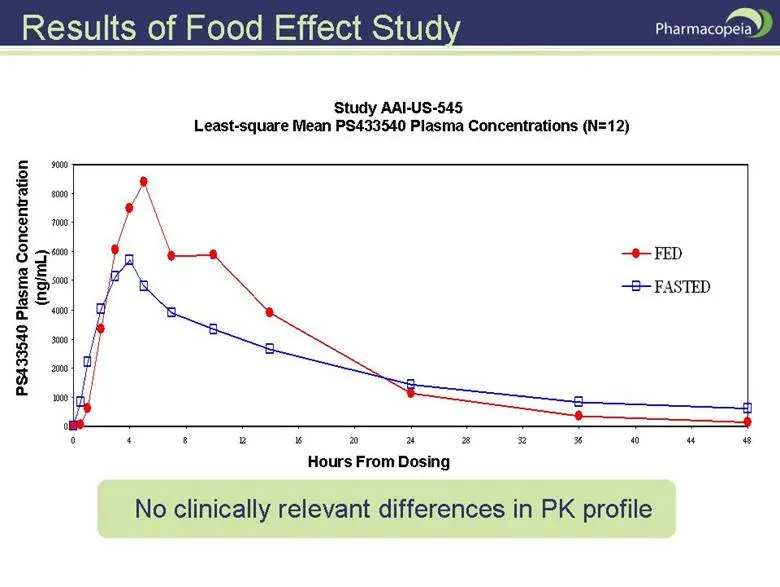
Slide 8: Results of Food Effect Study
Results of Food Effect Study No clinically relevant differences in PK profile Study AAI-US-545 Least-square Mean PS433540 Plasma Concentrations (N=12) PS433540 Plasma Concentration (ng/mL) Hours From Dosing STUDY AAI-US-545 LEAST-SQUARES MEAN PS433540 PLASMA CONCENTRATIONS (N=12) 0 1000 2000 3000 40
Slide 9: Phase 2 Development
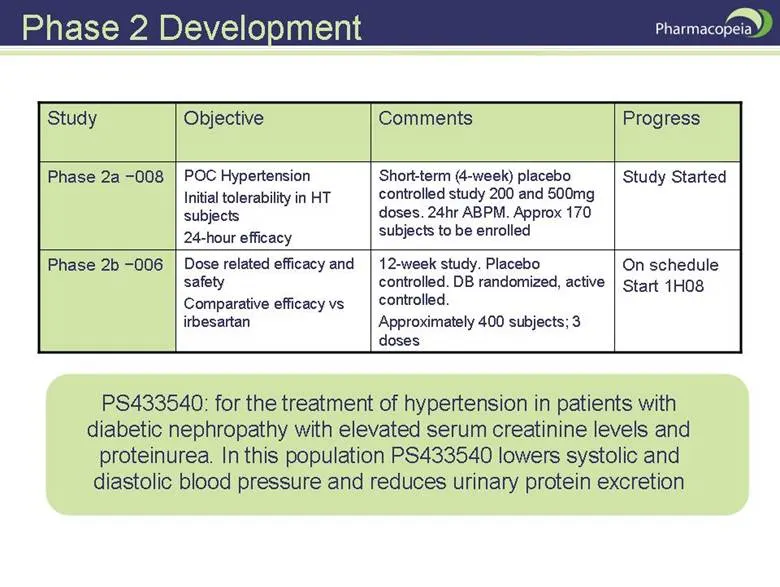
Phase 2 Development Phase 2b -006 Phase 2a -008 Study On schedule Start 1H08 12-week study. Placebo controlled. DB randomized, active controlled. Approximately 400 subjects; 3 doses Dose related efficacy and safety Comparative efficacy vs irbesartan Study Started Short-term (4-week) placebo controll
Slide 10: PS178990 Selective Androgen Receptor Modulators (SARM)
PS178990 Selective Androgen Receptor Modulators (SARM)
Slide 11: Androgen Receptor Function
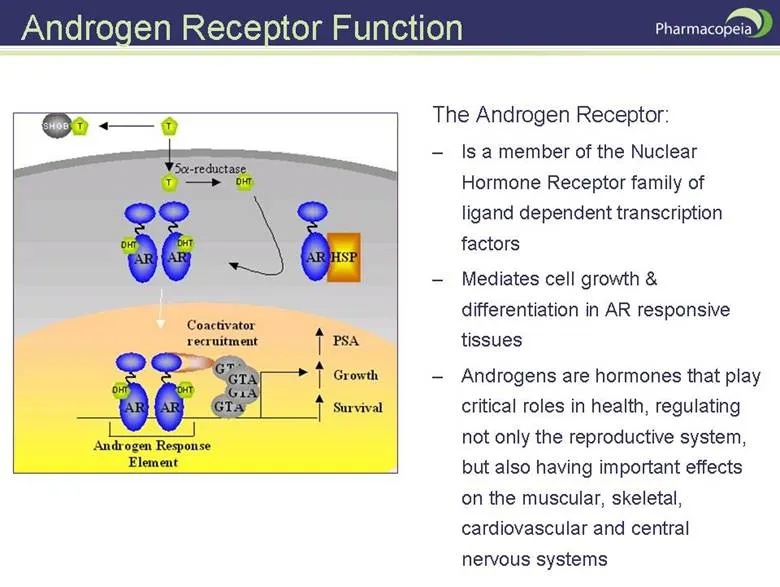
Androgen Receptor Function The Androgen Receptor: Is a member of the Nuclear Hormone Receptor family of ligand dependent transcription factors Mediates cell growth & differentiation in AR responsive tissues Androgens are hormones that play critical roles in health, regulating not only the reproducti
Slide 12: Potential Benefits of Androgens
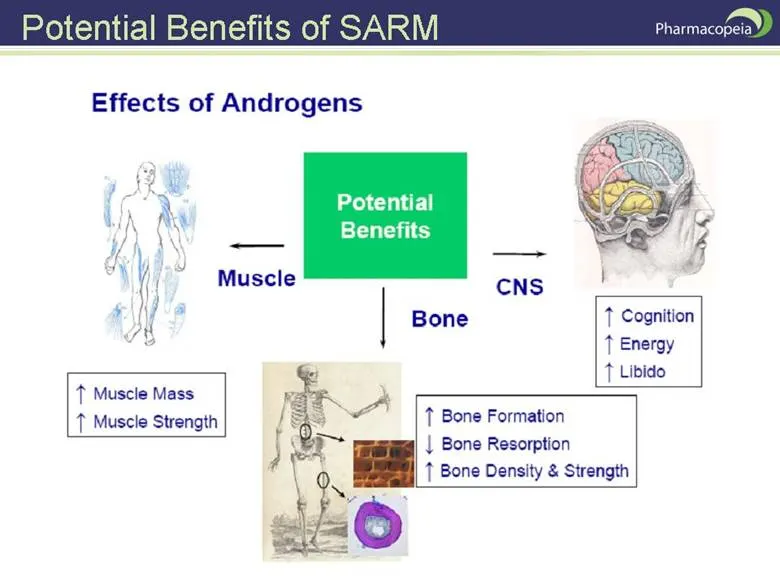
7 Muscle Mass 7 Muscle Strength Potential Benefits + Cognition tT Energy T Libido A 7 Bone Formation | Bone Resorption 7 Bone Density & Strength
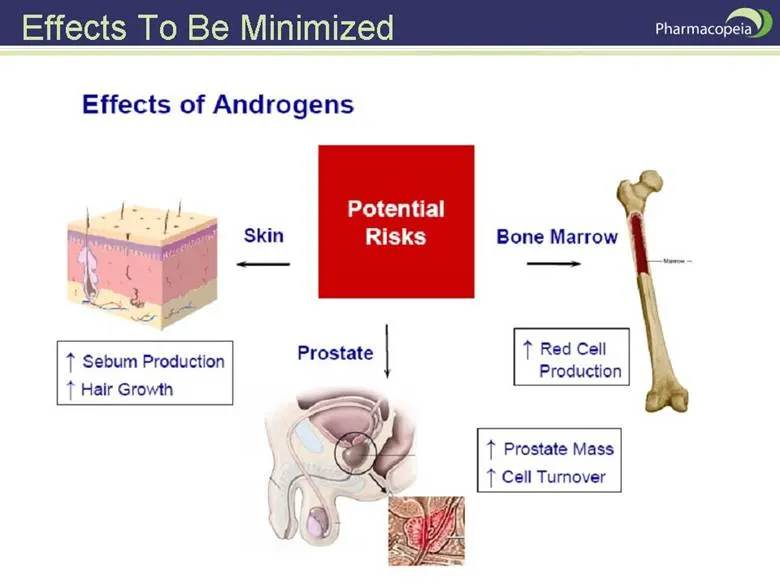
Slide 13: Effects To Be Minimized
Effects To Be Minimized — Pharmacopeia Effects of Androgens Potential Risks Bone Marrow T Red Cell Production + Sebum Production + Hair Growth + Prostate Mass 1 Cell Turnover
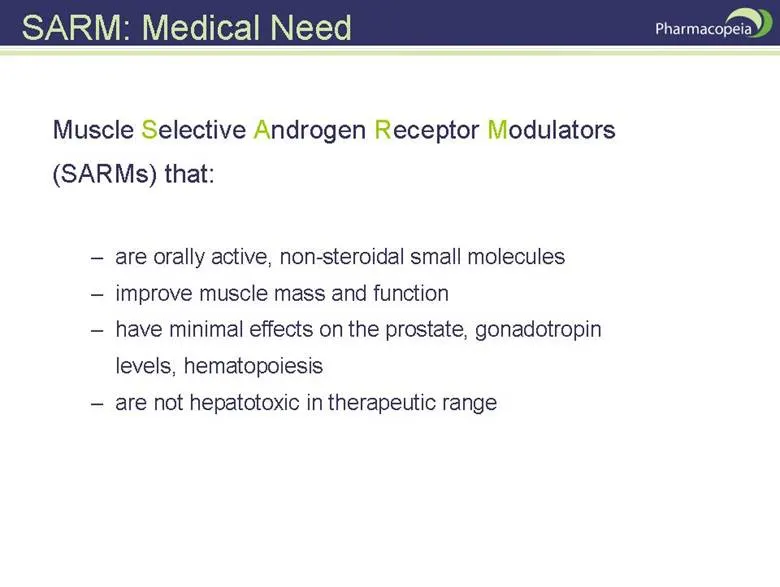
Slide 14: SARM: Medical Need
SARM: Medical Need Muscle Selective Androgen Receptor Modulators (SARMs) that: are orally active, non-steroidal small molecules improve muscle mass and function have minimal effects on the prostate, gonadotropin levels, hematopoiesis are not hepatotoxic in therapeutic range
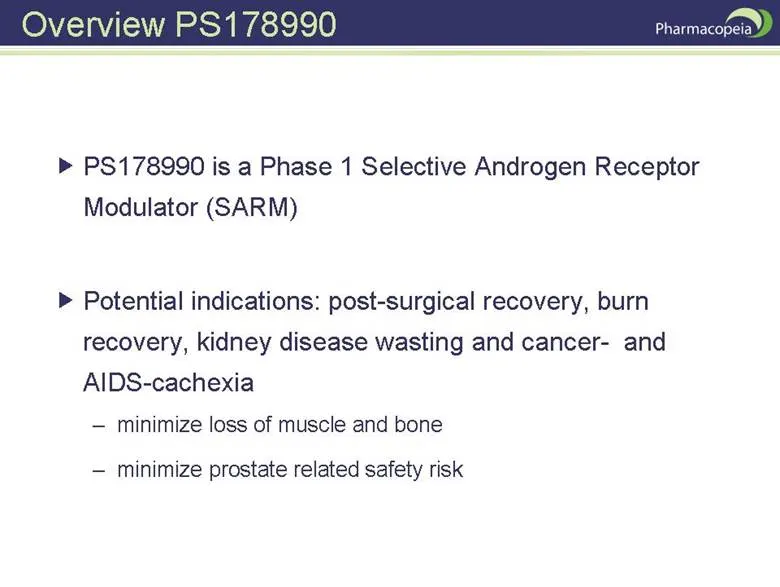
Slide 15: Overview PS178990
Overview PS178990 PS178990 is a Phase 1 Selective Androgen Receptor Modulator (SARM) Potential indications: post-surgical recovery, burn recovery, kidney disease wasting and cancer- and AIDS-cachexia minimize loss of muscle and bone minimize prostate related safety risk
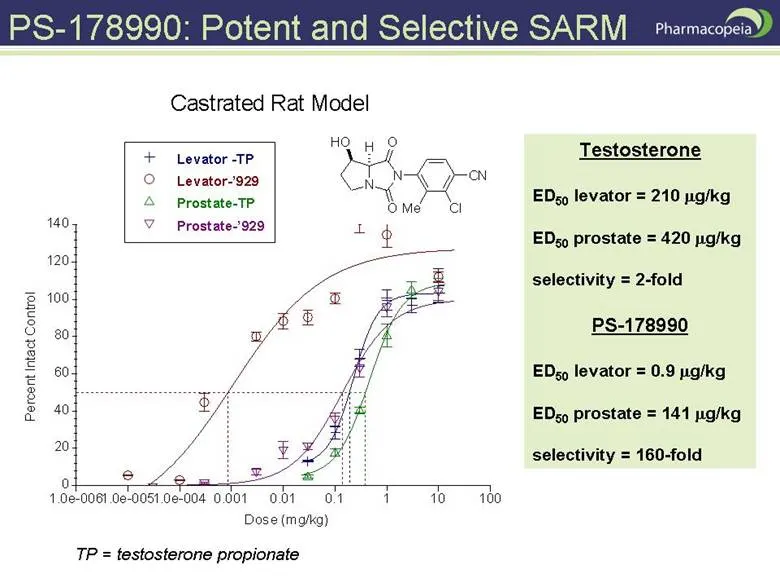
Slide 16: PS-178990: Potent and Selective SARM
PS-178990: Potent and Selective SARM Levator -TP Levator-’929 Prostate-TP Prostate-’929 Testosterone ED50 levator = 210 mg/kg ED50 prostate = 420 mg/kg selectivity = 2-fold PS-178990 ED50 levator = 0.9 mg/kg ED50 prostate = 141 mg/kg selectivity = 160-fold TP = testosterone propionate Castrated Rat
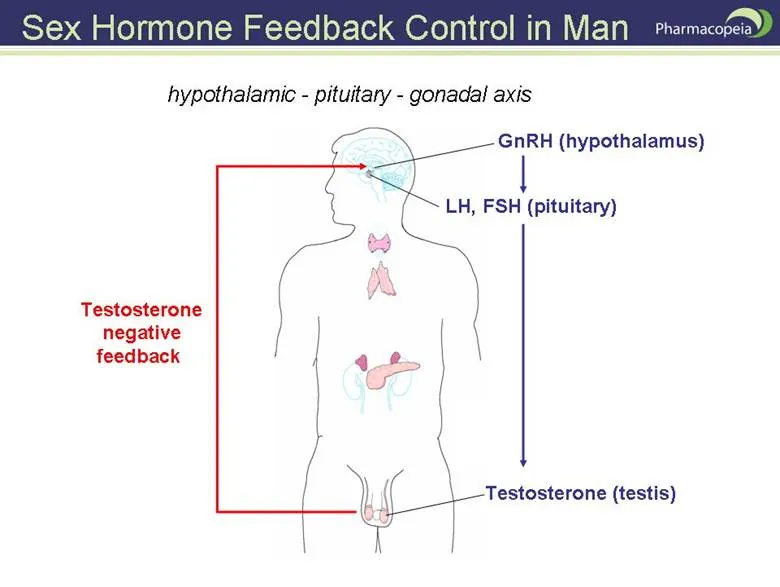
Slide 17: Sex Hormone Feedback Control in Man
GnRH (hypothalamus) Testosterone (testis) LH, FSH (pituitary) Testosterone negative feedback hypothalamic - pituitary - gonadal axis Sex Hormone Feedback Control in Man
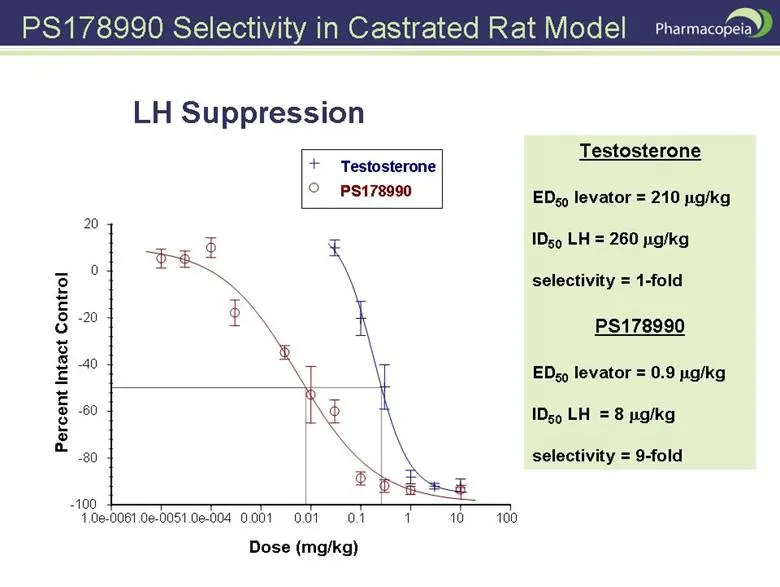
Slide 18: PS178990 Selectivity in Castrated Rat Model
Testosterone ED50 levator = 210 mg/kg ID50 LH = 260 mg/kg selectivity = 1-fold PS178990 ED50 levator = 0.9 mg/kg ID50 LH = 8 mg/kg selectivity = 9-fold 1.0e-006 1.0e-005 1.0e-004 0.001 0.01 0.1 1 10 100 -100 -80 -60 -40 -20 0 20 Testosterone PS178990 Dose (mg/kg) Percent Intact Control LH Suppressio
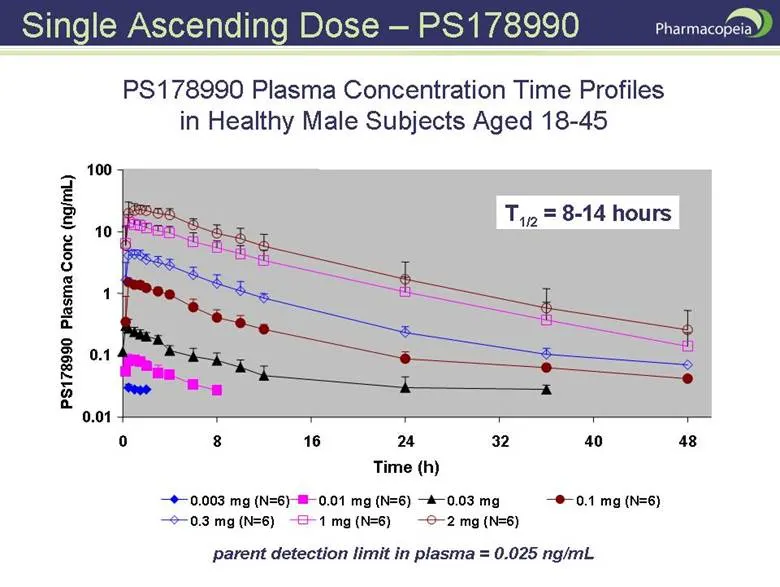
Slide 19: Single Ascending Dose – PS178990
0.01 0.1 1 10 100 0 8 16 24 32 40 48 Time (h) PS178990 Plasma Conc (ng/mL) 0.003 mg (N=6) 0.01 mg (N=6) 0.03 mg 0.1 mg (N=6) 0.3 mg (N=6) 1 mg (N=6) 2 mg (N=6) parent detection limit in plasma = 0.025 ng/mL T1/2 = 8-14 hours Single Ascending Dose – PS178990 PS178990 Plasma Concentration Time Profile
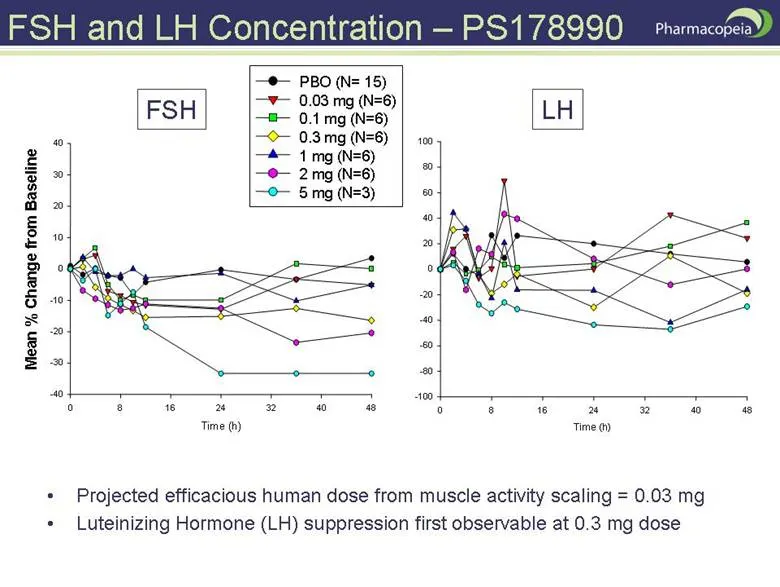
Slide 20: FSH and LH Concentration – PS178990
Mean % Change from Baseline Time (h) 0 8 16 24 32 40 48 -40 -30 -20 -10 0 10 20 30 40 PBO (N= 15) 0.03 mg (N=6) 0.1 mg (N=6) 0.3 mg (N=6) 1 mg (N=6) 2 mg (N=6) 5 mg (N=3) Time (h) 0 8 16 24 32 40 48 -100 -80 -60 -40 -20 0 20 40 60 80 100 FSH LH FSH and LH Concentration – PS178990 Projected efficacio
Slide 21: Summary of PS-178990 SARM Profile
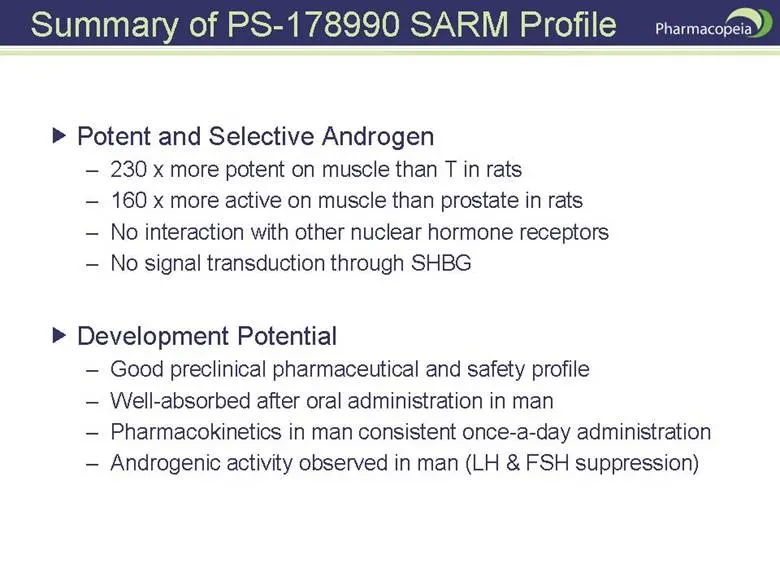
Summary of PS-178990 SARM Profile Potent and Selective Androgen 230 x more potent on muscle than T in rats 160 x more active on muscle than prostate in rats No interaction with other nuclear hormone receptors No signal transduction through SHBG Development Potential Good preclinical pharmaceutical a
Slide 22: SARM - Development Plans
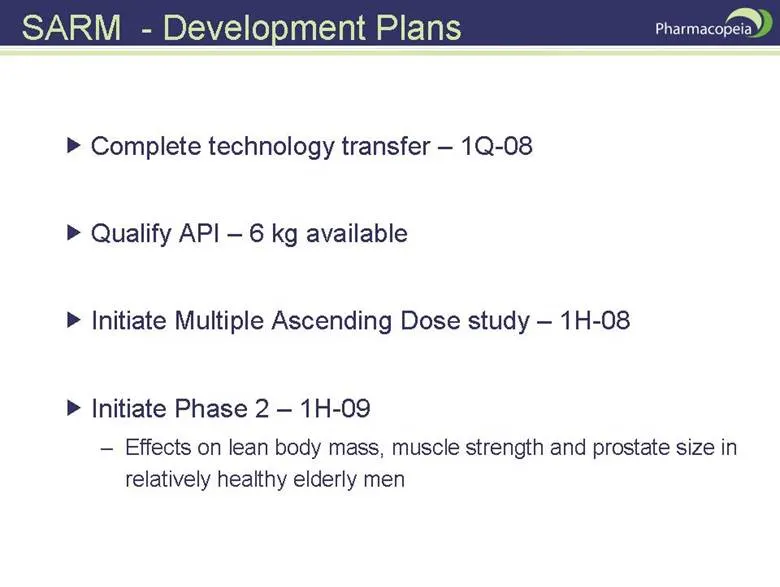
SARM - Development Plans Complete technology transfer – 1Q-08 Qualify API – 6 kg available Initiate Multiple Ascending Dose study – 1H-08 Initiate Phase 2 – 1H-09 Effects on lean body mass, muscle strength and prostate size in relatively healthy elderly men
Source: SEC EDGAR · 8-K filed Nov 14, 2007
More decks from Pharmacopeia Inc
 Pharmacopeia — Merger or Acquisition (November 2008)34 slides · Nov 3, 2008
 The Oppenheimer 19th Annual Healthcare Conference (November 2008)33 slides · Nov 3, 2008
 Ligand Pharmaceuticals — Merger or Acquisition (September 2008)18 slides · Sep 24, 2008
 BMO Capital Markets 7th Annual Focus on Healthcare Conference 200822 slides · Aug 5, 2008
 Investor Presentation (May 2008)36 slides · May 19, 2008
 Investor Presentation (May 2008)11 slides · May 16, 2008