Pharmacyclics — ASH (American Society of Hematology) Annual Meeting 2010
19 slides from Pharmacyclics's conference presentation, Dec 7, 2010
Slide 1: The BTK Inhibitor PCI-32765 Induces Durable Responses with Minimal Toxicity: Phase I Study
THE BTK INHIBITOR, PCI-32765, INDUCES DURABLE RESPONSES WITH MINIMAL TOXICITY IN PATIENTS WITH RELAPSED/REFRACTORY B-CELL MALIGNANCIES: RESULTS FROM A PHASE | STUDY NATHAN FOWLER, MD}, Jerr PorTE SHARMAN, MD?, SONALI M SmitH, MD3, THOMAS Boyo, MD‘, BARBARA GRANT, MD®, KATHRYN S. KOLIBABA, MD®, RICHA
Slide 2: Nathan Fowler MD disclosures
Nathan Fowler MD RESEARCH FUNDING/PI: Pharmacyclics EMPLOYEE: N/A STOCKHOLDER: N/A CONSULTANT: Pharmacyclics SCIENTIFIC ADVISORY BOARD: Pharmacyclics
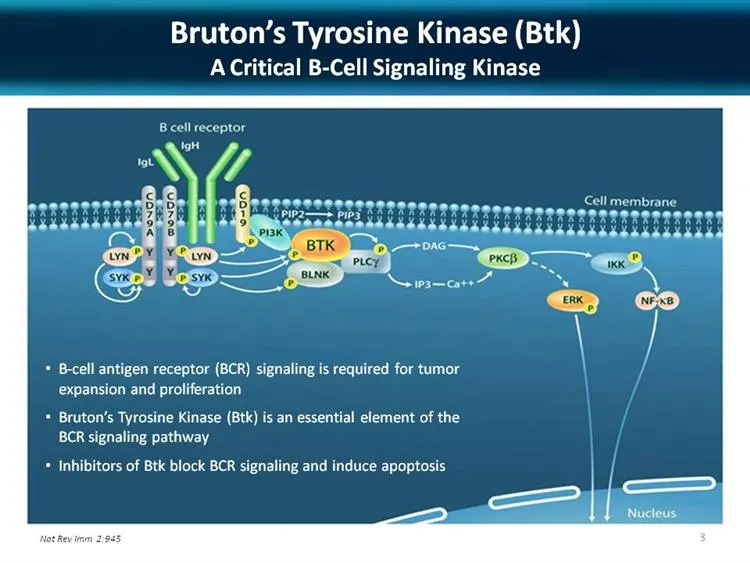
Slide 3: Bruton's Tyrosine Kinase (Btk): A Critical B-Cell Signaling Kinase
Bruton’s Tyrosine Kinase (Btk) A Critical B-Cell Signaling Kinase B cell receptor Cell membrane * B-cell antigen receptor (BCR) signaling is required for tumor expansion and proliferation * Bruton’s Tyrosine Kinase (Btk) is an essential element of the BCR signaling pathway * Inhibitors of Btk block
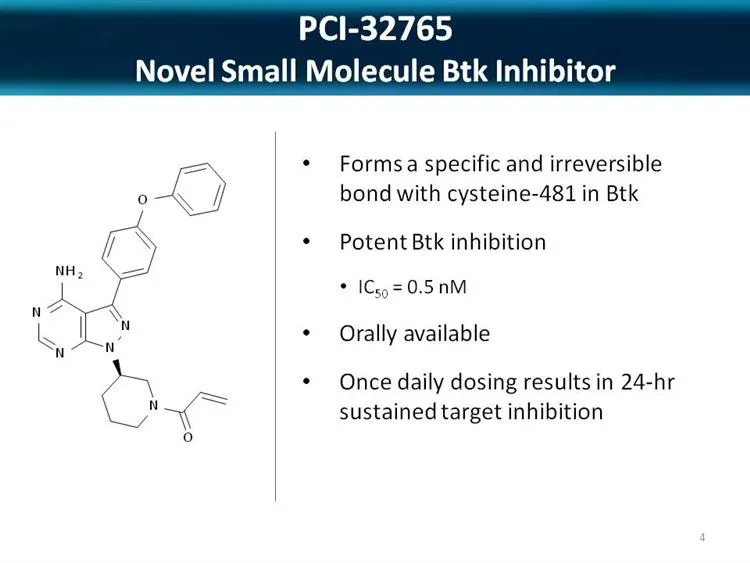
Slide 4: PCI-32765: Novel Small Molecule Btk Inhibitor
PCI-32765 Novel Small Molecule Btk Inhibitor * Formsa specific and irreversible bond with cysteine-481 in Btk * Potent Btk inhibition * IC. =0.5 nM * Orally available * Once daily dosing results in 24-hr sustained target inhibition
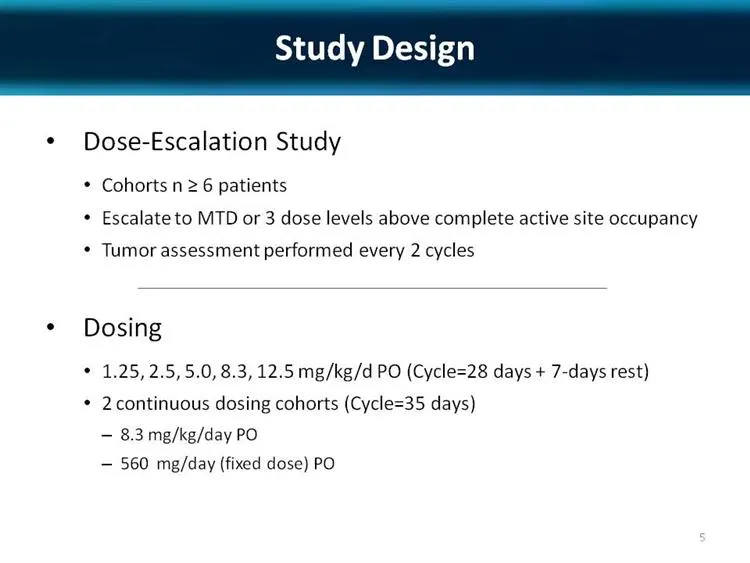
Slide 5: Study Design
udy Design * Dose-Escalation Study * Cohorts n 2 6 patients * Escalate to MTD or 3 dose levels above complete active site occupancy * Tumor assessment performed every 2 cycles * Dosing * 1.25, 2.5,5.0, 8.3, 12.5 mg/kg/d PO (Cycle=28 days + 7-days rest) * 2continuous dosing cohorts (Cycle=35 days) —
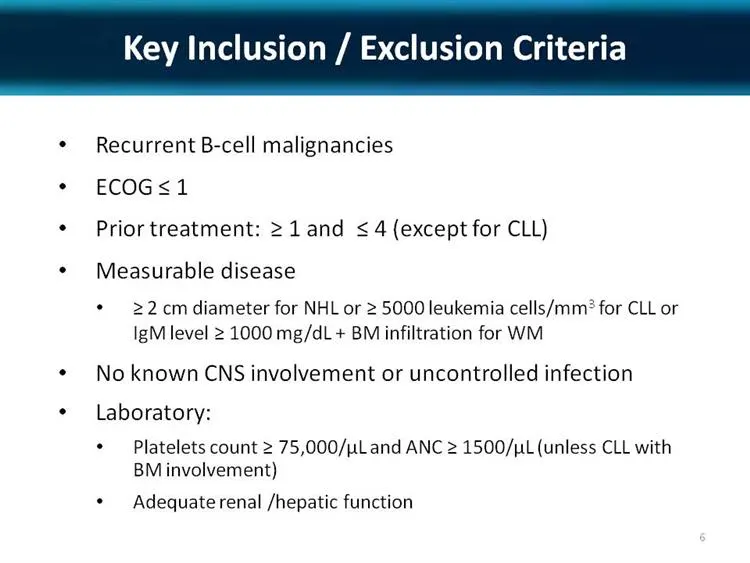
Slide 6: Key Inclusion / Exclusion Criteria
Key Inclusion / Exclusion Criteria Recurrent B-cell malignancies ECOG <1 Prior treatment: >1 and <4 (except for CLL) Measurable disease * 22 .cmdiameter for NHL or 2 5000 leukemia cells/mm? for CLL or IgM level 2 1000 mg/dL + BM infiltration for WM No known CNS involvement or uncontrolled infection
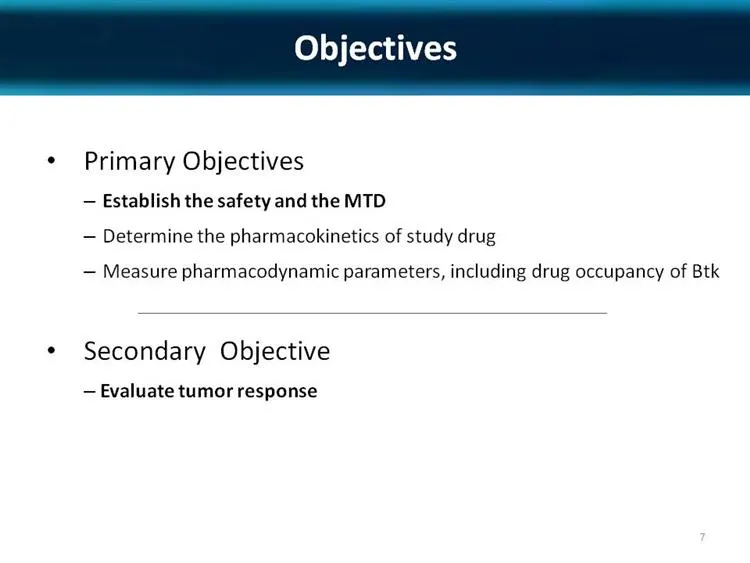
Slide 7: Objectives
Objectives Primary Objectives — Establish the safety and the MTD — Determine the pharmacokinetics of study drug — Measure pharmacodynamic parameters, including drug occupancy of Btk Secondary Objective — Evaluate tumor response
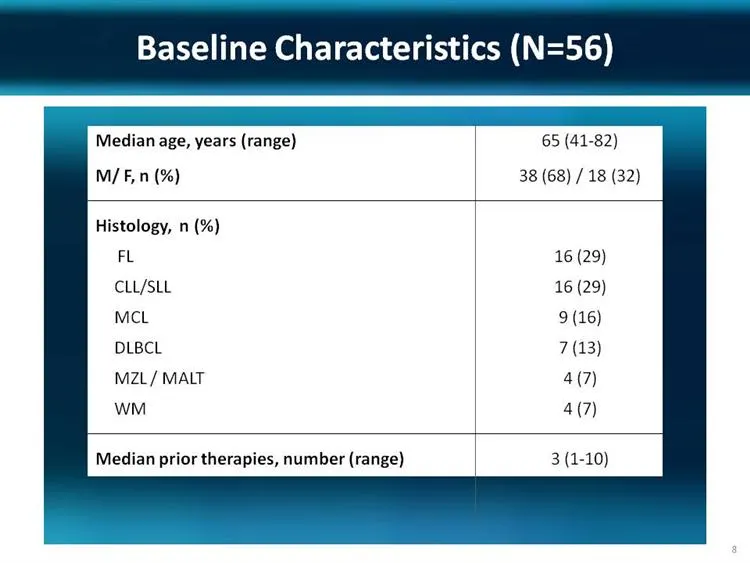
Slide 8: Baseline Characteristics (N=56)
Baseline Characteristics (N=56) Median age, years (range) M/F, n (%) 65 (41-82) 38 (68) / 18 (32) Histology, n (%) FL CLU/SLL MCL DLBCL MZL/ MALT WM 16 (29) 16 (29) 9 (16) 7(13) 4(7) 4(7) Median prior therapies, number (range) 3 (1-10)
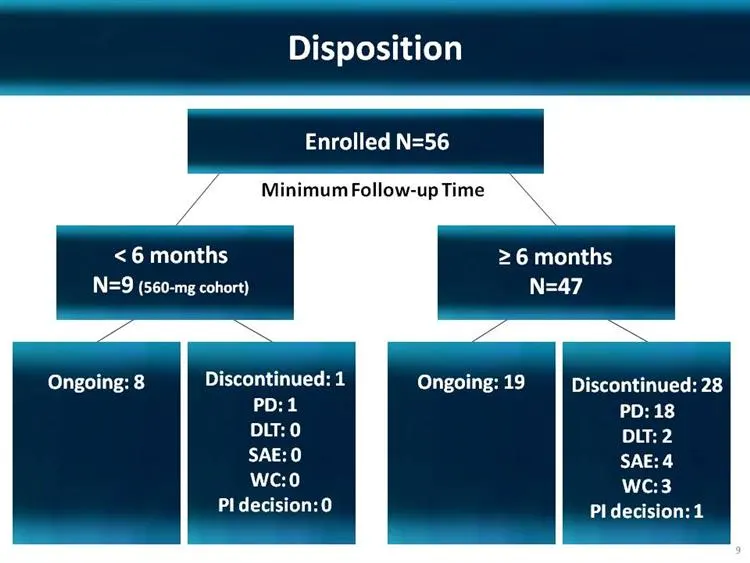
Slide 9: Disposition
Disposition Enrolled 6 Minimum Follow-up Time <6 months N=9 (560-mg cohort) Ongoing: 8 Discontinued: 1 PD:1 DLT: 0 SAE:0 wc:0 Pl decision:0 26 months N=47 Ongoing: 19 Discontinued: 28 PD: 18 DLT: 2 SAE: 4 wCc:3 Pl decision: 1
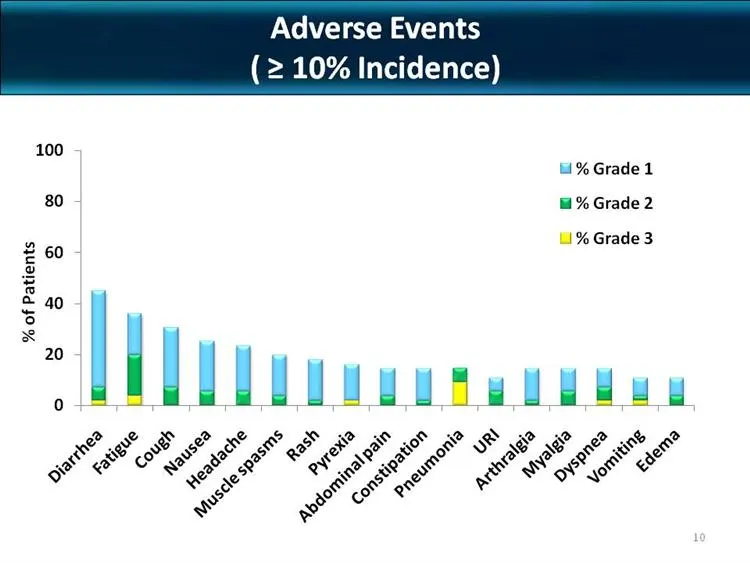
Slide 10: Adverse Events
Adverse Events (2 10% Incidence) &%Grade1 80 i % Grade 2 1% Grade 3 2 i) % of Patients FS $ | i. __ = = = = i = = = = = | iT ig [ling = o- se 2 e RS ey & Pa & Ss &. s s ee Ss w Rg e RS < SEPM KS Kes eS ge x? ef of & & g we SS e >
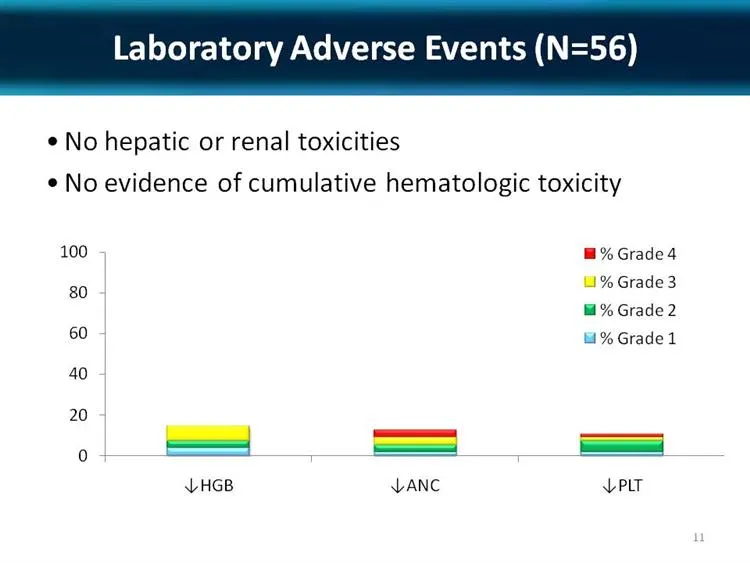
Slide 11: Laboratory Adverse Events (N=56)
Laboratory Adverse Events (N=56) * No hepatic or renal toxicities * No evidence of cumulative hematologic toxicity 100 @%Grade4 80 4% Grade 3 @ % Grade2 60 1% Grade 1 40 20 i — = — HGB ANC PLT
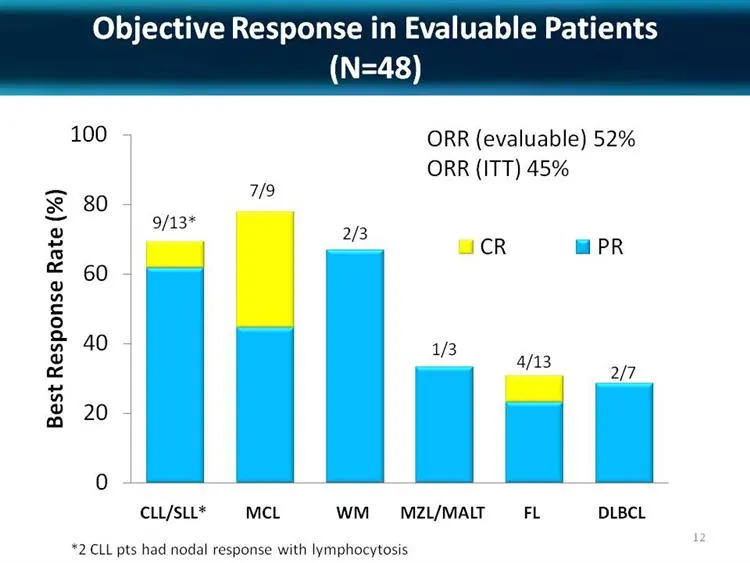
Slide 12: Objective Response in Evaluable Patients
Objective Response in Evaluable Patients (N=48) 100 ORR (evaluable) 52% ORR (ITT) 45% 80 sp 7/9 IS CR PR 60 S fo) B = o Best Response Rate (%) 20 CLL/SLL* MCL WM MZL/MALT FL DLBCL *2 CLL pts had nodal response with lymphocytosis
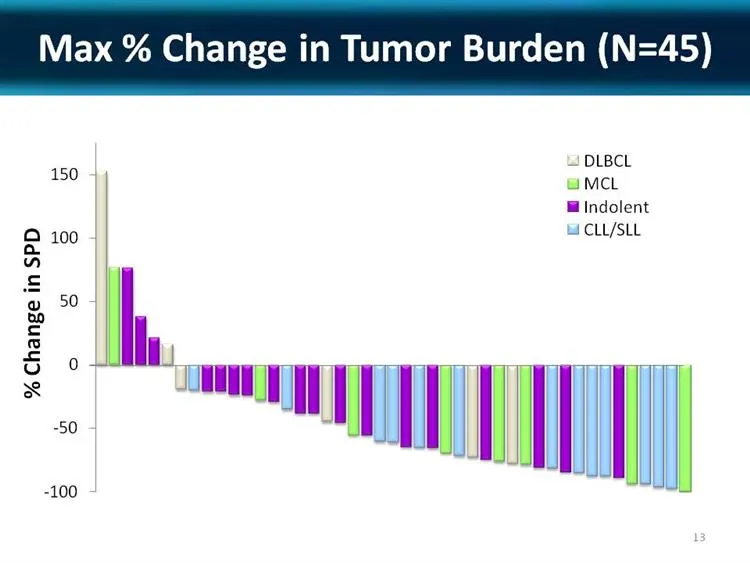
Slide 13: Max % Change in Tumor Burden (N=45)
Max % Change in Tumor Burden (N=45) “| DLBCL | MCL @ Indolent 100 &CLL/SLL : Il 150 % RE in SPD °
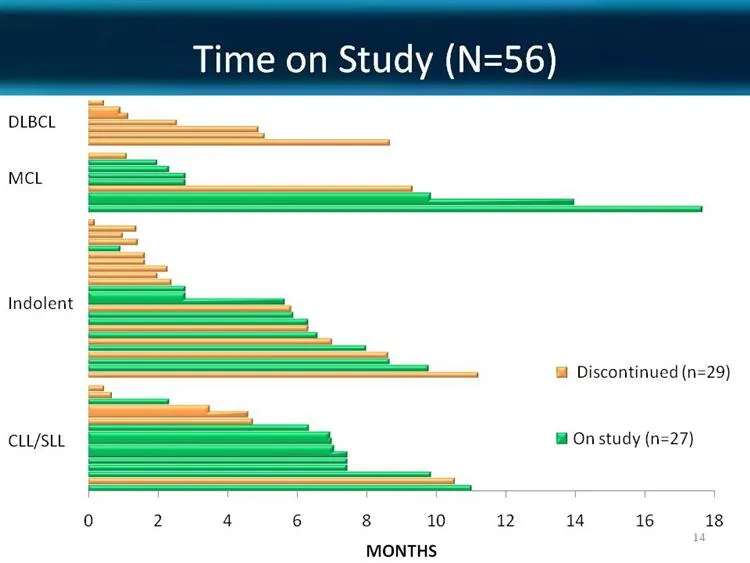
Slide 14: Time on Study (N=56)
Time on Study (N=56) @ Discontinued (n=29) CLL/SLL @ On study (n=27) i} 2 4 6 8 10 12 14 16 18 MONTHS
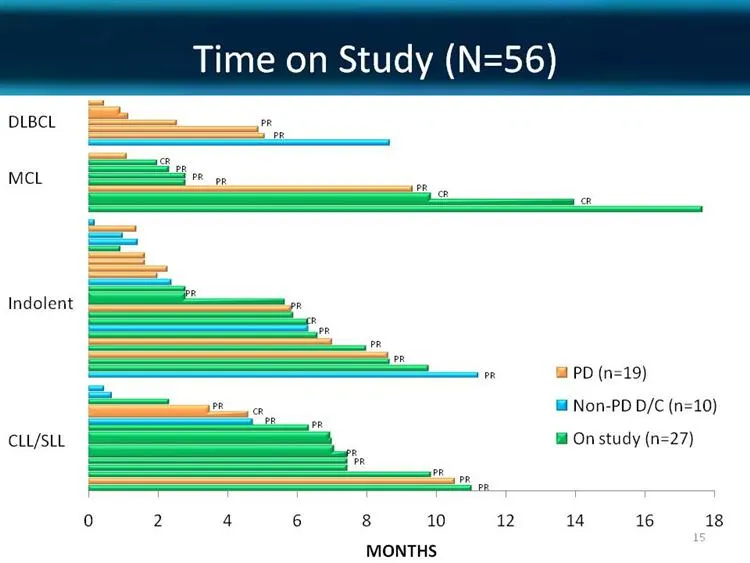
Slide 15: Time on Study (N=56)
Time on Study (N=56) mm PD (n=19) a Non-PD D/C (n=10) CLL/SLL . 7 @ On study (n=27) 0 2 4 6 8 10 12 14 16 18 MONTHS
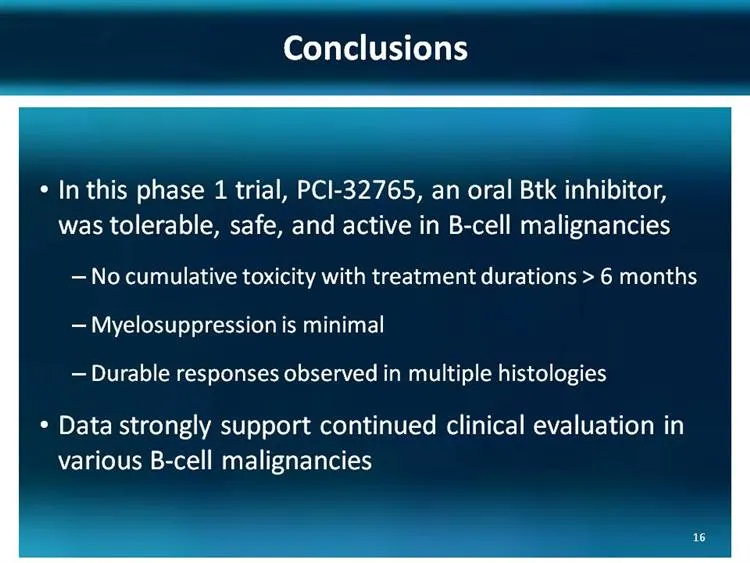
Slide 16: Conclusions
Conclusions ¢ Inthis phase 1 trial, PCI-32765, an oral Btk inhibitor, was tolerable, safe, and active in B-cell malignancies — No cumulative toxicity with treatment durations > 6 months —Myelosuppression is minimal — Durable responses observed in multiple histologies * Data strongly support continue
Slide 17: Back up slides
Back up slides
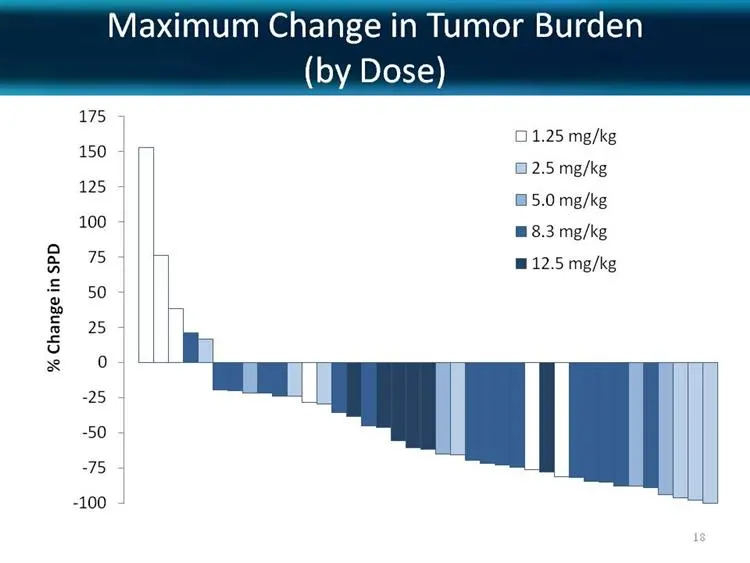
Slide 18: % Change in SPD
% Change in SPD Maximum Change in Tumor Burden (by Dose) 01.25 mg/kg 02.5 mg/kg ©5.0 mg/kg 8.3 me/kg 12.5 mg/kg
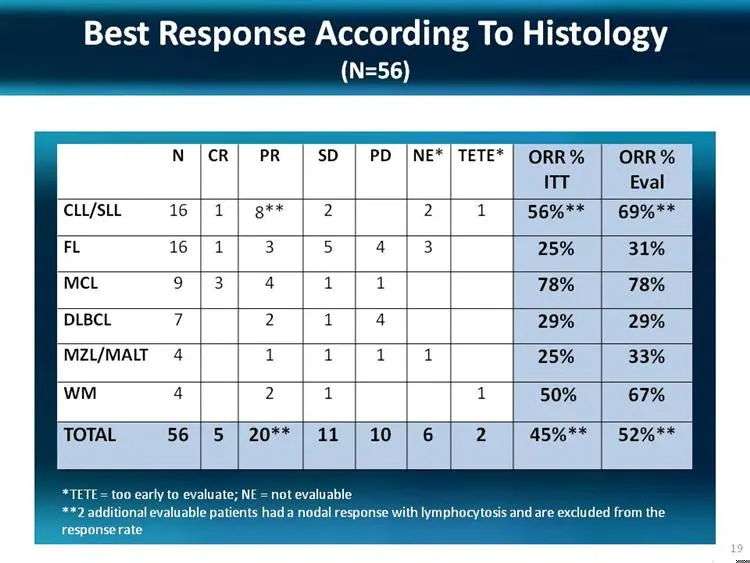
Slide 19: Best Response According To Histology
Best Response According To Histology (N=56) ORR % IT CLL/SLL 56%** FL 25% MCL 78% DLBCL 29% MZL/MALT 25% WM 50% 45%" *TETE = too early to evaluate; NE = not evaluable **2 additional evaluable patients hada nodal response with lymphocytosis and are excluded from the
Source: SEC EDGAR · 8-K filed Dec 7, 2010
More decks from Pharmacyclics Inc
 Merger or Acquisition (March 2015)20 slides · Mar 5, 2015
 33rd Annual J.P. Morgan Healthcare Conference (January 2015)38 slides · Jan 13, 2015
 Technical Presentation (June 2014)18 slides · Jun 5, 2014
 American Society of Hematology Annual Meeting 201317 slides · Dec 11, 2013
 Technical Presentation (December 2013)18 slides · Dec 11, 2013
 Technical Presentation (December 2013)22 slides · Dec 11, 2013