Arcellx — Investor Relations Event at the 65th ASH Annual Meeting 2023
38 slides from Arcellx's conference presentation, Dec 12, 2023

Slide 1: Investor Relations Event at the 65th ASH Annual Meeting
Exhibit 99.1 th Investor Relations Event at the 65 ASH Annual Meeting December 11, 2023
Slide 2: Forward-Looking Statements
Forward-Looking Statements This presentation contains forward-looking statements within the meaning of Section 27A of the Securities Act of 1933, as amended and Section 21E of the Securities Exchange Act of 1934, as amended, that are based on our management’s beliefs and assumptions and on informati
Slide 3: Agenda
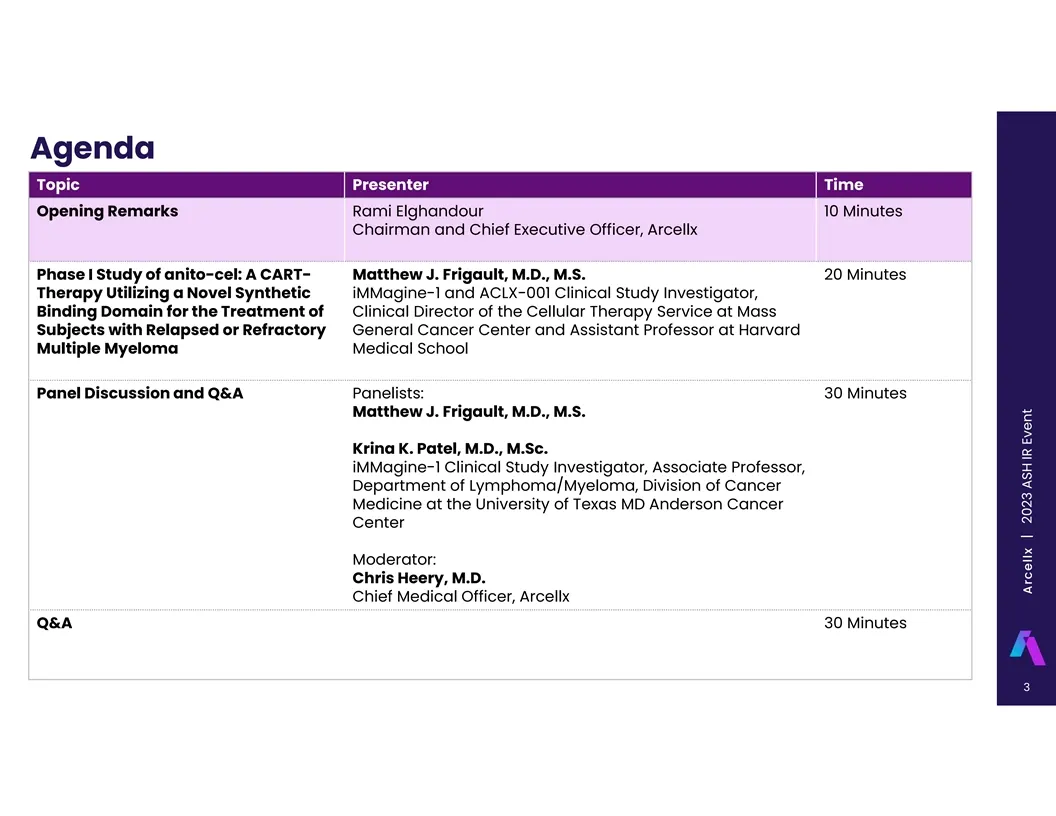
Agenda Topic Presenter Time Opening Remarks Rami Elghandour 10 Minutes Chairman and Chief Executive Officer, Arcellx Phase I Study of anito-cel: A CART- Matthew J. Frigault, M.D., M.S. 20 Minutes Therapy Utilizing a Novel Synthetic iMMagine-1 and ACLX-001 Clinical Study Investigator, Binding Domain
Slide 4: Arcellx is a Different Kind of Cell Therapy Company
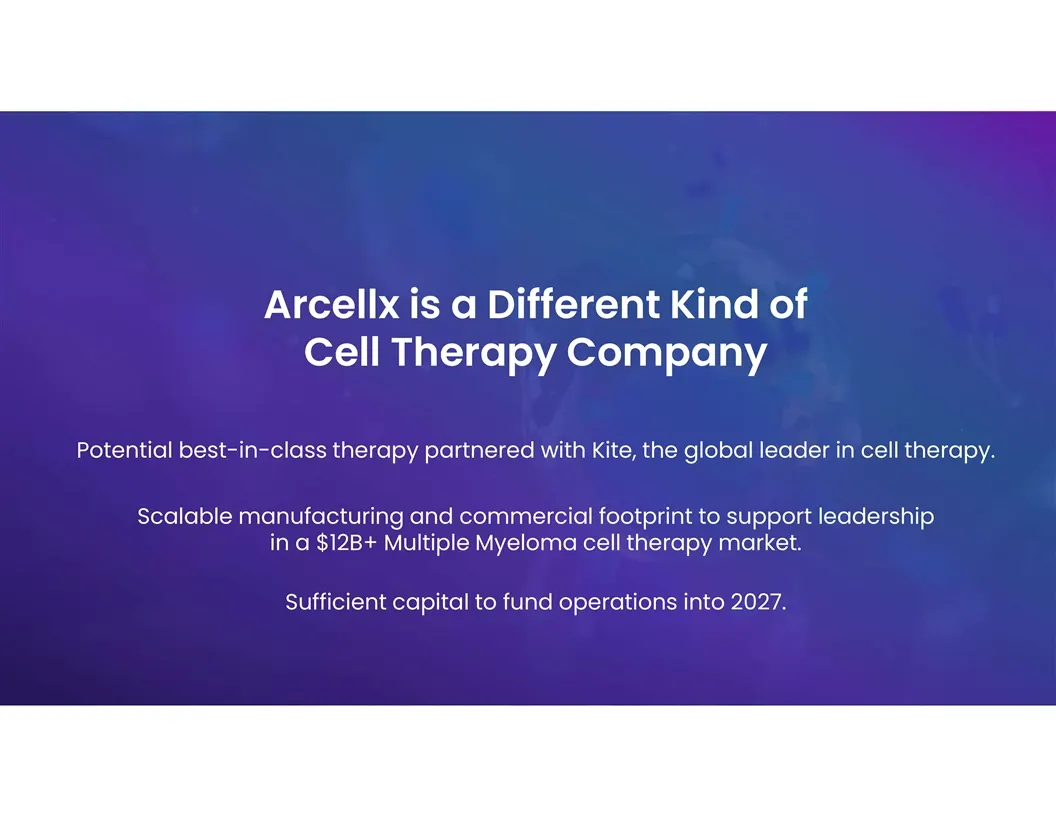
Arcellx is a Different Kind of Cell Therapy Company Potential best-in-class therapy partnered with Kite, the global leader in cell therapy. Scalable manufacturing and commercial footprint to support leadership in a $12B+ Multiple Myeloma cell therapy market. Sufficient capital to fund operations int
Slide 5: Arcellx is well positioned for launch and scale
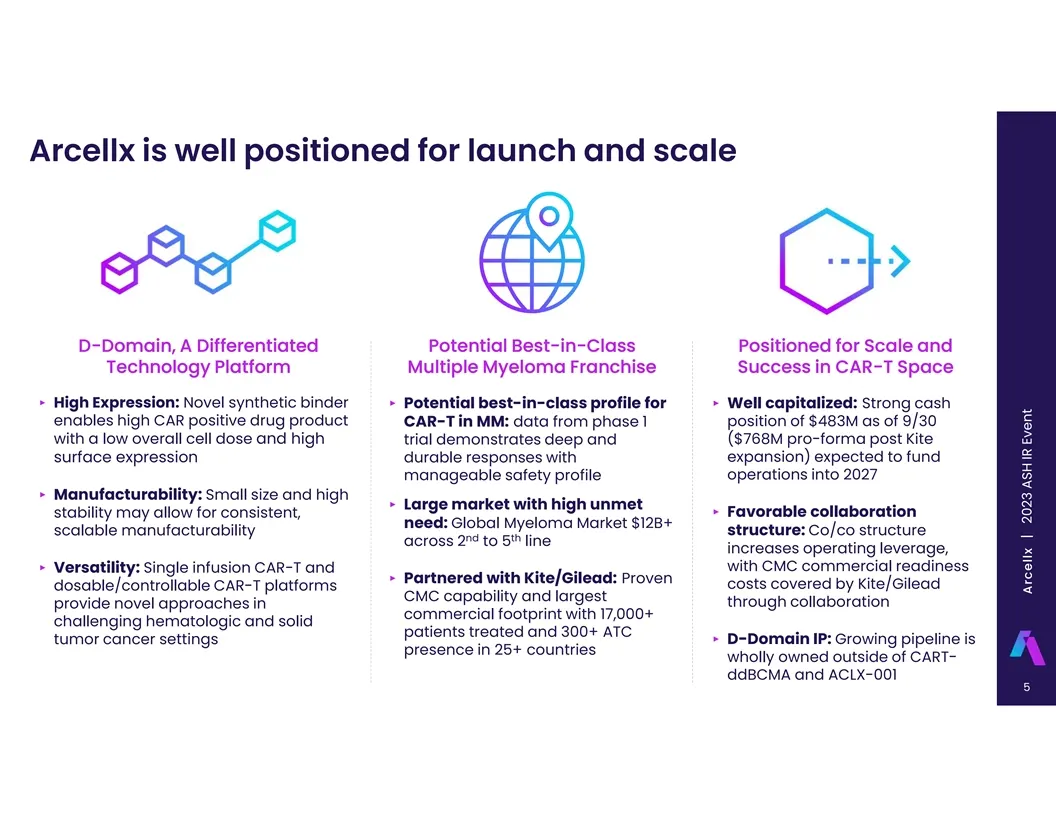
Arcellx is well positioned for launch and scale D-Domain, A Differentiated Potential Best-in-Class Positioned for Scale and Technology Platform Multiple Myeloma Franchise Success in CAR-T Space ‣ High Expression: Novel synthetic binder ‣ Potential best-in-class profile for ‣ Well capitalized: Strong
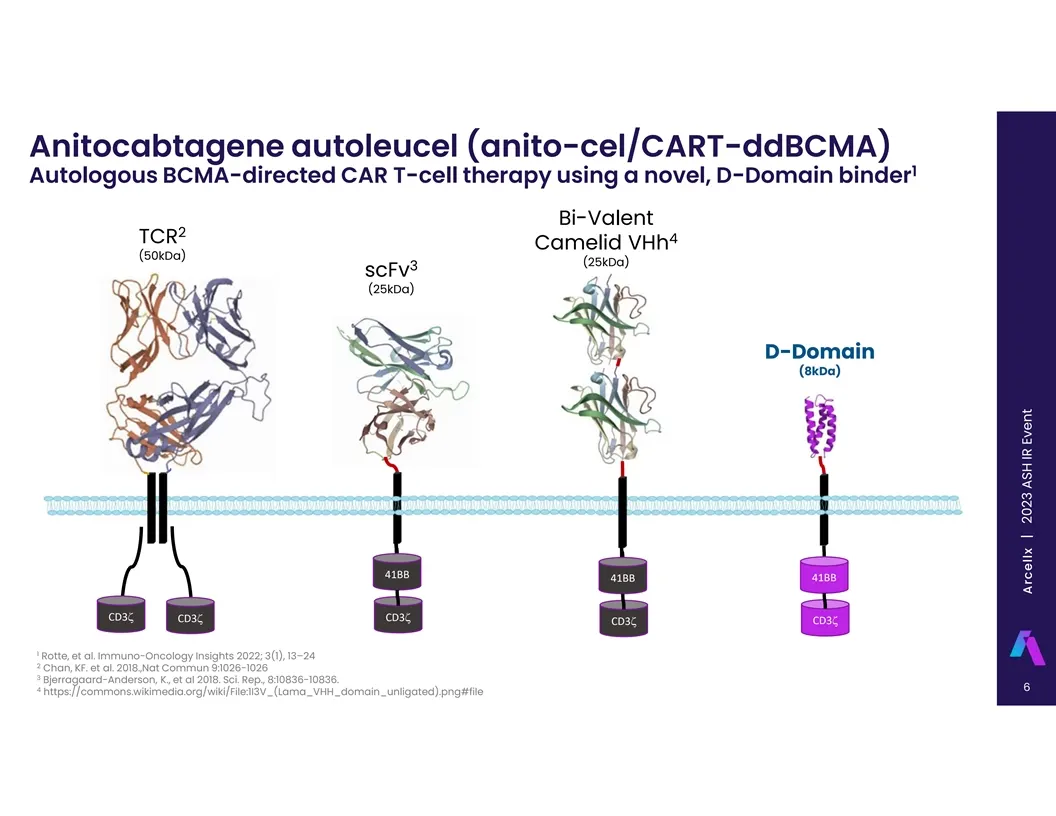
Slide 6: Anitocabtagene autoleucel (anito-cel/CART-ddBCMA)
Anitocabtagene autoleucel (anito-cel/CART-ddBCMA) 1 Autologous BCMA-directed CAR T-cell therapy using a novel, D-Domain binder Bi-Valent 2 TCR 4 Camelid VHh (50kDa) (25kDa) 3 scFv (25kDa) D-Domain (8kDa) 41BB 41BB 41BB CD3zCD3z CD3z CD3z CD3z 1 Rotte, et al. Immuno-Oncology Insights 2022; 3(1), 13–2
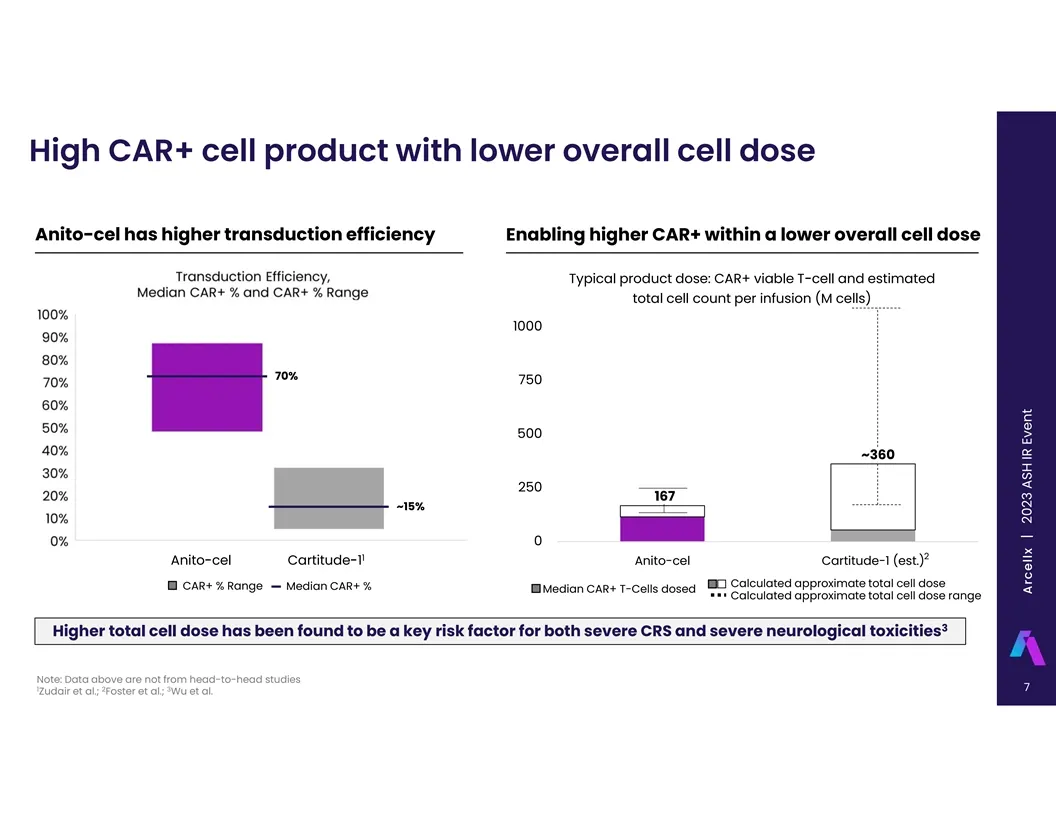
Slide 7: High CAR+ cell product with lower overall cell dose
High CAR+ cell product with lower overall cell dose Anito-cel has higher transduction efficiency Enabling higher CAR+ within a lower overall cell dose Typical product dose: CAR+ viable T-cell and estimated total cell count per infusion (M cells) 1000 70% 750 500 ~360 250 167 ~15% 0 2 1 Anito-cel Car
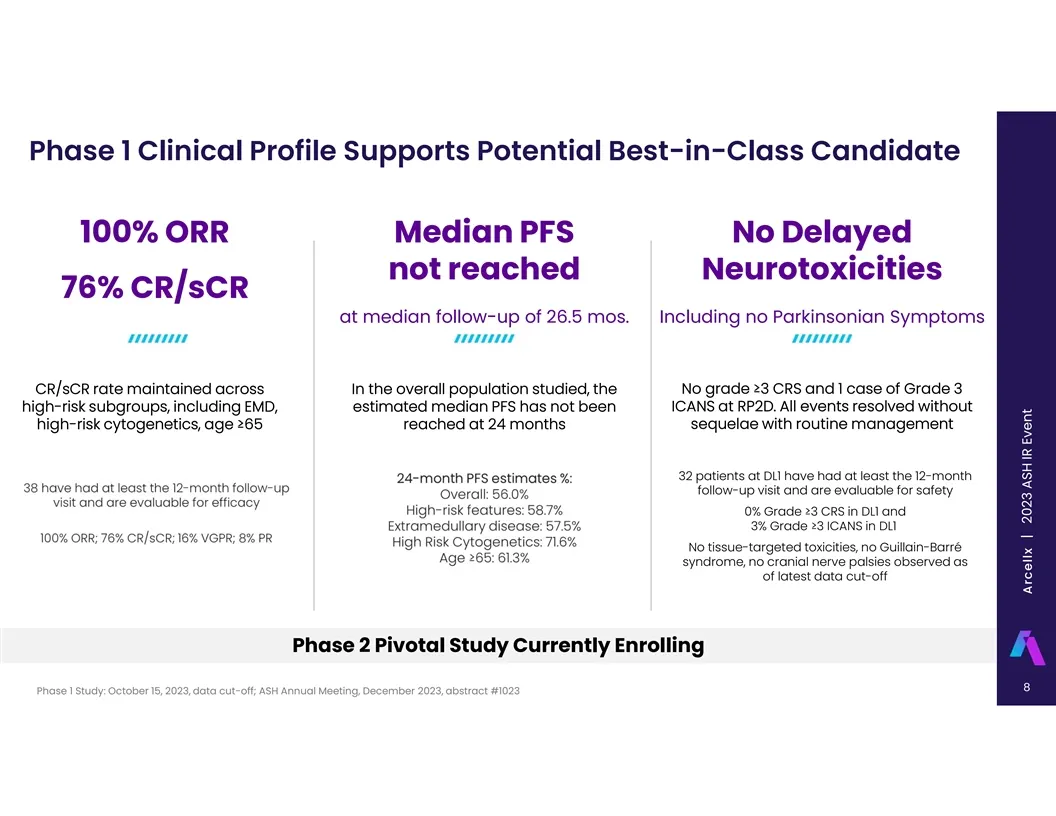
Slide 8: Phase 1 Clinical Profile Supports Potential Best-in-Class Candidate
Phase 1 Clinical Profile Supports Potential Best-in-Class Candidate 100% ORR Median PFS No Delayed not reached Neurotoxicities 76% CR/sCR at median follow-up of 26.5 mos. Including no Parkinsonian Symptoms No grade ≥3 CRS and 1 case of Grade 3 CR/sCR rate maintained across In the overall population
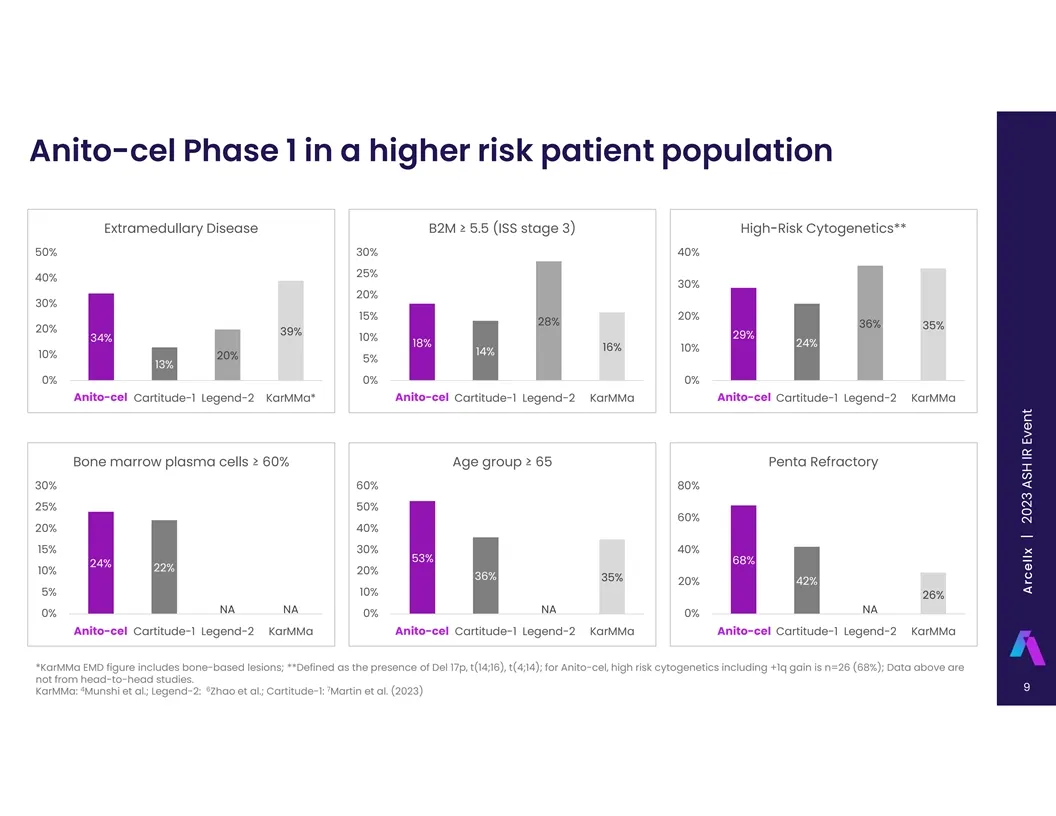
Slide 9: Anito-cel Phase 1 in a higher risk patient population
Anito-cel Phase 1 in a higher risk patient population Extramedullary Disease B2M ≥ 5.5 (ISS stage 3) High-Risk Cytogenetics** 50% 30% 40% 25% 40% 30% 20% 30% 15% 20% 28% 36% 35% 20% 39% 29% 34% 10% 18% 24% 16% 10% 14% 10% 20% 5% 13% 0% 0% 0% A An ni it to o- -C ce ell Cartitude-1 Legend-2 KarMMa* A
Slide 10: Multiple Myeloma is a Significant Market Opportunity
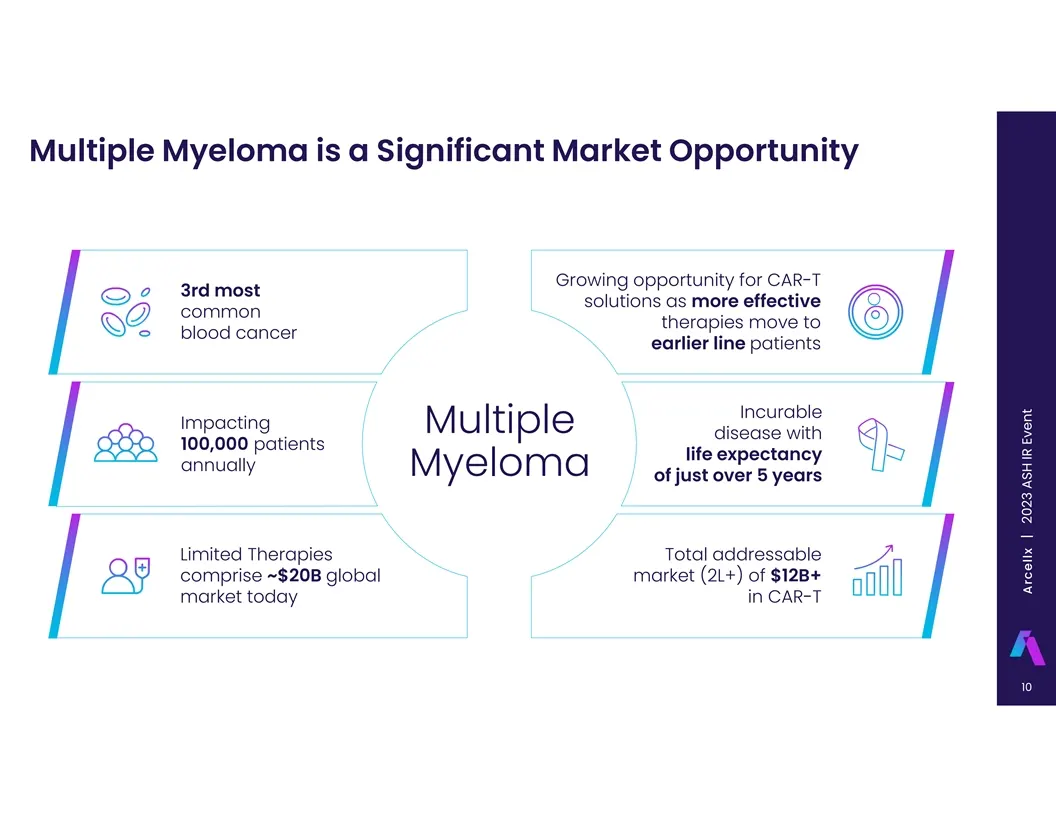
Multiple Myeloma is a Significant Market Opportunity Growing opportunity for CAR-T 3rd most solutions as more effective common therapies move to blood cancer earlier line patients Incurable Impacting Multiple disease with 100,000 patients life expectancy annually Myeloma of just over 5 years Limited
Slide 11: A Rich Development Pipeline with Growth in Mind
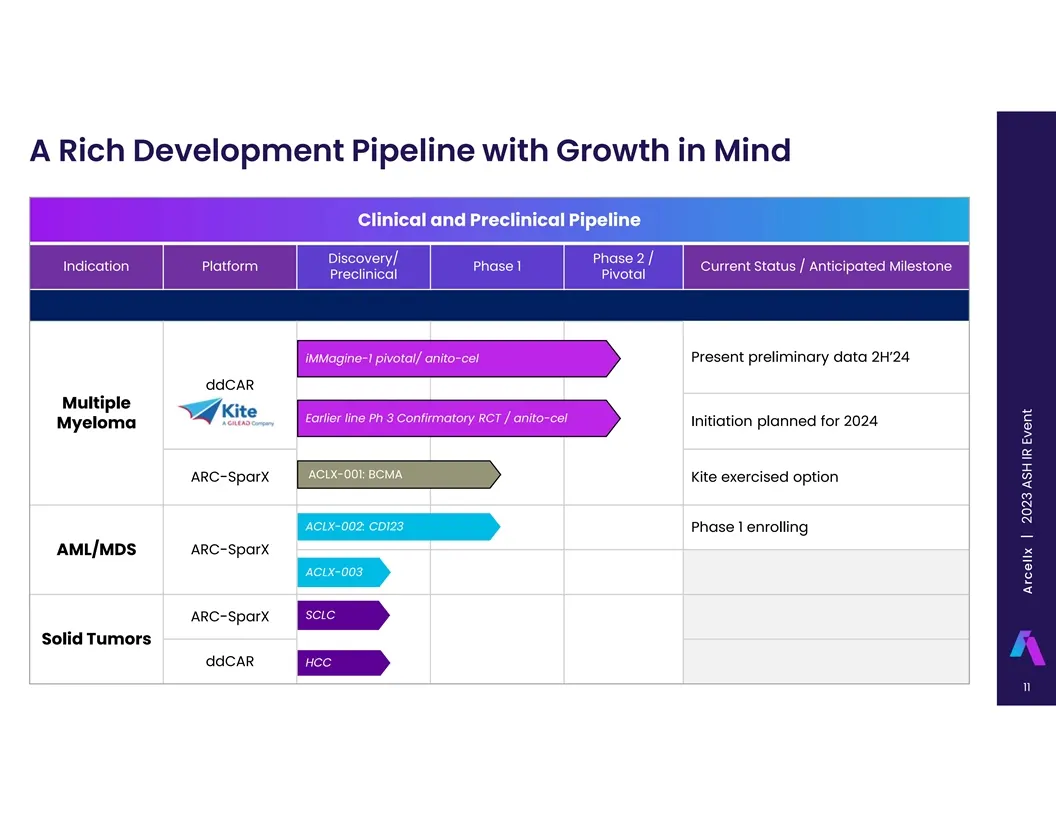
A Rich Development Pipeline with Growth in Mind Clinical and Preclinical Pipeline Discovery/ Phase 2 / Indication Platform Phase 1 Current Status / Anticipated Milestone Preclinical Pivotal iMMagine-1 pivotal/ anito-cel Present preliminary data 2H’24 ddCAR Multiple Earlier line Ph 3 Confirmatory RCT
Slide 12: Arcellx Reimagining Cell Therapy
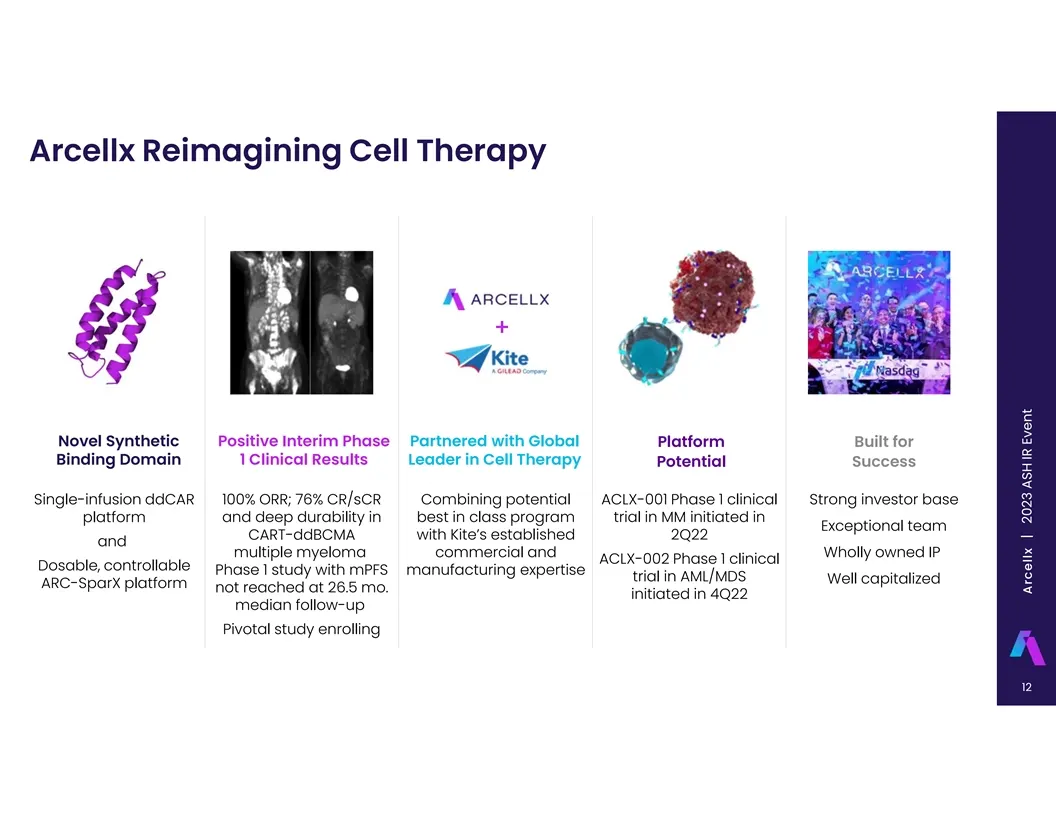
Arcellx Reimagining Cell Therapy + Novel Synthetic Positive Interim Phase Partnered with Global Platform Built for Binding Domain 1 Clinical Results Leader in Cell Therapy Potential Success Single-infusion ddCAR 100% ORR; 76% CR/sCR Combining potential ACLX-001 Phase 1 clinical Strong investor base
Slide 13: Agenda
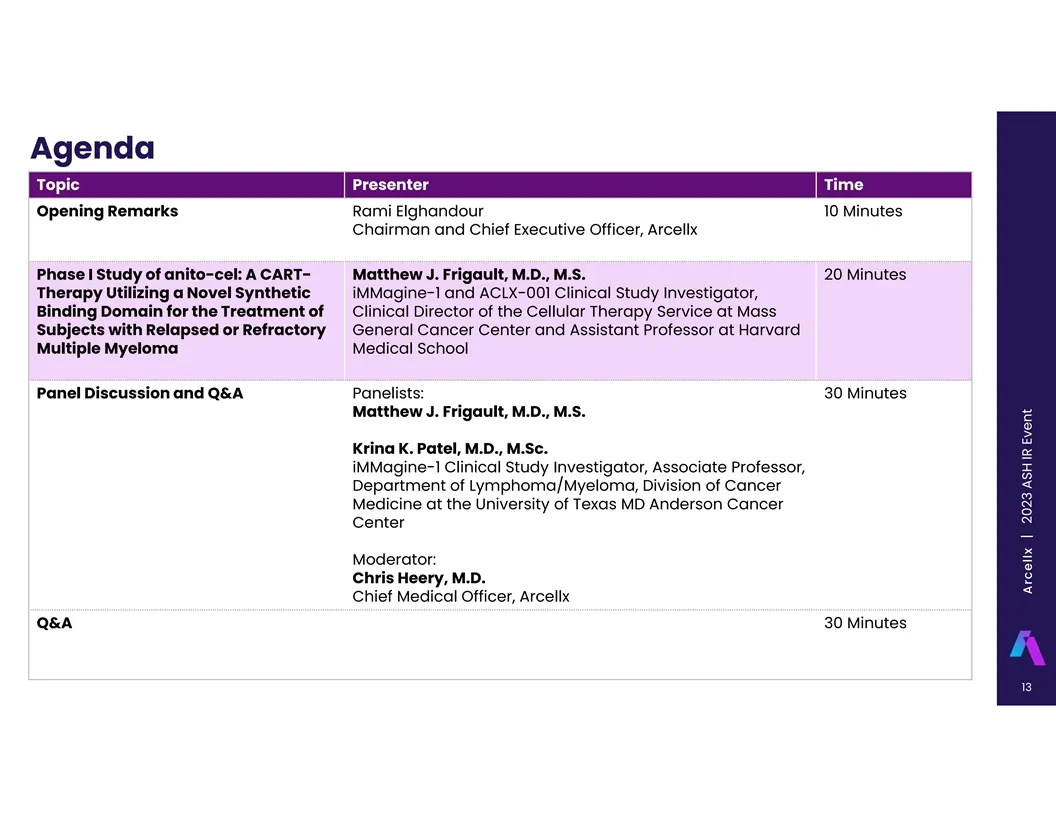
Agenda Topic Presenter Time Opening Remarks Rami Elghandour 10 Minutes Chairman and Chief Executive Officer, Arcellx Phase I Study of anito-cel: A CART- Matthew J. Frigault, M.D., M.S. 20 Minutes Therapy Utilizing a Novel Synthetic iMMagine-1 and ACLX-001 Clinical Study Investigator, Binding Domain
Slide 14: Abstract: Phase 1 Study of Anito-cel in Relapsed/Refractory Multiple Myeloma
Abstract: 1023 Phase 1 Study Of Anito-cel For The Treatment Of Patients With Relapsed And/Or Refractory Multiple Myeloma: Results From At Least 1-year Follow-up In All Patients 1 2 3 4 5* Matthew Frigault, MD, MS , Jacalyn Rosenblatt, MD , Binod Dhakal, MBBS , Noopur Raje, MD , Daniella Cook, BS , 6
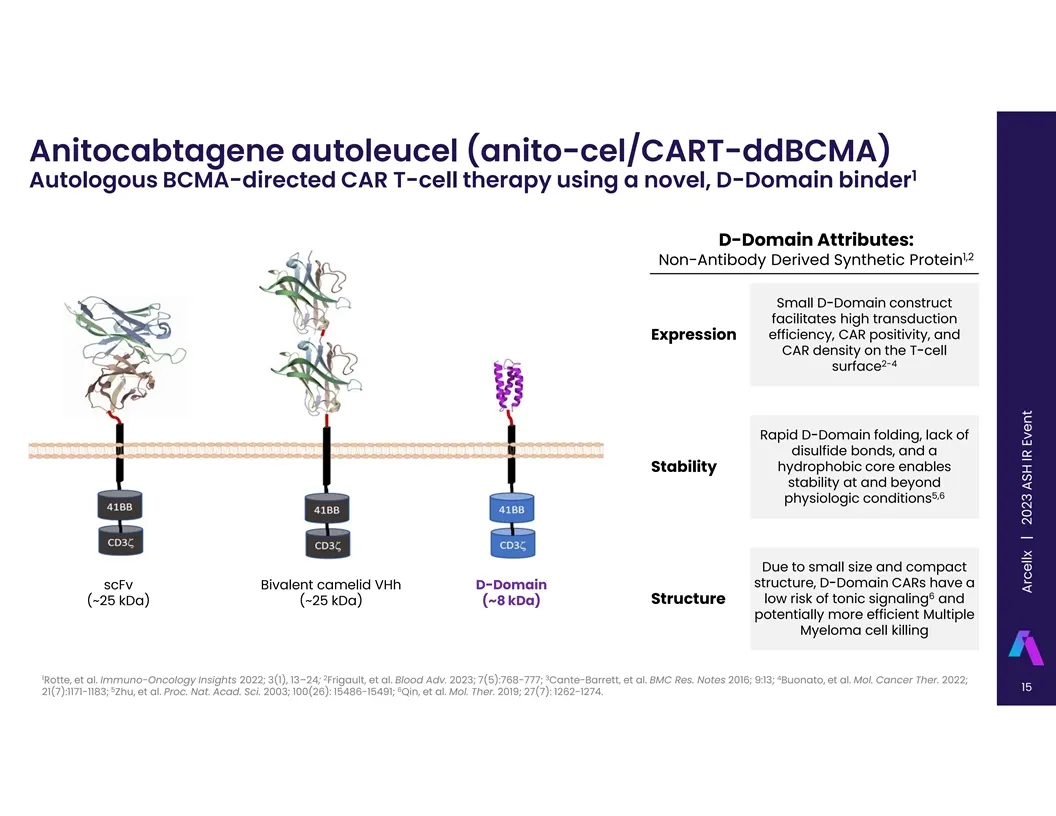
Slide 15: Anito-cel: D-Domain Binder Attributes
Anitocabtagene autoleucel (anito-cel/CART-ddBCMA) 1 Autologous BCMA-directed CAR T-cell therapy using a novel, D-Domain binder D-Domain Attributes: 1,2 Non-Antibody Derived Synthetic Protein Small D-Domain construct facilitates high transduction Expression efficiency, CAR positivity, and CAR density
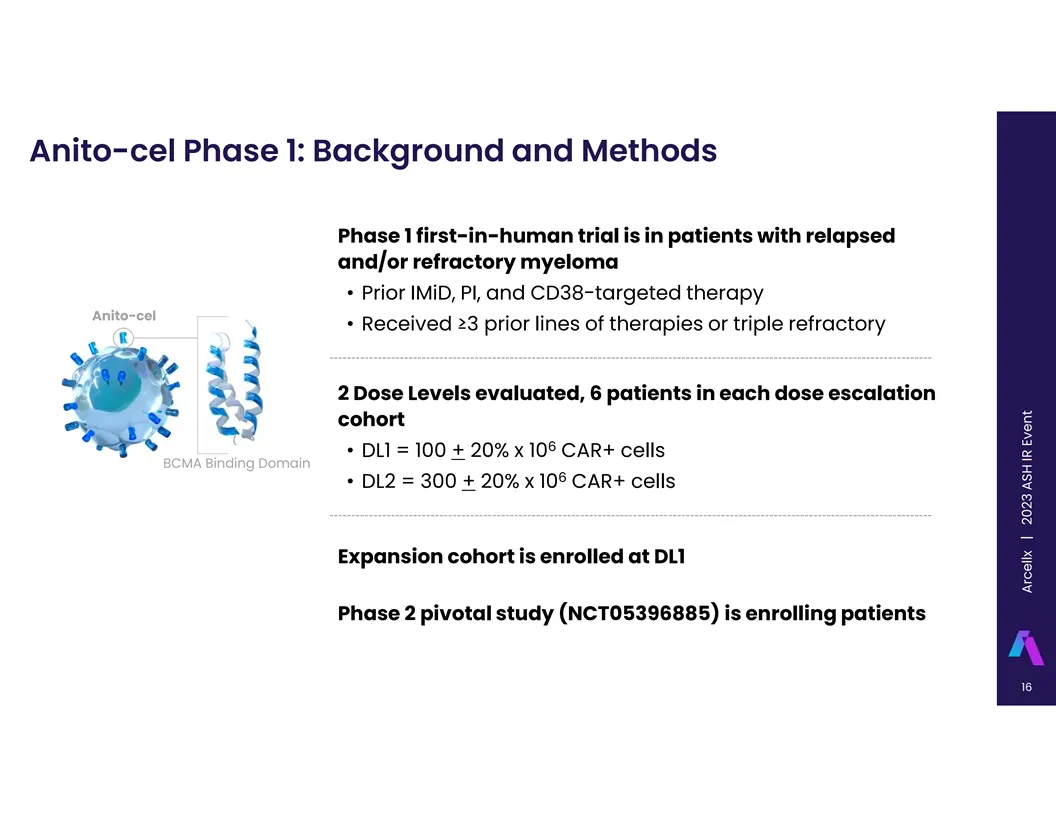
Slide 16: Anito-cel Phase 1: Background and Methods
Anito-cel Phase 1: Background and Methods Phase 1 first-in-human trial is in patients with relapsed and/or refractory myeloma • Prior IMiD, PI, and CD38-targeted therapy Anito-cel • Received ≥3 prior lines of therapies or triple refractory 2 Dose Levels evaluated, 6 patients in each dose escalation
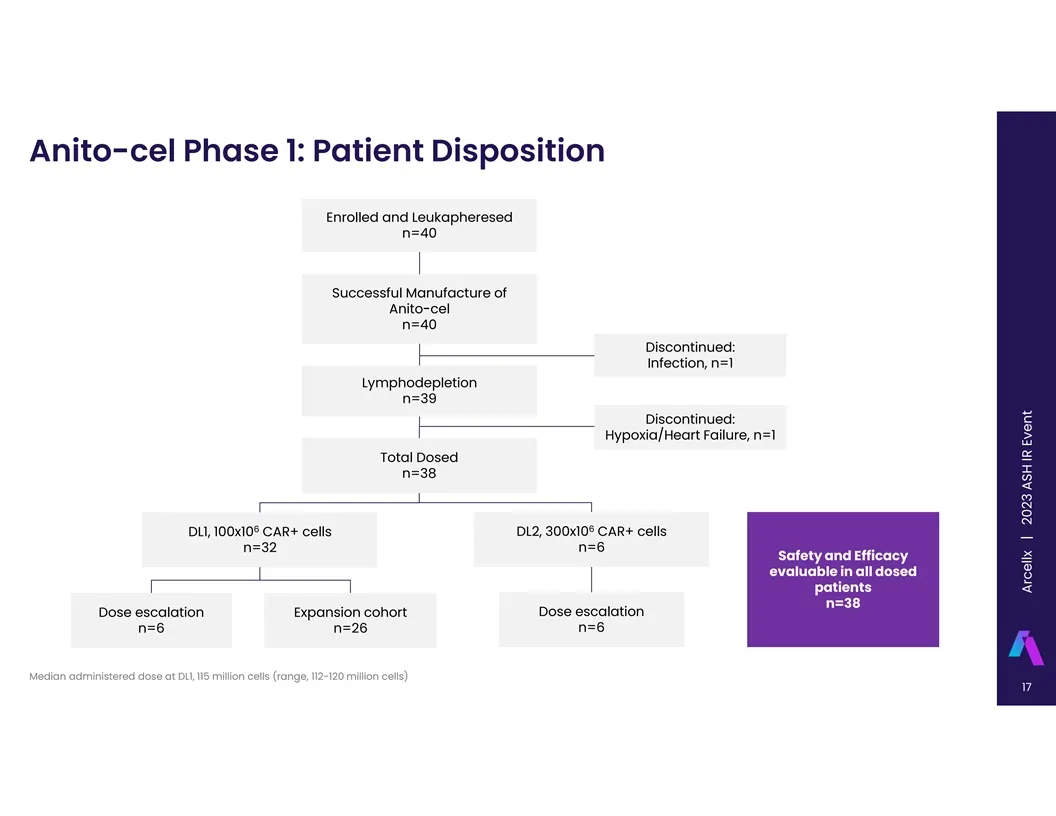
Slide 17: Anito-cel Phase 1: Patient Disposition
Anito-cel Phase 1: Patient Disposition Enrolled and Leukapheresed n=40 Successful Manufacture of Anito-cel n=40 Discontinued: Infection, n=1 Lymphodepletion n=39 Discontinued: Hypoxia/Heart Failure, n=1 Total Dosed n=38 6 6 DL1, 100x10 CAR+ cells DL2, 300x10 CAR+ cells n=32 n=6 Safety and Efficacy e
Slide 18: Anito-cel Phase 1: A higher risk patient population
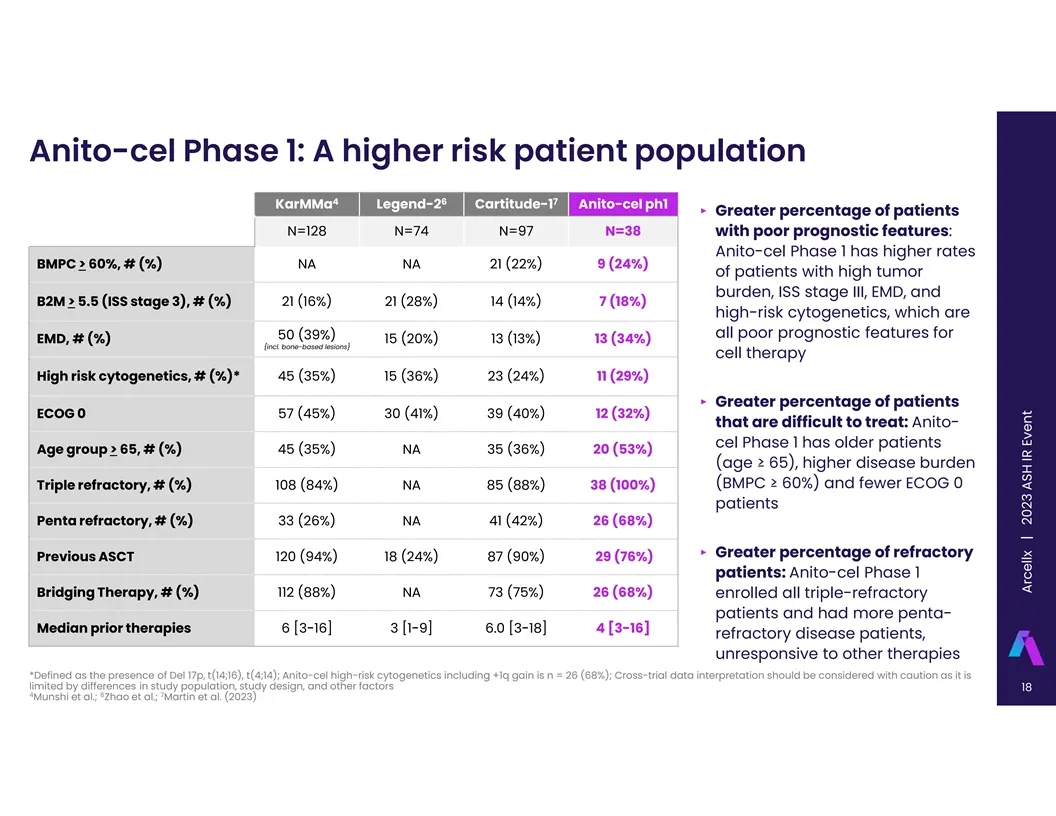
Anito-cel Phase 1: A higher risk patient population 4 6 7 KarMMa Legend-2 Cartitude-1 Anito-cel ph1 ‣ Greater percentage of patients N=128 N=74 N=97 N=38 with poor prognostic features: Anito-cel Phase 1 has higher rates BMPC > 60%, # (%) NA NA 21 (22%) 9 (24%) of patients with high tumor burden, ISS
Slide 19: Greater proportion of patients with ISS Stage III
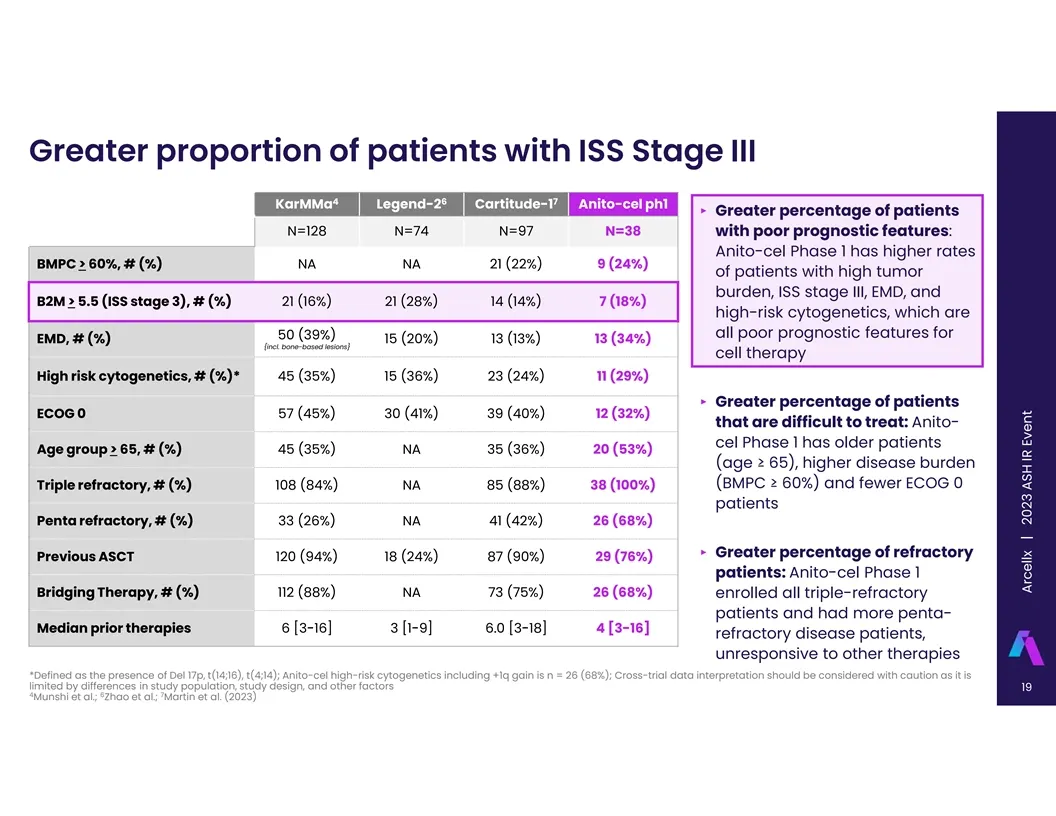
Greater proportion of patients with ISS Stage III 4 6 7 KarMMa Legend-2 Cartitude-1 Anito-cel ph1 ‣ Greater percentage of patients N=128 N=74 N=97 N=38 with poor prognostic features: Anito-cel Phase 1 has higher rates BMPC > 60%, # (%) NA NA 21 (22%) 9 (24%) of patients with high tumor burden, ISS s
Slide 20: Greater proportion of patients with EMD
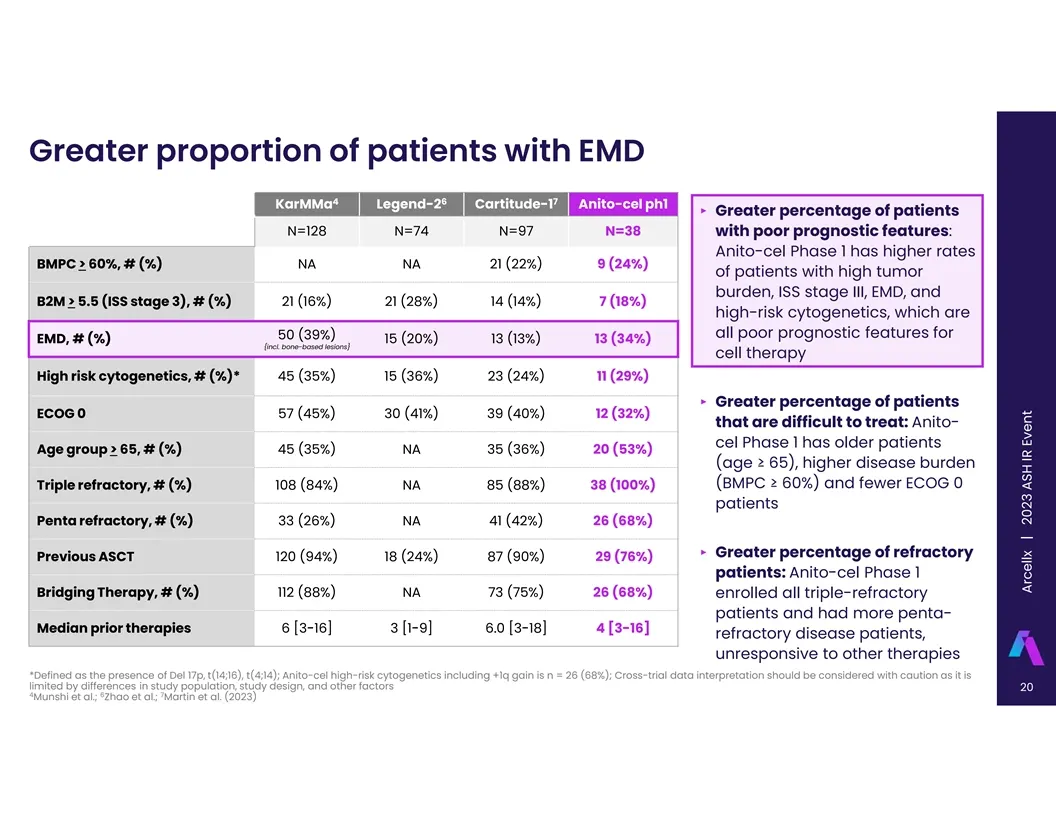
Greater proportion of patients with EMD 4 6 7 KarMMa Legend-2 Cartitude-1 Anito-cel ph1 ‣ Greater percentage of patients N=128 N=74 N=97 N=38 with poor prognostic features: Anito-cel Phase 1 has higher rates BMPC > 60%, # (%) NA NA 21 (22%) 9 (24%) of patients with high tumor burden, ISS stage III,
Slide 21: Greater proportion of patients with High-Risk Cytogenetics
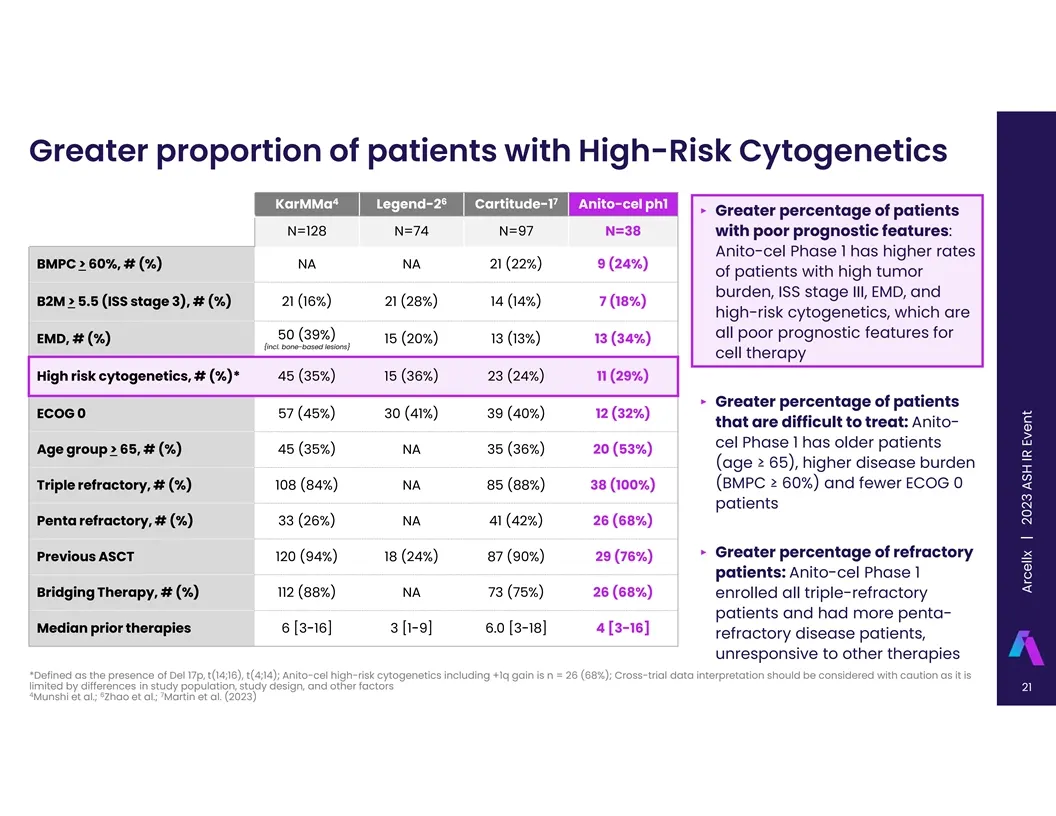
Greater proportion of patients with High-Risk Cytogenetics 4 6 7 KarMMa Legend-2 Cartitude-1 Anito-cel ph1 ‣ Greater percentage of patients N=128 N=74 N=97 N=38 with poor prognostic features: Anito-cel Phase 1 has higher rates BMPC > 60%, # (%) NA NA 21 (22%) 9 (24%) of patients with high tumor burd
Slide 22: Greater proportion of patients age ≥65
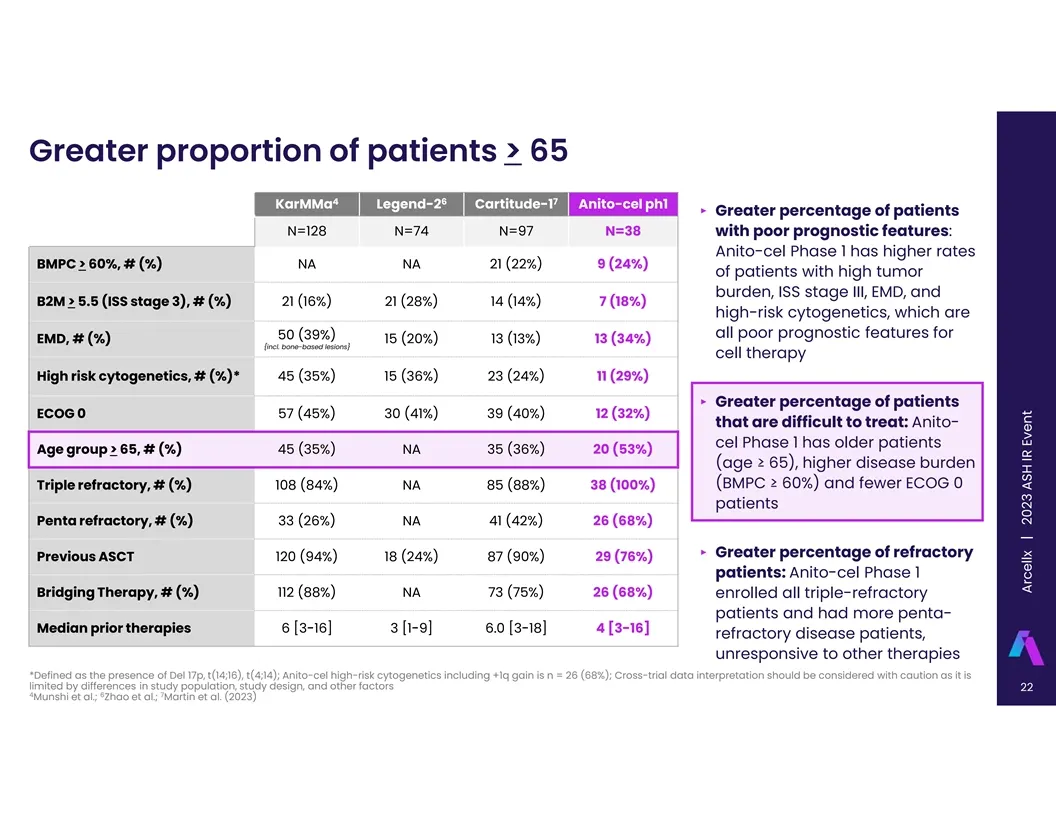
Greater proportion of patients > 65 4 6 7 KarMMa Legend-2 Cartitude-1 Anito-cel ph1 ‣ Greater percentage of patients N=128 N=74 N=97 N=38 with poor prognostic features: Anito-cel Phase 1 has higher rates BMPC > 60%, # (%) NA NA 21 (22%) 9 (24%) of patients with high tumor burden, ISS stage III, EMD,
Slide 23: Greater proportion of patients that are Penta Refractory
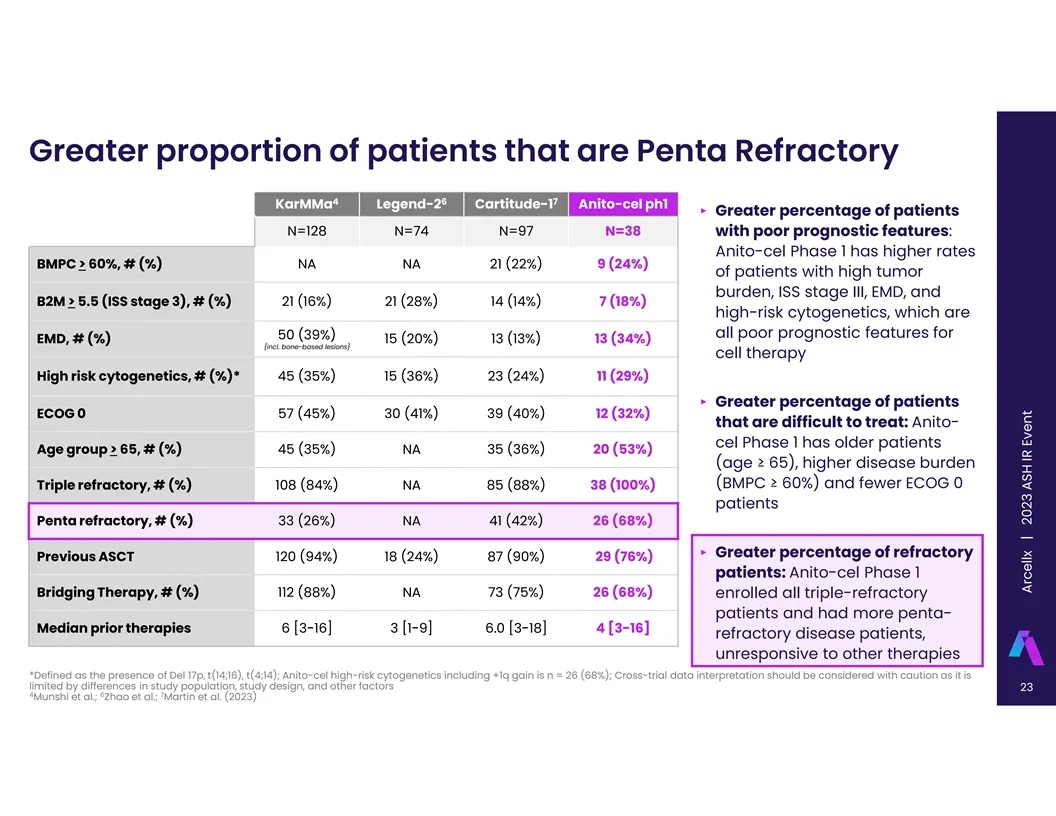
Greater proportion of patients that are Penta Refractory 4 6 7 KarMMa Legend-2 Cartitude-1 Anito-cel ph1 ‣ Greater percentage of patients N=128 N=74 N=97 N=38 with poor prognostic features: Anito-cel Phase 1 has higher rates BMPC > 60%, # (%) NA NA 21 (22%) 9 (24%) of patients with high tumor burden
Slide 24: High CR/sCR rate of 76%, maintained across high-risk groups
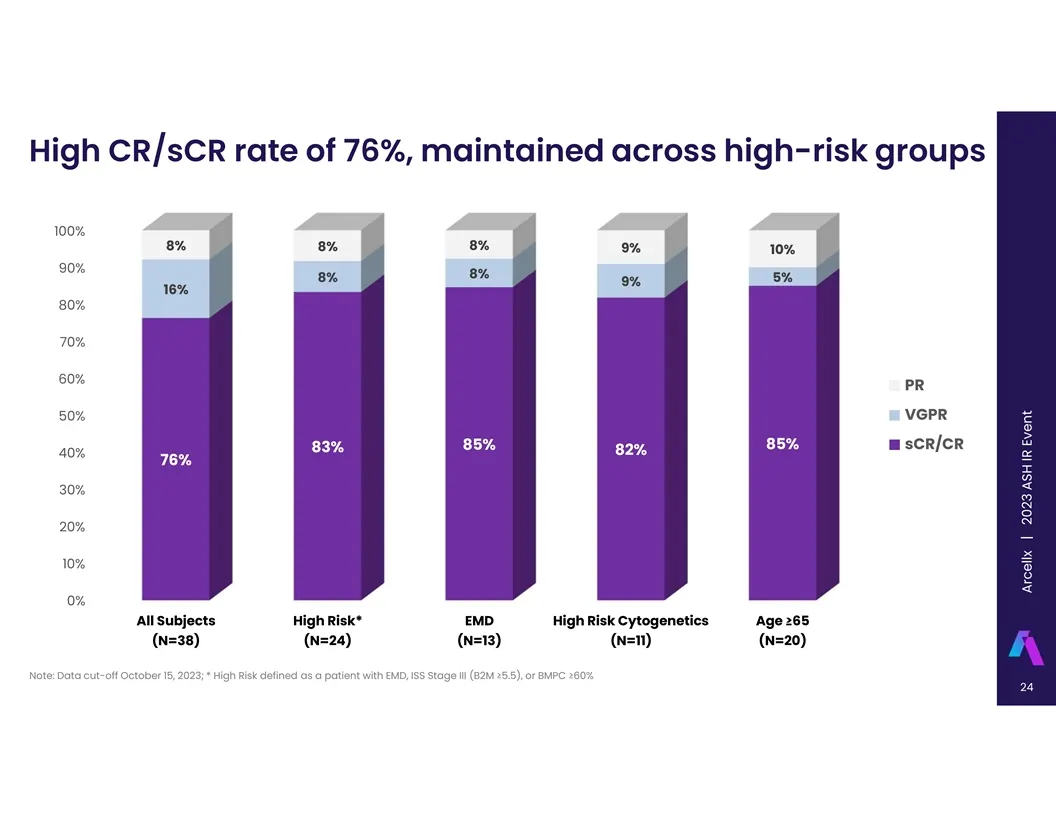
High CR/sCR rate of 76%, maintained across high-risk groups 100% 8% 8% 8% 9% 10% 90% 8% 8% 5% 9% 16% 80% 70% 60% PR VGPR 50% 85% sCR/CR 85% 83% 82% 40% 76% 30% 20% 10% 0% All Subjects High Risk* EMD High Risk Cytogenetics Age ≥65 (N=38) (N=24) (N=13) (N=11) (N=20) Note: Data cut-off October 15, 2023
Slide 25: Anito-cel has 100% ORR and 76% CR/sCR in Phase 1
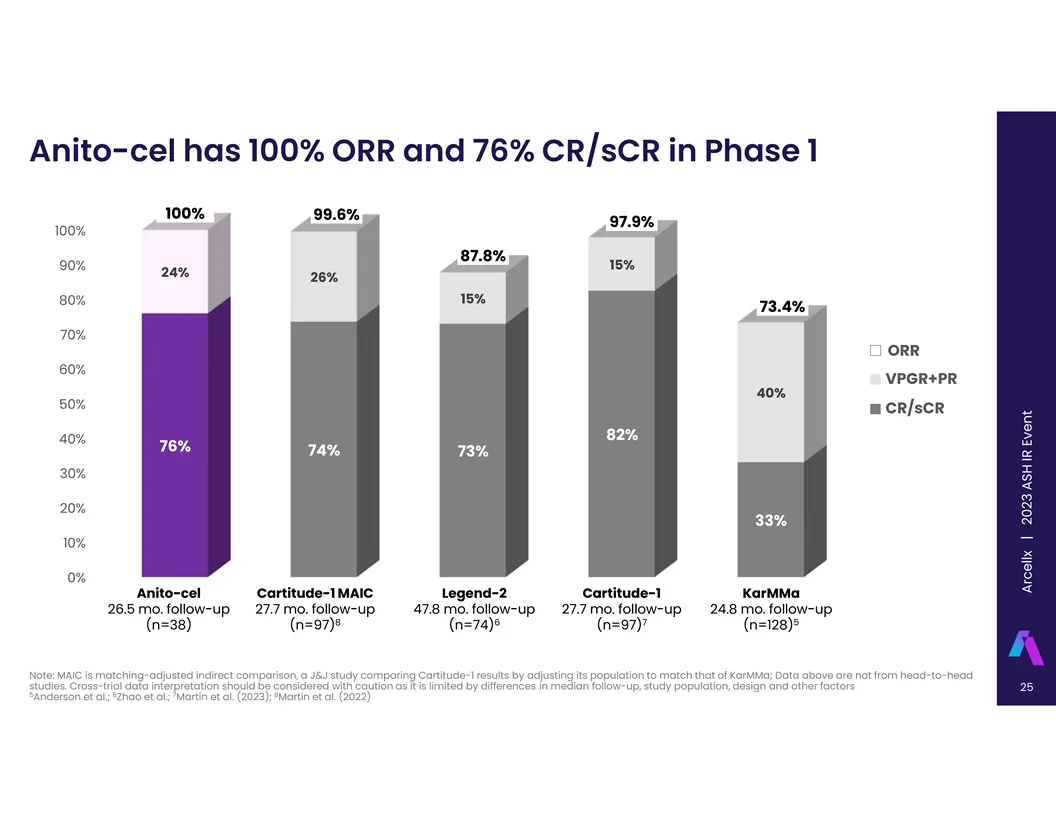
Anito-cel has 100% ORR and 76% CR/sCR in Phase 1 100% 99.6% 97.9% 100% 87.8% 15% 90% 24% 26% 15% 80% 73.4% 70% ORR 60% VPGR+PR 40% 50% CR/sCR 82% 40% 76% 74% 73% 30% 20% 33% 10% 0% Anito-cel Cartitude-1 MAIC Legend-2 Cartitude-1 KarMMa 26.5 mo. follow-up 27.7 mo. follow-up 47.8 mo. follow-up 27.7 mo
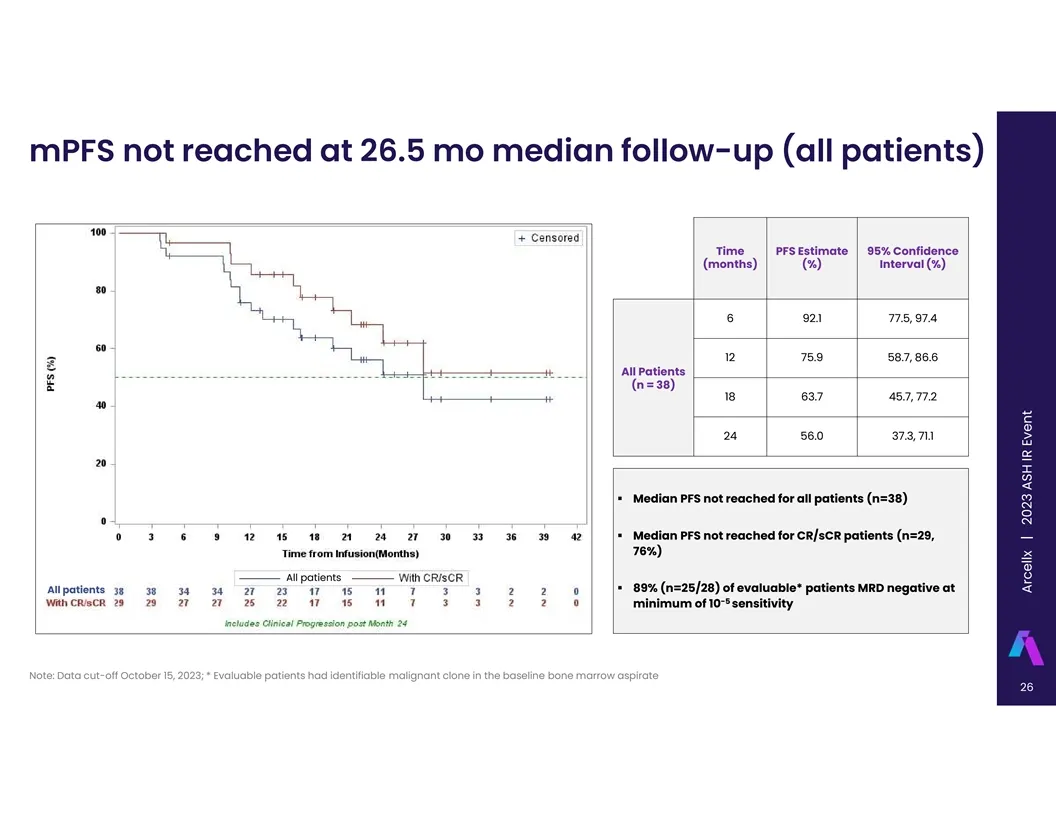
Slide 26: mPFS not reached at 26.5 mo median follow-up (all patients)
mPFS not reached at 26.5 mo median follow-up (all patients) Time PFS Estimate 95% Confidence (months) (%) Interval (%) 6 92.1 77.5, 97.4 12 75.9 58.7, 86.6 All Patients (n = 38) 18 63.7 45.7, 77.2 24 56.0 37.3, 71.1 § Median PFS not reached for all patients (n=38) § Median PFS not reached for CR/sCR
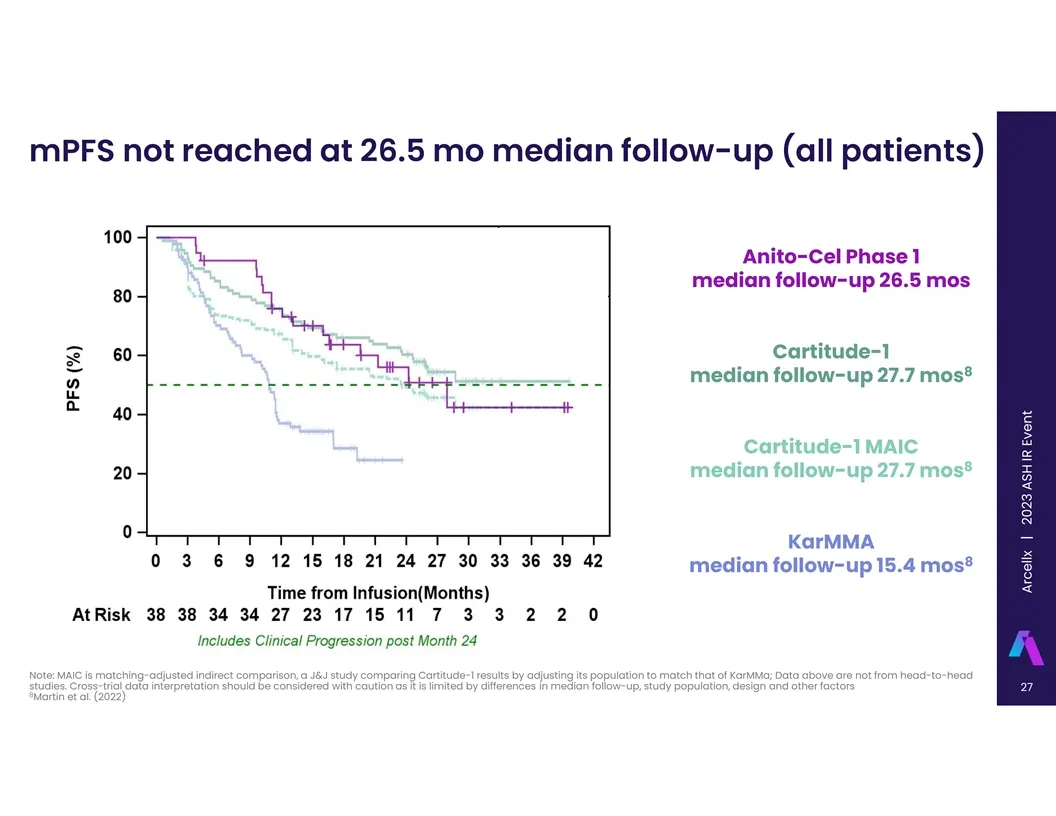
Slide 27: mPFS not reached at 26.5 mo median follow-up (all patients)
mPFS not reached at 26.5 mo median follow-up (all patients) Anito-Cel Phase 1 median follow-up 26.5 mos Cartitude-1 8 median follow-up 27.7 mos Cartitude-1 MAIC 8 median follow-up 27.7 mos KarMMA 8 median follow-up 15.4 mos Note: MAIC is matching-adjusted indirect comparison, a J&J study comparing C
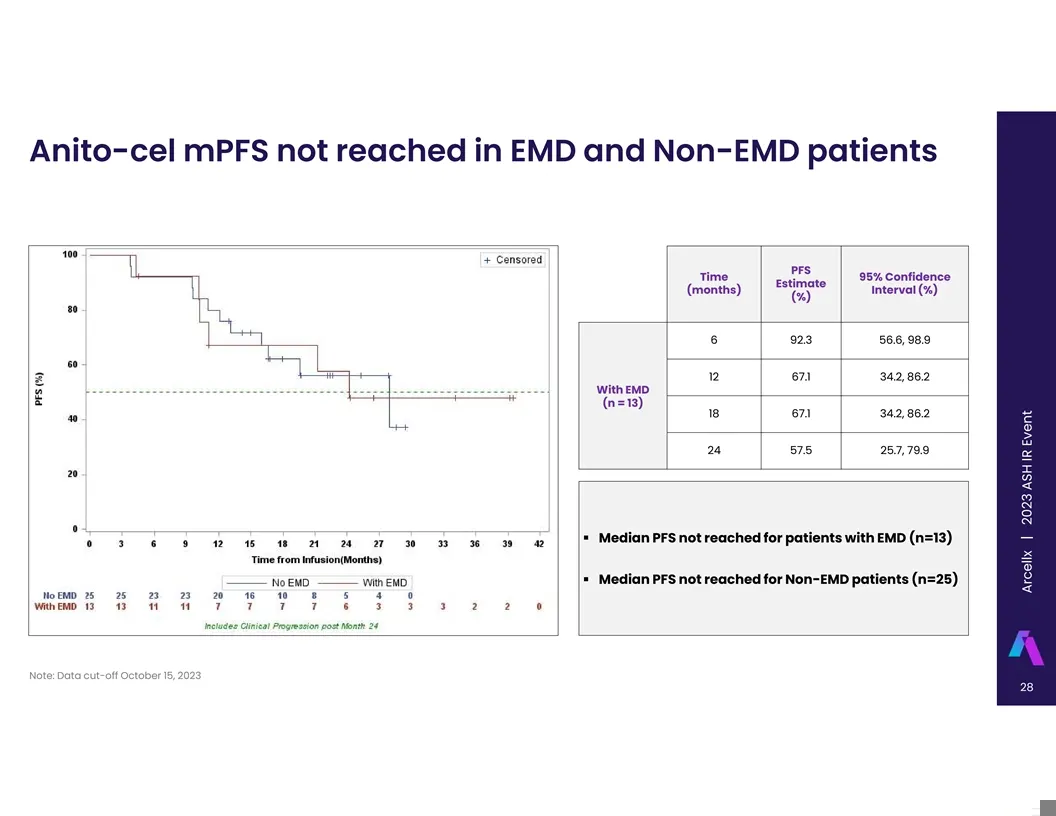
Slide 28: Anito-cel mPFS not reached in EMD and Non-EMD patients
Anito-cel mPFS not reached in EMD and Non-EMD patients PFS Time 95% Confidence Estimate (months) Interval (%) (%) 6 92.3 56.6, 98.9 12 67.1 34.2, 86.2 With EMD (n = 13) 18 67.1 34.2, 86.2 24 57.5 25.7, 79.9 § Median PFS not reached for patients with EMD (n=13) § Median PFS not reached for Non-EMD pa
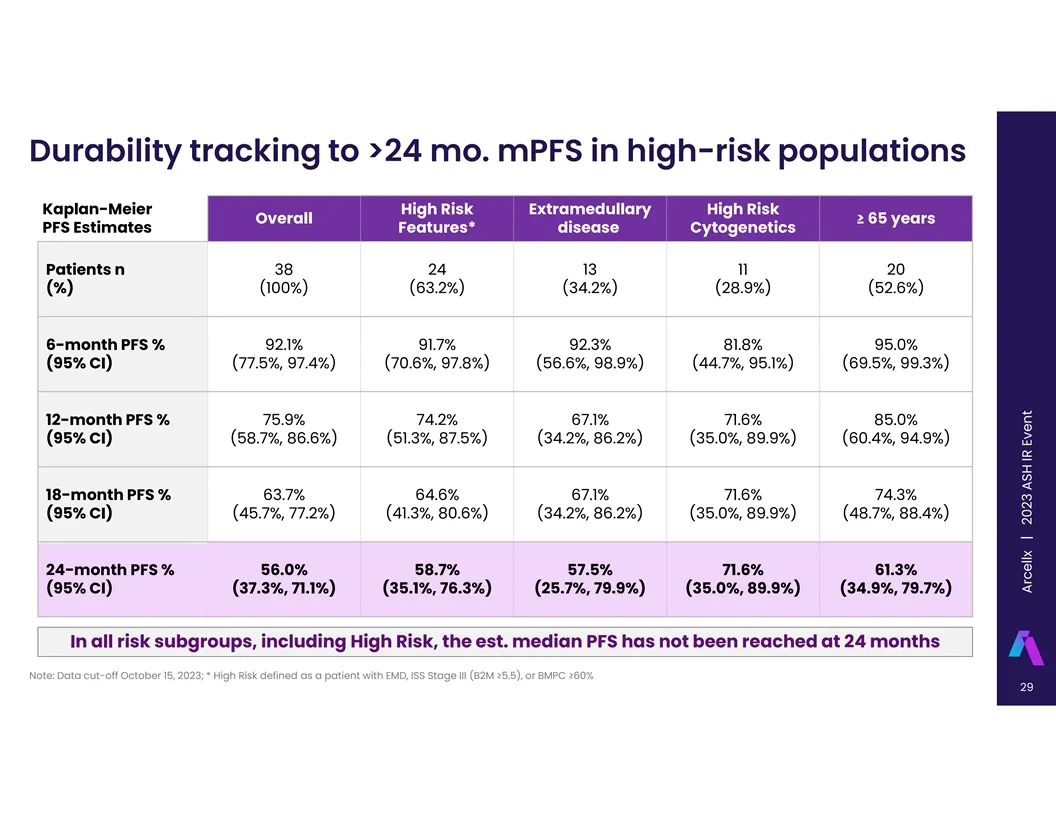
Slide 29: Durability tracking to >24 mo. mPFS in high-risk populations
Durability tracking to >24 mo. mPFS in high-risk populations Kaplan-Meier High Risk Extramedullary High Risk Overall ≥ 65 years PFS Estimates Features* disease Cytogenetics Patients n 38 24 13 11 20 (%) (100%) (63.2%) (34.2%) (28.9%) (52.6%) 6-month PFS % 92.1% 91.7% 92.3% 81.8% 95.0% (95% CI) (77.5
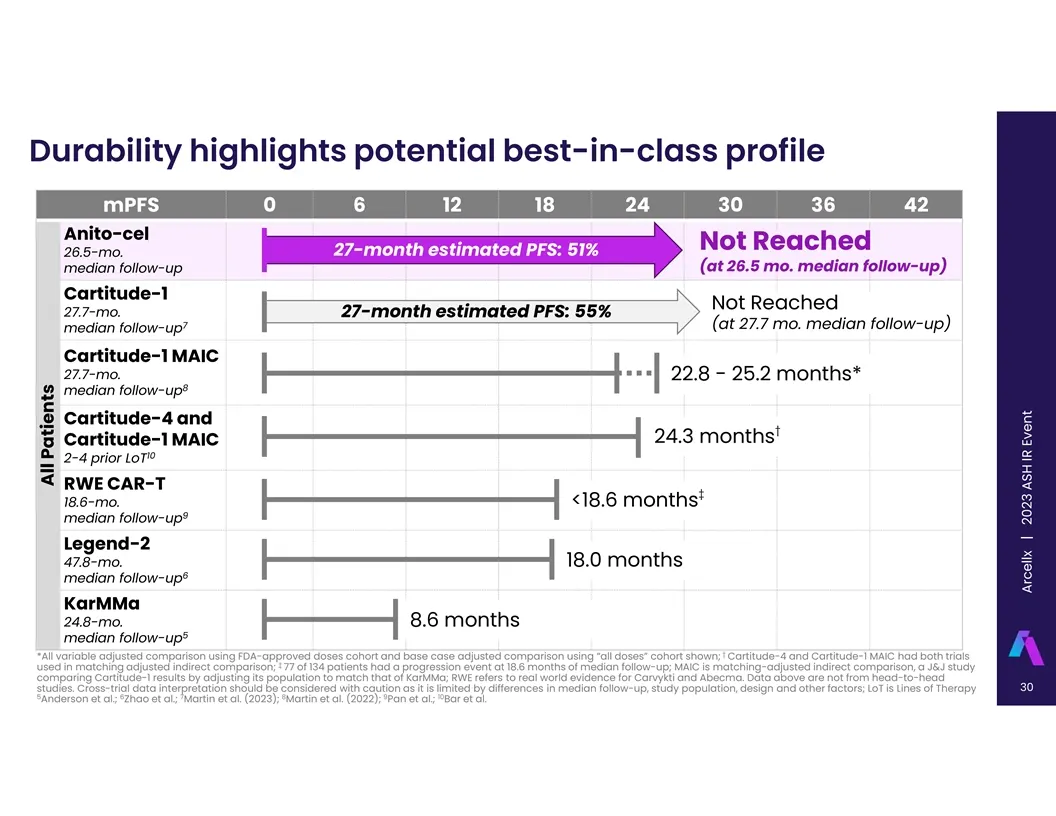
Slide 30: Durability highlights potential best-in-class profile
Durability highlights potential best-in-class profile mPFS 0 6 12 18 24 30 36 42 Anito-cel Not Reached 27-month estimated PFS: 51% 26.5-mo. (at 26.5 mo. median follow-up) median follow-up Cartitude-1 Not Reached 27.7-mo. 27-month estimated PFS: 55% 7 (at 27.7 mo. median follow-up) median follow-up C
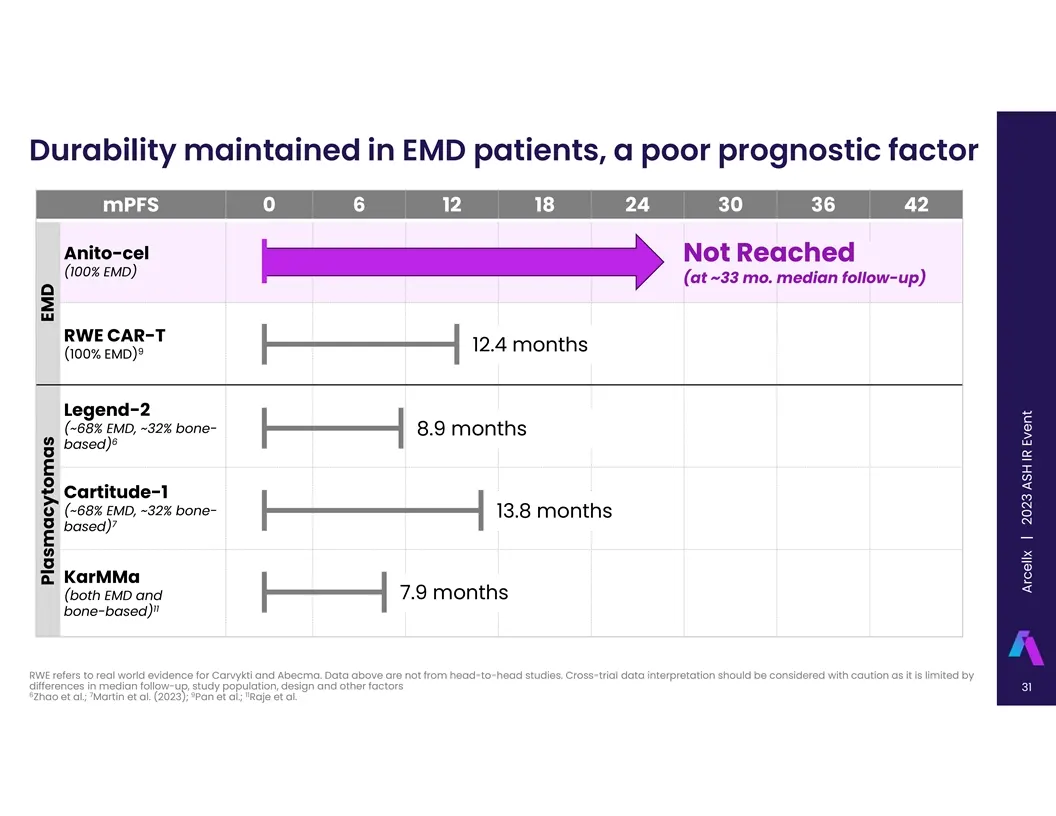
Slide 31: Durability maintained in EMD patients, a poor prognostic factor
Durability maintained in EMD patients, a poor prognostic factor mPFS 0 6 12 18 24 30 36 42 Anito-cel Not Reached (100% EMD) (at ~33 mo. median follow-up) RWE CAR-T 12.4 months 9 (100% EMD) Legend-2 (~68% EMD, ~32% bone- 8.9 months 6 based) Cartitude-1 (~68% EMD, ~32% bone- 13.8 months 7 based) KarMM
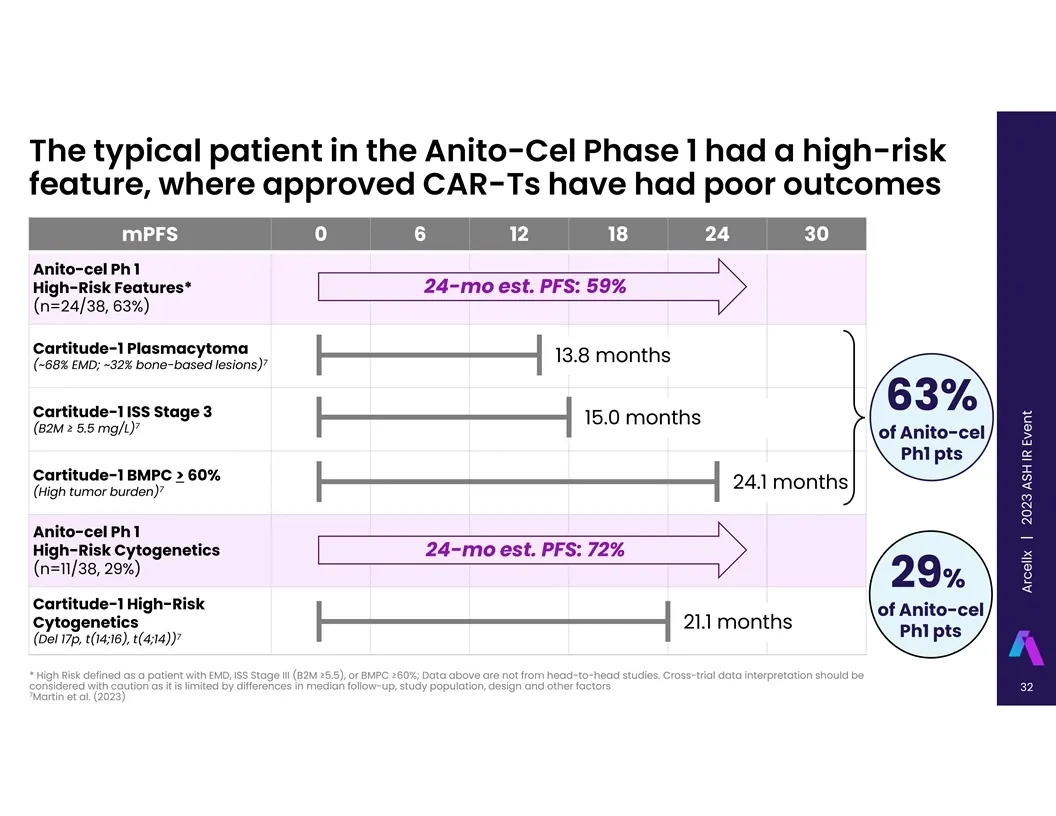
Slide 32: The typical patient in the Anito-Cel Phase 1 had a high-risk feature
The typical patient in the Anito-Cel Phase 1 had a high-risk feature, where approved CAR-Ts have had poor outcomes mPFS 0 6 12 18 24 30 Anito-cel Ph 1 High-Risk Features* 24-mo est. PFS: 59% (n=24/38, 63%) Cartitude-1 Plasmacytoma 13.8 months 7 (~68% EMD; ~32% bone-based lesions) 63% Cartitude-1 ISS
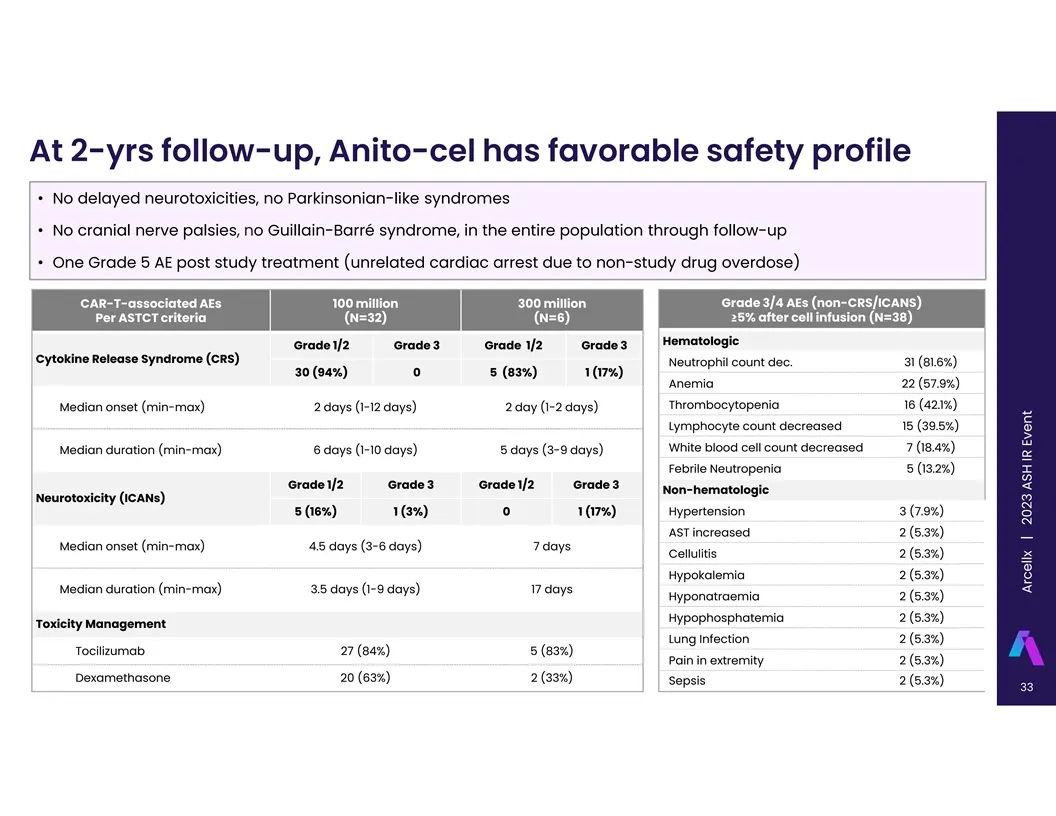
Slide 33: At 2-yrs follow-up, Anito-cel has favorable safety profile
At 2-yrs follow-up, Anito-cel has favorable safety profile • No delayed neurotoxicities, no Parkinsonian-like syndromes • No cranial nerve palsies, no Guillain-Barré syndrome, in the entire population through follow-up • One Grade 5 AE post study treatment (unrelated cardiac arrest due to non-study
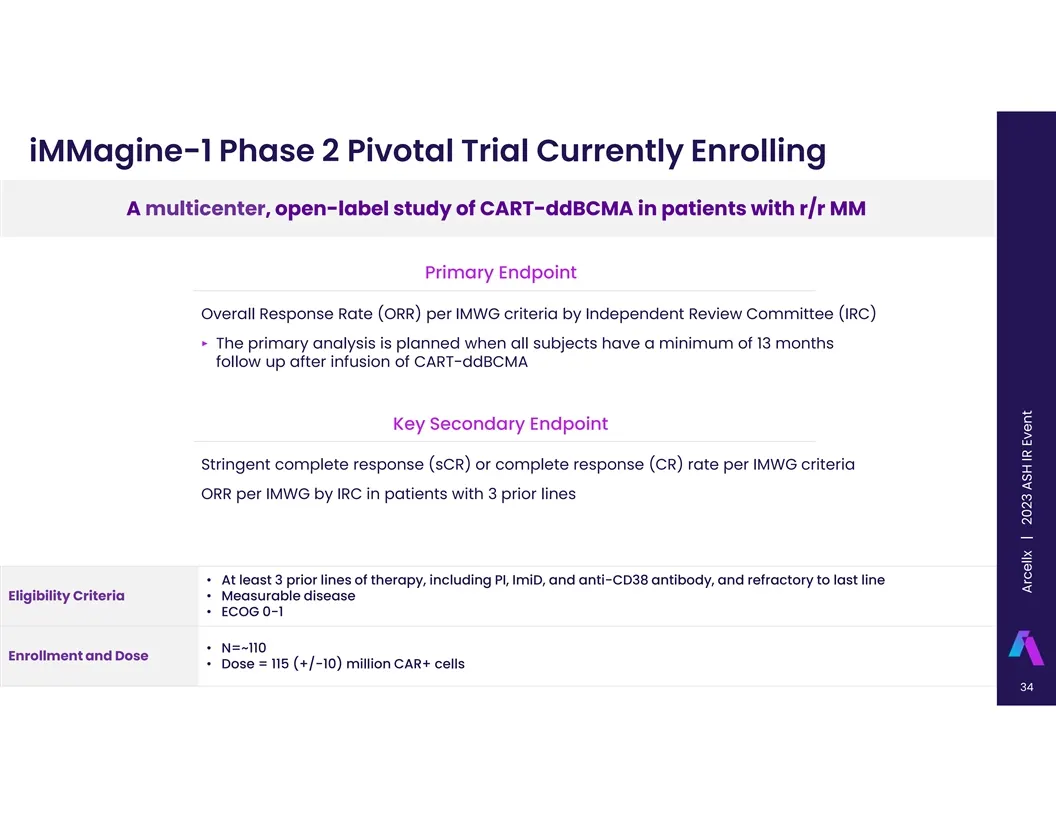
Slide 34: iMMagine-1 Phase 2 Pivotal Trial Currently Enrolling
iMMagine-1 Phase 2 Pivotal Trial Currently Enrolling A multicenter, open-label study of CART-ddBCMA in patients with r/r MM Primary Endpoint Overall Response Rate (ORR) per IMWG criteria by Independent Review Committee (IRC) ‣ The primary analysis is planned when all subjects have a minimum of 13 mo
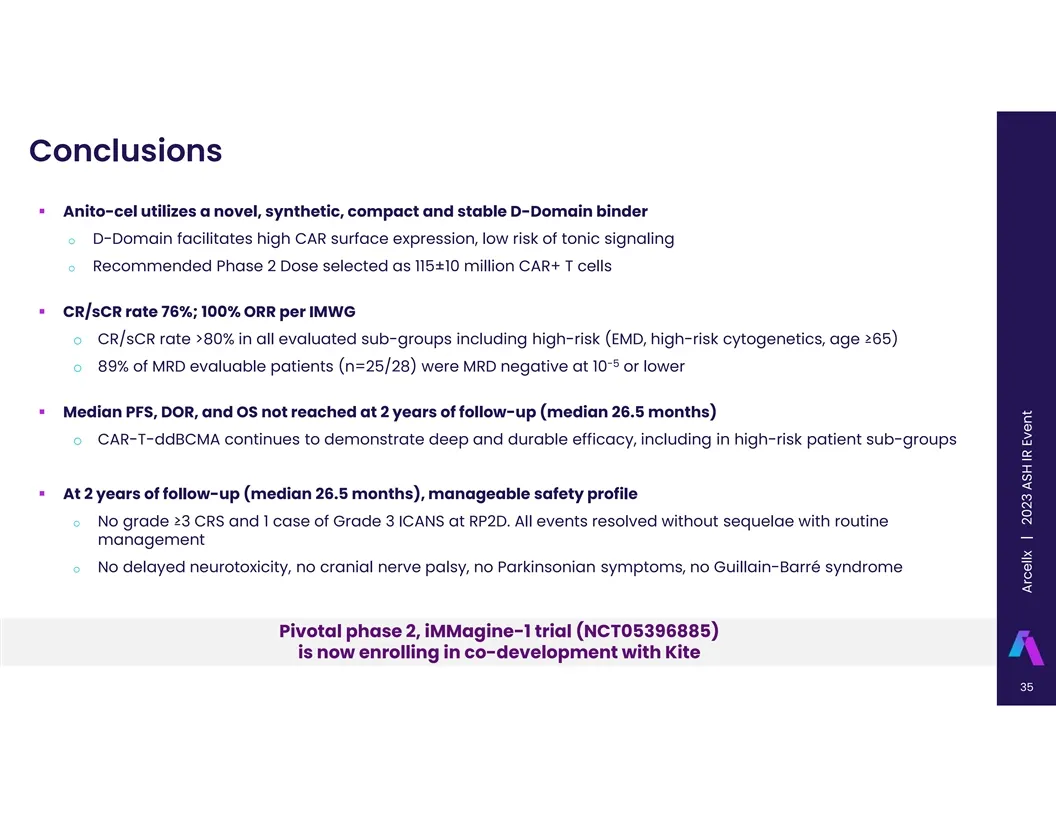
Slide 35: Conclusions
Conclusions § Anito-cel utilizes a novel, synthetic, compact and stable D-Domain binder o D-Domain facilitates high CAR surface expression, low risk of tonic signaling o Recommended Phase 2 Dose selected as 115±10 million CAR+ T cells § CR/sCR rate 76%; 100% ORR per IMWG o CR/sCR rate >80% in all ev

Slide 36: Arcellx Panel Discussion
Arcellx Panel Discussion Christopher Heery, Matthew J. Frigault, Krina K. Patel, M.D. M.D., M.S. M.D., M.Sc. Chief Medical Officer, Arcellx iMMagine-1 and ACLX-001 Clinical iMMagine-1 Clinical Study Study Investigator, Clinical Investigator, Associate Director of the Cellular Therapy Professor, Depa

Slide 37: Q&A
Q&A 37 A Arrc c ee llx ll x | 2023 ASH IR Event
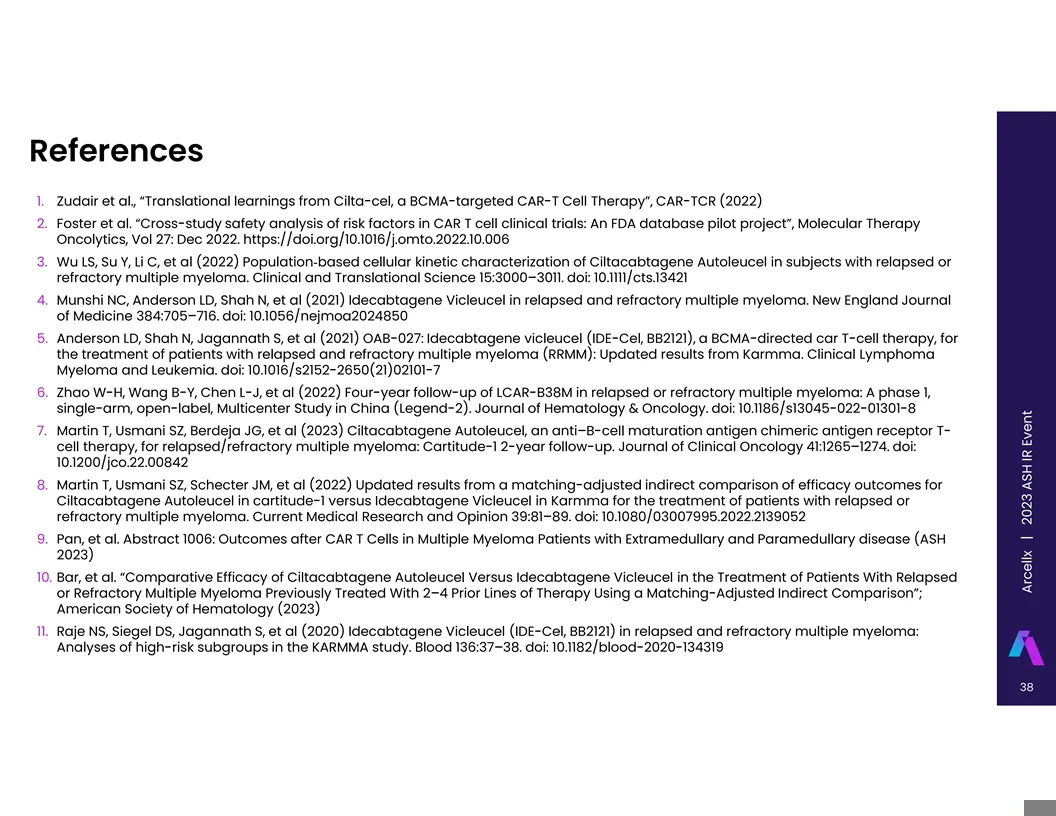
Slide 38: References
References 1. Zudair et al., “Translational learnings from Cilta-cel, a BCMA-targeted CAR-T Cell Therapy”, CAR-TCR (2022) 2. Foster et al. “Cross-study safety analysis of risk factors in CAR T cell clinical trials: An FDA database pilot project”, Molecular Therapy Oncolytics, Vol 27: Dec 2022. https
Source: SEC EDGAR · 8-K filed Dec 12, 2023