Gritstone bio — Gritstone Oncology — 38th Annual J.P. Morgan Healthcare Conference (January 2020)
47 slides from Gritstone bio's conference presentation, Jan 13, 2020

Slide 1: 38th Annual J.P. Morgan Healthcare Conference
38th Annual J.P. Morgan Healthcare Conference JANUARY 16, 2020 Gritstone Exhibit 99.1
Slide 2: Safe Harbor and Forward-Looking Statements
This presentation contains forward-looking statements including, but not limited to, statements related to our preclinical and clinical product candidates, GRANITE, SLATE, and our bispecific antibody program. All statements other than statements of historical facts contained in this presentation, in
Slide 3: Executive Summary
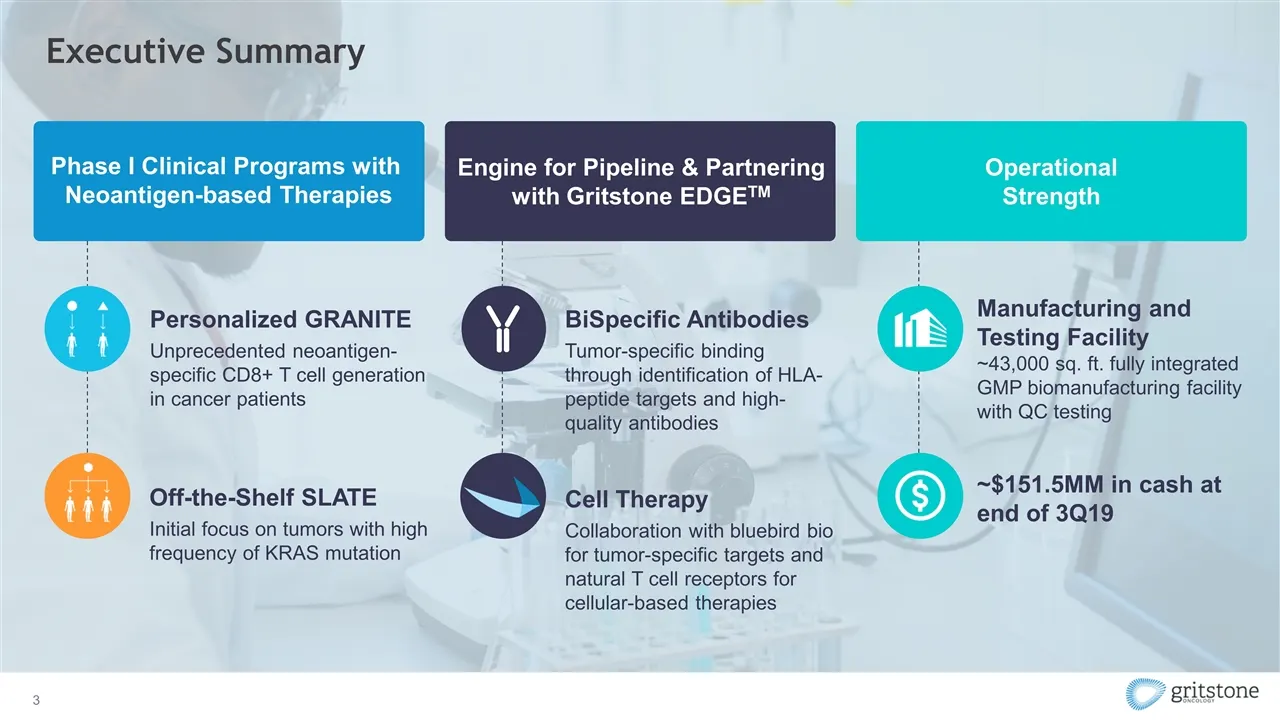
Phase I Clinical Programs with Neoantigen-based Therapies Operational Strength Engine for Pipeline & Partnering with Gritstone EDGETM ~$151.5MM in cash at end of 3Q19 Personalized GRANITE Unprecedented neoantigen-specific CD8+ T cell generation in cancer patients Off-the-Shelf SLATE Initial focus on
Slide 4: Tumor Neoantigens are Specific to Tumors and Readily Recognized by Normal T Cells
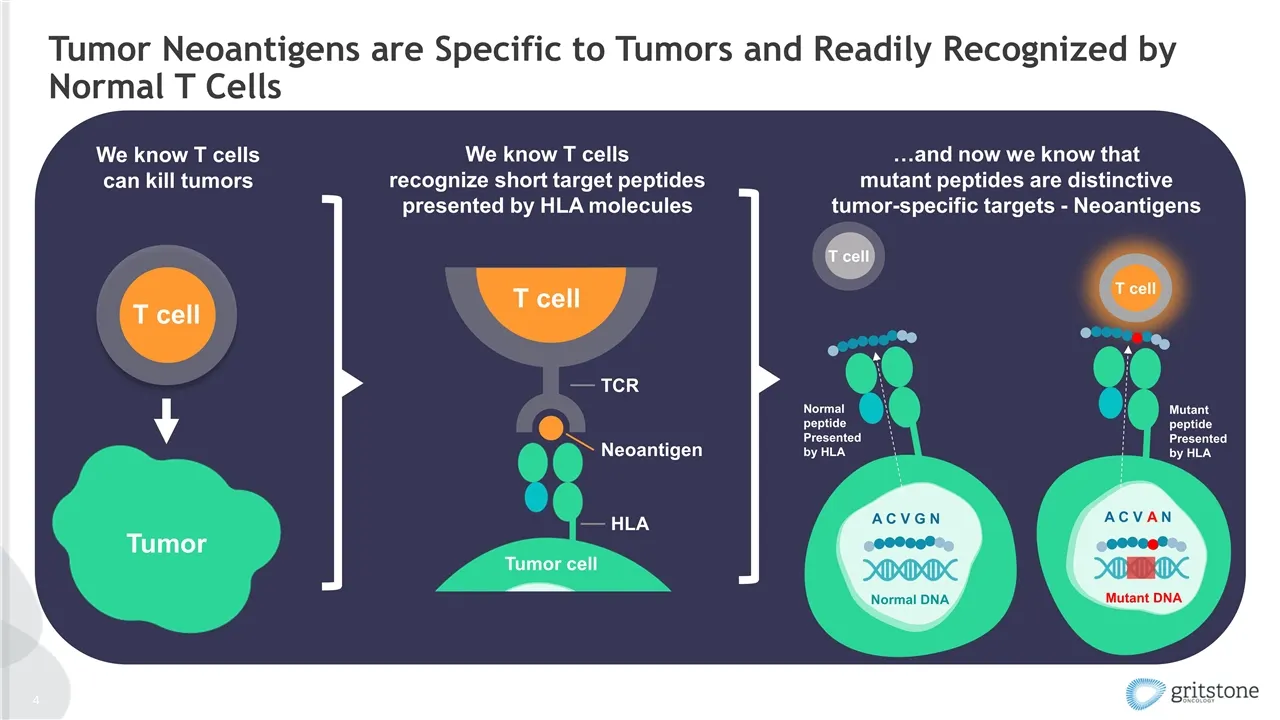
Tumor Neoantigens are Specific to Tumors and Readily Recognized by Normal T Cells We know T cells recognize short target peptides presented by HLA molecules We know T cells can kill tumors …and now we know that mutant peptides are distinctive tumor-specific targets - Neoantigens T cell Tumor HLA Neo
Slide 5: Many Solid Tumor Patients Lack Neoantigen-Specific T Cells
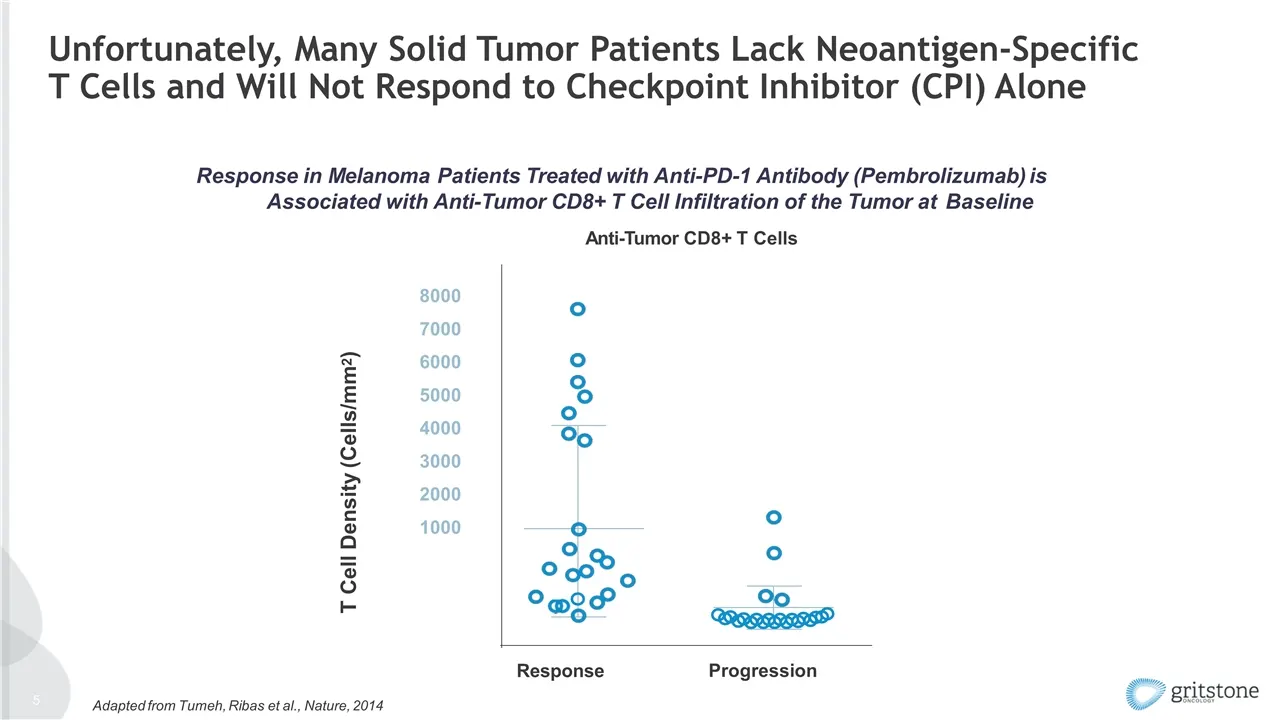
Unfortunately, Many Solid Tumor Patients Lack Neoantigen-Specific T Cells and Will Not Respond to Checkpoint Inhibitor (CPI) Alone Response in Melanoma Patients Treated with Anti-PD-1 Antibody (Pembrolizumab) is Associated with Anti-Tumor CD8+ T Cell Infiltration of the Tumor at Baseline Adapted fro
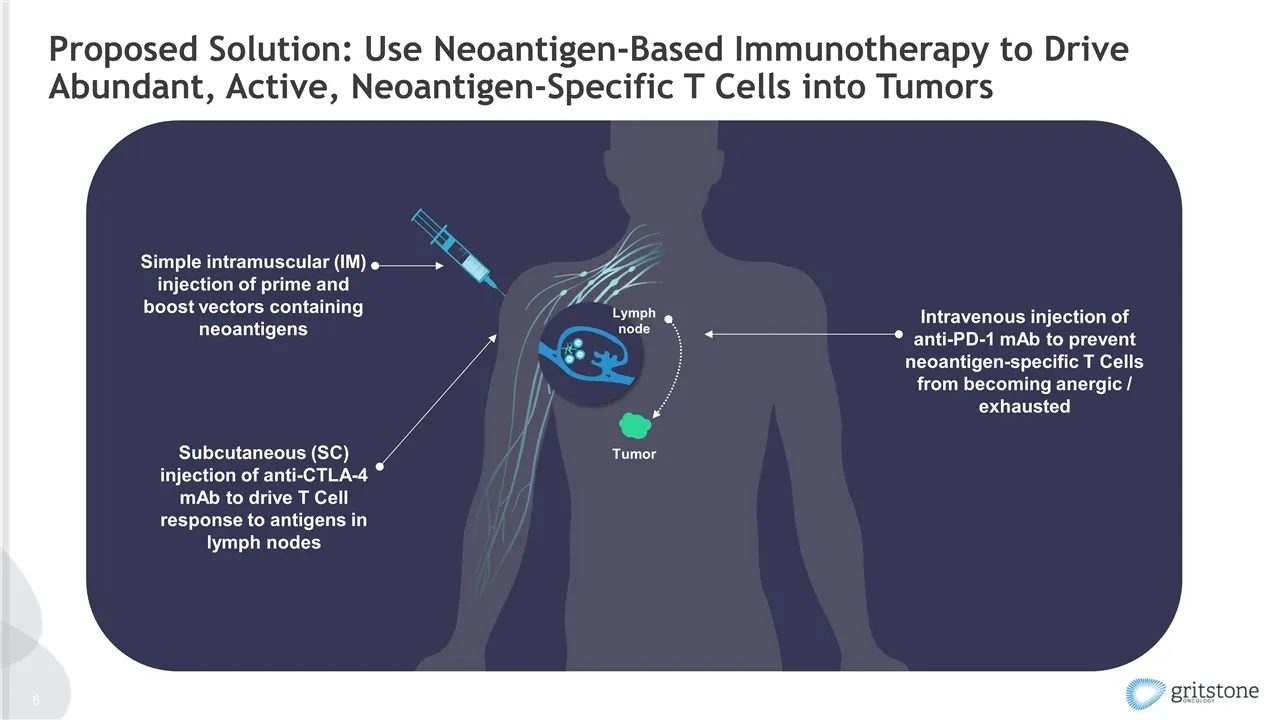
Slide 6: Proposed Solution: Neoantigen-Based Immunotherapy to Drive Neoantigen-Specific T Cells into Tumors
Proposed Solution: Use Neoantigen-Based Immunotherapy to Drive Abundant, Active, Neoantigen-Specific T Cells into Tumors Simple intramuscular (IM) injection of prime and boost vectors containing neoantigens Subcutaneous (SC) injection of anti-CTLA-4 mAb to drive T Cell response to antigens in lymph
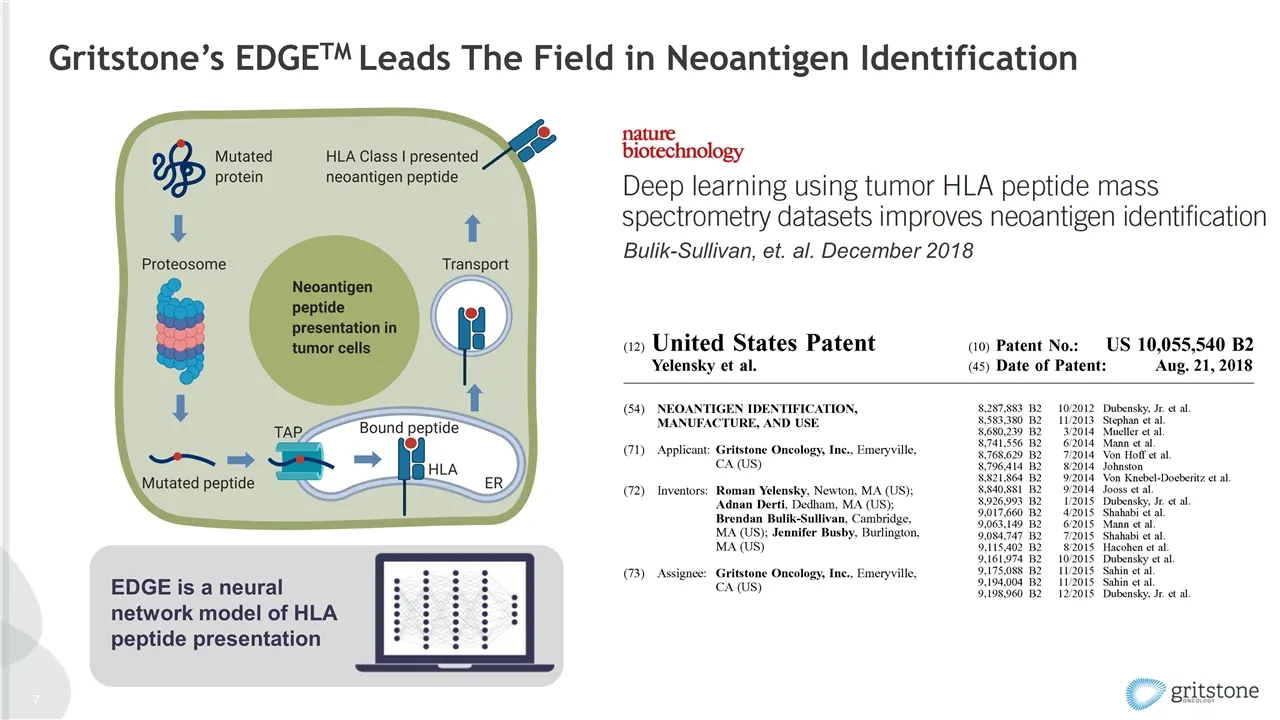
Slide 7: Gritstone's EDGE Leads The Field in Neoantigen Identification
Gritstone’s EDGETM Leads The Field in Neoantigen Identification EDGE is a neural network model of HLA peptide presentation Bulik-Sullivan, et. al. December 2018
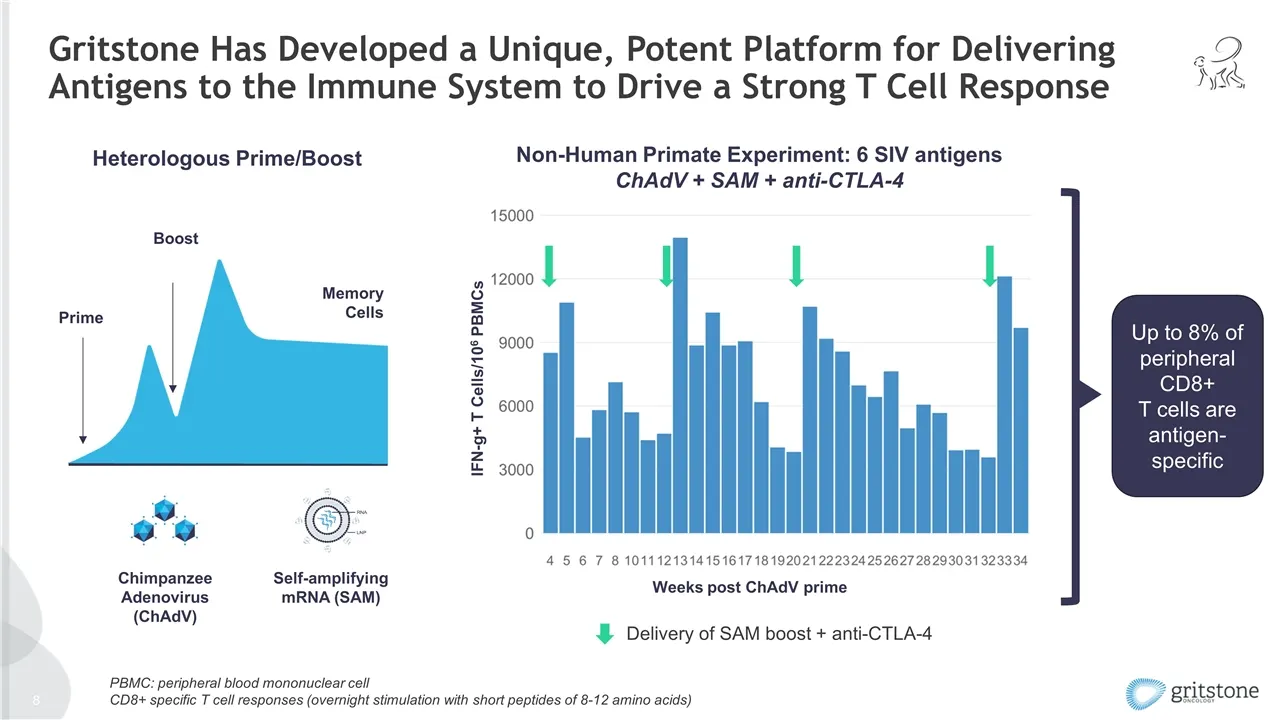
Slide 8: Unique, Potent Platform for Delivering Antigens to the Immune System
Gritstone Has Developed a Unique, Potent Platform for Delivering Antigens to the Immune System to Drive a Strong T Cell Response Non-Human Primate Experiment: 6 SIV antigens ChAdV + SAM + anti-CTLA-4 PBMC: peripheral blood mononuclear cell CD8+ specific T cell responses (overnight stimulation with s
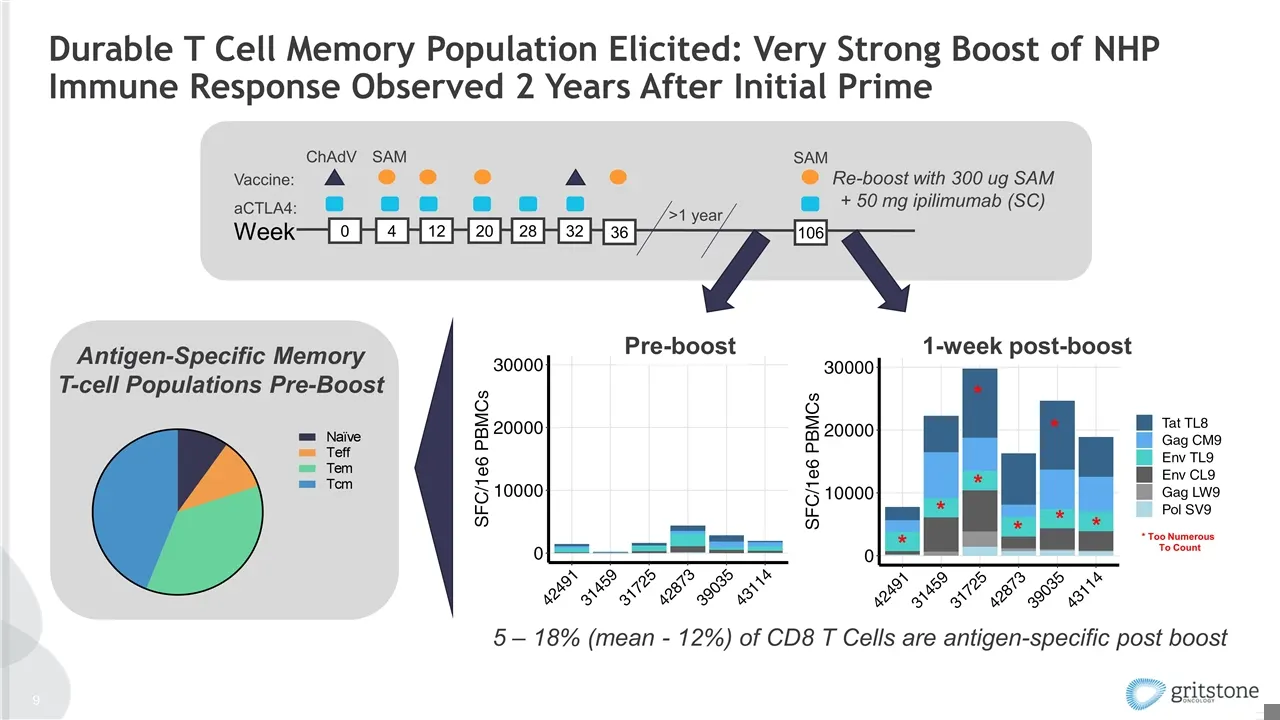
Slide 9: Durable T Cell Memory Population Elicited in NHP
Durable T Cell Memory Population Elicited: Very Strong Boost of NHP Immune Response Observed 2 Years After Initial Prime Pre-boost 1-week post-boost * * * * * * * * * Too Numerous To Count 5 – 18% (mean - 12%) of CD8 T Cells are antigen-specific post boost Re-boost with 300 ug SAM + 50 mg ipilimumab

Slide 10: GRANITE
GRANITE
Slide 11: Unique Neoantigens Enabling Personalized Immunotherapy
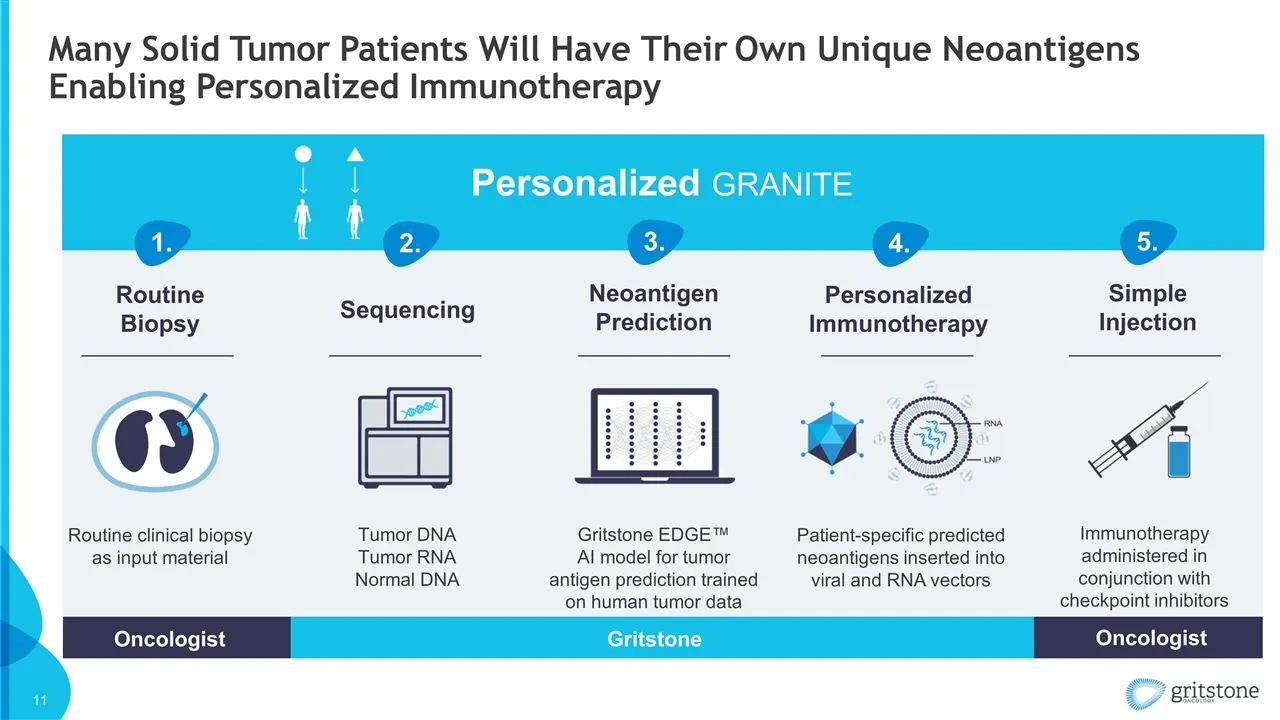
Many Solid Tumor Patients Will Have Their Own Unique Neoantigens Enabling Personalized Immunotherapy Routine FFPE clinical biopsy as input material Tumor exome Normal exome Tumor transcriptome Oncologist Gritstone Oncologist Routine Biopsy Sequencing Neoantigen Prediction Personalized Immunotherapy
Slide 12: GRANITE Phase 1: Dosing, Safety and Immunogenicity
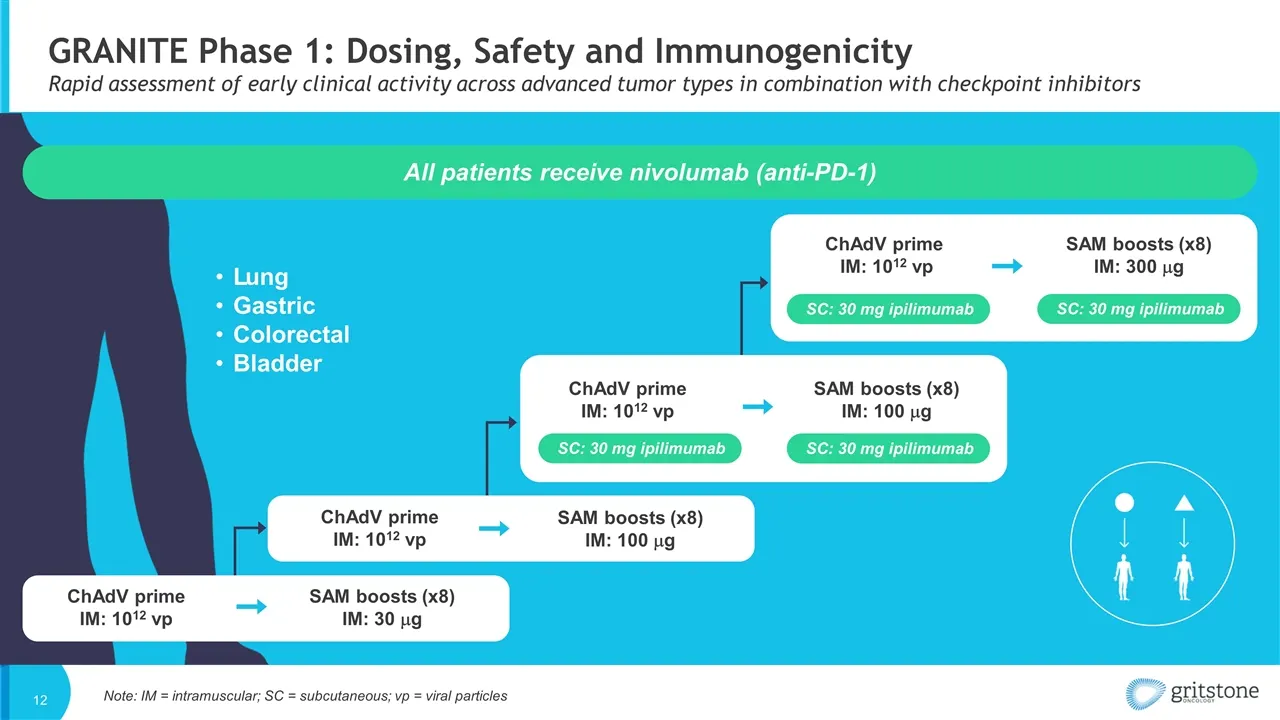
ChAdV prime IM: 1012 vp SAM boosts (x8) IM: 30 mg ChAdV prime IM: 1012 vp SAM boosts (x8) IM: 100 mg ChAdV prime IM: 1012 vp SAM boosts (x8) IM: 100 mg Note: IM = intramuscular; SC = subcutaneous; vp = viral particles ChAdV prime IM: 1012 vp SAM boosts (x8) IM: 300 mg SC: 30 mg ipilimumab SC: 30 mg
Slide 13: GRANITE Prime/Boost with Nivolumab is Well Tolerated
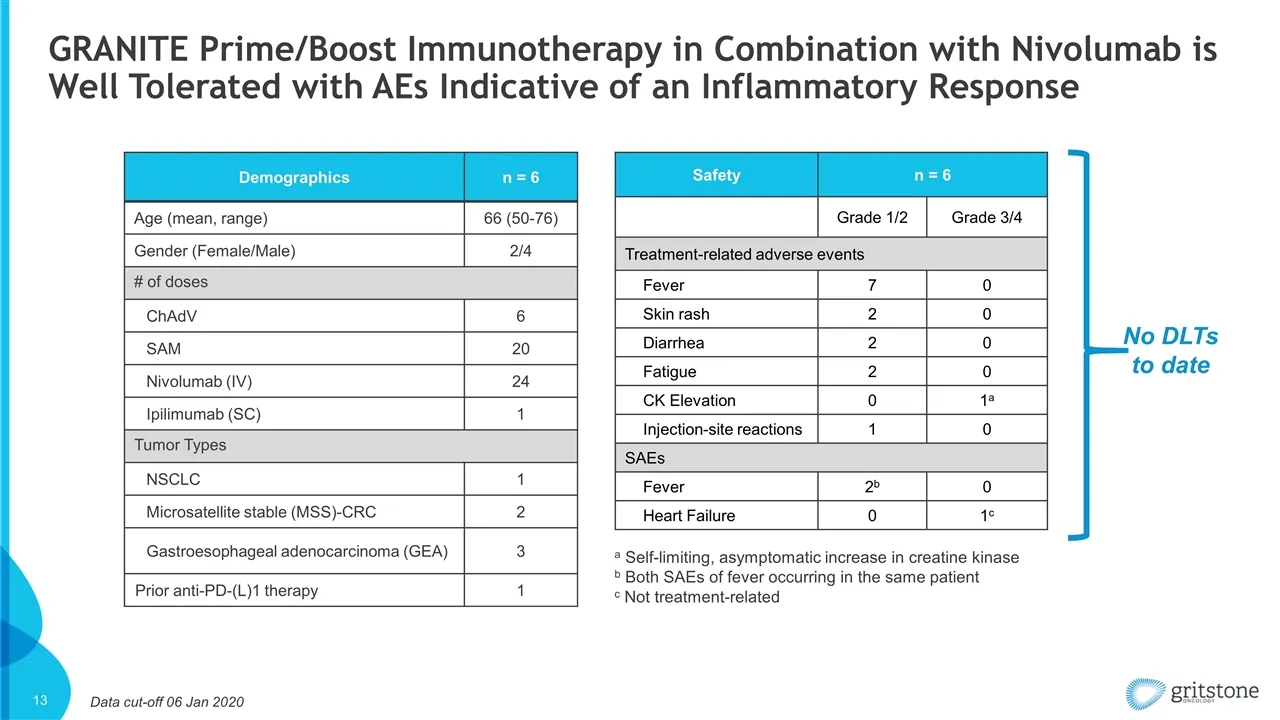
GRANITE Prime/Boost Immunotherapy in Combination with Nivolumab is Well Tolerated with AEs Indicative of an Inflammatory Response Demographics n = 6 Age (mean, range) 66 (50-76) Gender (Female/Male) 2/4 # of doses ChAdV 6 SAM 20 Nivolumab (IV) 24 Ipilimumab (SC) 1 Tumor Types NSCLC 1 Microsatellite
Slide 14: Priming with ChAdV Induces Rapid CD8+ T Cell Response
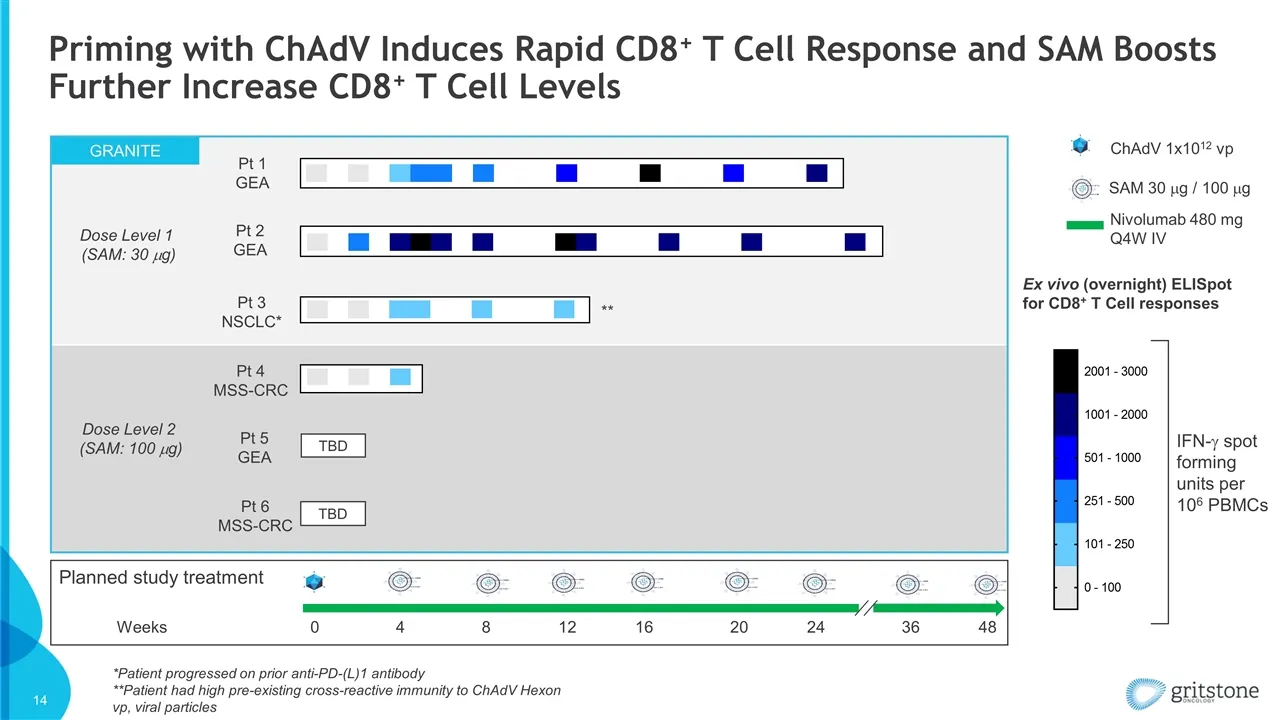
Priming with ChAdV Induces Rapid CD8+ T Cell Response and SAM Boosts Further Increase CD8+ T Cell Levels ChAdV 1x10¹² vp SAM 30 mg / 100 mg Nivolumab 480 mg Q4W IV Ex vivo (overnight) ELISpot for CD8+ T Cell responses IFN-g spot forming units per 106 PBMCs Weeks 0 4 8 12 16 20 24 36 48 Planned study
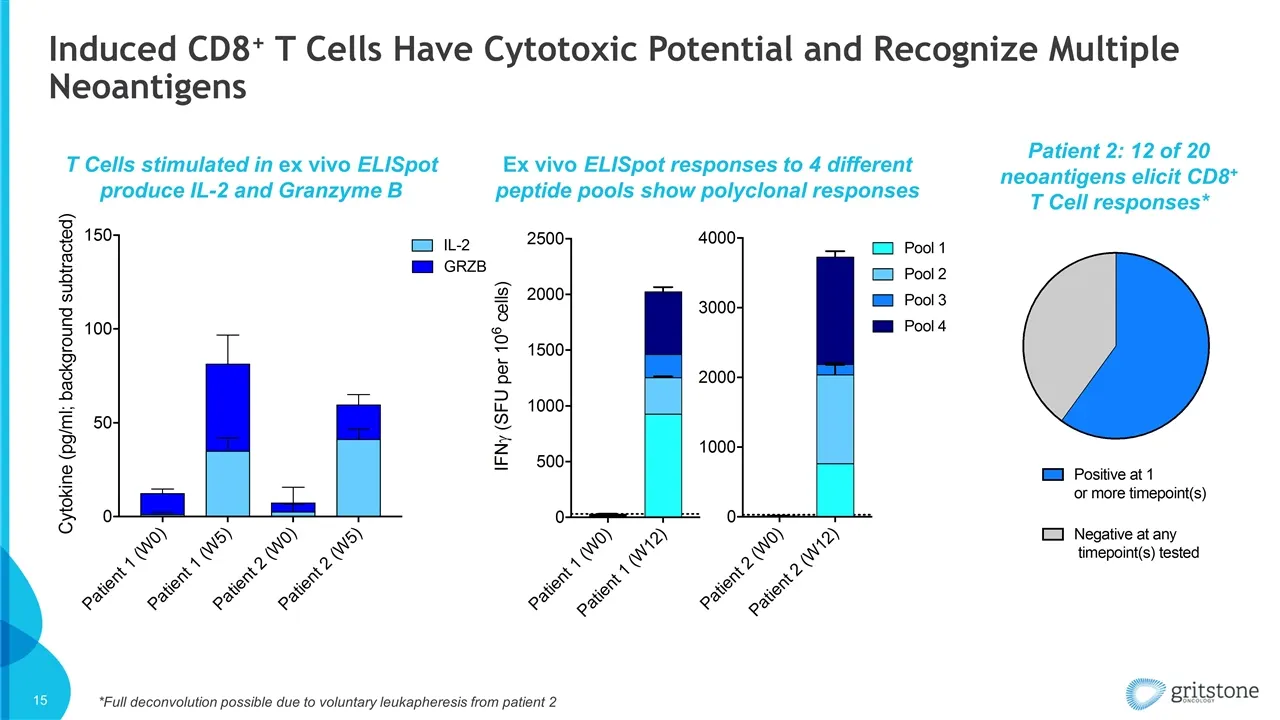
Slide 15: Induced CD8+ T Cells Have Cytotoxic Potential and Recognize Multiple Neoantigens
Induced CD8+ T Cells Have Cytotoxic Potential and Recognize Multiple Neoantigens T Cells stimulated in ex vivo ELISpot produce IL-2 and Granzyme B Ex vivo ELISpot responses to 4 different peptide pools show polyclonal responses Patient 2: 12 of 20 neoantigens elicit CD8+ T Cell responses* *Full deco
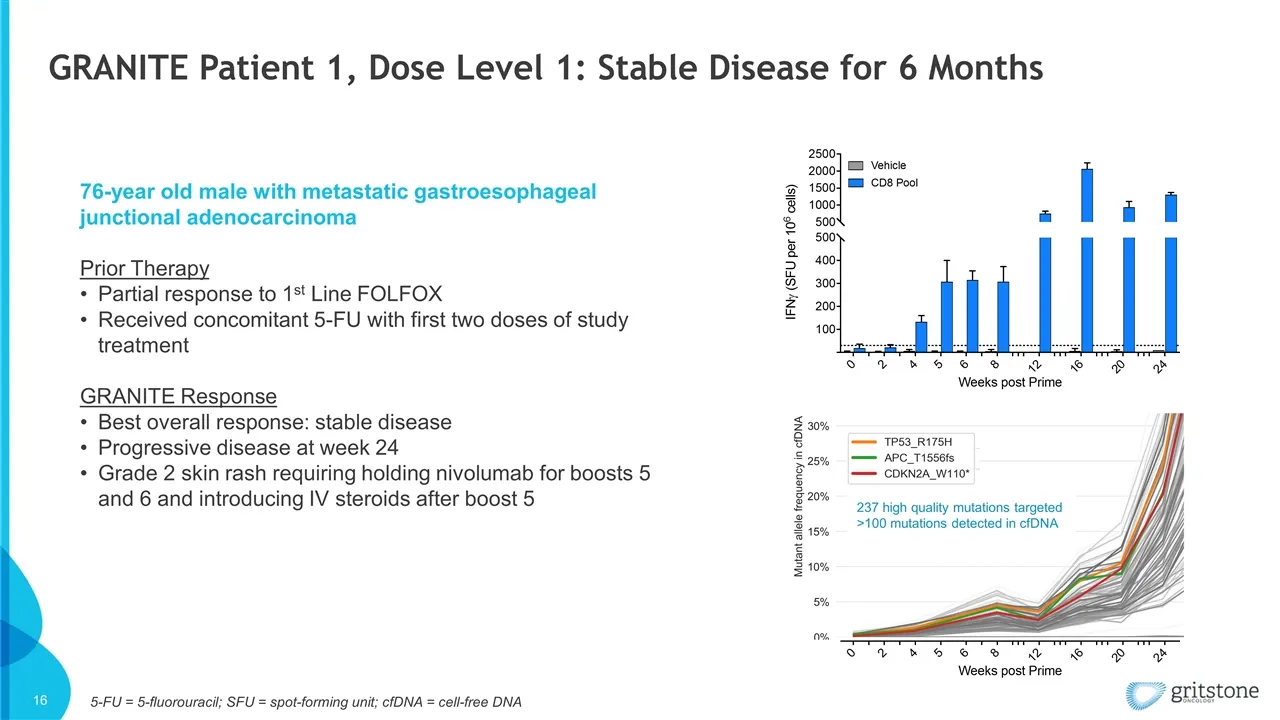
Slide 16: GRANITE Patient 1, Dose Level 1: Stable Disease for 6 Months
76-year old male with metastatic gastroesophageal junctional adenocarcinoma Prior Therapy Partial response to 1st Line FOLFOX Received concomitant 5-FU with first two doses of study treatment GRANITE Response Best overall response: stable disease Progressive disease at week 24 Grade 2 skin rash requ
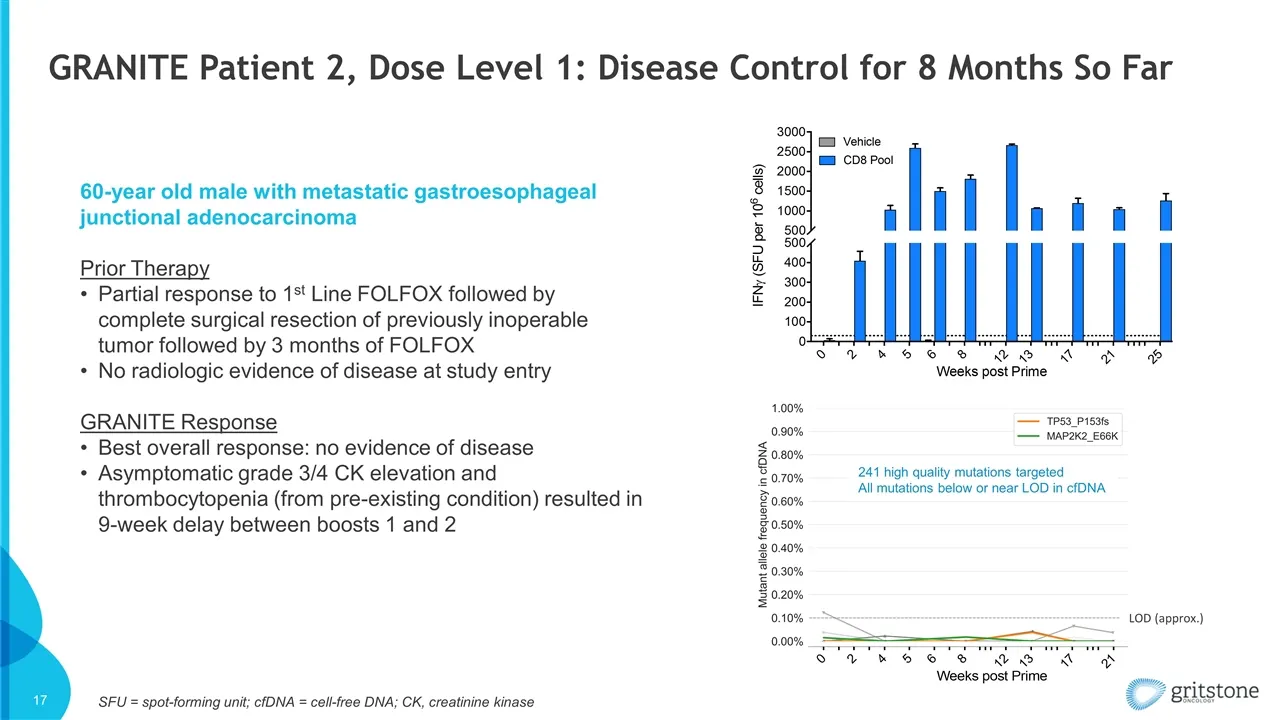
Slide 17: GRANITE Patient 2, Dose Level 1: Disease Control for 8 Months So Far
241 high quality mutations targeted All mutations below or near LOD in cfDNA GRANITE Patient 2, Dose Level 1: Disease Control for 8 Months So Far SFU = spot-forming unit; cfDNA = cell-free DNA; CK, creatinine kinase 60-year old male with metastatic gastroesophageal junctional adenocarcinoma Prior Th
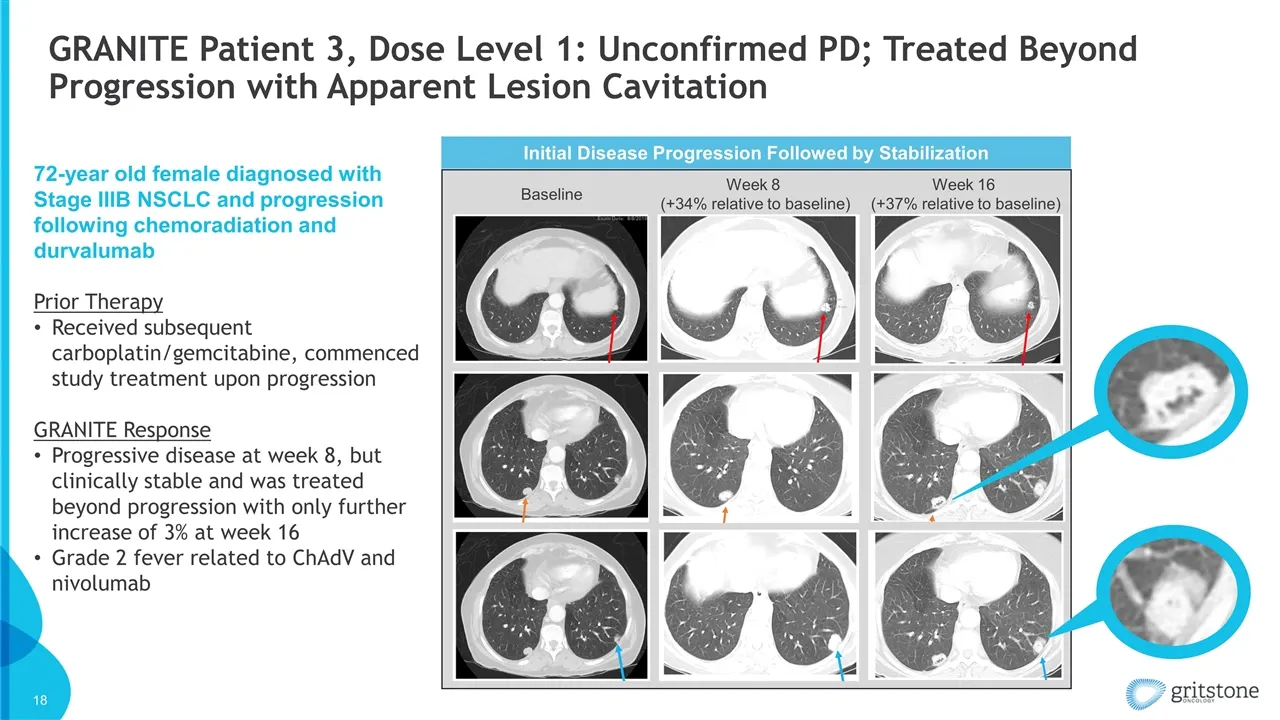
Slide 18: GRANITE Patient 3, Dose Level 1: Unconfirmed PD
72-year old female diagnosed with Stage IIIB NSCLC and progression following chemoradiation and durvalumab Prior Therapy Received subsequent carboplatin/gemcitabine, commenced study treatment upon progression GRANITE Response Progressive disease at week 8, but clinically stable and was treated beyon
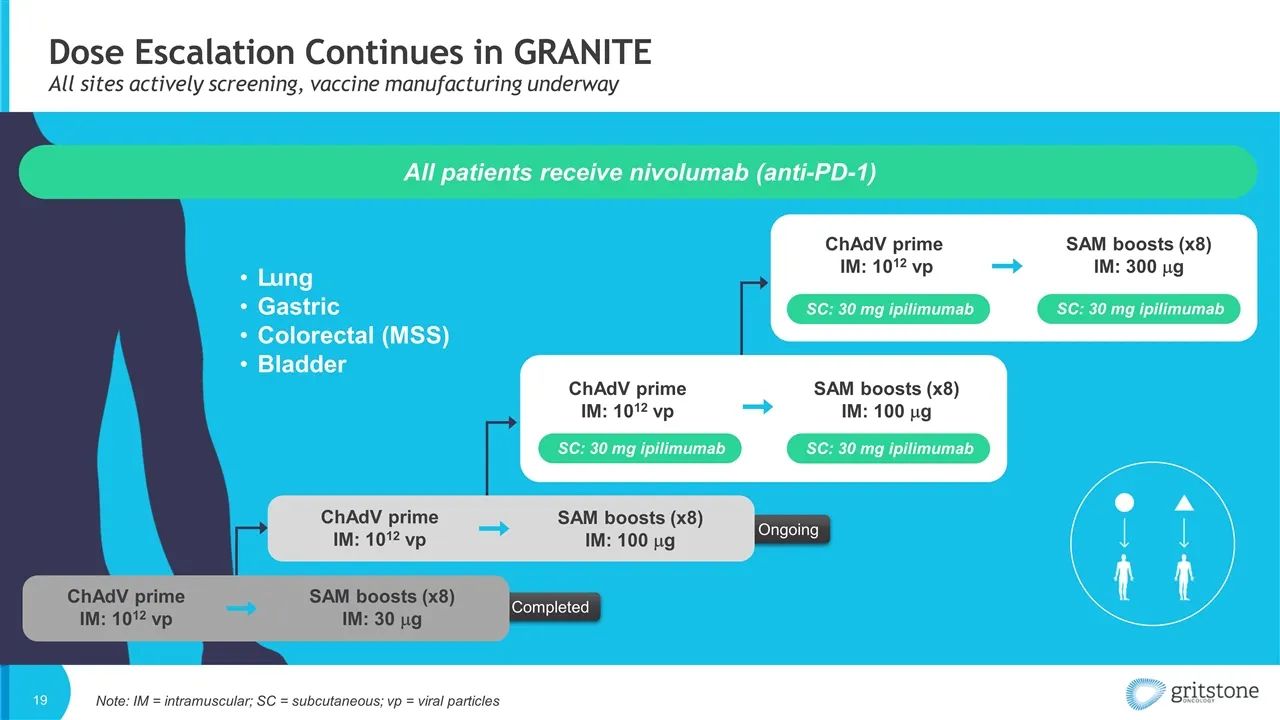
Slide 19: Dose Escalation Continues in GRANITE
ChAdV prime IM: 1012 vp SAM boosts (x8) IM: 100 mg Note: IM = intramuscular; SC = subcutaneous; vp = viral particles ChAdV prime IM: 1012 vp SAM boosts (x8) IM: 300 mg SC: 30 mg ipilimumab SC: 30 mg ipilimumab SC: 30 mg ipilimumab SC: 30 mg ipilimumab Lung Gastric Colorectal (MSS) Bladder Dose Escal
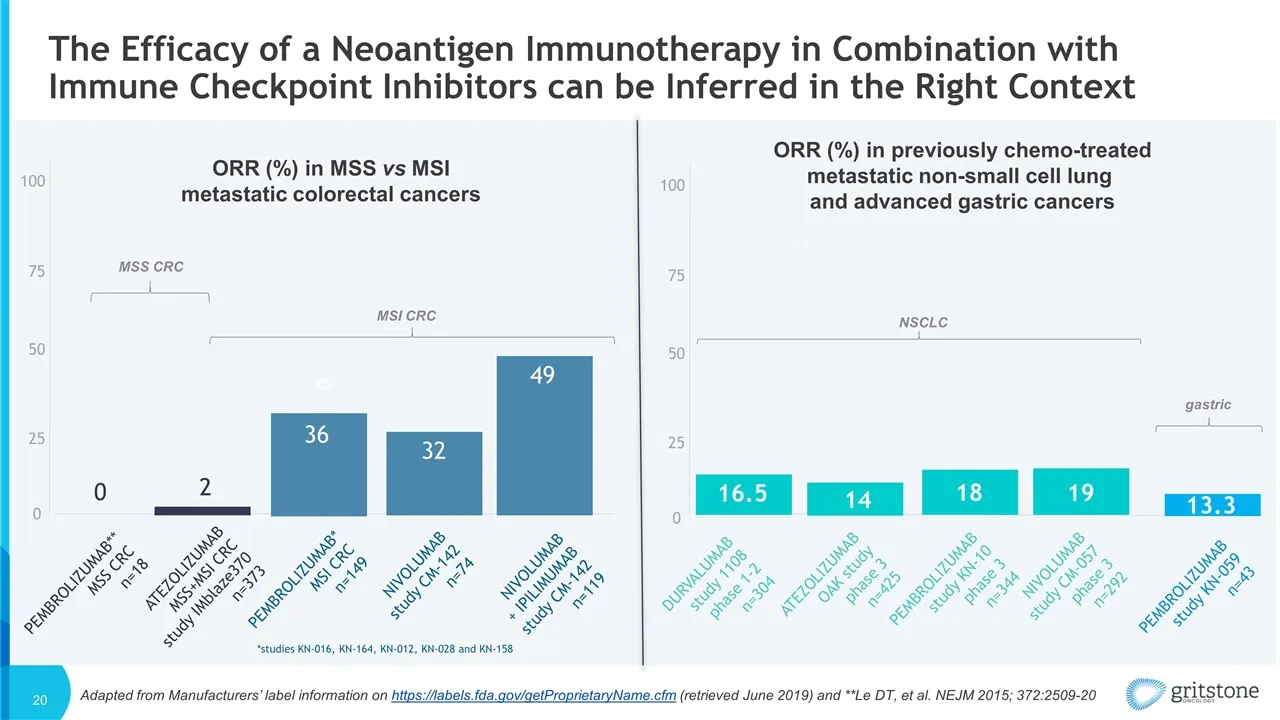
Slide 20: Efficacy of Neoantigen Immunotherapy with Checkpoint Inhibitors Can Be Inferred
The Efficacy of a Neoantigen Immunotherapy in Combination with Immune Checkpoint Inhibitors can be Inferred in the Right Context Adapted from Manufacturers’ label information on https://labels.fda.gov/getProprietaryName.cfm (retrieved June 2019) and **Le DT, et al. NEJM 2015; 372:2509-20 ORR (%) in
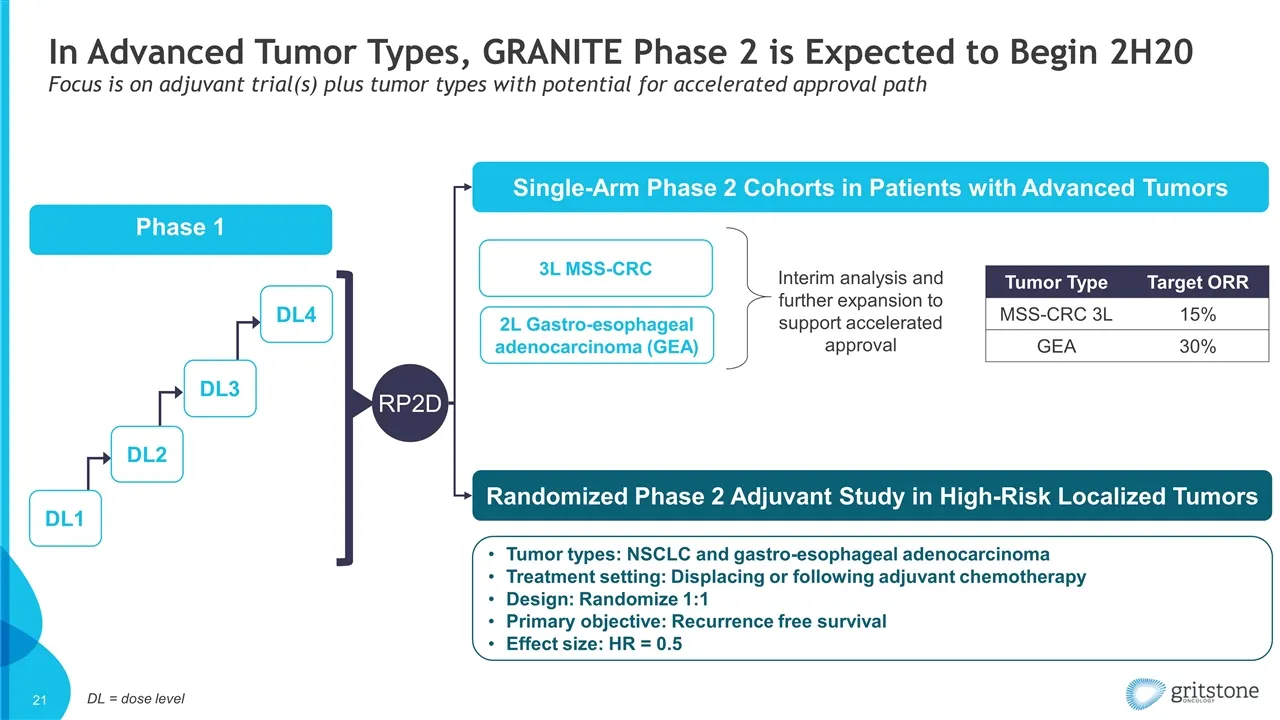
Slide 21: Single-Arm Phase Cohorts in Patients with Advanced Tumors
Single-Arm Phase 2 Cohorts in Patients with Advanced Tumors 3L MSS-CRC Phase 1 2L Gastro-esophageal adenocarcinoma (GEA) DL4 DL1 DL2 DL3 Tumor Type Target ORR MSS-CRC 3L 15% GEA 30% In Advanced Tumor Types, GRANITE Phase 2 is Expected to Begin 2H20 Interim analysis and further expansion to support a
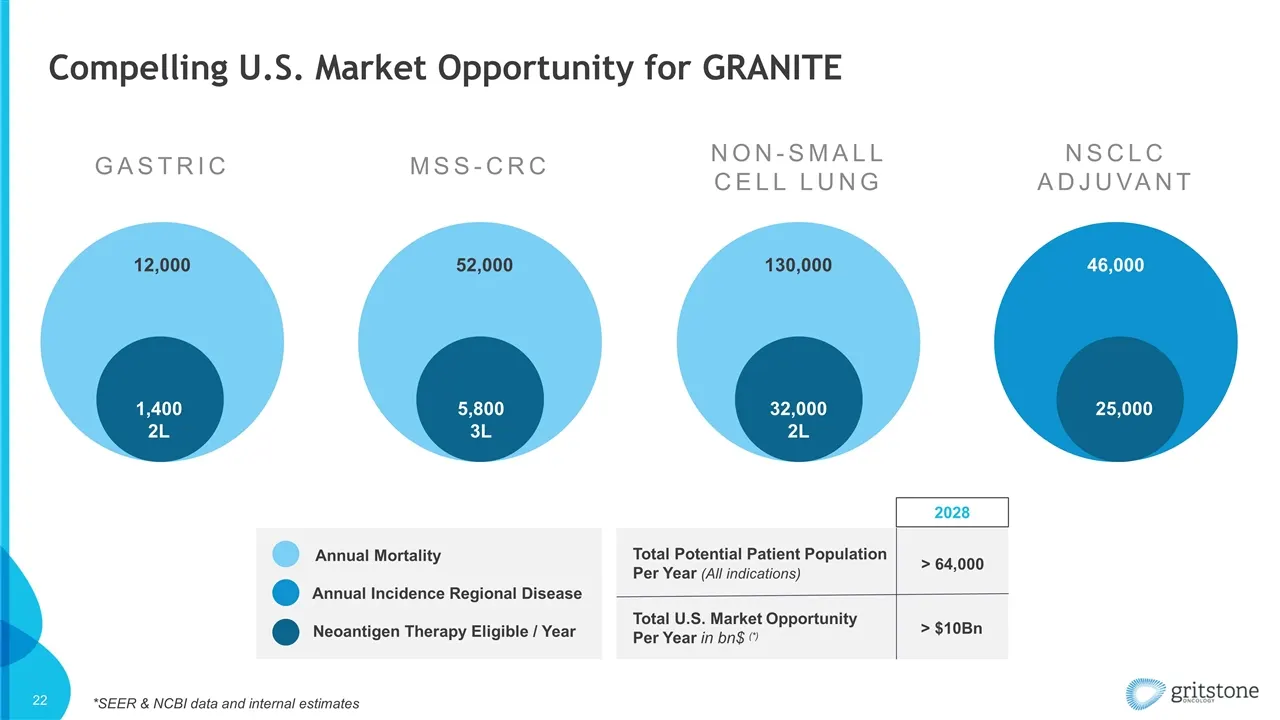
Slide 22: Compelling U.S. Market Opportunity for GRANITE
Compelling U.S. Market Opportunity for GRANITE Total Potential Patient Population Per Year (All indications) Total U.S. Market Opportunity Per Year in bn$ (*) > 64,000 > $10Bn GASTRIC MSS-CRC NON-SMALL CELL LUNG NSCLC ADJUVANT 12,000 2028 52,000 130,000 46,000 32,000 2L 25,000 5,800 3L 1,400 2L Annu

Slide 23: SLATE
SLATE
Slide 24: SLATE Delivers Shared Neoantigens Using Gritstone's Prime/Boost Platform
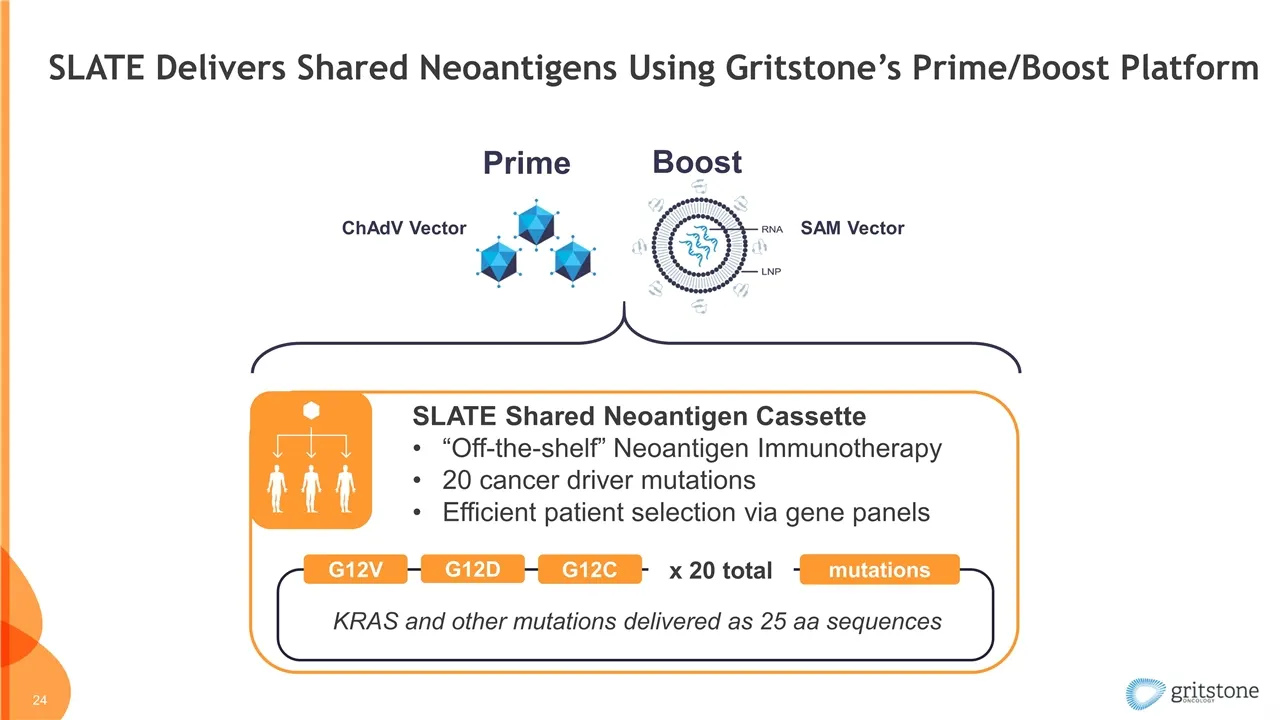
G12V SLATE Shared Neoantigen Cassette “Off-the-shelf” Neoantigen Immunotherapy 20 cancer driver mutations Efficient patient selection via gene panels SLATE Delivers Shared Neoantigens Using Gritstone’s Prime/Boost Platform SAM Vector ChAdV Vector Prime Boost G12D G12C mutations x 20 total KRAS and o
Slide 25: SLATE Product Concept
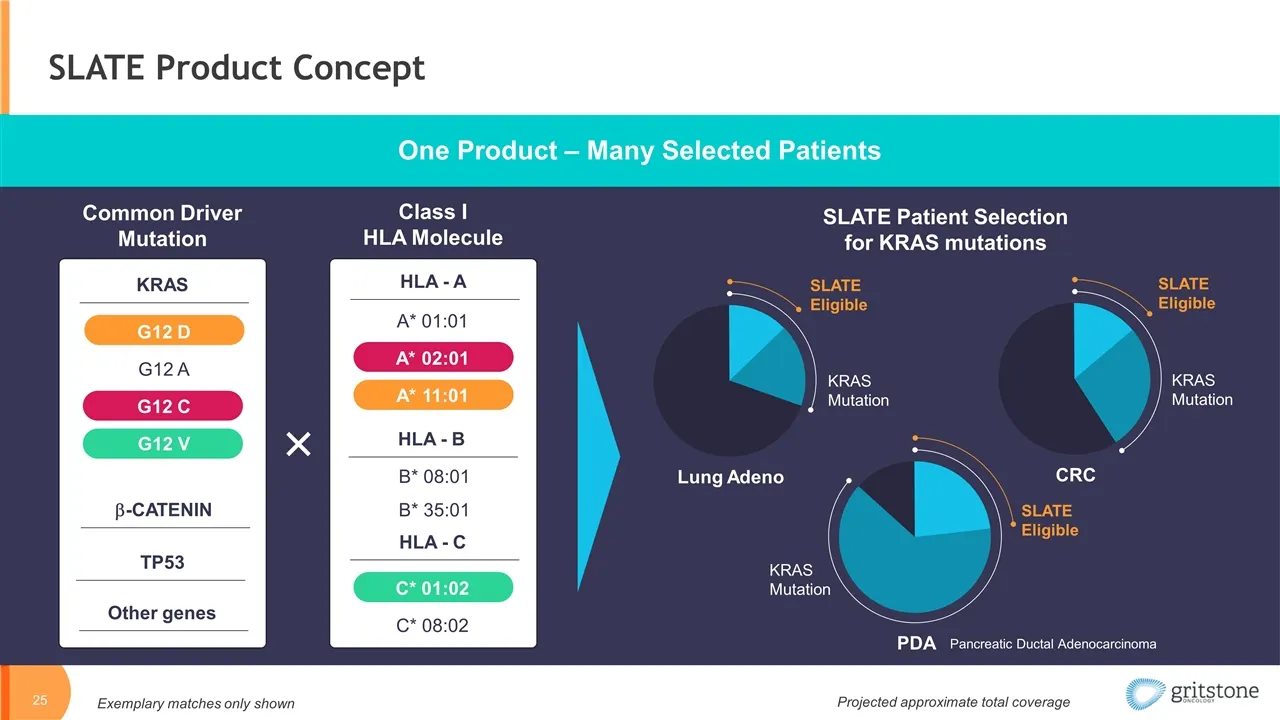
SLATE Product Concept One Product – Many Selected Patients Common Driver Mutation Class I HLA Molecule KRAS b-CATENIN G12 D G12 A G12 C G12 V HLA - A A* 01:01 A* 02:01 A* 11:01 HLA - B HLA - C C* 01:02 C* 08:02 B* 08:01 B* 35:01 SLATE Patient Selection for KRAS mutations Lung Adeno SLATE Eligible KR
Slide 26: SLATE Phase 1: Dosing, Safety and Immunogenicity
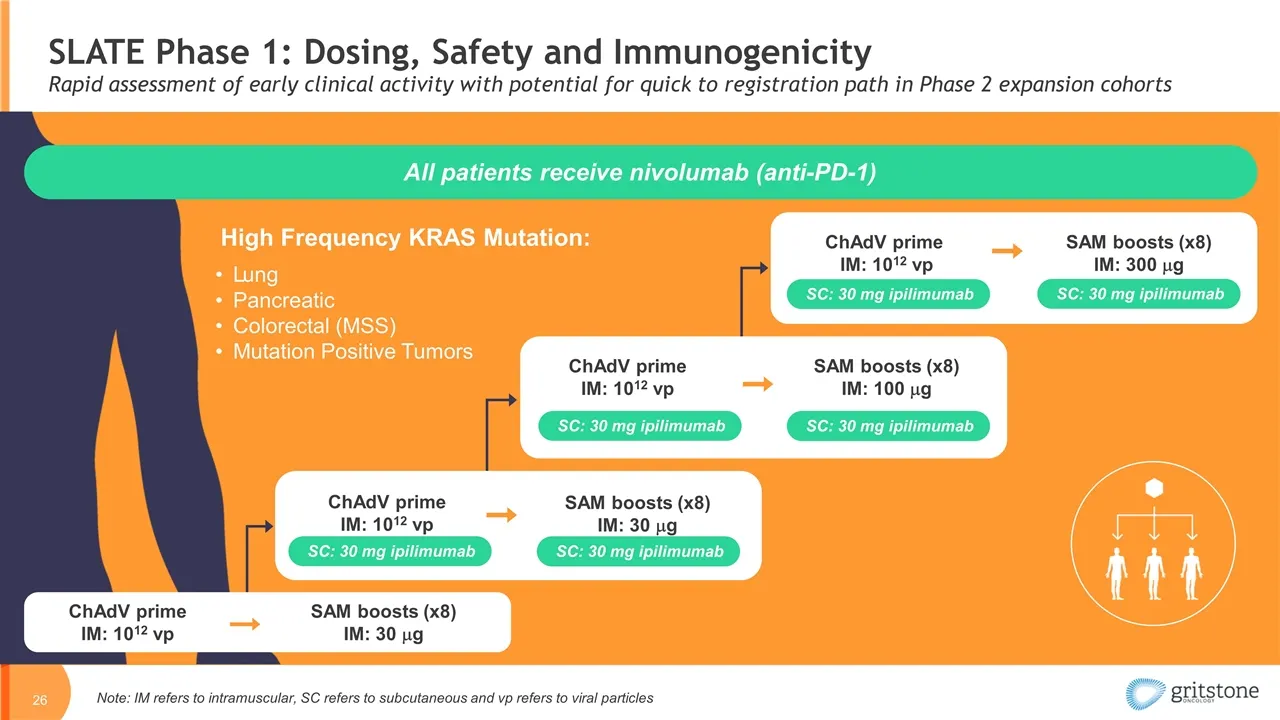
ChAdV prime IM: 1012 vp SAM boosts (x8) IM: 30 mg ChAdV prime IM: 1012 vp SAM boosts (x8) IM: 100 mg Note: IM refers to intramuscular, SC refers to subcutaneous and vp refers to viral particles ChAdV prime IM: 1012 vp SAM boosts (x8) IM: 300 mg SC: 30 mg ipilimumab SC: 30 mg ipilimumab SC: 30 mg ipi
Slide 27: SLATE Prime/Boost with Nivolumab and Ipilimumab Well Tolerated To Date
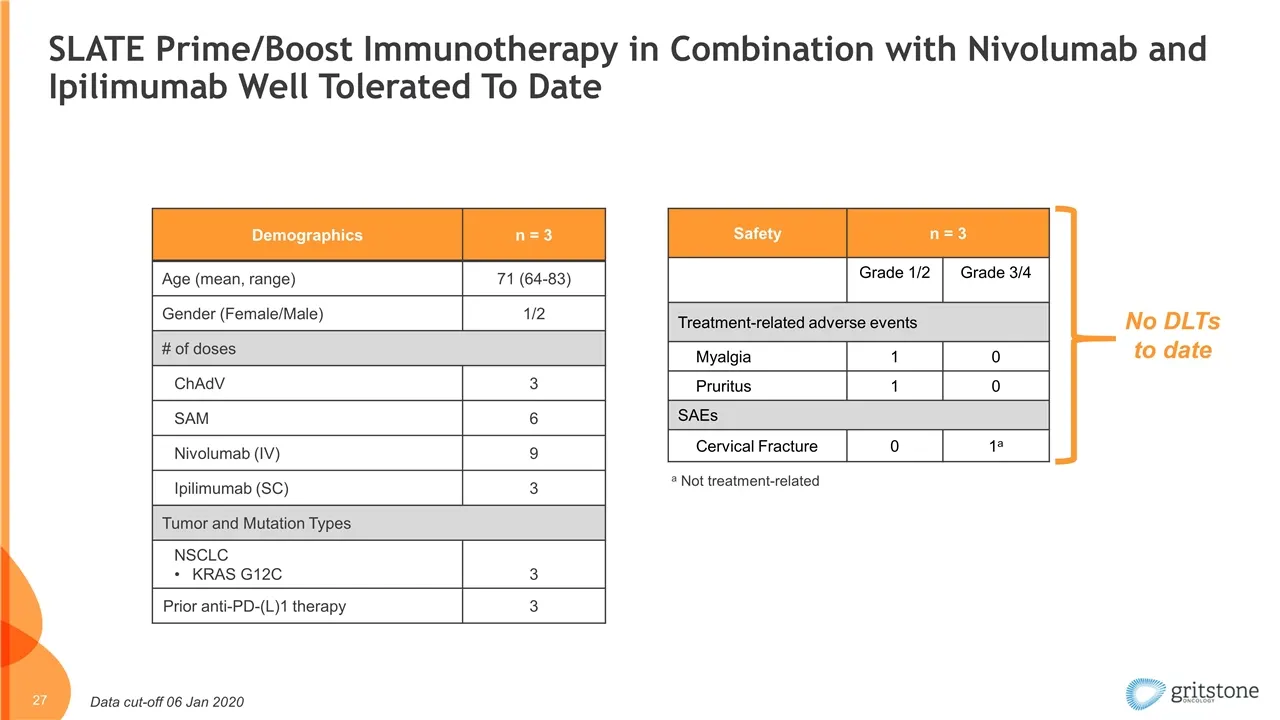
SLATE Prime/Boost Immunotherapy in Combination with Nivolumab and Ipilimumab Well Tolerated To Date Demographics n = 3 Age (mean, range) 71 (64-83) Gender (Female/Male) 1/2 # of doses ChAdV 3 SAM 6 Nivolumab (IV) 9 Ipilimumab (SC) 3 Tumor and Mutation Types NSCLC KRAS G12C 3 Prior anti-PD-(L)1 thera
Slide 28: SLATE: Single Neoantigen Capable of Driving Strong CD8+ T Cell Response
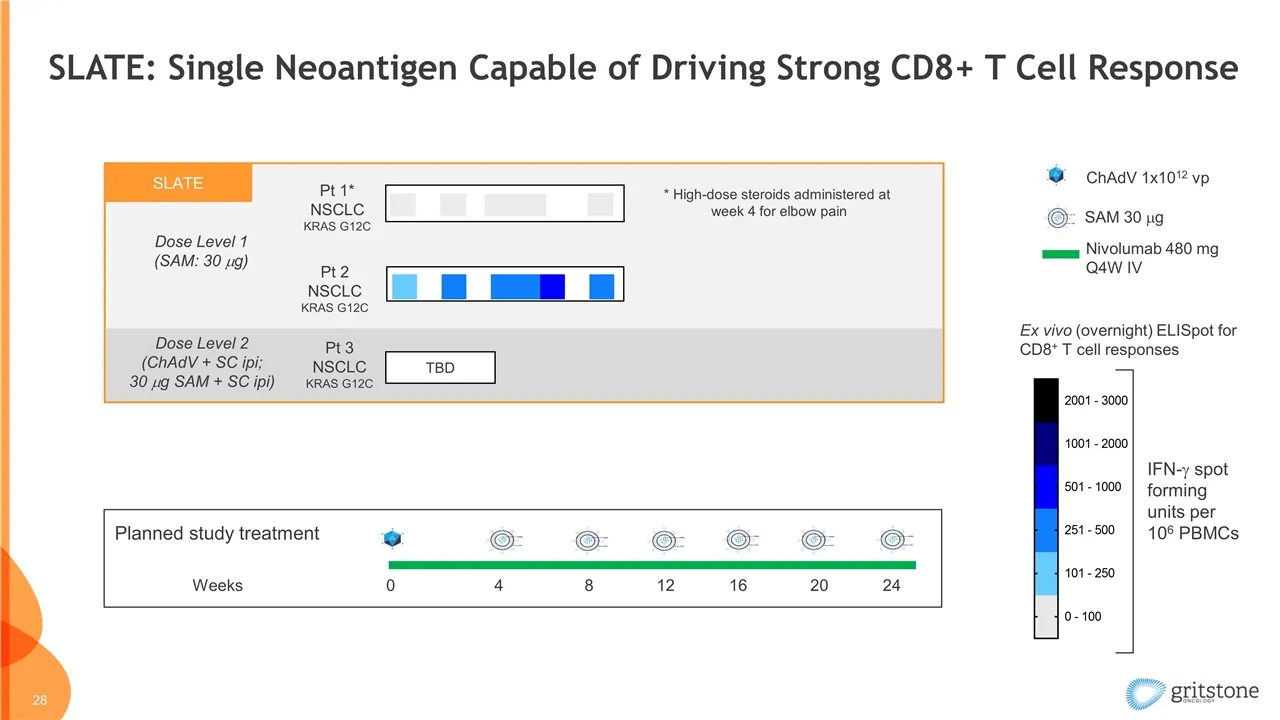
SLATE: Single Neoantigen Capable of Driving Strong CD8+ T Cell Response ChAdV 1x10¹² vp SAM 30 mg Nivolumab 480 mg Q4W IV Ex vivo (overnight) ELISpot for CD8+ T cell responses IFN-g spot forming units per 106 PBMCs Weeks 0 4 8 12 16 20 24 Planned study treatment Pt 1* NSCLC KRAS G12C Pt 2 NSCLC KRAS
Slide 29: SLATE Patient 2, Dose Level 1: ChAdV Prime Induces Strong CD8+ T Cell Responses
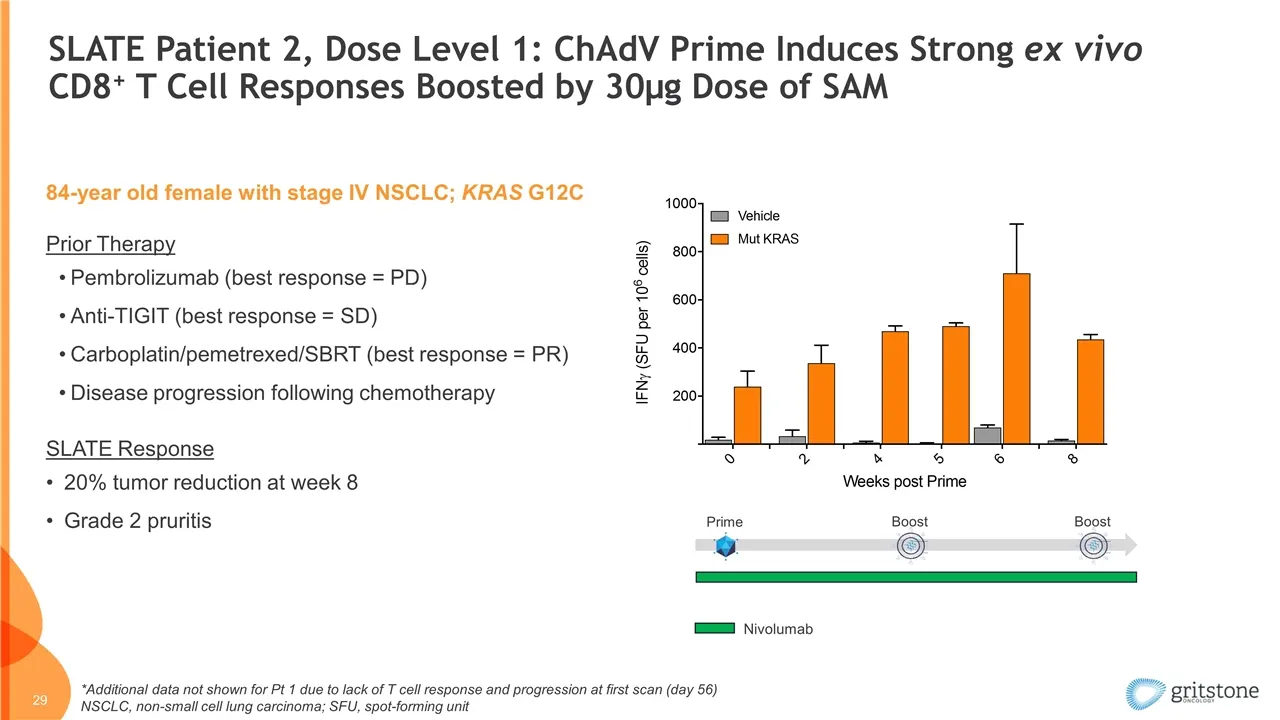
84-year old female with stage IV NSCLC; KRAS G12C Prior Therapy Pembrolizumab (best response = PD) Anti-TIGIT (best response = SD) Carboplatin/pemetrexed/SBRT (best response = PR) Disease progression following chemotherapy SLATE Response 20% tumor reduction at week 8 Grade 2 pruritis SLATE Patient 2
Slide 30: SLATE Patient 2, Dose Level 1: ~20% Sustained Tumor Shrinkage
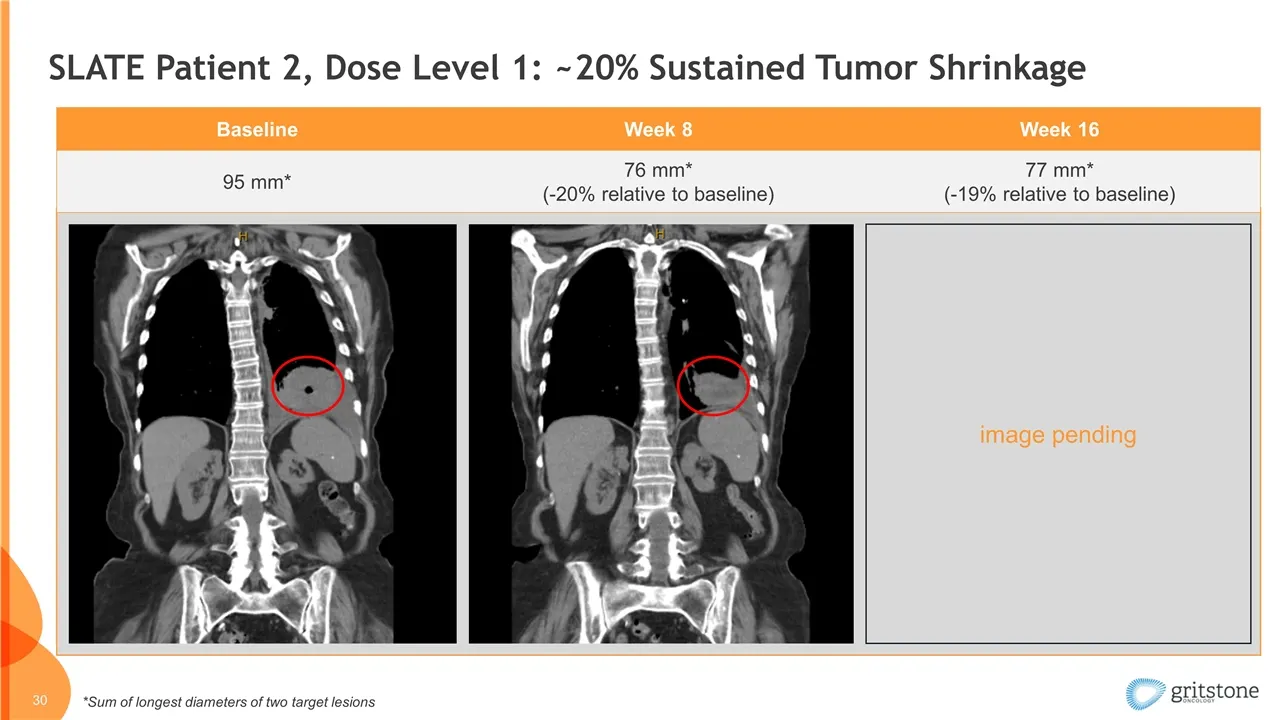
SLATE Patient 2, Dose Level 1: ~20% Sustained Tumor Shrinkage image pending Baseline Week 8 Week 16 95 mm* 76 mm* (-20% relative to baseline) 77 mm* (-19% relative to baseline) *Sum of longest diameters of two target lesions
Slide 31: Dose Escalation Continues in SLATE
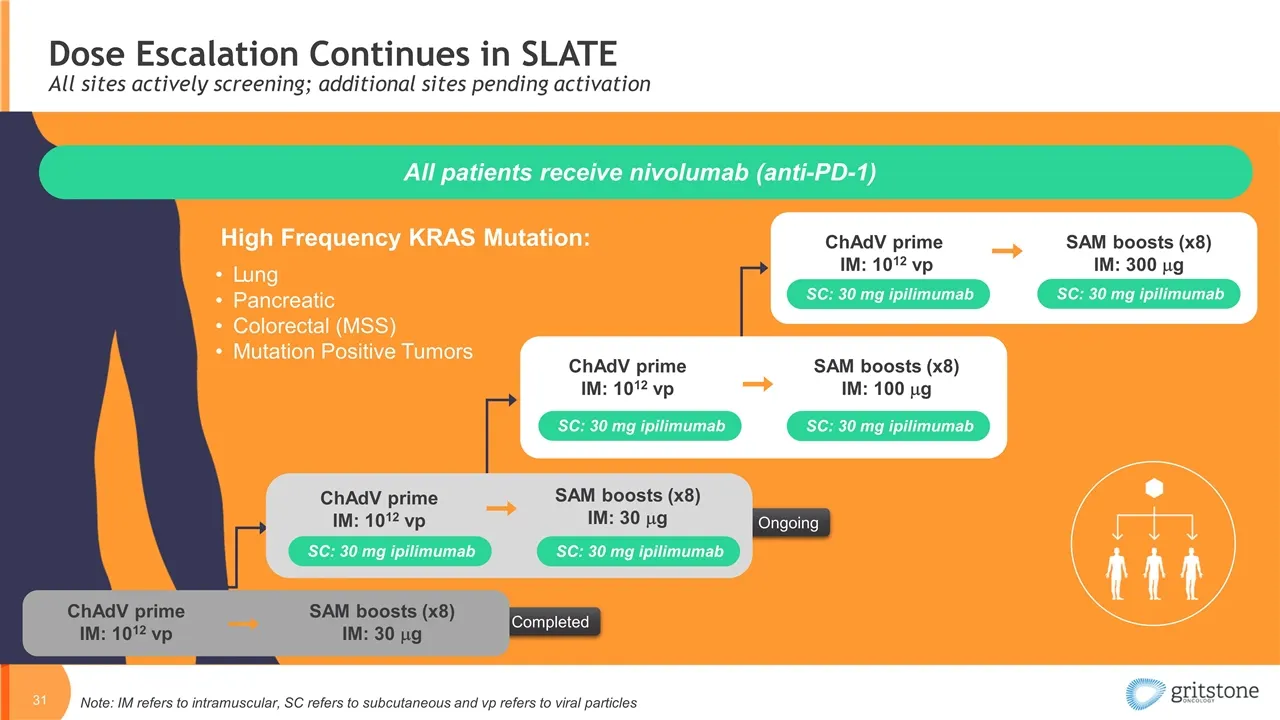
Dose Escalation Continues in SLATE ChAdV prime IM: 1012 vp SAM boosts (x8) IM: 100 mg Note: IM refers to intramuscular, SC refers to subcutaneous and vp refers to viral particles ChAdV prime IM: 1012 vp SAM boosts (x8) IM: 300 mg SC: 30 mg ipilimumab SC: 30 mg ipilimumab SC: 30 mg ipilimumab SC: 30
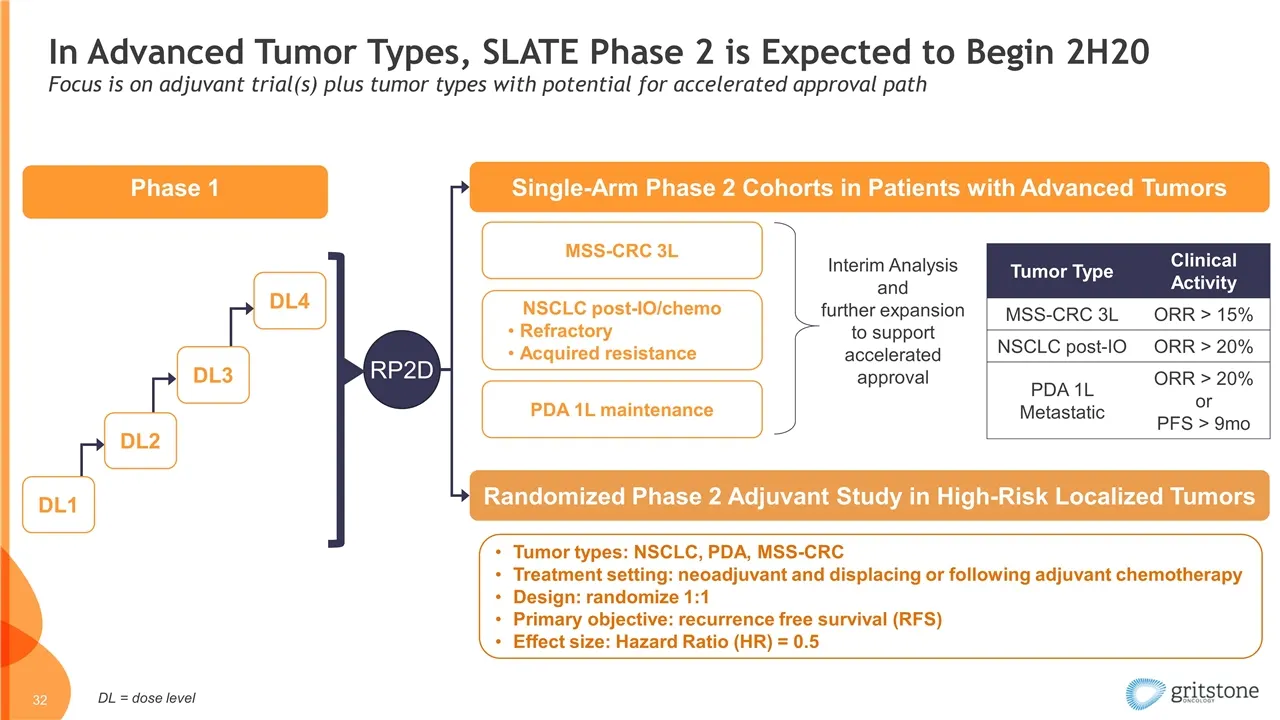
Slide 32: Single-Arm Phase Cohorts in Patients with Advanced Tumors
Single-Arm Phase 2 Cohorts in Patients with Advanced Tumors Phase 1 DL4 DL1 DL2 DL3 Tumor Type Clinical Activity MSS-CRC 3L ORR > 15% NSCLC post-IO ORR > 20% PDA 1L Metastatic ORR > 20% or PFS > 9mo In Advanced Tumor Types, SLATE Phase 2 is Expected to Begin 2H20 Interim Analysis and further expansi
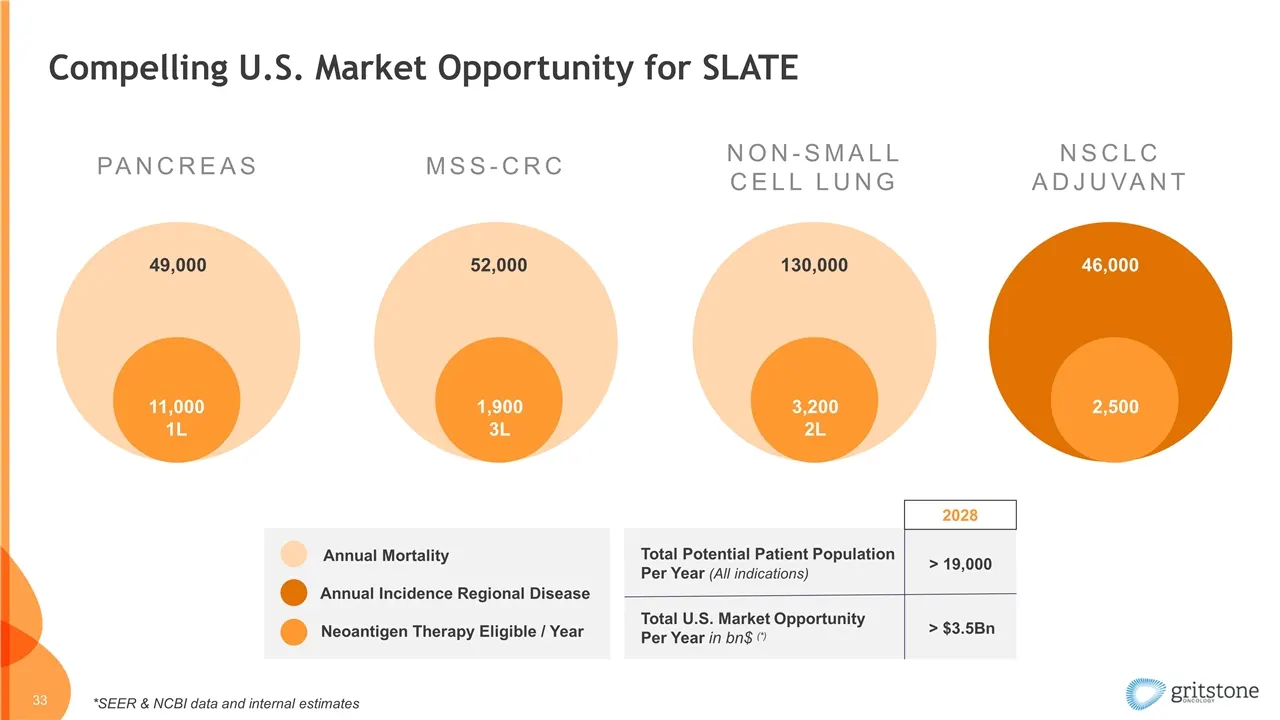
Slide 33: Compelling U.S. Market Opportunity for SLATE
Compelling U.S. Market Opportunity for SLATE Total Potential Patient Population Per Year (All indications) Total U.S. Market Opportunity Per Year in bn$ (*) > 19,000 > $3.5Bn PANCREAS MSS-CRC NON-SMALL CELL LUNG Annual Mortality Neoantigen Therapy Eligible / Year 49,000 2028 52,000 130,000 NSCLC ADJ
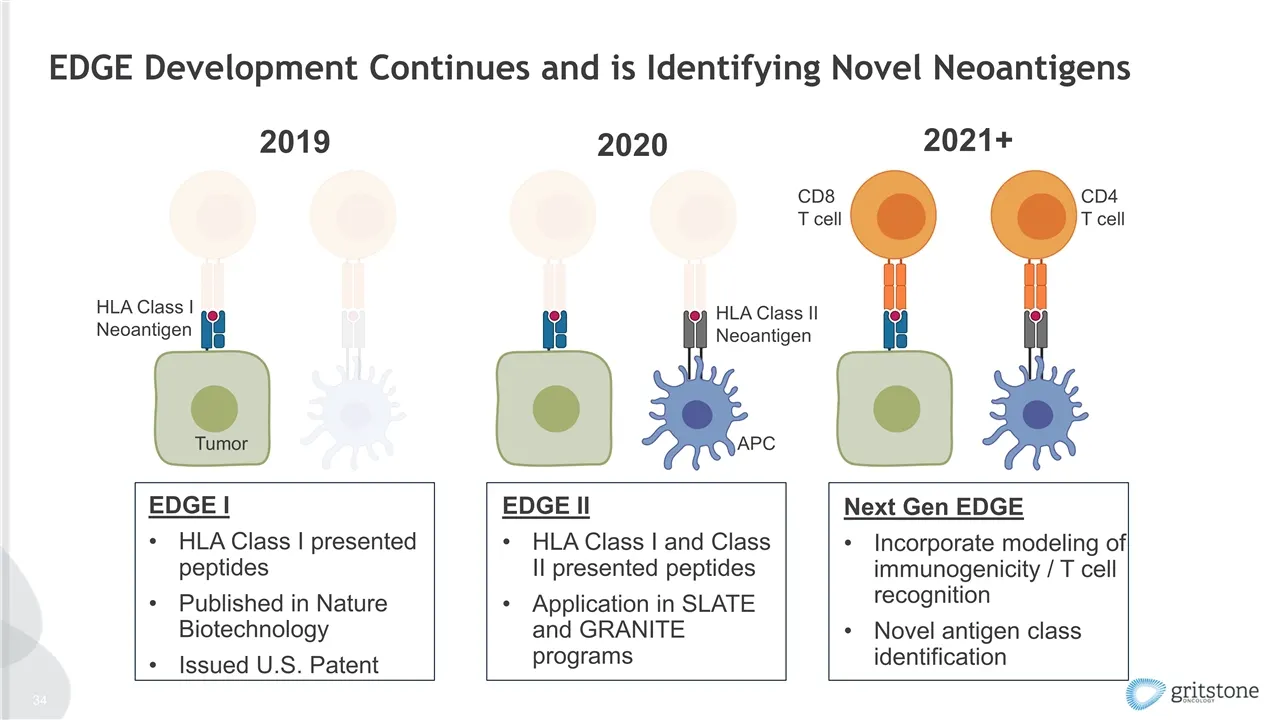
Slide 34: EDGE Development Continues and is Identifying Novel Neoantigens
EDGE Development Continues and is Identifying Novel Neoantigens 2019 2020 2021+ Tumor APC HLA Class I Neoantigen HLA Class II Neoantigen CD8 T cell CD4 T cell EDGE I HLA Class I presented peptides Published in Nature Biotechnology Issued U.S. Patent EDGE II HLA Class I and Class II presented peptide
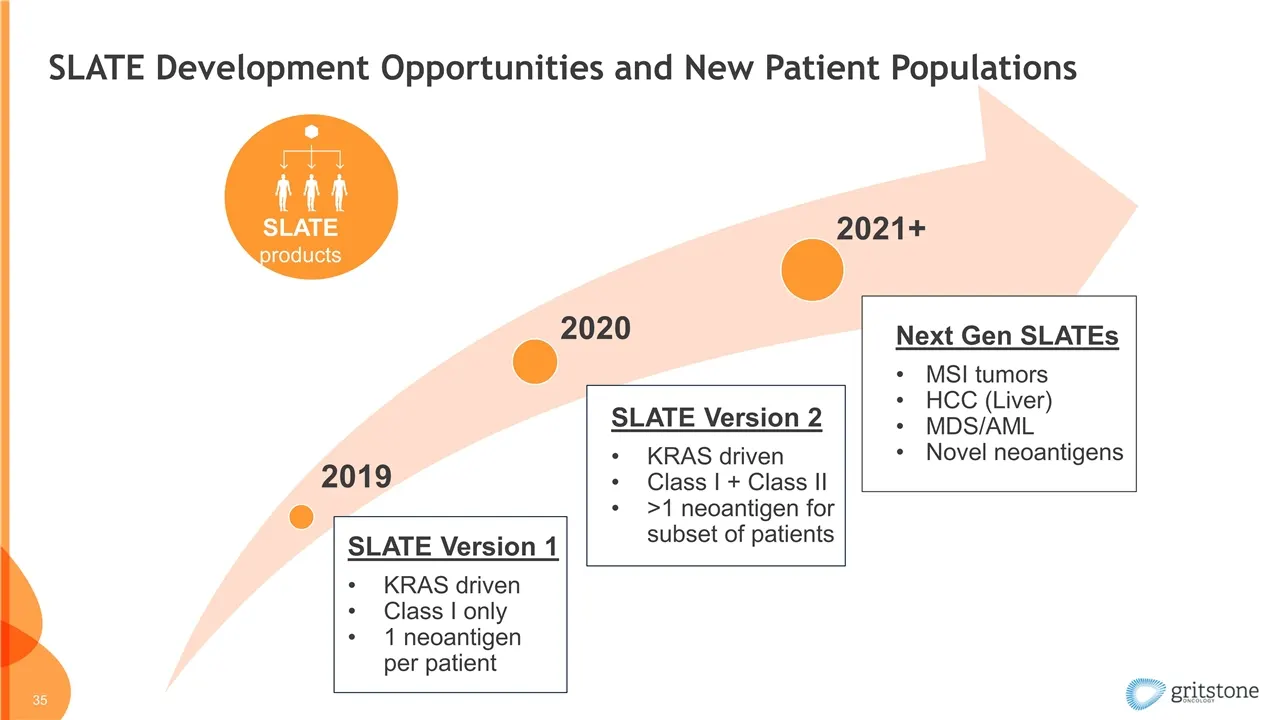
Slide 35: SLATE Development Opportunities and New Patient Populations
SLATE Development Opportunities and New Patient Populations SLATE Version 1 KRAS driven Class I only 1 neoantigen per patient SLATE Version 2 KRAS driven Class I + Class II >1 neoantigen for subset of patients Next Gen SLATEs MSI tumors HCC (Liver) MDS/AML Novel neoantigens 2019 2020 2021+ SLATE pro

Slide 36: Tumor-Specific Bispecific Antibodies (BiSAb)
TUMOR-SPECIFIC BISPECIFIC ANTIBODIES (BiSAb)
Slide 37: First Generation Solid Tumor BiSAb Targets May Have a Limited Therapeutic Window
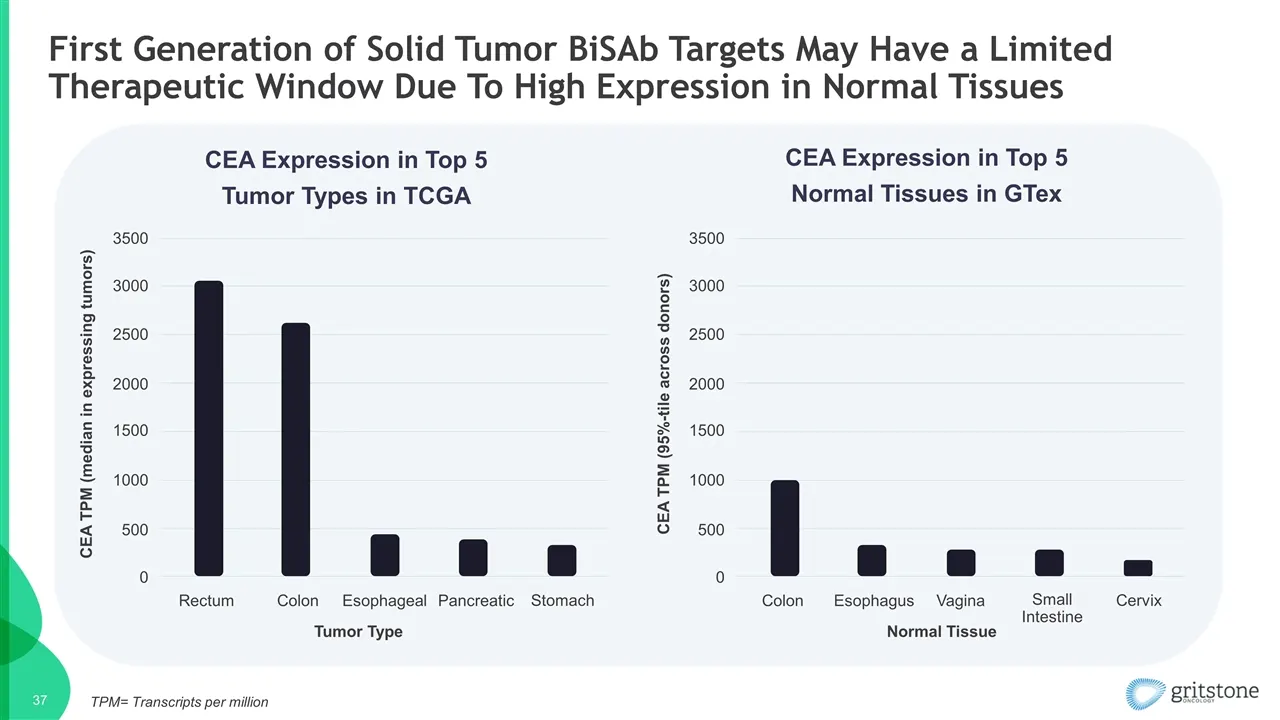
First Generation of Solid Tumor BiSAb Targets May Have a Limited Therapeutic Window Due To High Expression in Normal Tissues TPM= Transcripts per million CEA Expression in Top 5 Tumor Types in TCGA CEA Expression in Top 5 Normal Tissues in GTex 3500 3000 2500 2000 1500 1000 500 0 CEA TPM (median in
Slide 38: Bispecific Therapy Enhanced with Superior Tumor-Specific Target Selection
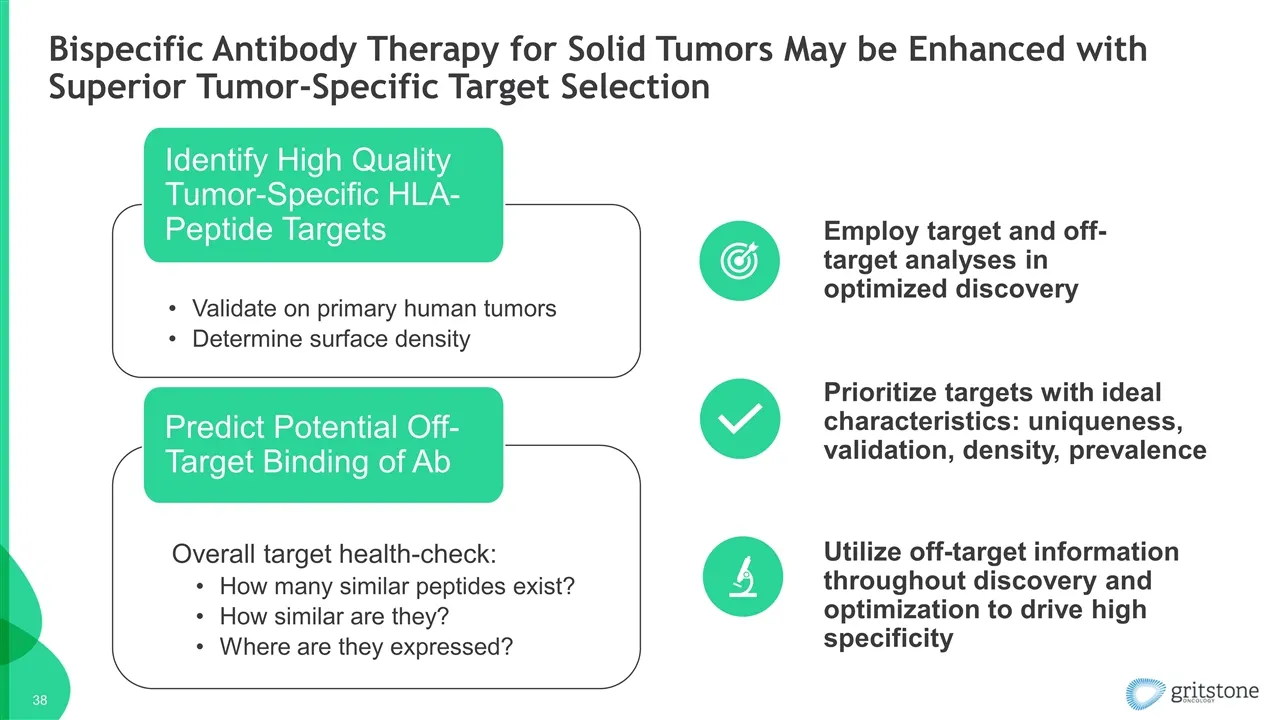
Bispecific Antibody Therapy for Solid Tumors May be Enhanced with Superior Tumor-Specific Target Selection Validate on primary human tumors Determine surface density Identify High Quality Tumor-Specific HLA-Peptide Targets Overall target health-check: How many similar peptides exist? How similar are
Slide 39: Select HLA-Peptide Complexes Densely Expressed on Cancer Cells
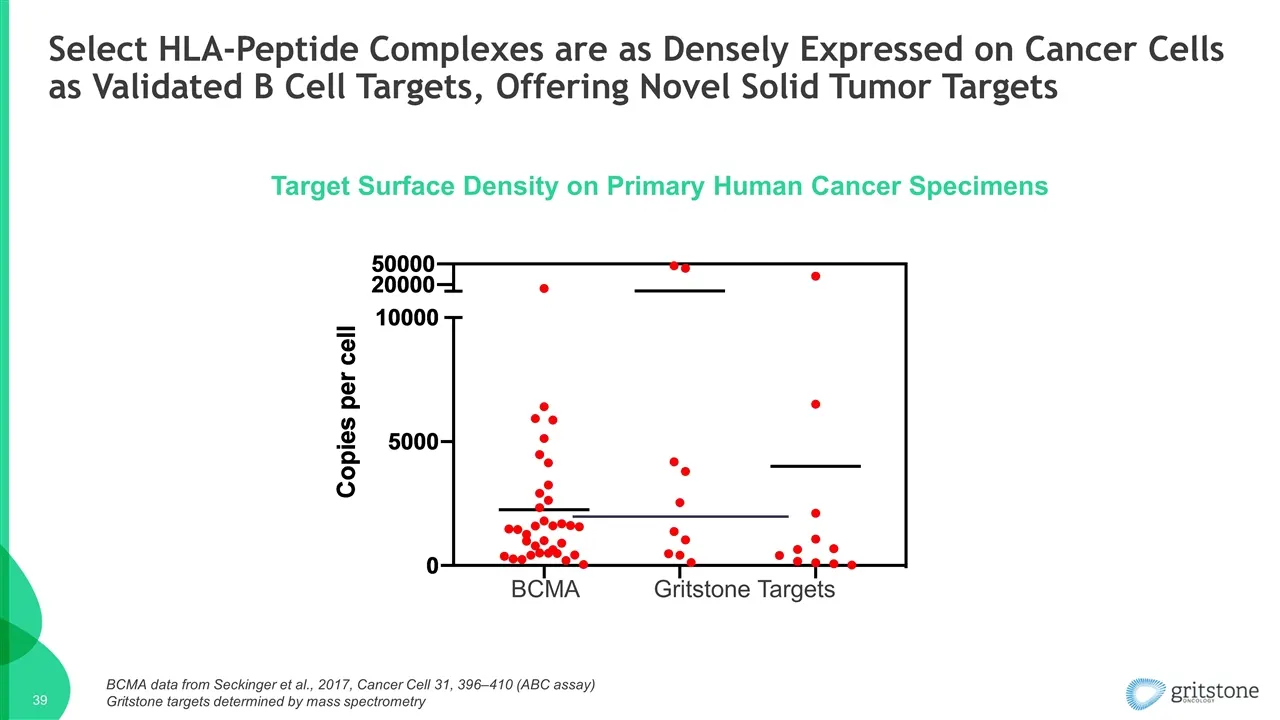
Select HLA-Peptide Complexes are as Densely Expressed on Cancer Cells as Validated B Cell Targets, Offering Novel Solid Tumor Targets BCMA Gritstone Targets Target Surface Density on Primary Human Cancer Specimens BCMA data from Seckinger et al., 2017, Cancer Cell 31, 396–410 (ABC assay) Gritstone t
Slide 40: Using EDGE to Identify Off-Target Liabilities
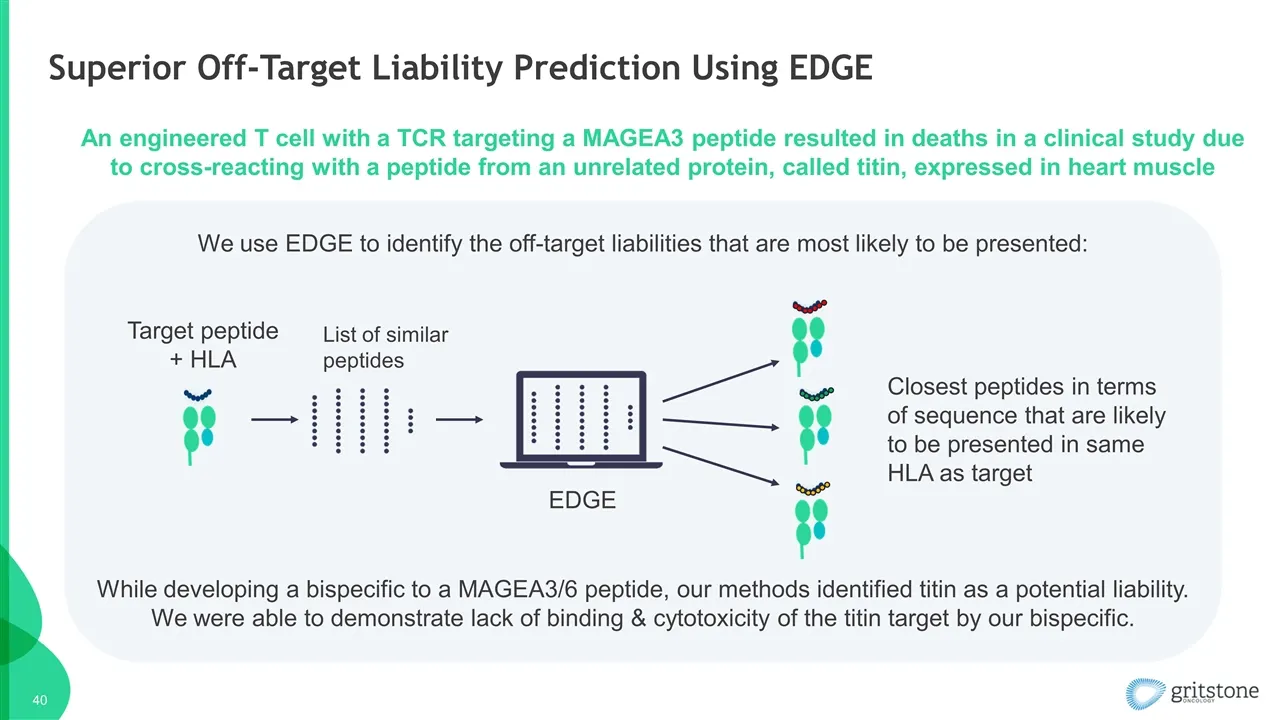
We use EDGE to identify the off-target liabilities that are most likely to be presented: While developing a bispecific to a MAGEA3/6 peptide, our methods identified titin as a potential liability. We were able to demonstrate lack of binding & cytotoxicity of the titin target by our bispecific. Super
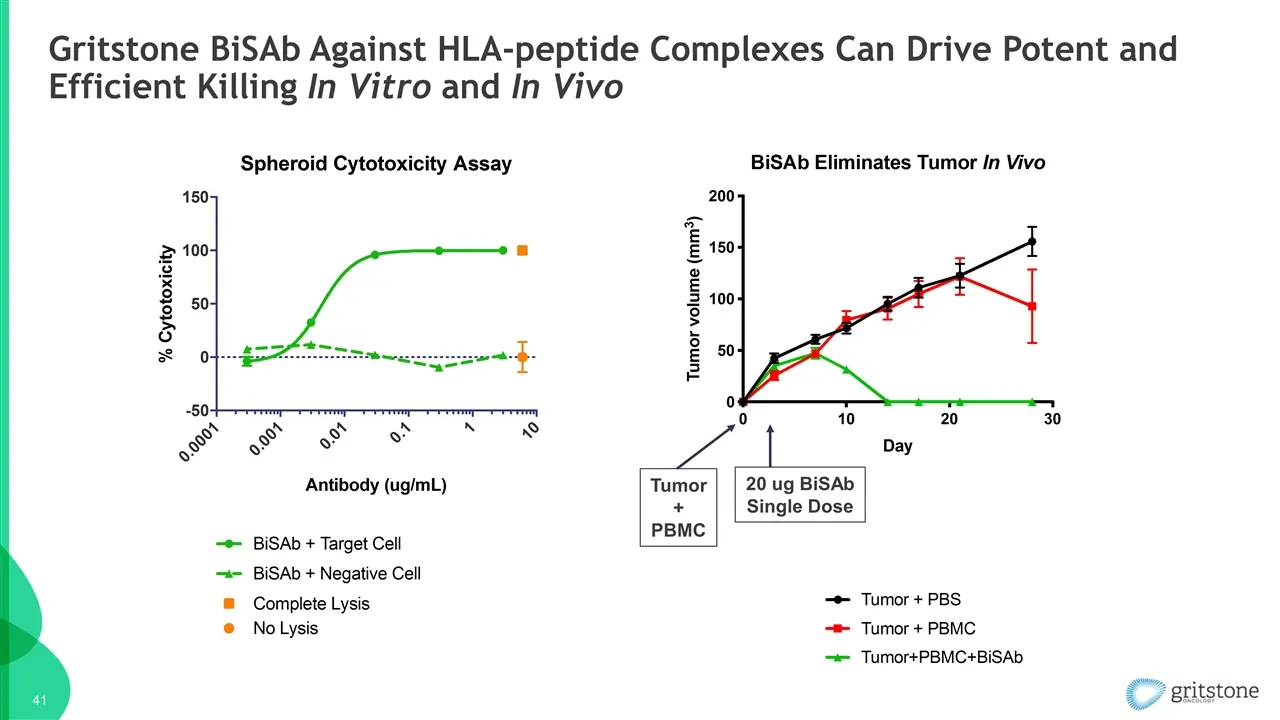
Slide 41: Gritstone BiSAb Drives Potent Killing In Vitro and In Vivo
Gritstone BiSAb Against HLA-peptide Complexes Can Drive Potent and Efficient Killing In Vitro and In Vivo Tumor + PBMC 20 ug BiSAb Single Dose

Slide 42: Business Operations
BUSINESS OPERATIONS
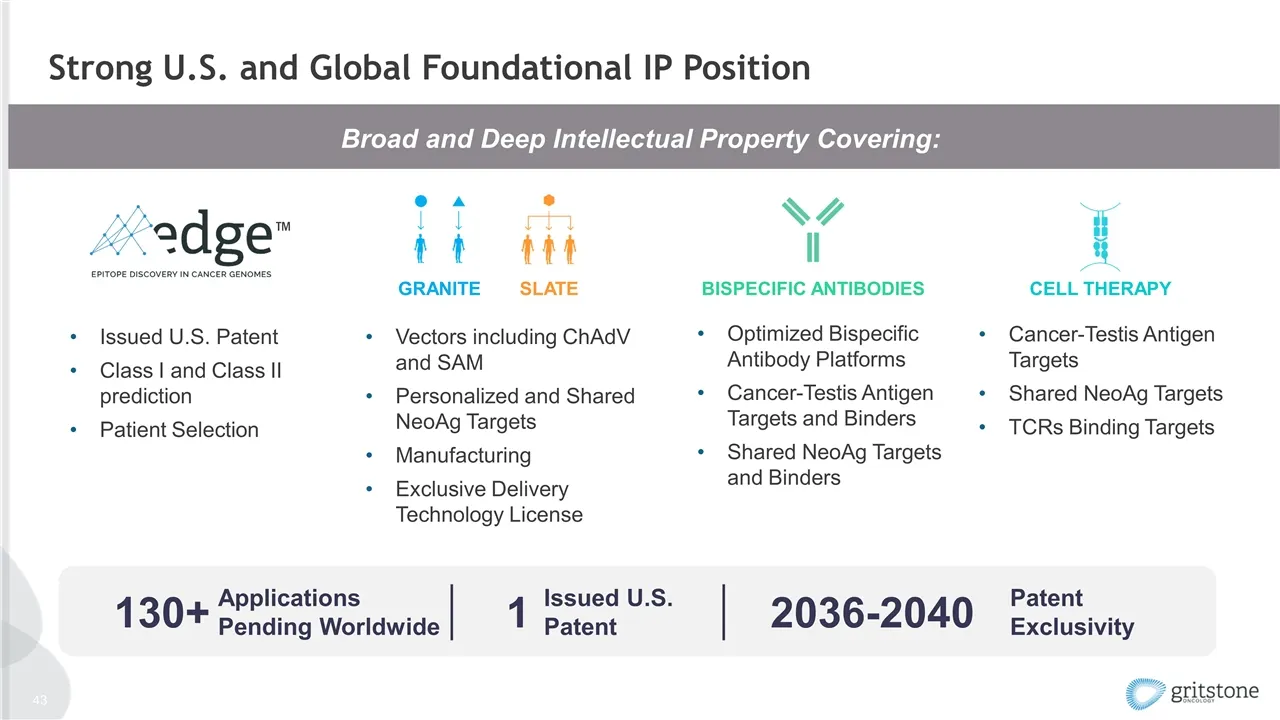
Slide 43: Strong U.S. and Global Foundational IP Position
Strong U.S. and Global Foundational IP Position Issued U.S. Patent Class I and Class II prediction Patient Selection Vectors including ChAdV and SAM Personalized and Shared NeoAg Targets Manufacturing Exclusive Delivery Technology License Optimized Bispecific Antibody Platforms Cancer-Testis Antigen
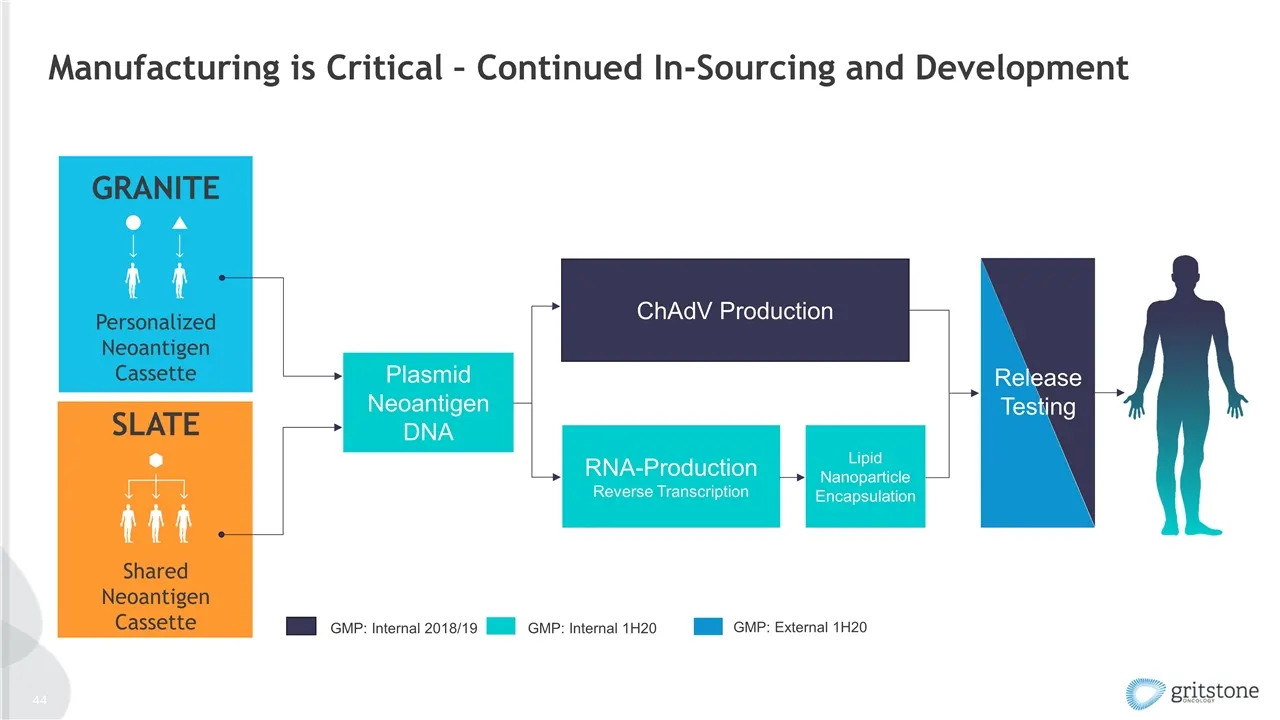
Slide 44: Manufacturing is Critical – Continued In-Sourcing and Development
Manufacturing is Critical – Continued In-Sourcing and Development GRANITE Personalized Neoantigen Cassette SLATE Shared Neoantigen Cassette Plasmid Neoantigen DNA ChAdV Production RNA-Production Reverse Transcription Lipid Nanoparticle Encapsulation GMP: Internal 2018/19 GMP: Internal 1H20 Release T
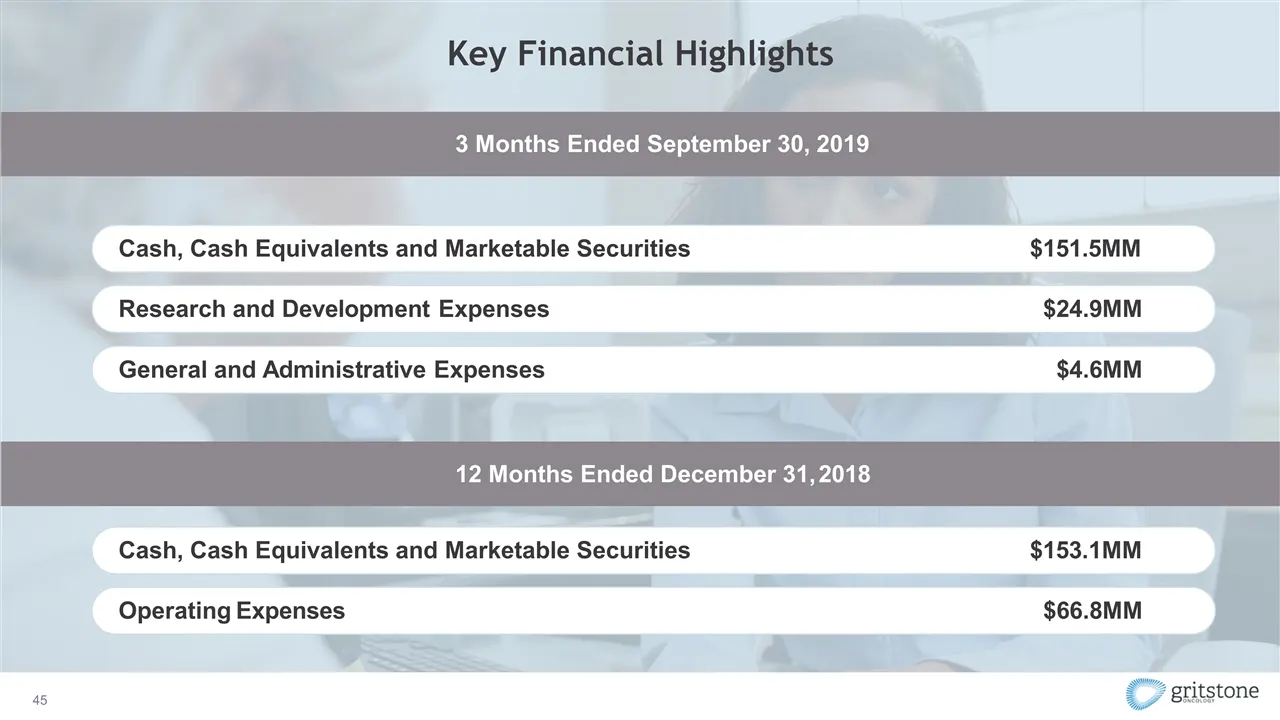
Slide 45: Key Financial Highlights
Cash, Cash Equivalents and Marketable Securities $153.1MM Operating Expenses $66.8MM 12 Months Ended December 31, 2018 3 Months Ended September 30, 2019 Cash, Cash Equivalents and Marketable Securities $151.5MM $24.9MM Research and Development Expenses General and Administrative Expenses $4.6MM Key
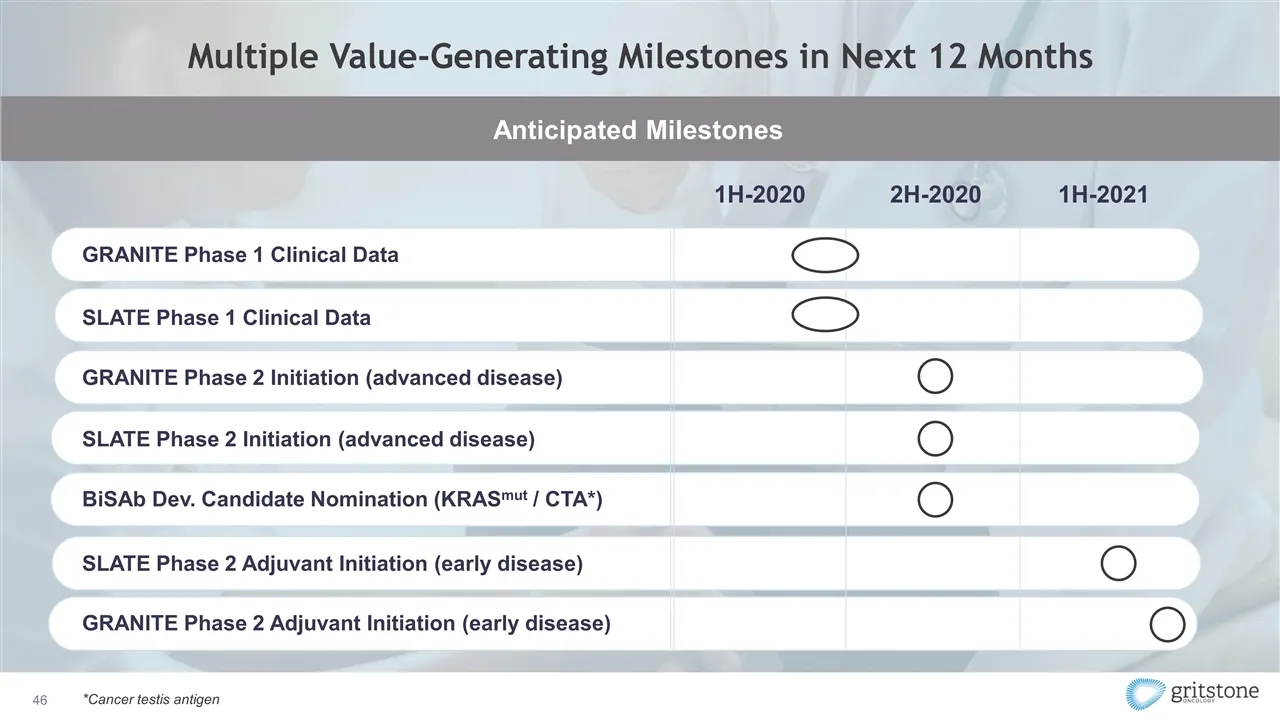
Slide 46: Multiple Value-Generating Milestones in Next Months
Multiple Value-Generating Milestones in Next 12 Months Anticipated Milestones BiSAb Dev. Candidate Nomination (KRASmut / CTA*) 1H-2020 GRANITE Phase 1 Clinical Data GRANITE Phase 2 Initiation (advanced disease) SLATE Phase 2 Initiation (advanced disease) 2H-2020 1H-2021 SLATE Phase 1 Clinical Data S

Slide 47: Thank you!
Thank you!
Source: SEC EDGAR · 8-K filed Jan 13, 2020