Harpoon Therapeutics — Investor Day (December 2021)
38 slides from Harpoon Therapeutics's investor day presentation, Dec 13, 2021

Slide 1: Advancing T Cell Engager Immunotherapies
Advancing T Cell Engager Immunotherapies DECEMBER 13, 2021 Exhibit 99.3
Slide 2: Forward-looking statements
This presentation and accompanying oral commentary contain forward-looking statements within the meaning of the Private Securities Litigation Reform Act of 1995. Words such as “may,” “will,” “expect,” “plan,” “anticipate,” “target,” “estimate” and similar expressions (as well as other words or expre
Slide 3: Presentation Agenda for Today
Presentation Agenda for Today Corporate Overview – Julie Eastland, President and CEO Clinical Pipeline Update – Natalie Sacks, M.D., CMO HPN217 (BCMA) HPN328 (DLL3) HPN536 (Mesothelin) ProTriTAC Scientific Update – Holger Wesche, Ph.D., CSO Program Status Summary and Conclusions – Julie Eastland

Slide 4: Corporate Overview
Corporate Overview
Slide 5: Clinical-Stage Immuno-Oncology Company Advancing a Novel Portfolio of T Cell Engagers
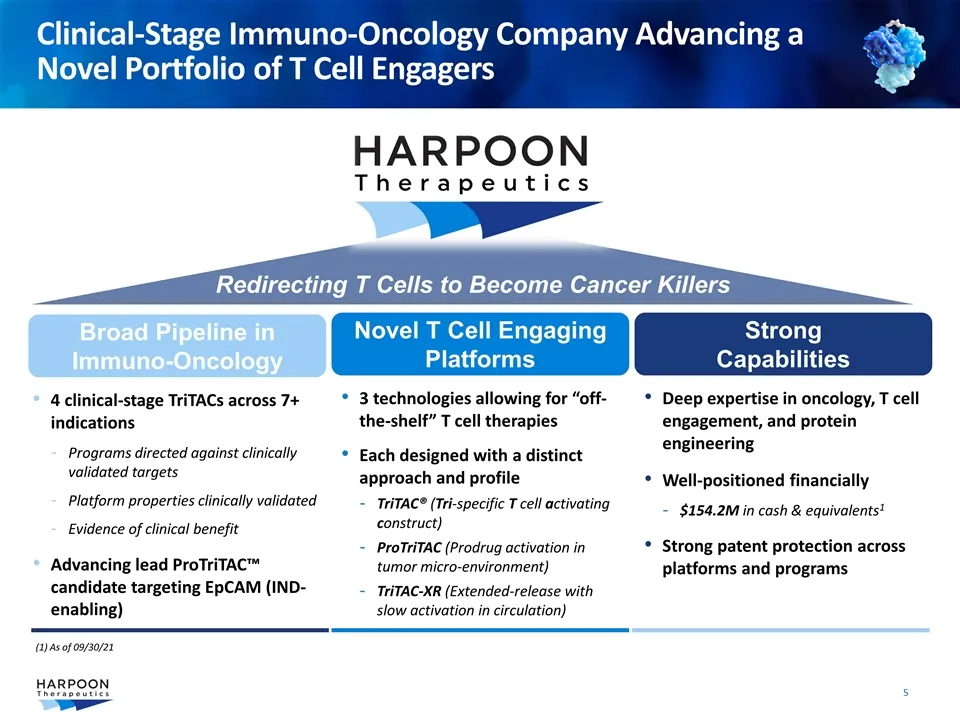
Clinical-Stage Immuno-Oncology Company Advancing a Novel Portfolio of T Cell Engagers Redirecting T Cells to Become Cancer Killers Strong Capabilities Broad Pipeline in Immuno-Oncology Novel T Cell Engaging Platforms Deep expertise in oncology, T cell engagement, and protein engineering Well-positio
Slide 6: Broad Pipeline of Immuno-Oncology Programs
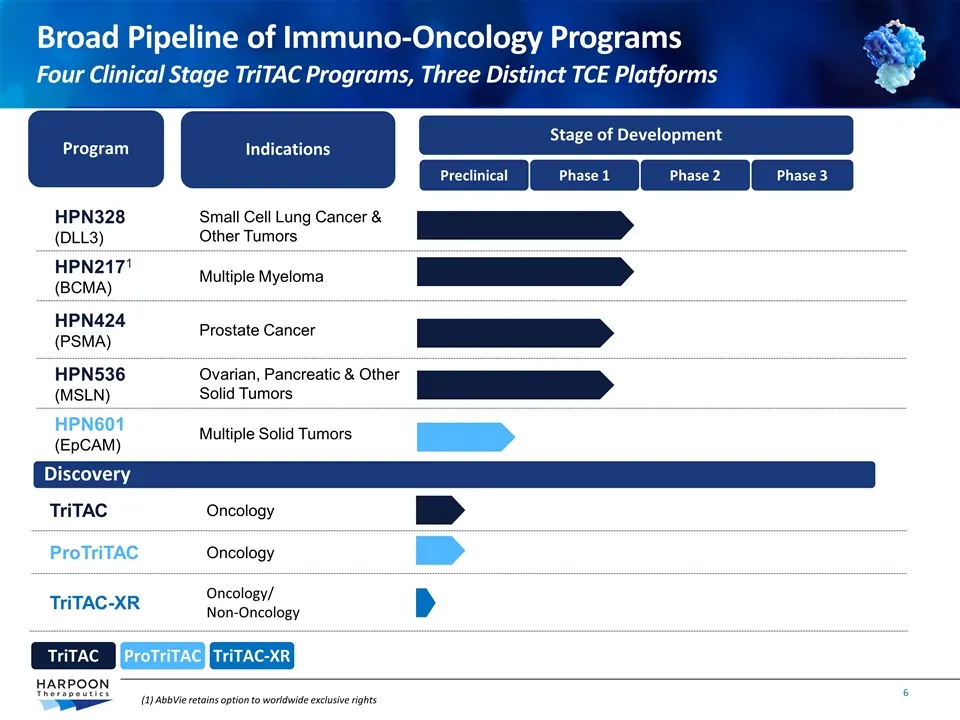
TriTAC Oncology ProTriTAC Oncology TriTAC-XR Oncology/ Non-Oncology Program Stage of Development Preclinical Phase 1 Phase 2 HPN328 (DLL3) Small Cell Lung Cancer & Other Tumors HPN2171 (BCMA) Multiple Myeloma HPN424 (PSMA) Prostate Cancer HPN536 (MSLN) Ovarian, Pancreatic & Other Solid Tumors HPN601
Slide 7: HPN217: TriTAC Targeting BCMA
HPN217: TriTAC Targeting BCMA
Slide 8: HPN217-3001 Phase 1/2 Trial Design
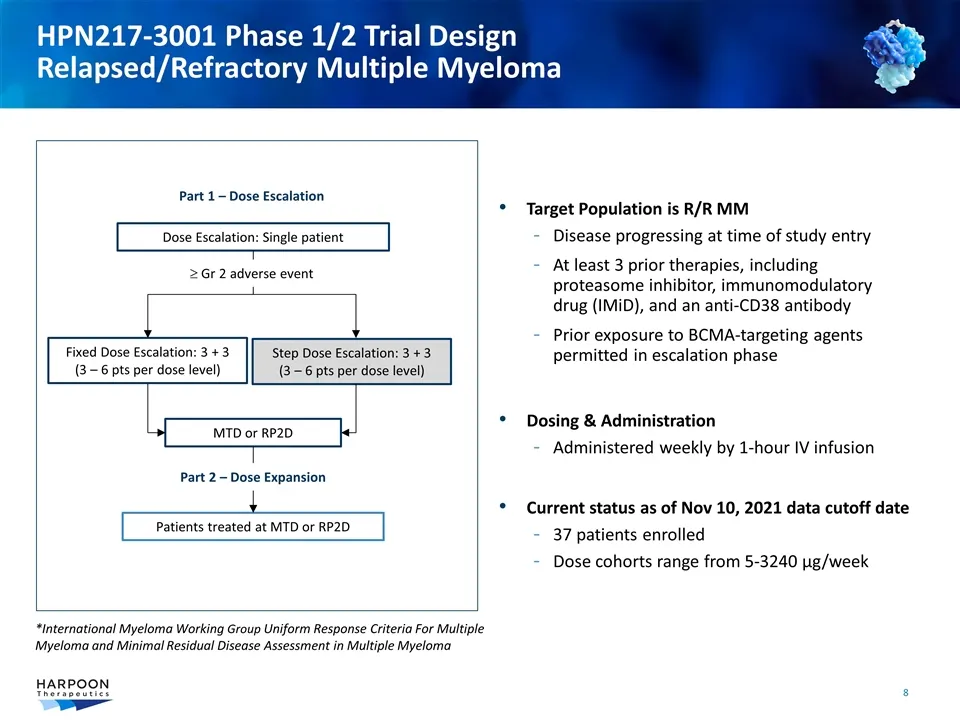
HPN217-3001 Phase 1/2 Trial Design Relapsed/Refractory Multiple Myeloma *International Myeloma Working Group Uniform Response Criteria For Multiple Myeloma and Minimal Residual Disease Assessment in Multiple Myeloma Target Population is R/R MM Disease progressing at time of study entry At least 3 pr
Slide 9: HPN217 Rapid Escalation and Implementation of Step Dosing
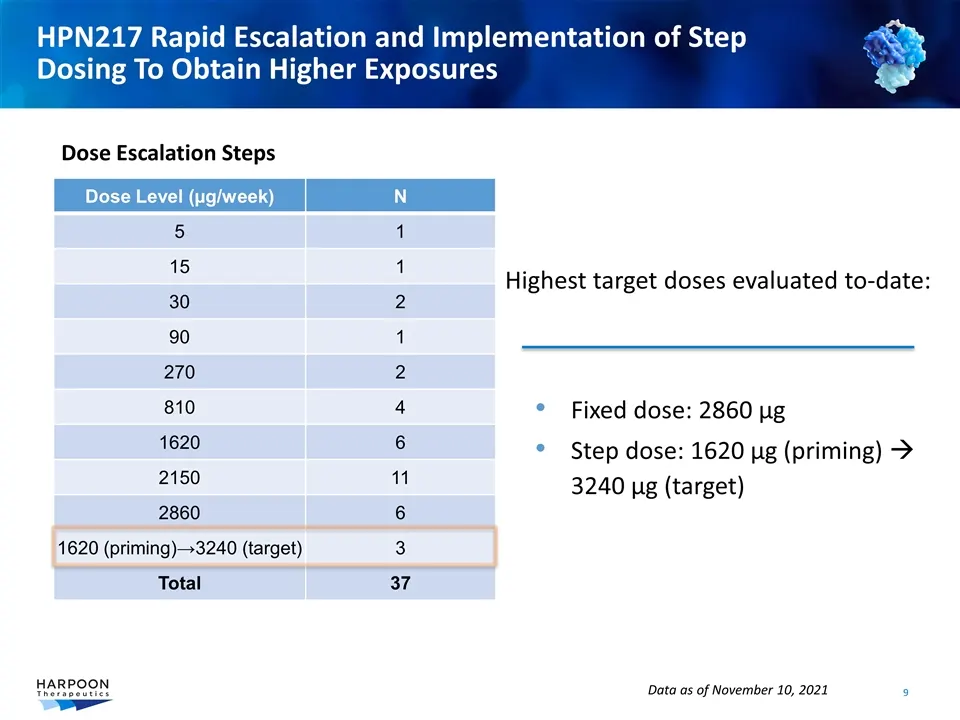
HPN217 Rapid Escalation and Implementation of Step Dosing To Obtain Higher Exposures Dose Level (µg/week) N 5 1 15 1 30 2 90 1 270 2 810 4 1620 6 2150 11 2860 6 1620 (priming)→3240 (target) 3 Total 37 Dose Escalation Steps Highest target doses evaluated to-date: Fixed dose: 2860 µg Step dose: 1620 µ
Slide 10: HPN217 Patient Baseline Characteristics
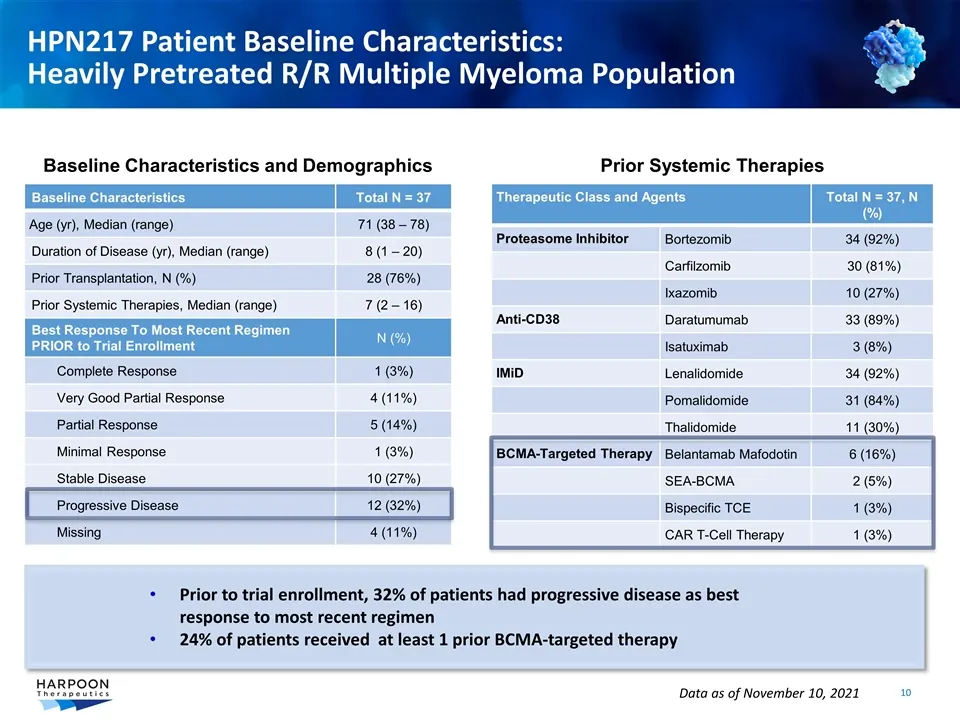
HPN217 Patient Baseline Characteristics: Heavily Pretreated R/R Multiple Myeloma Population Baseline Characteristics Total N = 37 Age (yr), Median (range) 71 (38 – 78) Duration of Disease (yr), Median (range) 8 (1 – 20) Prior Transplantation, N (%) 28 (76%) Prior Systemic Therapies, Median (range) 7
Slide 11: HPN217 Has Manageable Safety Profile
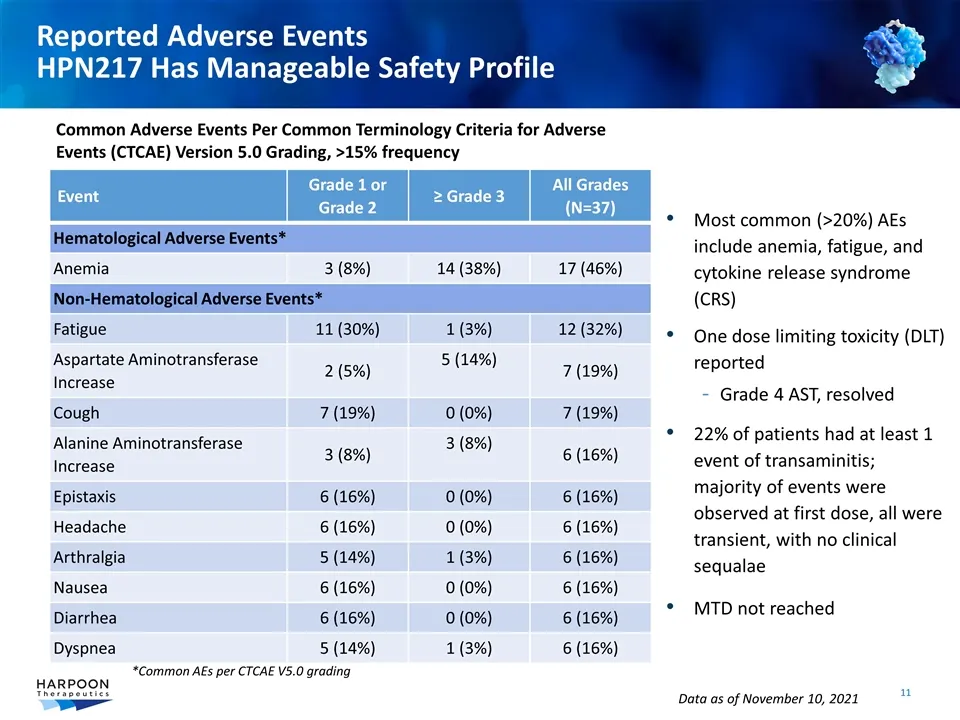
Reported Adverse Events HPN217 Has Manageable Safety Profile Event Grade 1 or Grade 2 ≥ Grade 3 All Grades (N=37) Hematological Adverse Events* Anemia 3 (8%) 14 (38%) 17 (46%) Non-Hematological Adverse Events* Fatigue 11 (30%) 1 (3%) 12 (32%) Aspartate Aminotransferase Increase 2 (5%) 5 (14%) 7 (19%
Slide 12: HPN217 Adverse Events: Focus on CRS
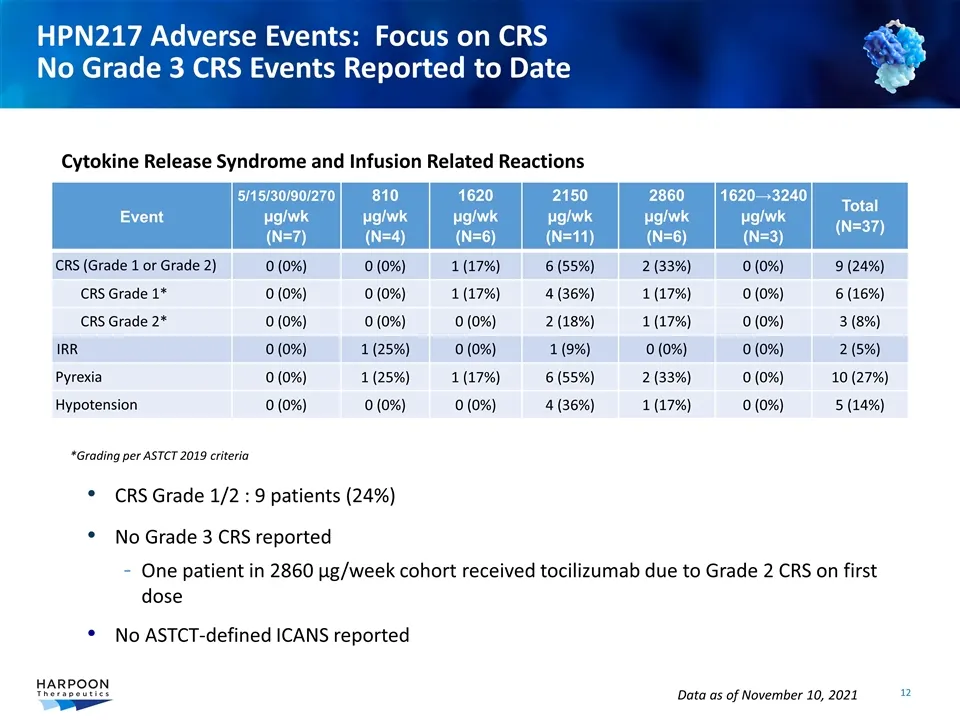
HPN217 Adverse Events: Focus on CRS No Grade 3 CRS Events Reported to Date Event 5/15/30/90/270 µg/wk (N=7) 810 µg/wk (N=4) 1620 µg/wk (N=6) 2150 µg/wk (N=11) 2860 µg/wk (N=6) 1620→3240 µg/wk (N=3) Total (N=37) CRS (Grade 1 or Grade 2) 0 (0%) 0 (0%) 1 (17%) 6 (55%) 2 (33%) 0 (0%) 9 (24%) CRS Grade 1
Slide 13: HPN217 on Treatment Activity Emerging in Higher Dose Cohorts
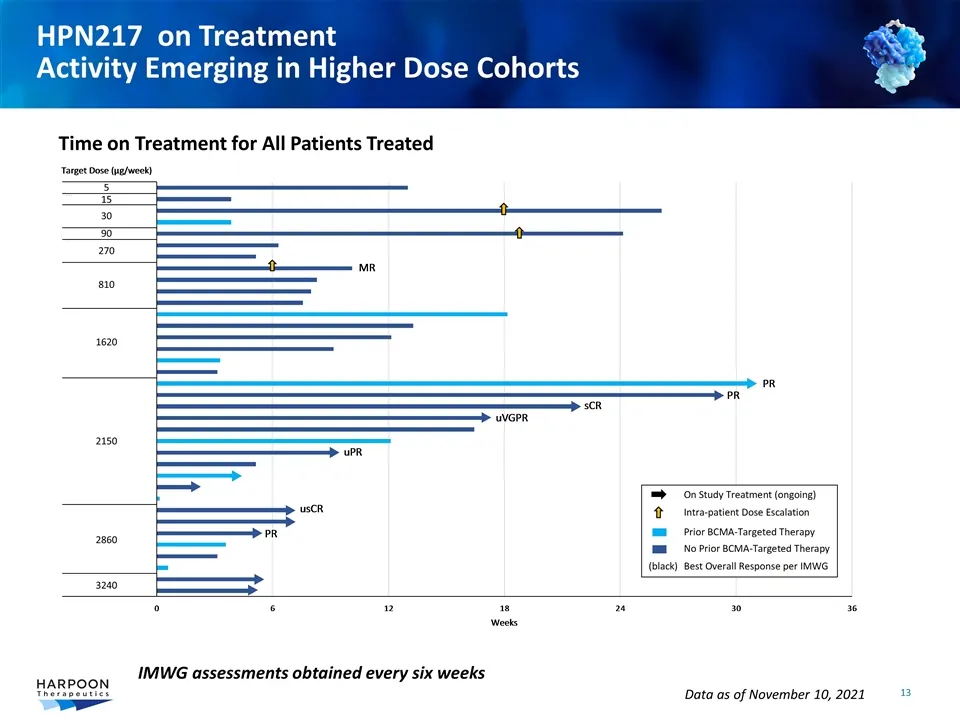
HPN217 on Treatment Activity Emerging in Higher Dose Cohorts Time on Treatment for All Patients Treated Data as of November 10, 2021 IMWG assessments obtained every six weeks 5 15 30 90 270 810 1620 2150 2860 3240
Slide 14: HPN217 IMWG Responses
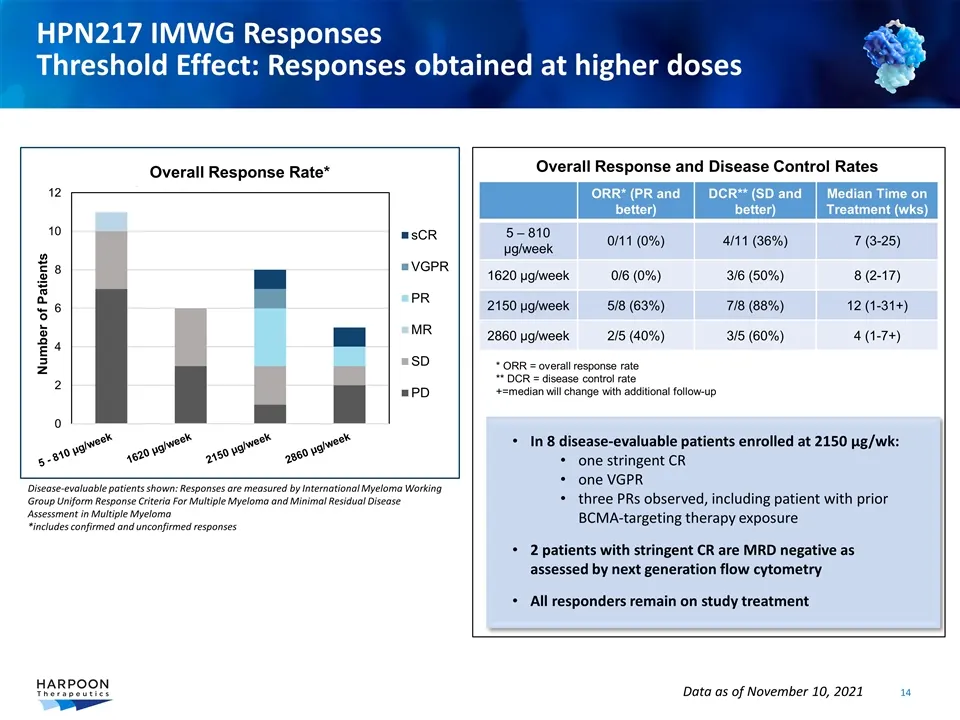
HPN217 IMWG Responses Threshold Effect: Responses obtained at higher doses Data as of November 10, 2021 ORR* (PR and better) DCR** (SD and better) Median Time on Treatment (wks) 5 – 810 µg/week 0/11 (0%) 4/11 (36%) 7 (3-25) 1620 µg/week 0/6 (0%) 3/6 (50%) 8 (2-17) 2150 µg/week 5/8 (63%) 7/8 (88%) 12
Slide 15: Signs of HPN217 Accumulation After Multiple Doses
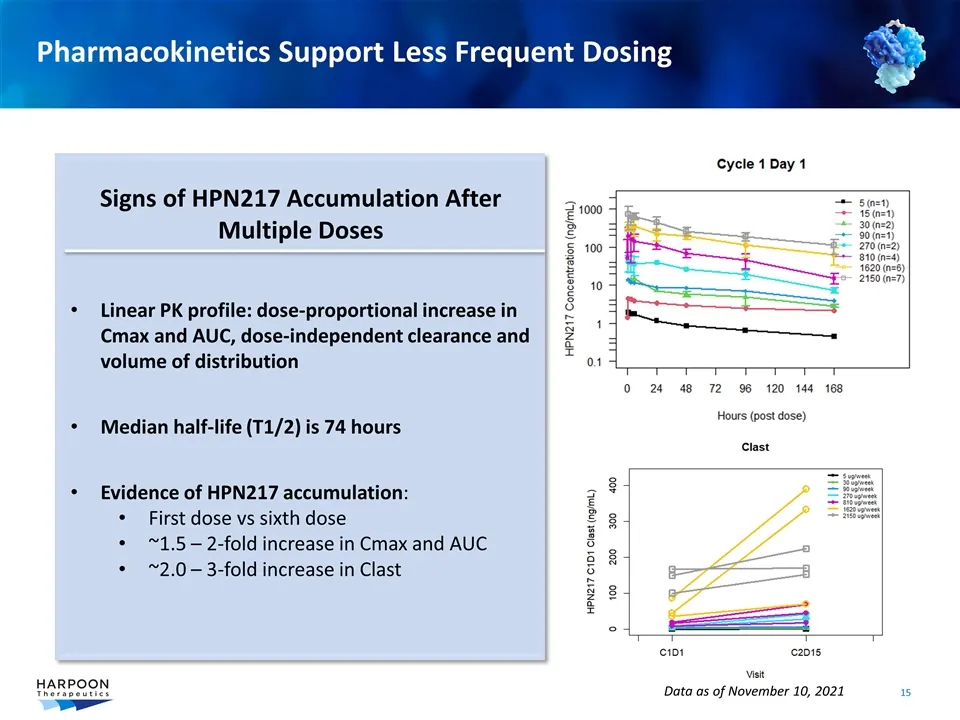
Signs of HPN217 Accumulation After Multiple Doses Linear PK profile: dose-proportional increase in Cmax and AUC, dose-independent clearance and volume of distribution Median half-life (T1/2) is 74 hours Evidence of HPN217 accumulation: First dose vs sixth dose ~1.5 – 2-fold increase in Cmax and AUC
Slide 16: HPN217 Summary
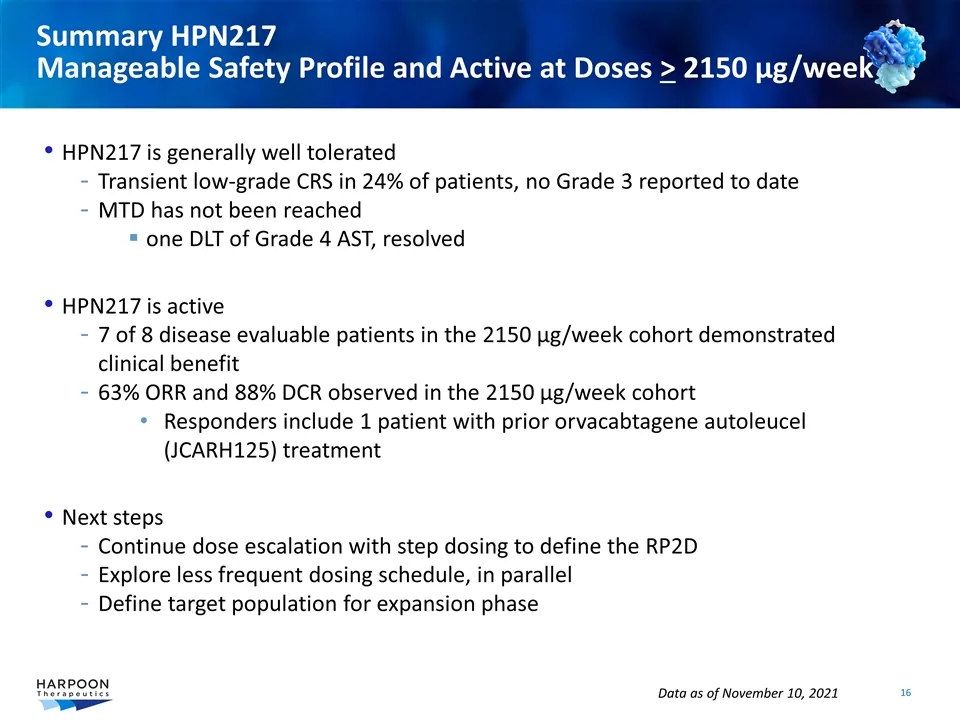
Summary HPN217 Manageable Safety Profile and Active at Doses > 2150 µg/week HPN217 is generally well tolerated Transient low-grade CRS in 24% of patients, no Grade 3 reported to date MTD has not been reached one DLT of Grade 4 AST, resolved HPN217 is active 7 of 8 disease evaluable patients in the 2
Slide 17: HPN328: TriTAC Targeting DLL3
HPN328: TriTAC Targeting DLL3
Slide 18: HPN328 Phase 1/2 Trial Design
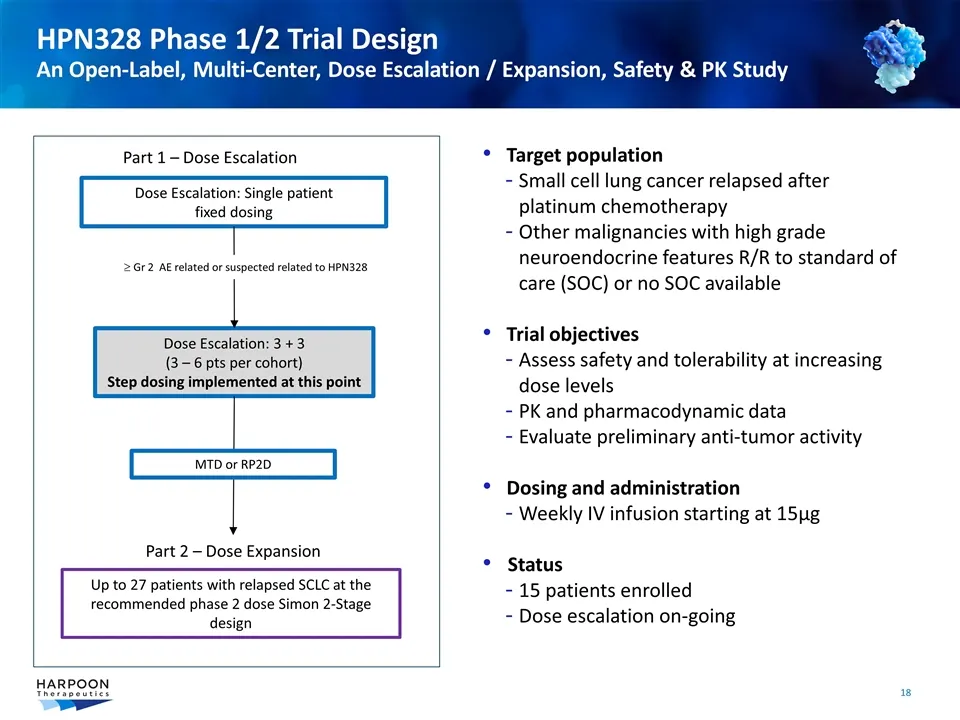
HPN328 Phase 1/2 Trial Design An Open-Label, Multi-Center, Dose Escalation / Expansion, Safety & PK Study Target population Small cell lung cancer relapsed after platinum chemotherapy Other malignancies with high grade neuroendocrine features R/R to standard of care (SOC) or no SOC available Trial o
Slide 19: HPN328: Dose Cohorts
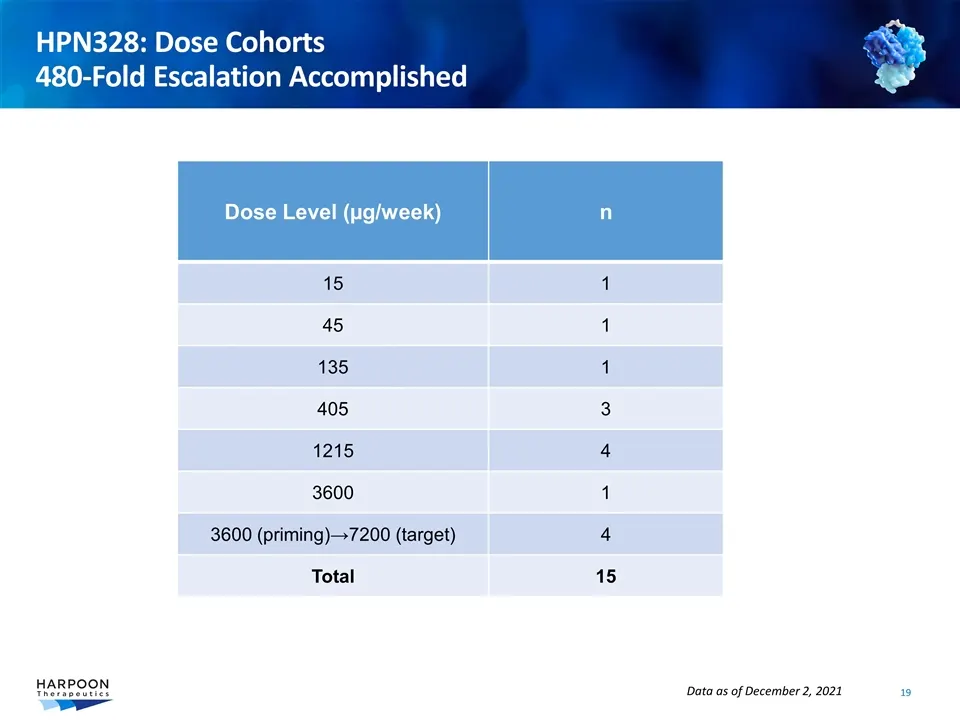
HPN328: Dose Cohorts 480-Fold Escalation Accomplished Data as of December 2, 2021 Dose Level (µg/week) n 15 1 45 1 135 1 405 3 1215 4 3600 1 3600 (priming)→7200 (target) 4 Total 15
Slide 20: HPN328 Baseline Demographics
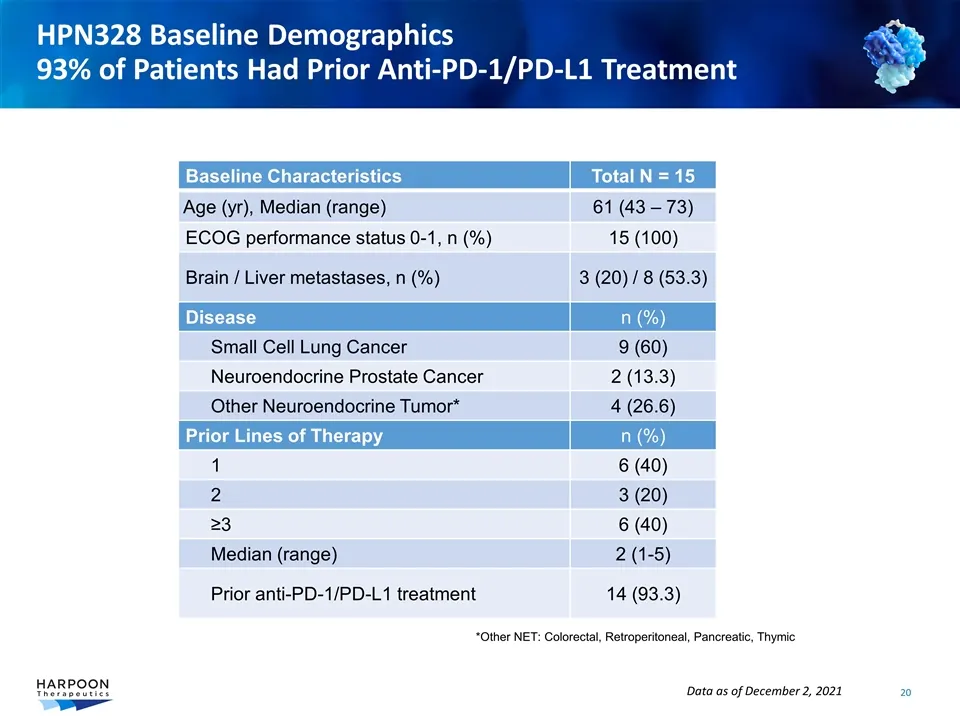
HPN328 Baseline Demographics 93% of Patients Had Prior Anti-PD-1/PD-L1 Treatment *Other NET: Colorectal, Retroperitoneal, Pancreatic, Thymic Data as of December 2, 2021 Baseline Characteristics Total N = 15 Age (yr), Median (range) 61 (43 – 73) ECOG performance status 0-1, n (%) 15 (100) Brain / Liv
Slide 21: HPN328: Safety and Tolerability
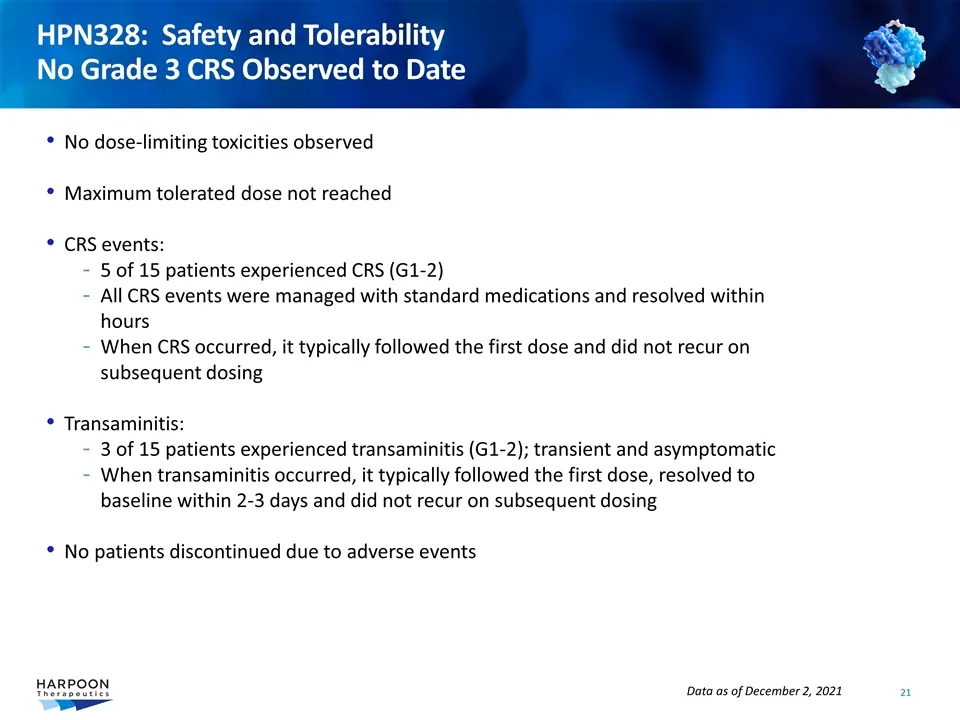
No dose-limiting toxicities observed Maximum tolerated dose not reached CRS events: 5 of 15 patients experienced CRS (G1-2) All CRS events were managed with standard medications and resolved within hours When CRS occurred, it typically followed the first dose and did not recur on subsequent dosing T
Slide 22: HPN328 Time on Treatment
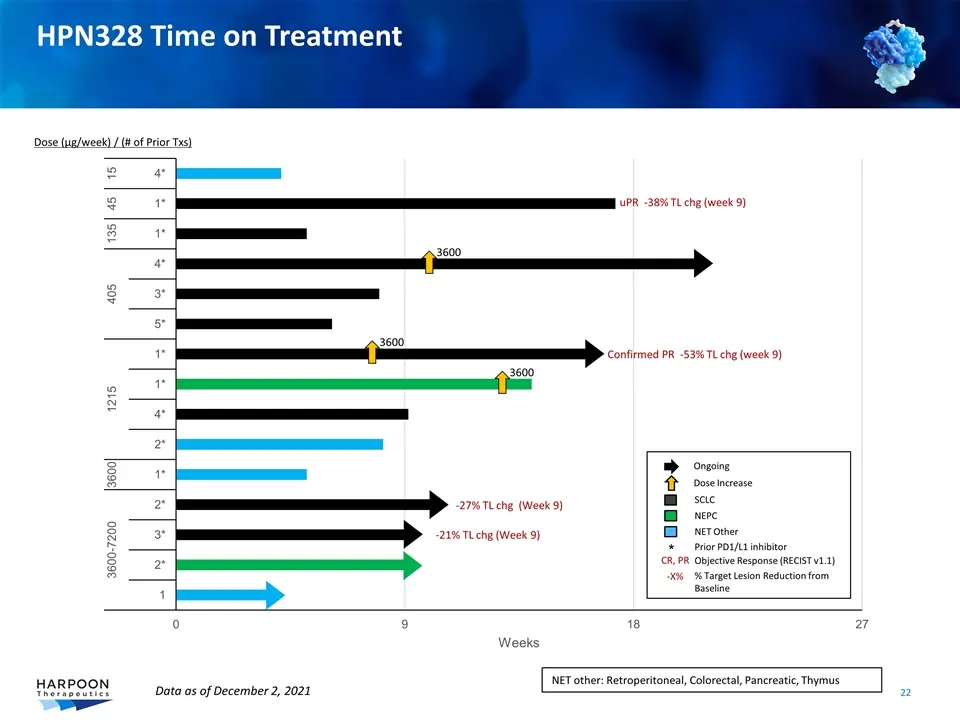
HPN328 Time on Treatment 3600 3600 3600 uPR -38% TL chg (week 9) Confirmed PR -53% TL chg (week 9) -21% TL chg (Week 9) -27% TL chg (Week 9) Dose Increase SCLC Prior PD1/L1 inhibitor Ongoing NEPC NET Other * % Target Lesion Reduction from Baseline -X% Objective Response (RECIST v1.1) CR, PR Dose (μg
Slide 23: HPN328 SCLC Patients Anti-tumor Activity at Higher Doses
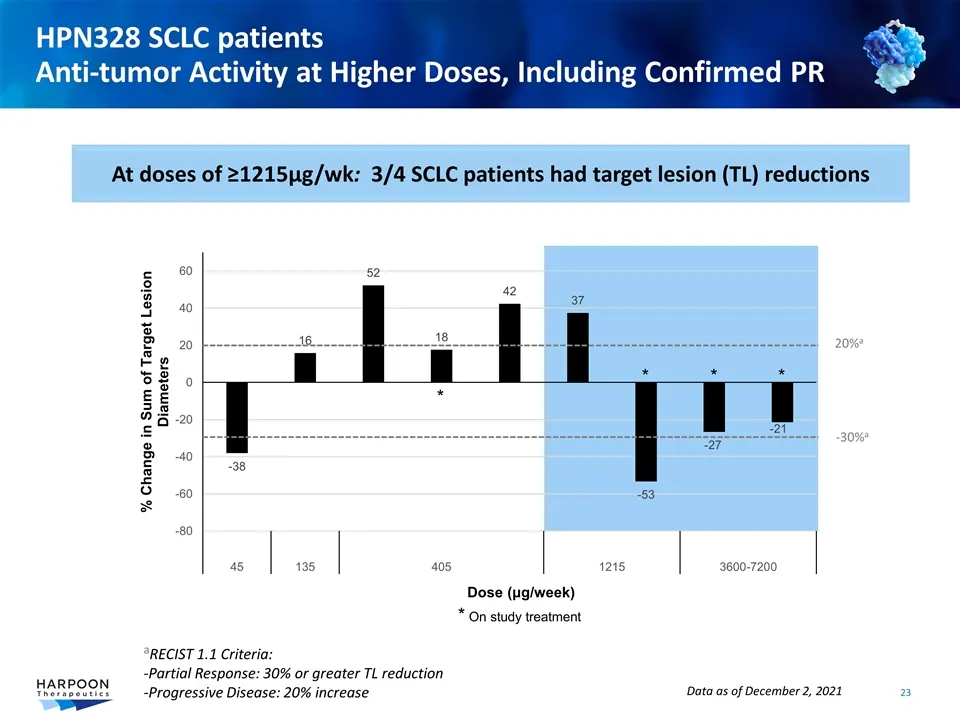
HPN328 SCLC patients Anti-tumor Activity at Higher Doses, Including Confirmed PR At doses of ≥1215μg/wk: 3/4 SCLC patients had target lesion (TL) reductions Dose (μg/week) * * * * * On study treatment aRECIST 1.1 Criteria: -Partial Response: 30% or greater TL reduction -Progressive Disease: 20% incr
Slide 24: HPN328 Patient Case One: SCLC
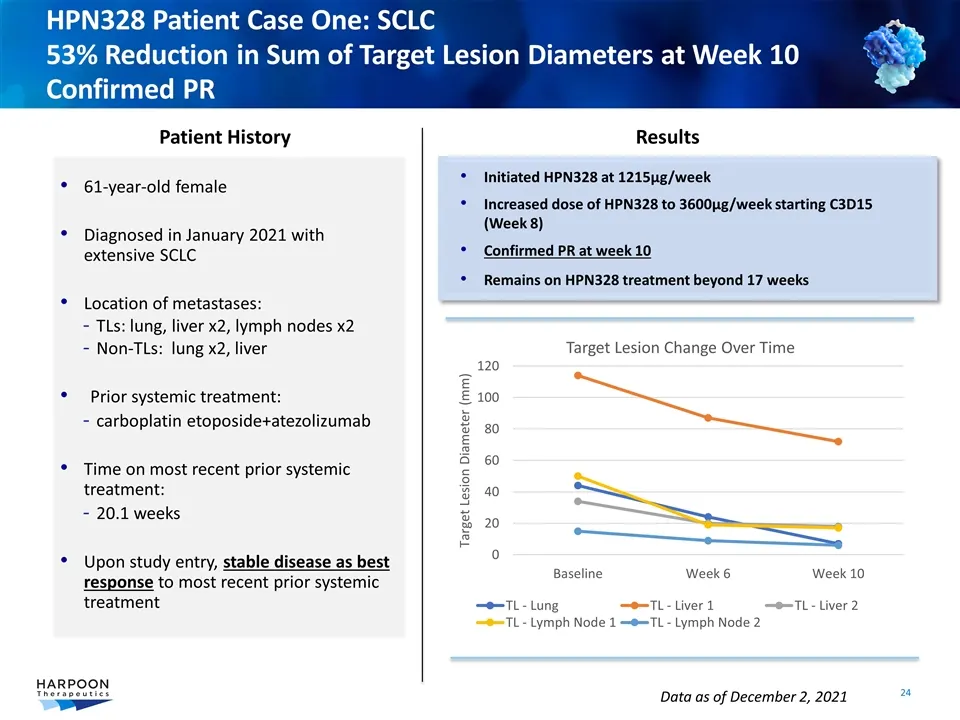
61-year-old female Diagnosed in January 2021 with extensive SCLC Location of metastases: TLs: lung, liver x2, lymph nodes x2 Non-TLs: lung x2, liver Prior systemic treatment: carboplatin etoposide+atezolizumab Time on most recent prior systemic treatment: 20.1 weeks Upon study entry, stable disease
Slide 25: HPN328 Patient Case One: SCLC Imaging
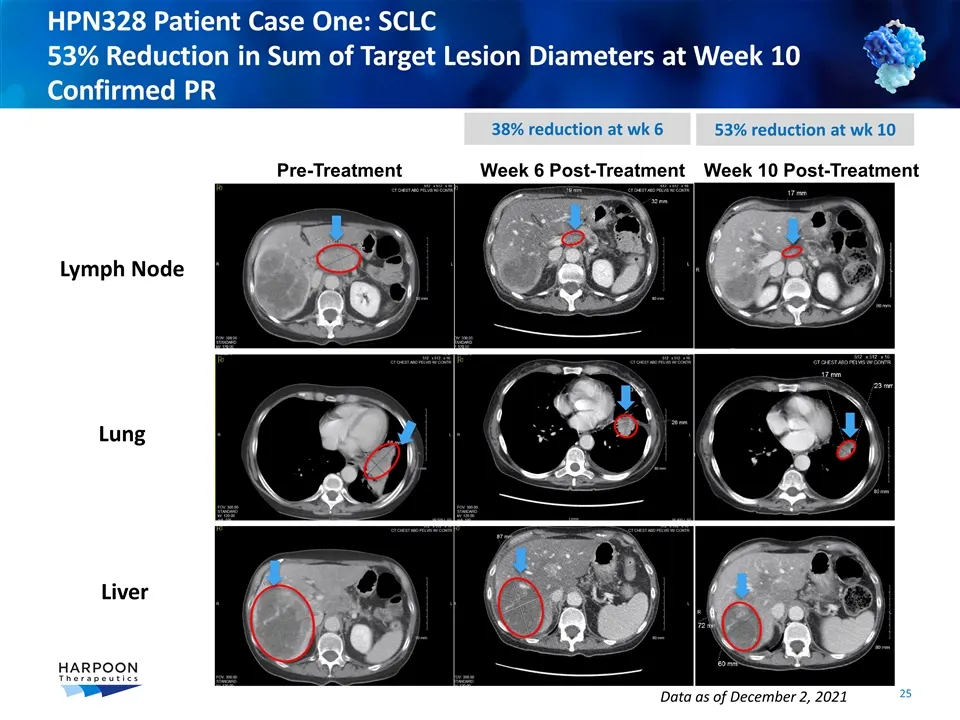
Pre-Treatment Week 6 Post-Treatment Week 10 Post-Treatment 38% reduction at wk 6 53% reduction at wk 10 HPN328 Patient Case One: SCLC 53% Reduction in Sum of Target Lesion Diameters at Week 10 Confirmed PR Lymph Node Lung Liver Data as of December 2, 2021
Slide 26: HPN328 Patient Case Two: SCLC
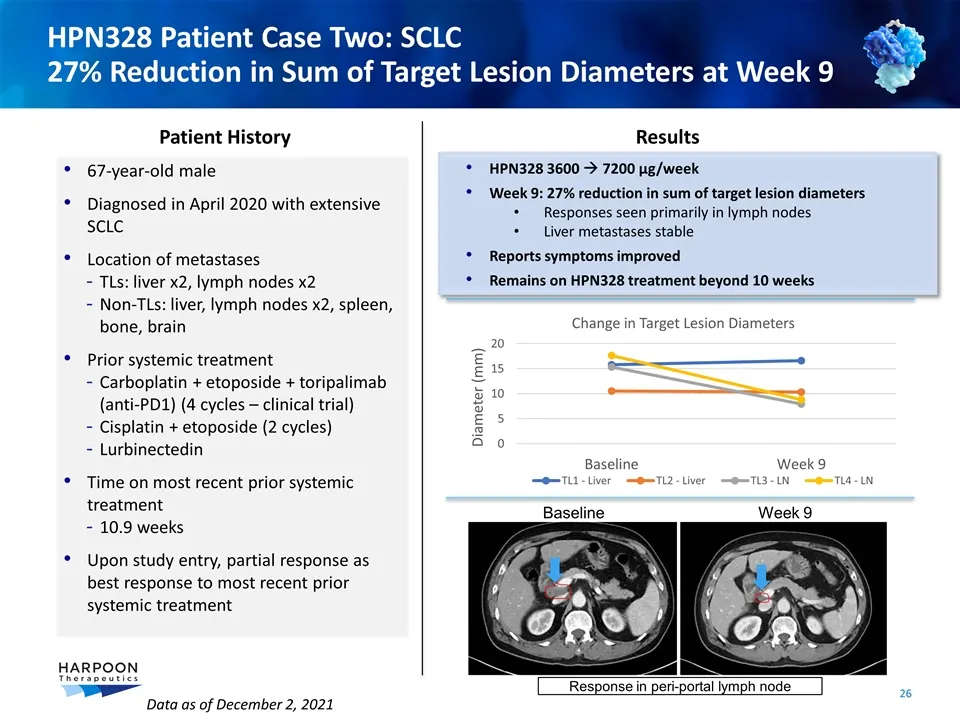
67-year-old male Diagnosed in April 2020 with extensive SCLC Location of metastases TLs: liver x2, lymph nodes x2 Non-TLs: liver, lymph nodes x2, spleen, bone, brain Prior systemic treatment Carboplatin + etoposide + toripalimab (anti-PD1) (4 cycles – clinical trial) Cisplatin + etoposide (2 cycles)
Slide 27: HPN328 Summary and Next Steps
HPN328 Summary and Next Steps HPN328 is well-tolerated No Grade 3 CRS to date Grade 1-2 CRS in 33% of patients No DLTs MTD not yet identified HPN328 activity signal at doses ≥1215 μg/week: Small Cell Lung Cancer 3 out of 4 patients with target lesion shrinkage, including 1 confirmed RECIST partial r
Slide 28: HPN536 Phase 1/2a Trial Design and Status
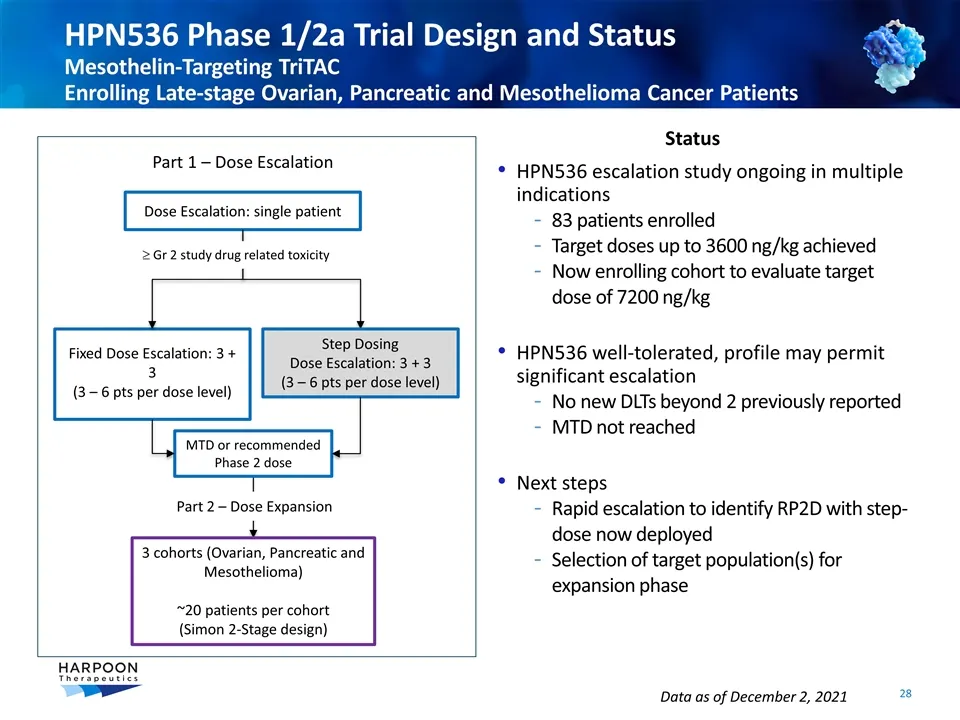
HPN536 Phase 1/2a Trial Design and Status Mesothelin-Targeting TriTAC Enrolling Late-stage Ovarian, Pancreatic and Mesothelioma Cancer Patients HPN536 escalation study ongoing in multiple indications 83 patients enrolled Target doses up to 3600 ng/kg achieved Now enrolling cohort to evaluate target
Slide 29: Clinical Summary
Clinical Summary Compelling initial clinical activity for HPN328 (DLL3) and HPN217 (BCMA) targeting programs observed in escalation phase Learnings from earlier programs have enabled rapid dose escalation and effective CRS management Encouraging profile of tolerability and activity seen at higher do

Slide 30: Harpoon Therapeutics
HARPOON Therapeutics ) \ ) . yy) ray ee ) ‘aa om) yy ae. ) \ LR,
Slide 31: T Cell Engager Platforms Are Optimized to Address Target-Specific Safety Concerns
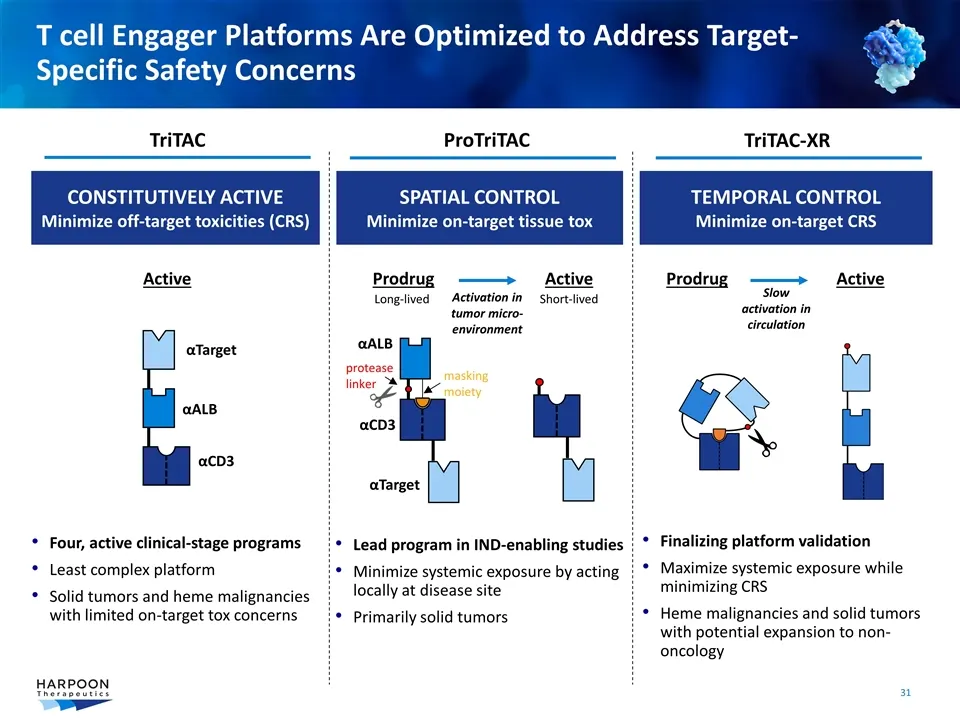
T cell Engager Platforms Are Optimized to Address Target-Specific Safety Concerns TriTAC ProTriTAC TriTAC-XR Prodrug Active αALB αTarget αCD3 Finalizing platform validation Maximize systemic exposure while minimizing CRS Heme malignancies and solid tumors with potential expansion to non-oncology Fou
Slide 32: Platforms Designed To Address T Cell Engager Associated Toxicities
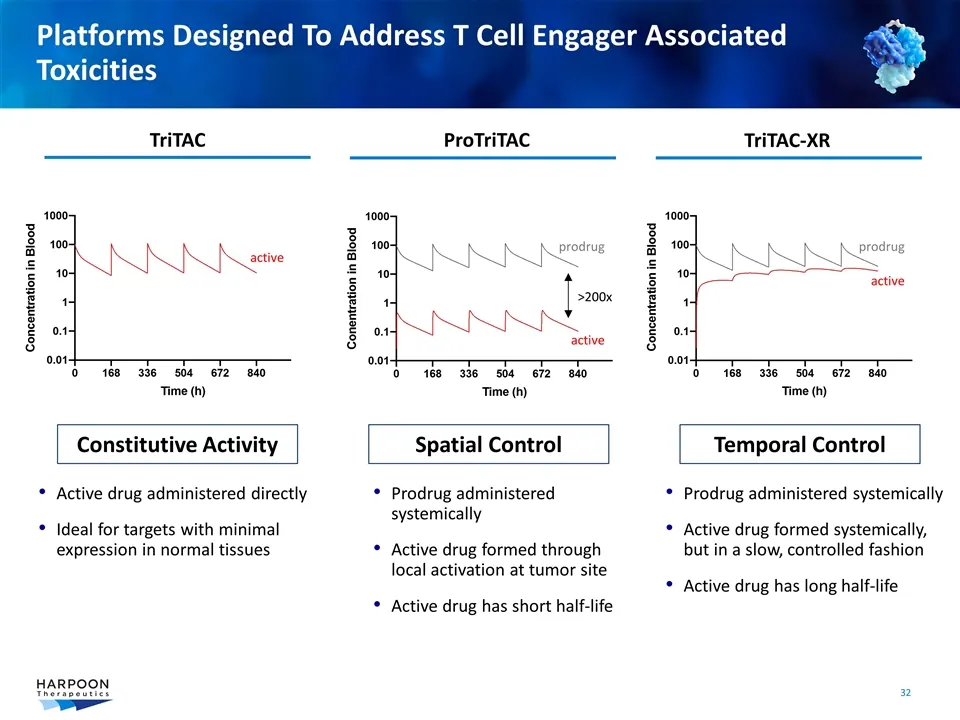
Platforms Designed To Address T Cell Engager Associated Toxicities Prodrug administered systemically Active drug formed through local activation at tumor site Active drug has short half-life Prodrug administered systemically Active drug formed systemically, but in a slow, controlled fashion Active d
Slide 33: Harpoon's First ProTriTAC HPN601 Is Designed to Target EpCAM
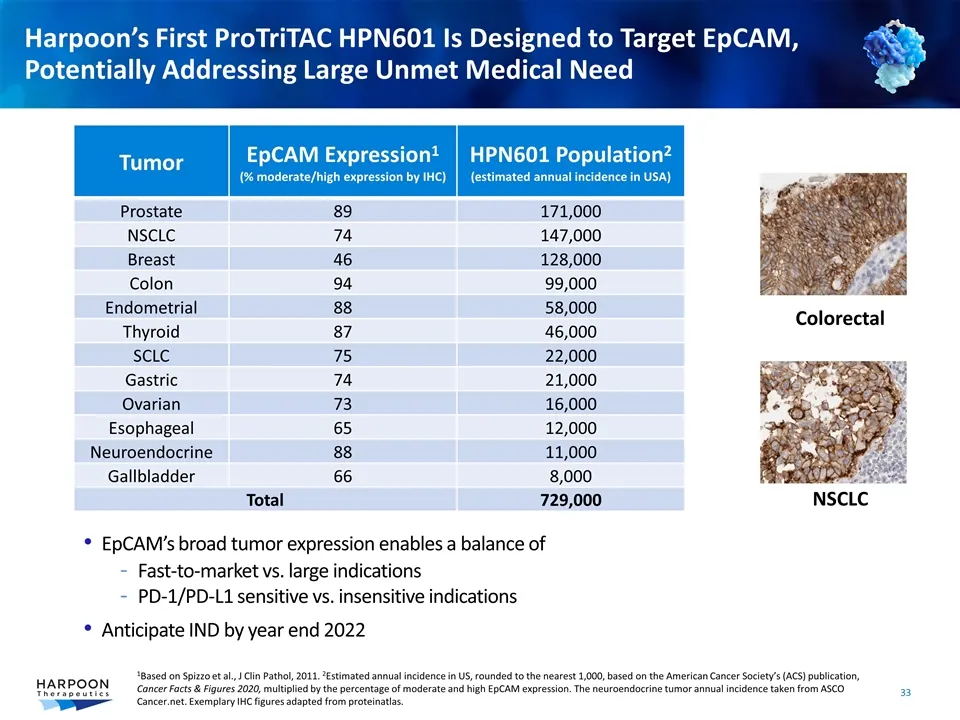
Harpoon’s First ProTriTAC HPN601 Is Designed to Target EpCAM, Potentially Addressing Large Unmet Medical Need Tumor EpCAM Expression1 (% moderate/high expression by IHC) HPN601 Population2 (estimated annual incidence in USA) Prostate 89 171,000 NSCLC 74 147,000 Breast 46 128,000 Colon 94 99,000 Endo
Slide 34: Evidence of TI Expansion for EpCAM-Targeting HPN601
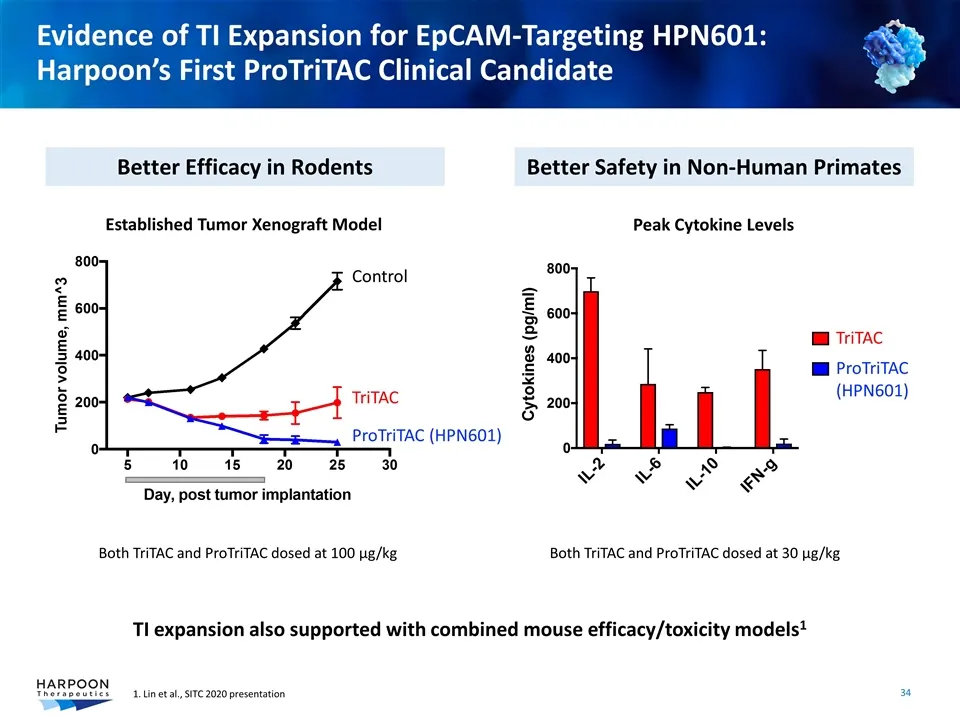
Evidence of TI Expansion for EpCAM-Targeting HPN601: Harpoon’s First ProTriTAC Clinical Candidate Better Efficacy in Rodents Better Safety in Non-Human Primates Control TriTAC ProTriTAC (HPN601) Both TriTAC and ProTriTAC dosed at 100 µg/kg Peak Cytokine Levels Both TriTAC and ProTriTAC dosed at 30 µ
Slide 35: Committed To Developing Next-Generation T Cell Engagers
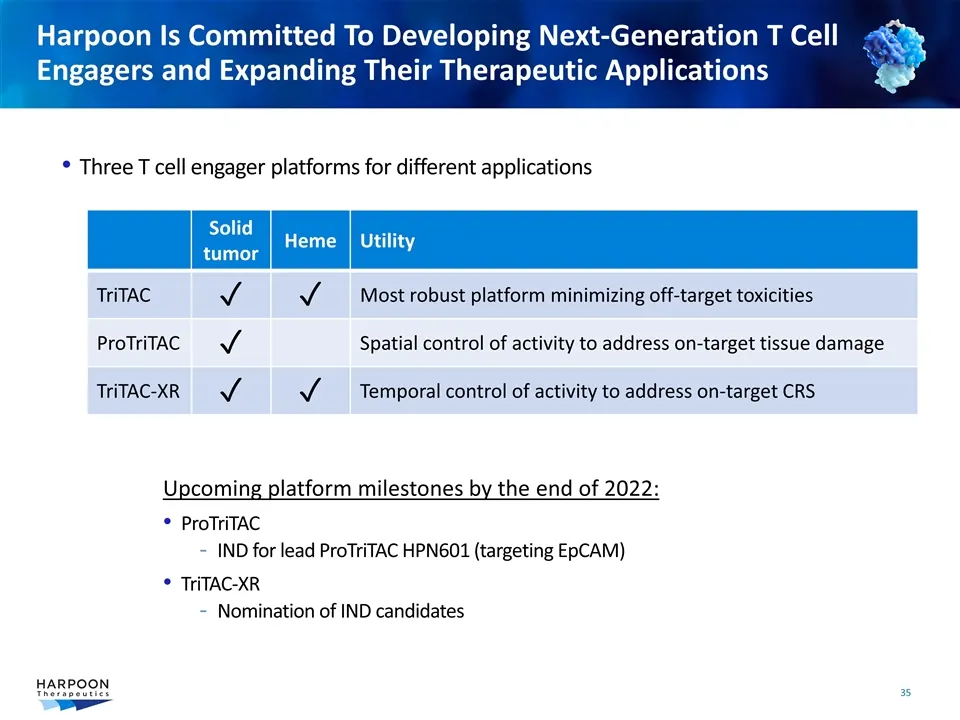
Harpoon Is Committed To Developing Next-Generation T Cell Engagers and Expanding Their Therapeutic Applications Solid tumor Heme Utility TriTAC ✓ ✓ Most robust platform minimizing off-target toxicities ProTriTAC ✓ Spatial control of activity to address on-target tissue damage TriTAC-XR ✓ ✓ Temporal
Slide 36: Program Status Summary and Conclusions
Program Status Summary and Conclusions
Slide 37: Summary and Conclusions
Summary and Conclusions Clinical progress continues HPN328 and HPN217 rapid dose escalation is driving early clinical activity across a spectrum of heavily pre-treated patients Dose levels reaching thresholds showing activity 2022 will focus on advancing our clinical programs that are demonstrating

Slide 38: Advancing T Cell Engager Immunotherapies
Advancing T Cell Engager Immunotherapies DECEMBER 13, 2021
Source: SEC EDGAR · 8-K filed Dec 13, 2021
More decks from Harpoon Therapeutics Inc
 Technical Presentation (January 2024)12 slides · Jan 26, 2024
 ESMO 202315 slides · Oct 23, 2023
 Corporate Update (December 2022)22 slides · Dec 12, 2022
 Investor Presentation (January 2022)40 slides · Jan 11, 2022
 Corporate Update (June 2021)50 slides · Jun 4, 2021
 Corporate Update (December 2020)30 slides · Dec 9, 2020