Provention Bio — Investor Presentation (June 2020)
34 slides from Provention Bio's investor presentation, Jun 15, 2020

Slide 1: Intercepting autoimmunity to prevent disease
Intercepting autoimmunity to prevent disease fF —_ sy _proventionbio
Slide 2: Forward looking statements
Forward looking statements This presentation contains forward-looking statements including, but not limited to, those relating to the Company’s product development, clinical studies, clinical and regulatory timelines, market opportunity, competitive position, possible or assumed future results of op
Slide 3: Intercepting autoimmunity to prevent disease
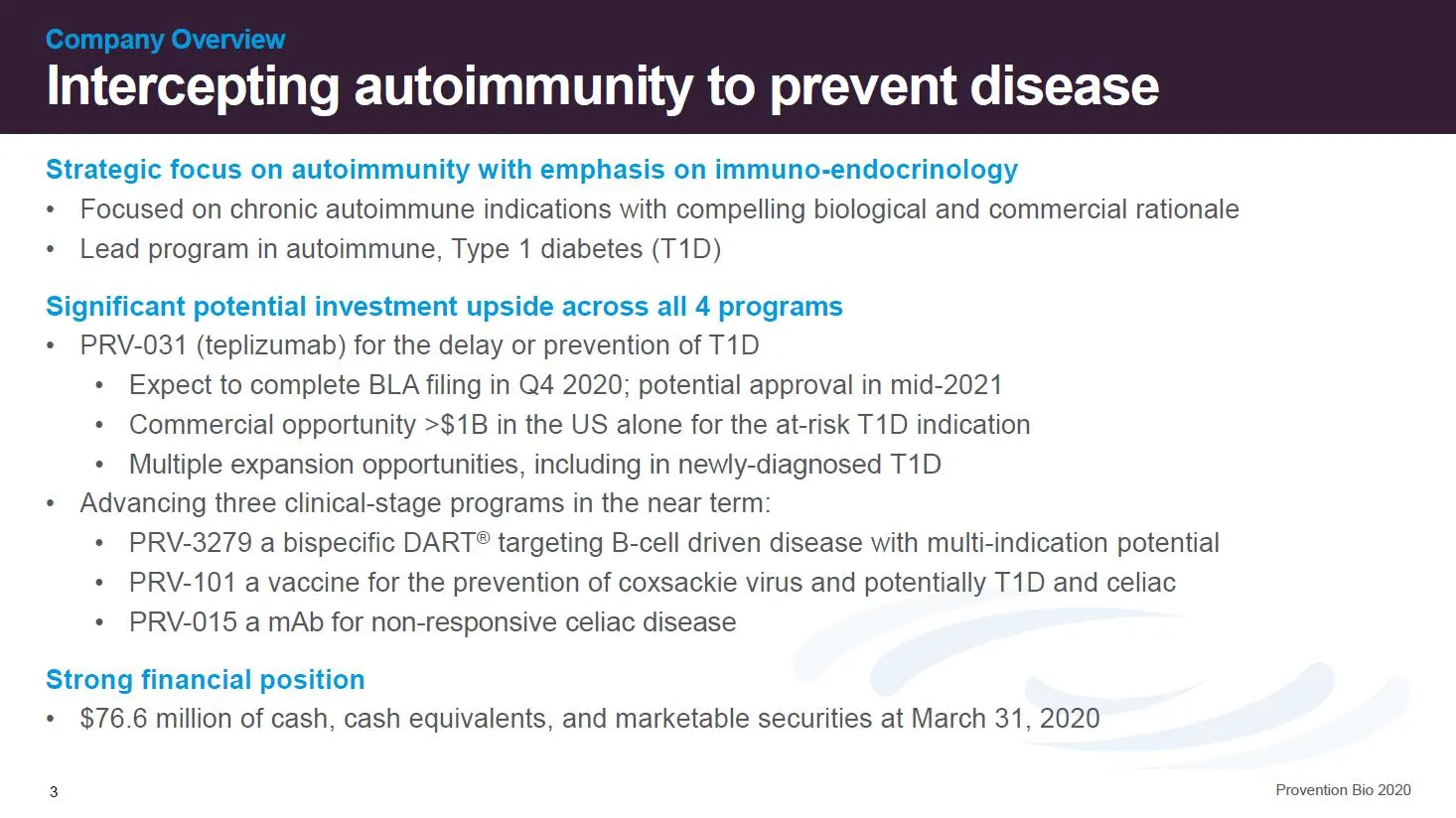
Intercepting autoimmunity to prevent disease Strategic focus on autoimmunity with emphasis on immuno-endocrinology ¢ Focused on chronic autoimmune indications with compelling biological and commercial rationale * Lead program in autoimmune, Type 1 diabetes (T1D) Significant potential investment upsi
Slide 4: Company Overview
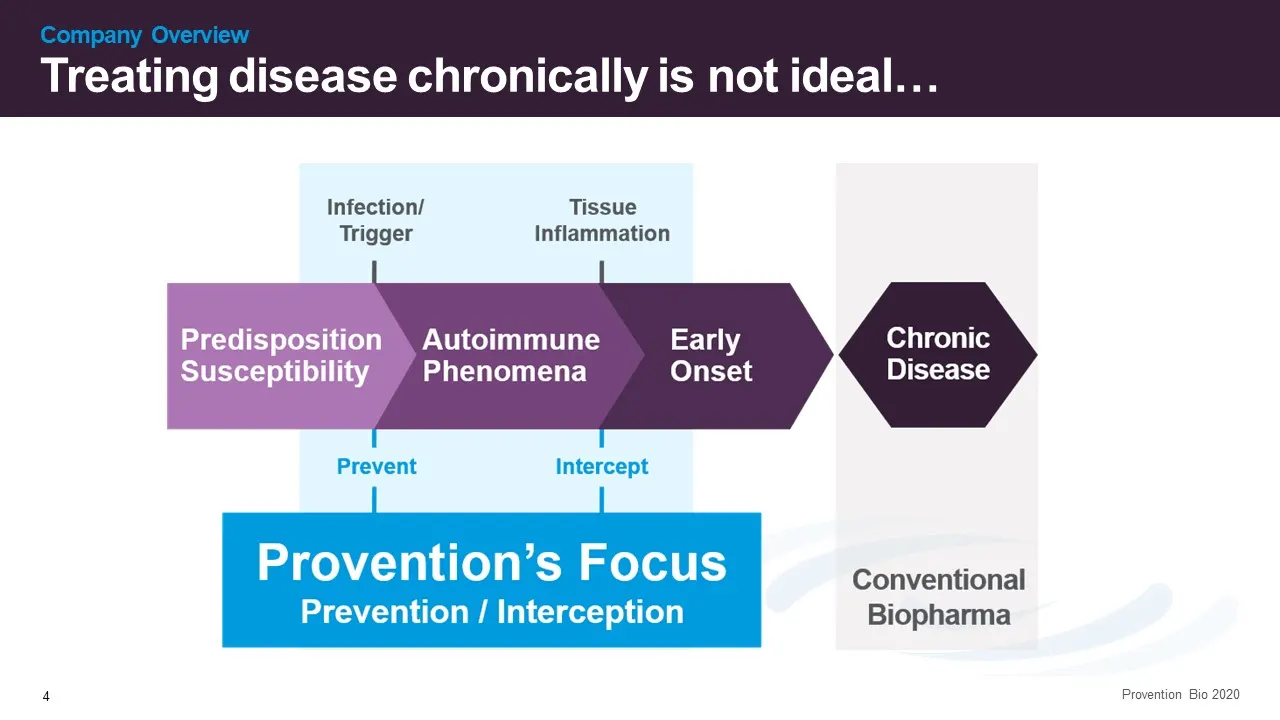
Company Overview Treating disease chronically is not ideal... Infection/ Tissue Trigger Inflammation Autoimmune Early Chronic Phenomena Onset Disease Conventional Biopharma 4 Provention Bio 2020
Slide 5: Pipeline
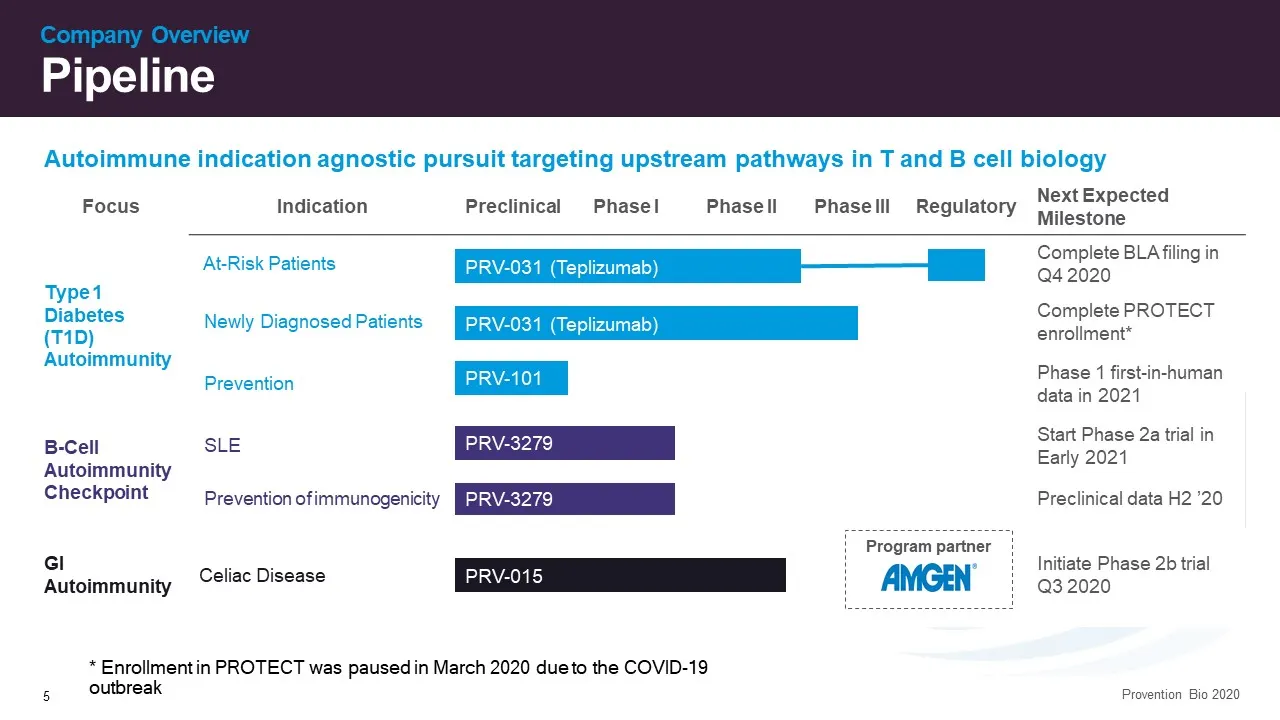
mpany ev Pipeline Next Expected Focus Indication Preclinical Phasel Phasell Phaselll Regulatory Milestone At-Risk Patients = 7 Complete BLA filing in ql —m Q4 2020 T Complete PROTECT 4 enrollment* Phase 1 first-in-human data in 2021 Start Phase 2a trial in B-Cell SLE PRV-3279 Early 2021 Autoimmunity
Slide 6: T1D high unmet need and disease burden
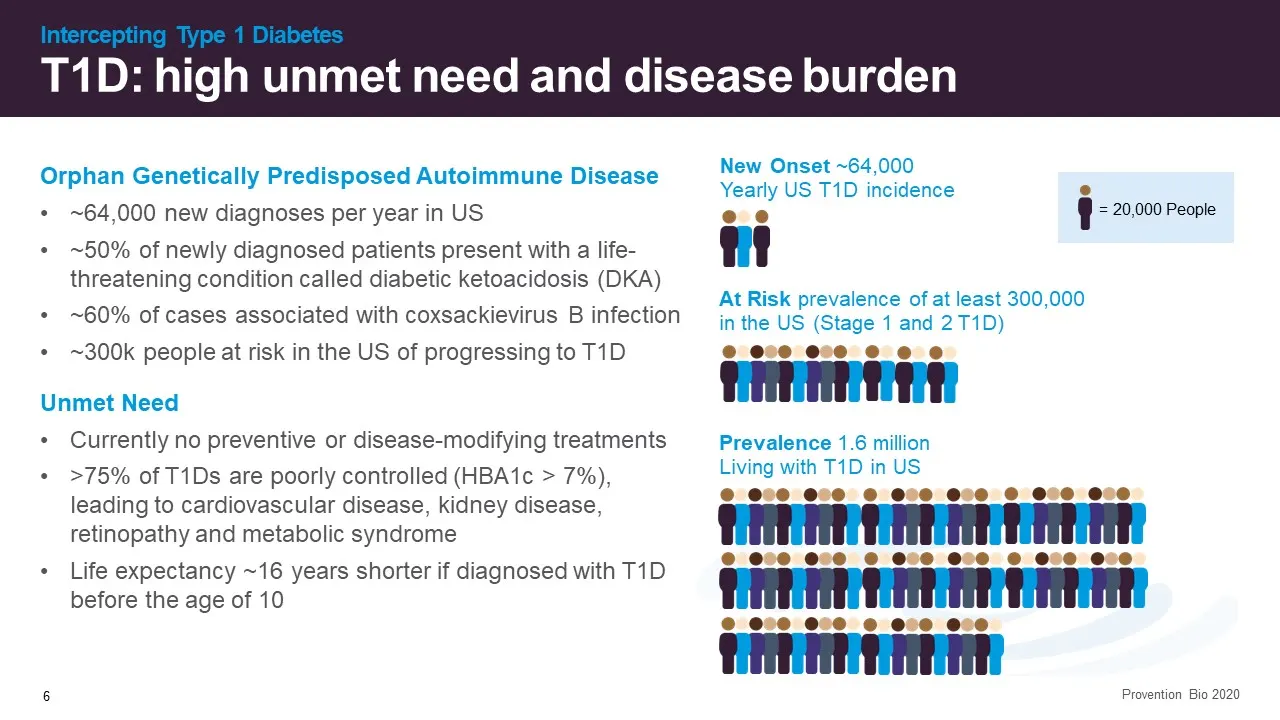
T1D high unmet need and disease burden New Onset ~64,000 han G ically Predisposed Autoimmune Di ; = ; Orphan Genetically Predisposed Autoimmune Disease Yearly US TD incidence + ~64,000 new diagnoses per year in US e + ~50% of newly diagnosed patients present with a life- wy threatening condition cal
Slide 7: Intercepting Type Diabetes
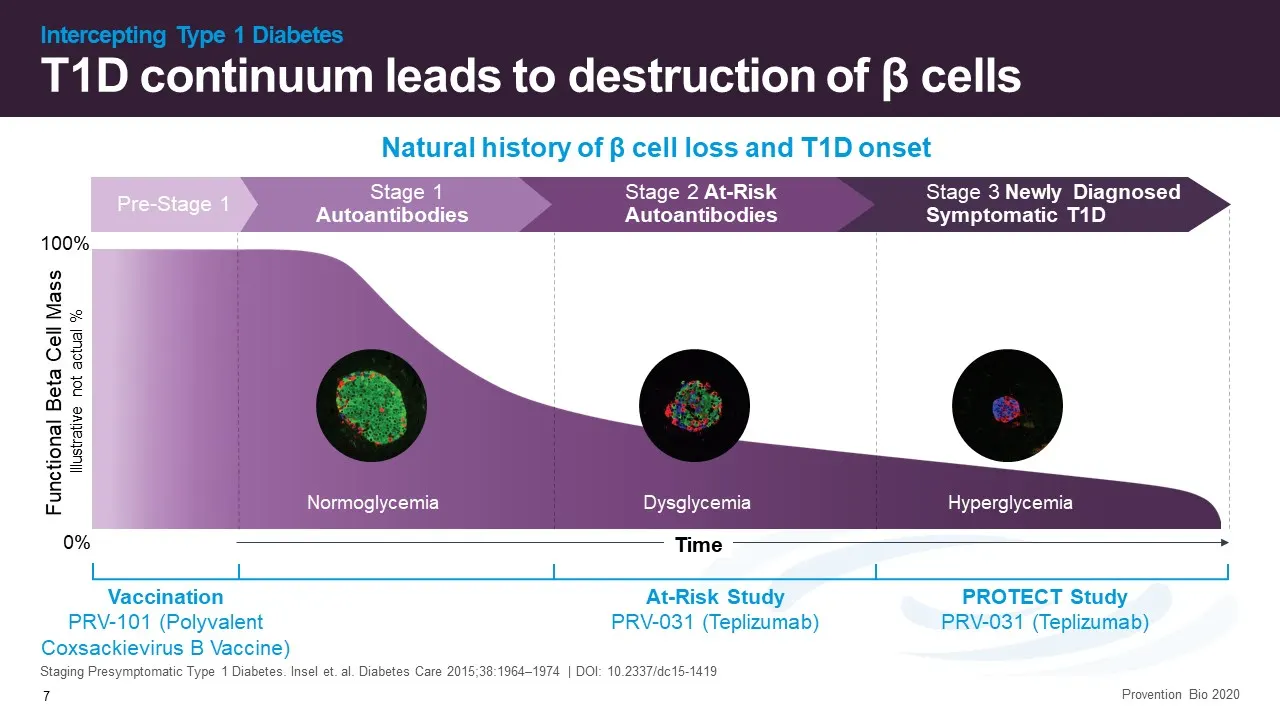
Intercepting Type 1 Diabetes T1D continuum leads to destruction of B cells Stage 3 Newly Autoantibodies Symptomatic T’ o S x Functional Beta Cell Mass illustrative not actual % Normoglycemia Dysglycemia Hyperglycemia ° x Staging Presymptomatic Type 1 Diabetes. Insel et. al. Diabetes Care 2015:38:196
Slide 8: PRV-031 (teplizumab): Intercepting T1D
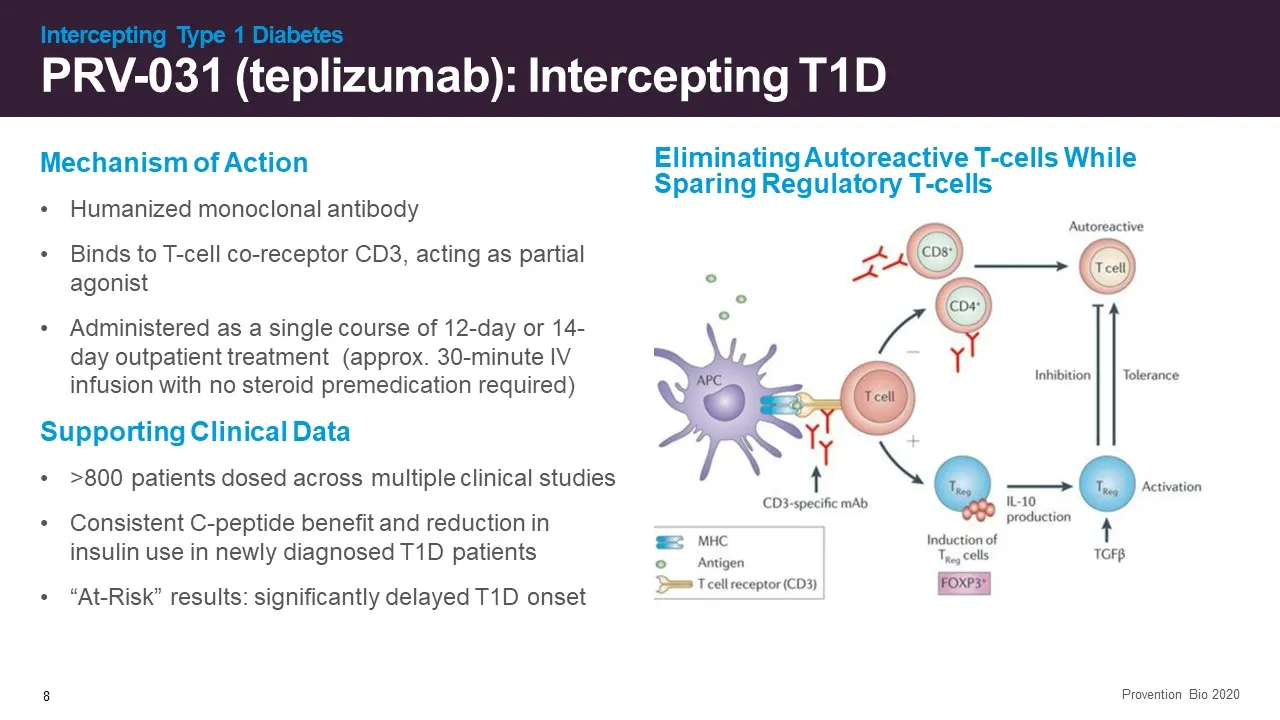
PRV-031 (teplizumab): Intercepting T1D Mechanism of Action Eliminating Autoreactive T-cells While Sparing Regulatory T-cells * Humanized monoclonal antibody . Binds to T-cell co-receptor CD3, acting as partial 2) agonist < ay ig be 4°) + Administered as a single course of 12-day or 14- \ ra SH day o
Slide 9: At-Risk study in T1D
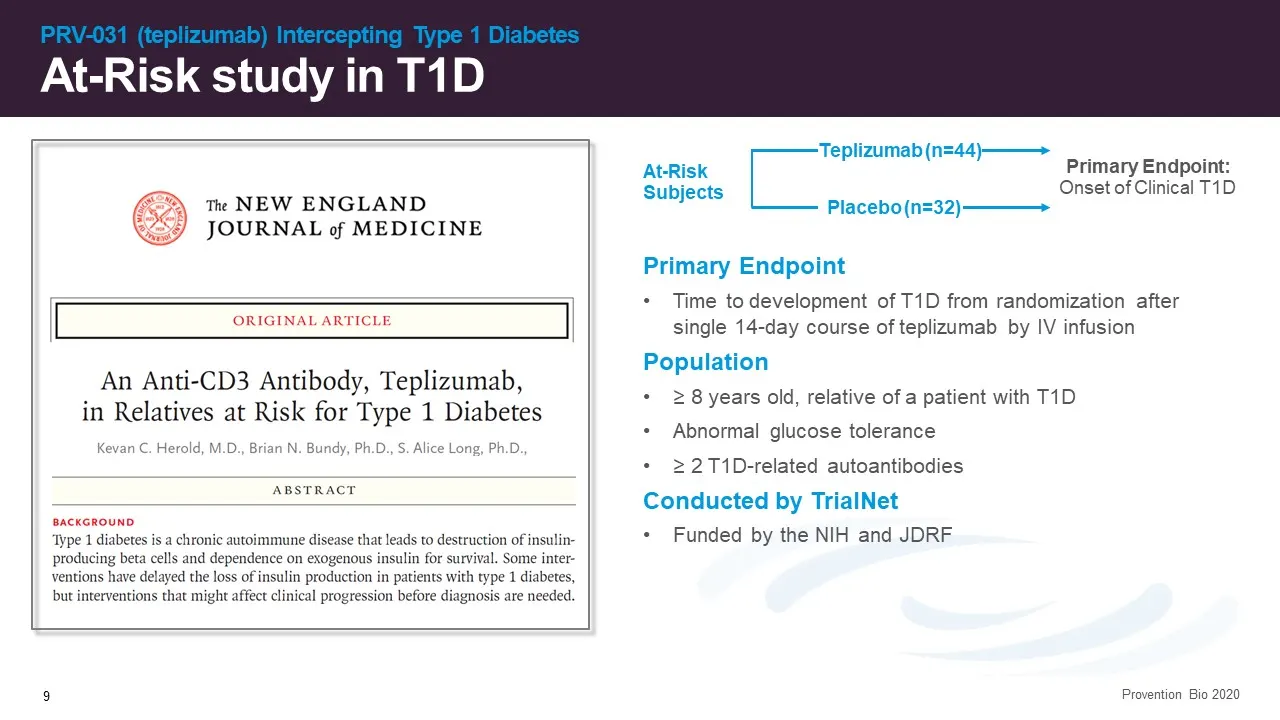
At-Risk study in T1D The NEW ENGLAND JOURNAL of MEDICINE ORIGINAL ARTICLE An Anti-CD3 Antibody, Teplizumab, in Relatives at Risk for Type 1 Diabetes Kevan C. Herold, M.D., Brian N. Bundy, Ph.D., S. Alice Long, Ph.D. ABSTRACT BACKGROUND Type 1 diabetes is a chronic autoimmune disease that leads to de
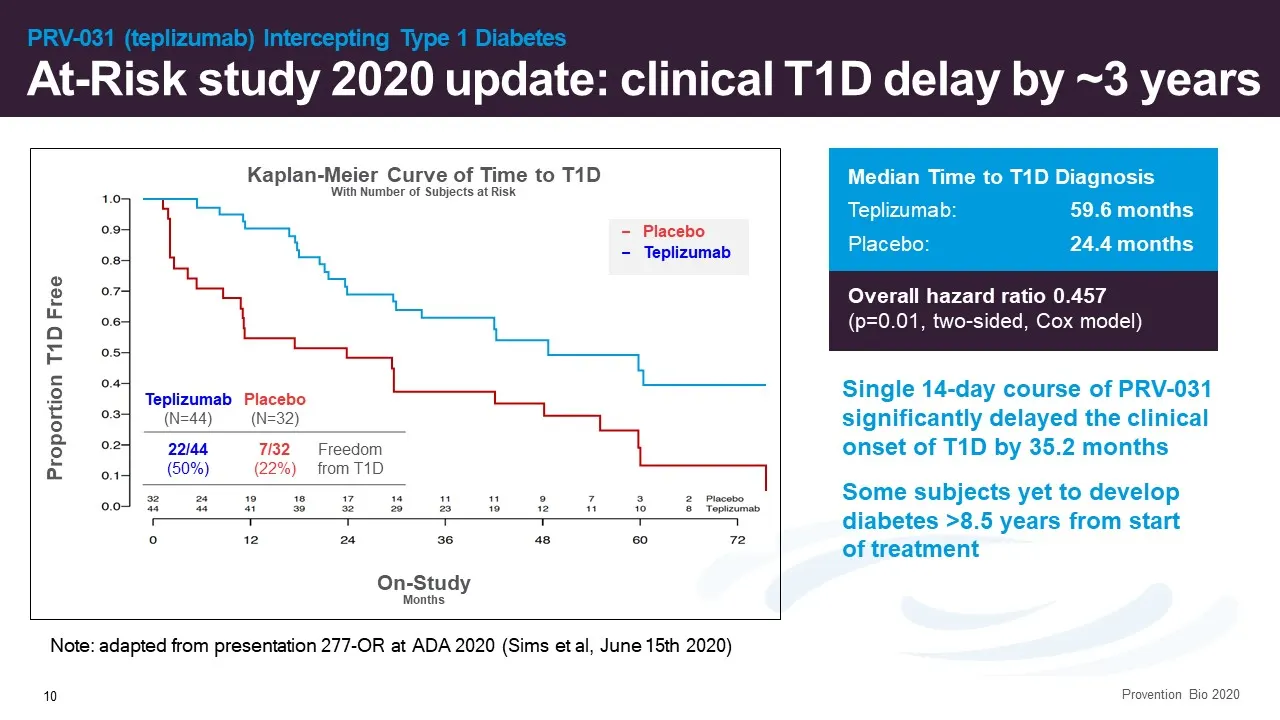
Slide 10: At-Risk study 2020 update: clinical T1D delay by ~3 years
PRV-031 (teplizumab) Intercepting Type 1 Diabetes At-Risk study 2020 update: clinical T1D delay by ~3 years Kaplan-Meier Curve of Time to T1D With Number of Subjects at Risk 1.05 Pe oe L__, - Placebo oe - Teplizumab Teplizumab Placebo 03] (N=44) —_(N=32) 027 22144 7132 Freedom (50%) (22%) from T1D P
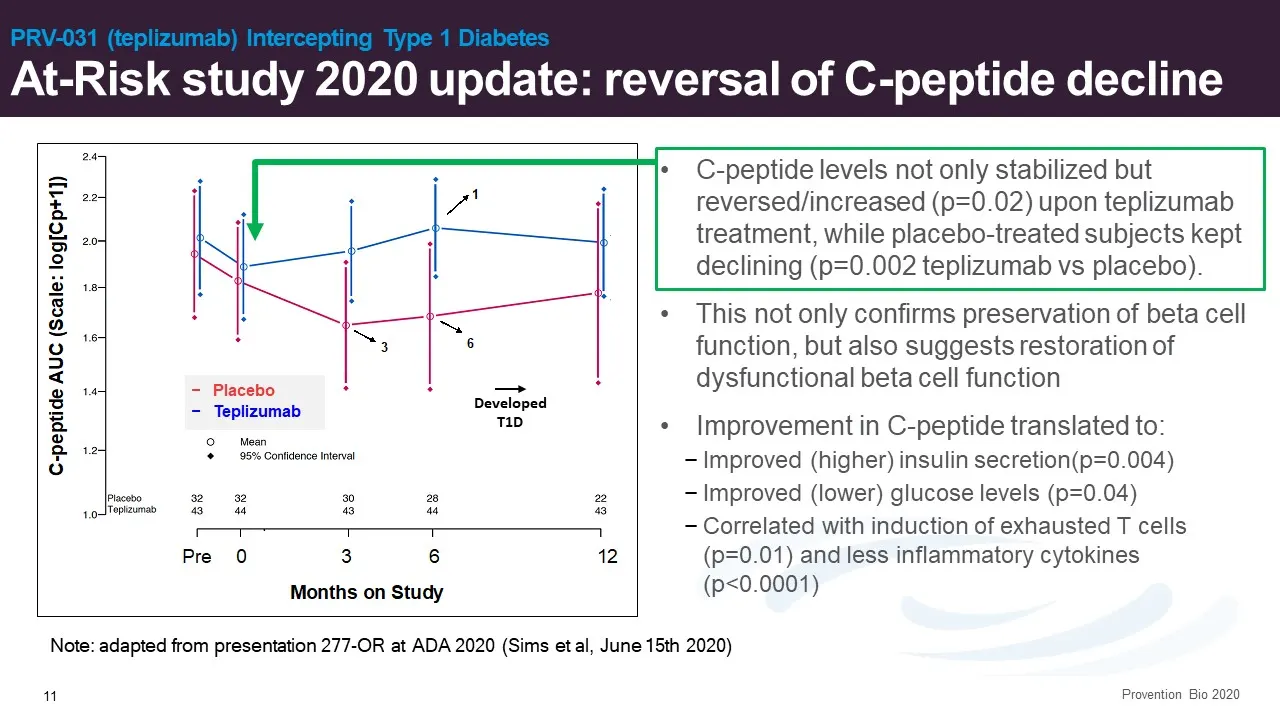
Slide 11: At-Risk study 2020 update: reversal of C-peptide decline
C-peptide AUC (Scale: log[Cp+1]) 249 224 204 aed 184 aad a2 - Placebo - Teplizumab Placebo .0-FTepizuman -| _——— Se || ™ 195% Confidence Interval At-Risk study 2020 update: reversal of C-peptide decline C-peptide levels not only stabilized but reversed/increased (p=0.02) upon teplizumab treatment, w
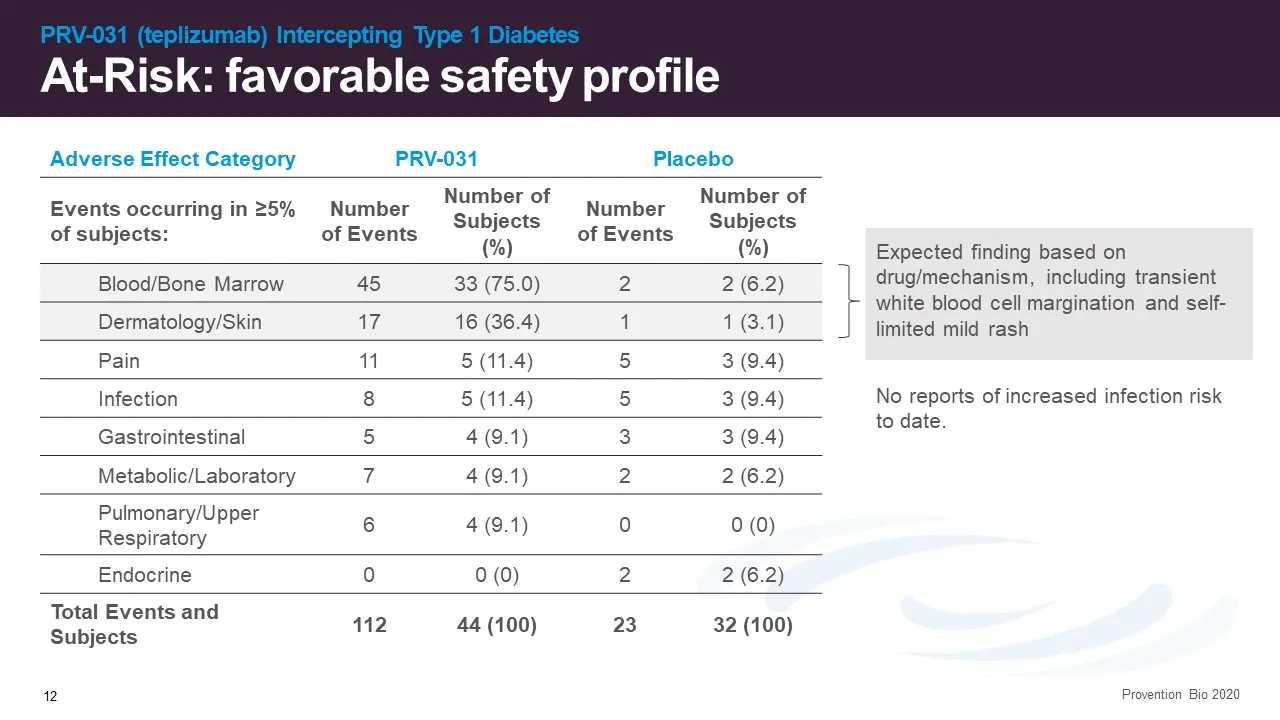
Slide 12: At-Risk: favorable safety profile
At-Risk: favorable safety profile Adverse Effect Category PRV-031 Placebo ae Number of Number of Events occurring in 25% Number Subjects Number Subjects of subjects: of Events s of Events s — (%) (%) ___ Expected finding based on Blood/Bone Marrow 45 33 (75.0) 2 2 (6.2) | drug/mechanism, including t
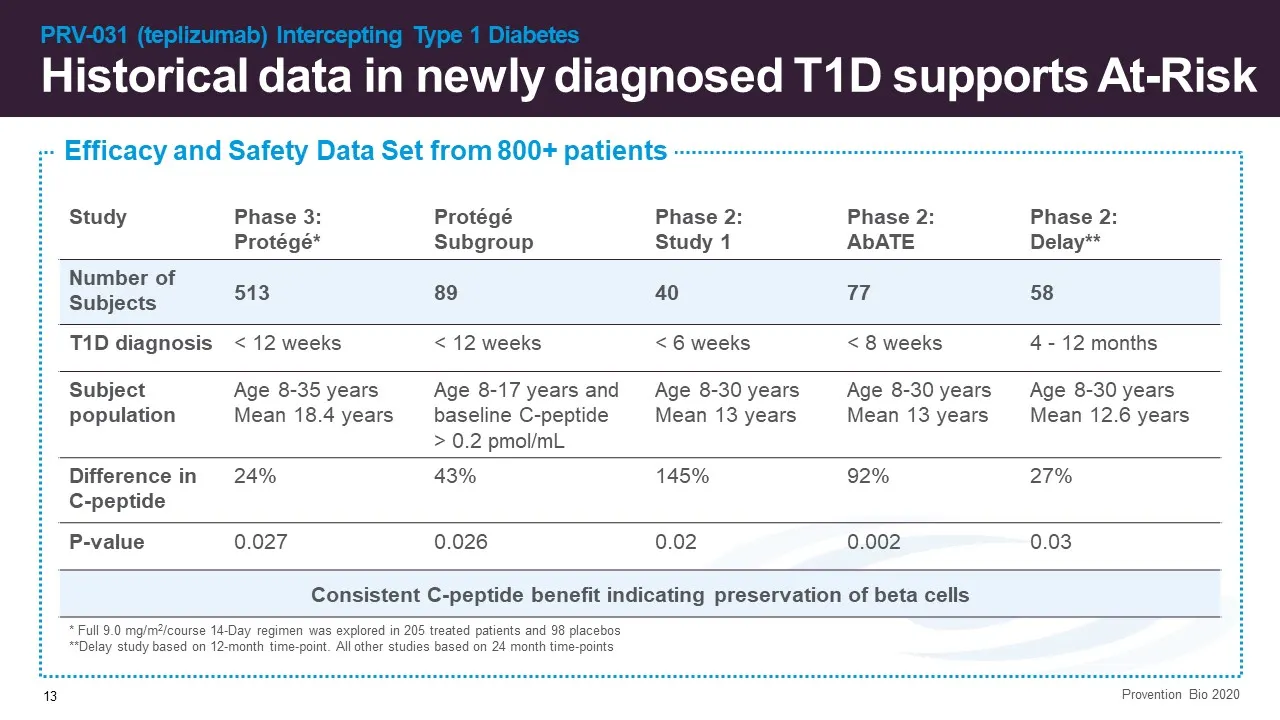
Slide 13: Historical data in newly diagnosed T1D supports At-Risk
Historical data in newly diagnosed T1D supports At-Risk + Efficacy and Safety Data Set from 800+ patients Study Phase 3: Protégé Phase 2: Phase 2: Phase 2: Protégé* Subgroup Study 1 AbATE Delay** Number of Subjects 513 89 40 7 58 T1D diagnosis < 12 weeks < 12 weeks <6 weeks <8 weeks 4-12 months Subj
Slide 14: Regulatory strategy
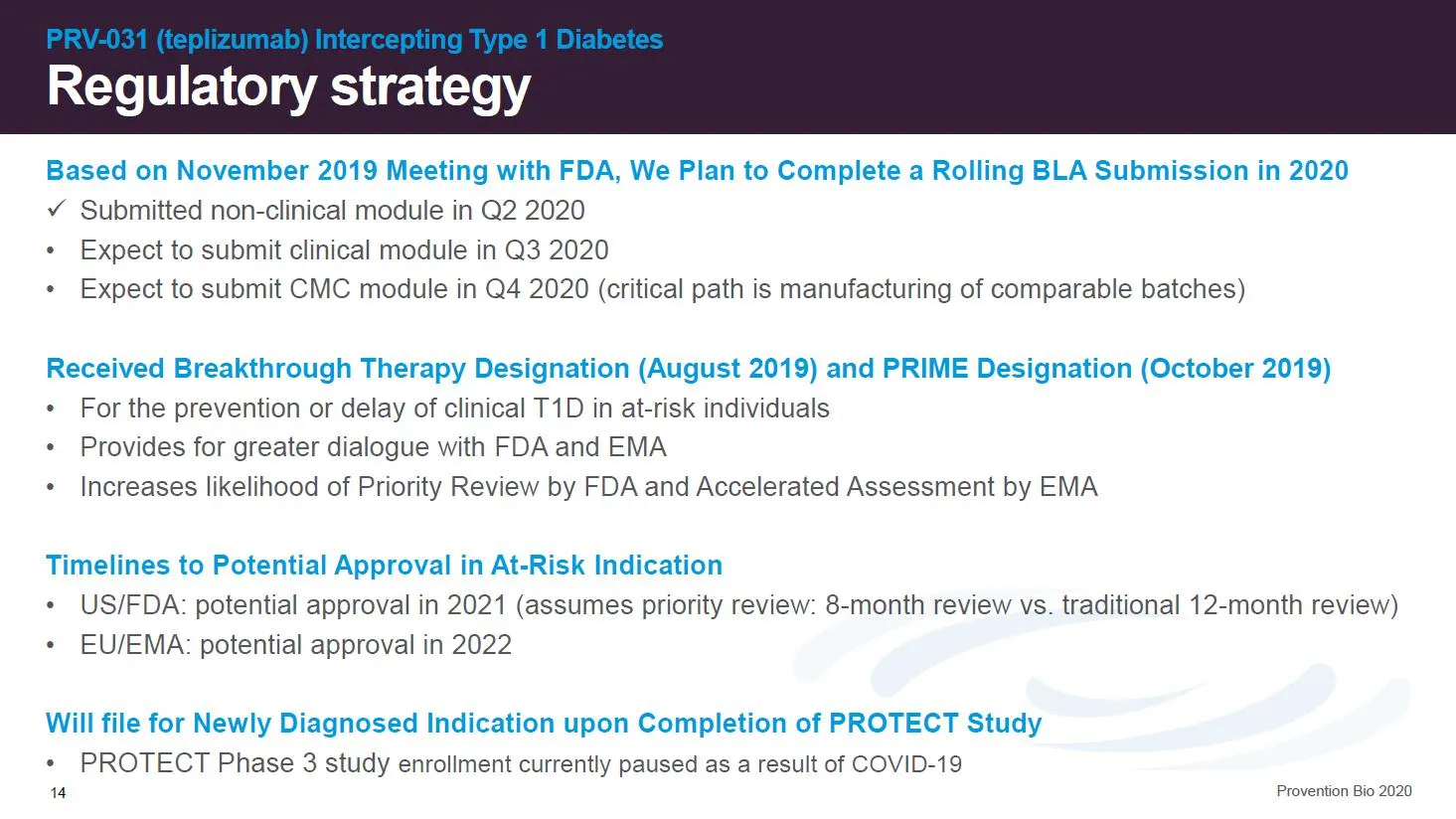
Regulatory strategy Based on November 2019 Meeting with FDA, We Plan to Complete a Rolling BLA Submission in 2020 v Submitted non-clinical module in Q2 2020 « Expect to submit clinical module in Q3 2020 « Expect to submit CMC module in Q4 2020 (critical path is manufacturing of comparable batches) R
Slide 15: Teplizumab manufacturing on track
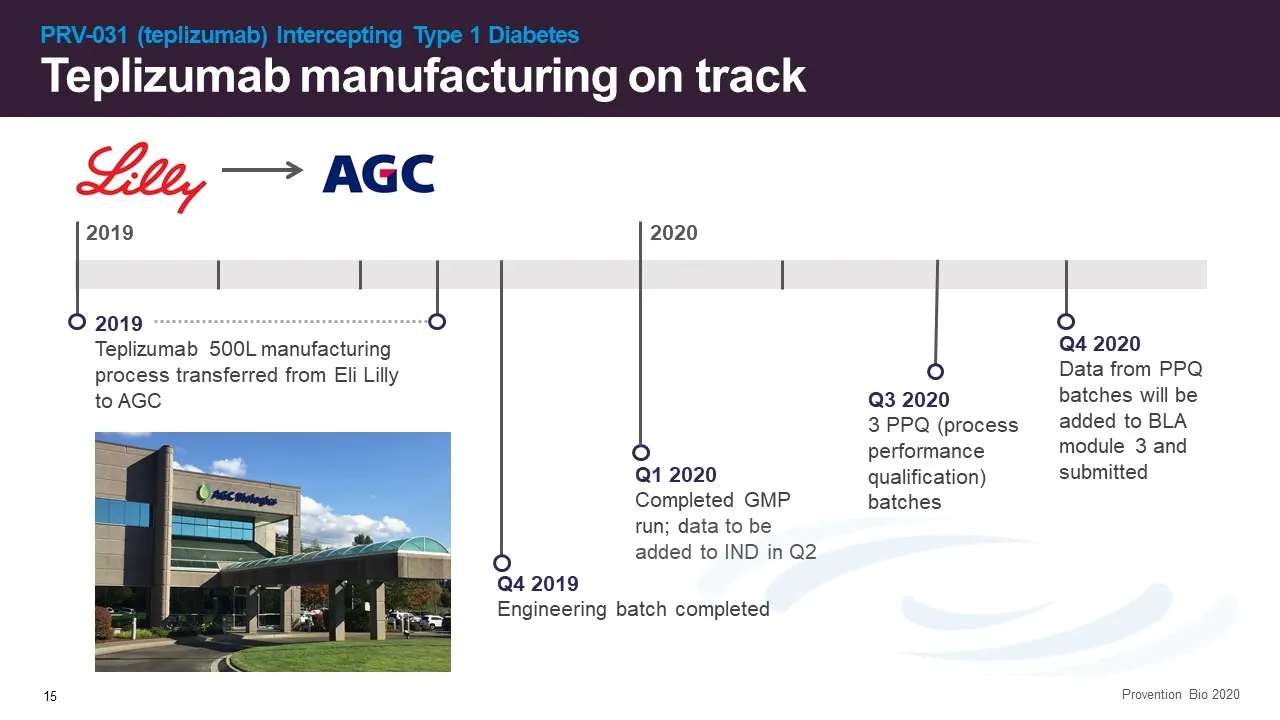
Teplizumab manufacturing on track 2019 2020 2019 } | Teplizumab 500L manufacturing Q4 2020 process transferred from Eli Lilly Data from PPQ to AGC Q3 2020 batches will be 3PPQ (process added to BLA performance module 3 and Q1 2020 qualification) submitted Completed GMP batches run; data to be added
Slide 16: Teplizumab commercialization and patient screening
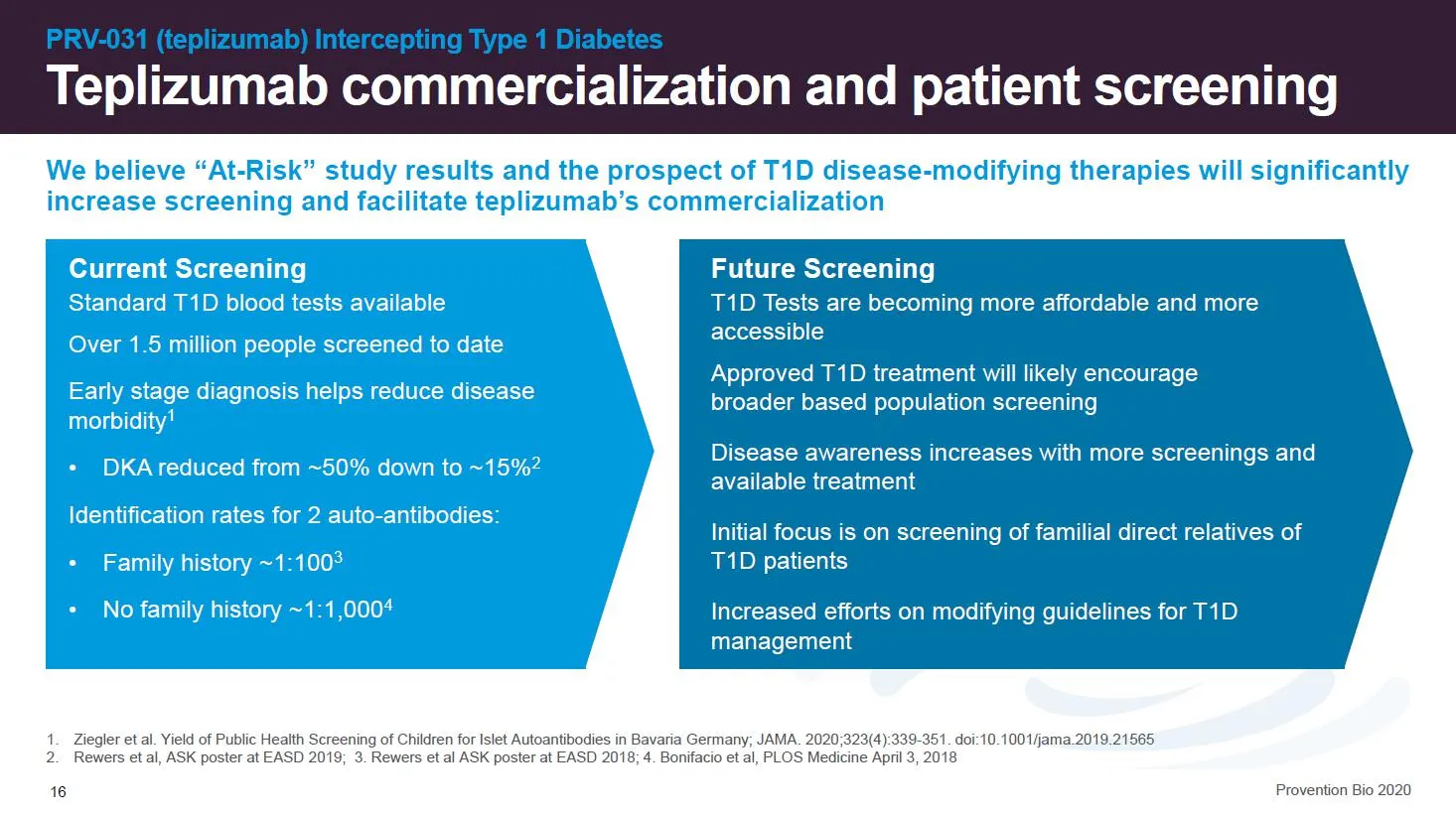
PRV-031 (teplizumab) Intercepting Type 1 Diabetes Teplizumab commercialization and patient screening 1. Ziegler et al. Yield of Public Health Screening of Children for Islet Autoantibodies in Bavaria Germany; JAMA. 2020;323(4):339-351.. doi:10.1001/jama.2019.21565 2. Rewers et al, ASK poster at EASD
Slide 17: US Commercial opportunity for at-risk indication
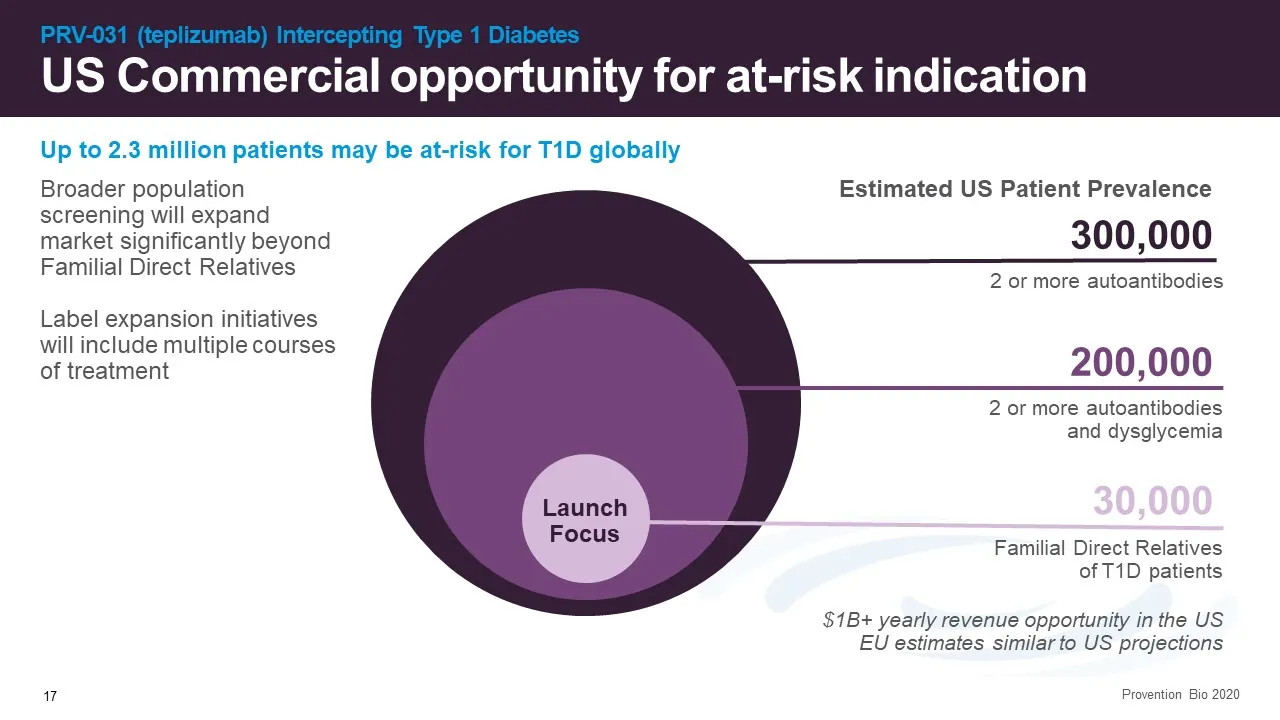
PRV-031 (teplizumab) Intercepting Type 1 Diabetes US Commercial opportunity for at-risk indication Broader population Estimated US Patient Prevalence screening will expand market significantly beyond 300,000 Familial Direct Relatives 2 or more autoantibodies Label expansion initiatives will include
Slide 18: Laying the groundwork for successful commercialization
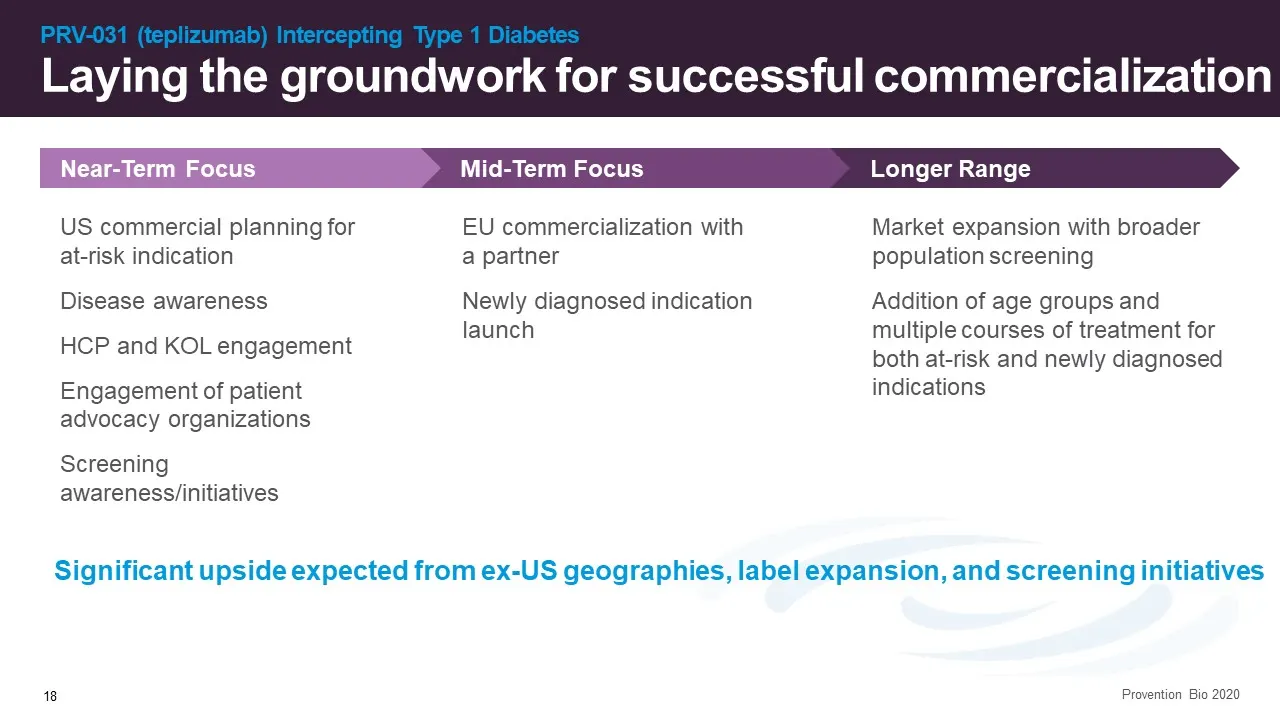
Laying the groundwork for successful commercialization Near-Term Focus Mid-Term Focus Longer Range US commercial planning for EU commercialization with Market expansion with broader at-risk indication a partner population screening Disease awareness Newly diagnosed indication Addition of age groups
Slide 19: T1D lifecycle and other potential indications
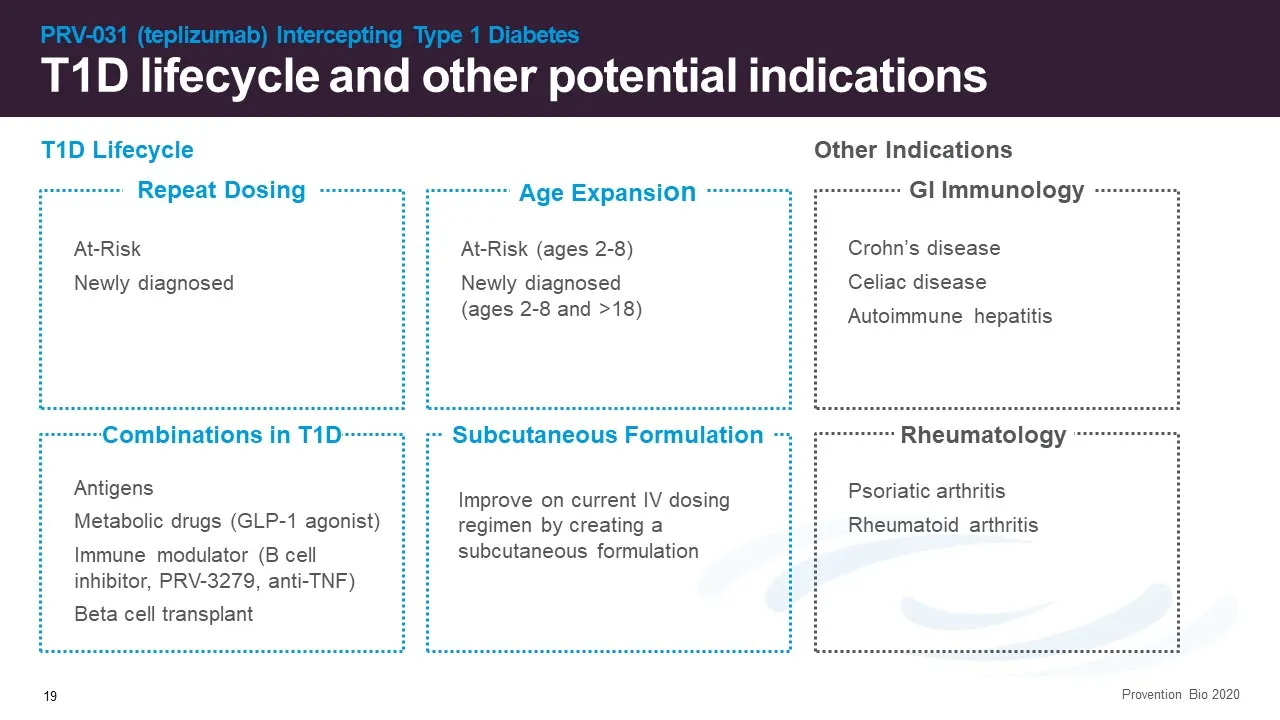
T1D lifecycle and other potential indications T1D Lifecycle Other Indications ~ Repeat Dosing GI Immunology At-Risk Crohn’s disease Newly diagnosed At-Risk (ages 2-8) Newly diagnosed (ages 2-8 and >18) Celiac disease Autoimmune hepatitis - Subcutaneous Formulation - ombinations in T1D “Rheumatology
Slide 20: PROTECT Phase 3 in newly diagnosed T1D
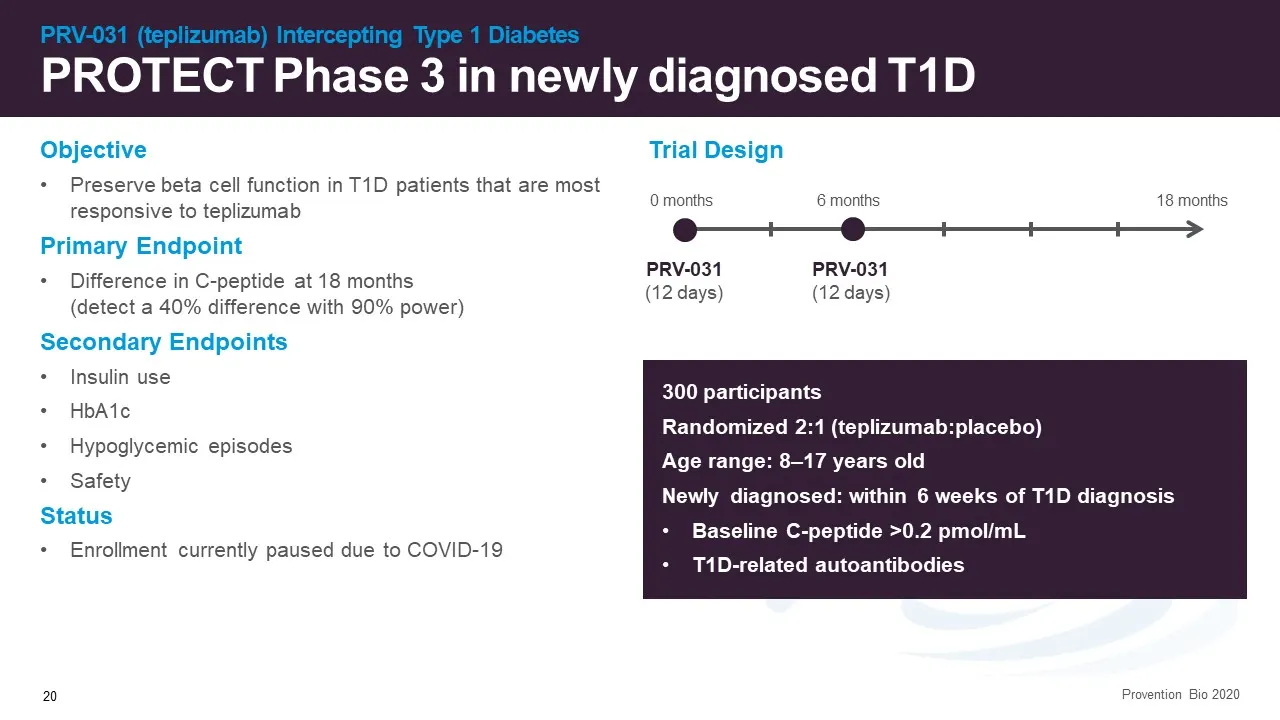
PRV-031 (teplizumab) Intercepting Type 1 Diabetes PROTECT Phase 3 in newly diagnosed T1D + Preserve beta cell function in T1D patients that are most O months 6 months 18 months responsive to teplizumab PRV-031 PRV-031 Difference in C-peptide at 18 months (12 days) (12 days) (detect a 40% difference
Slide 21: Opportunity for newly diagnosed indication in the US
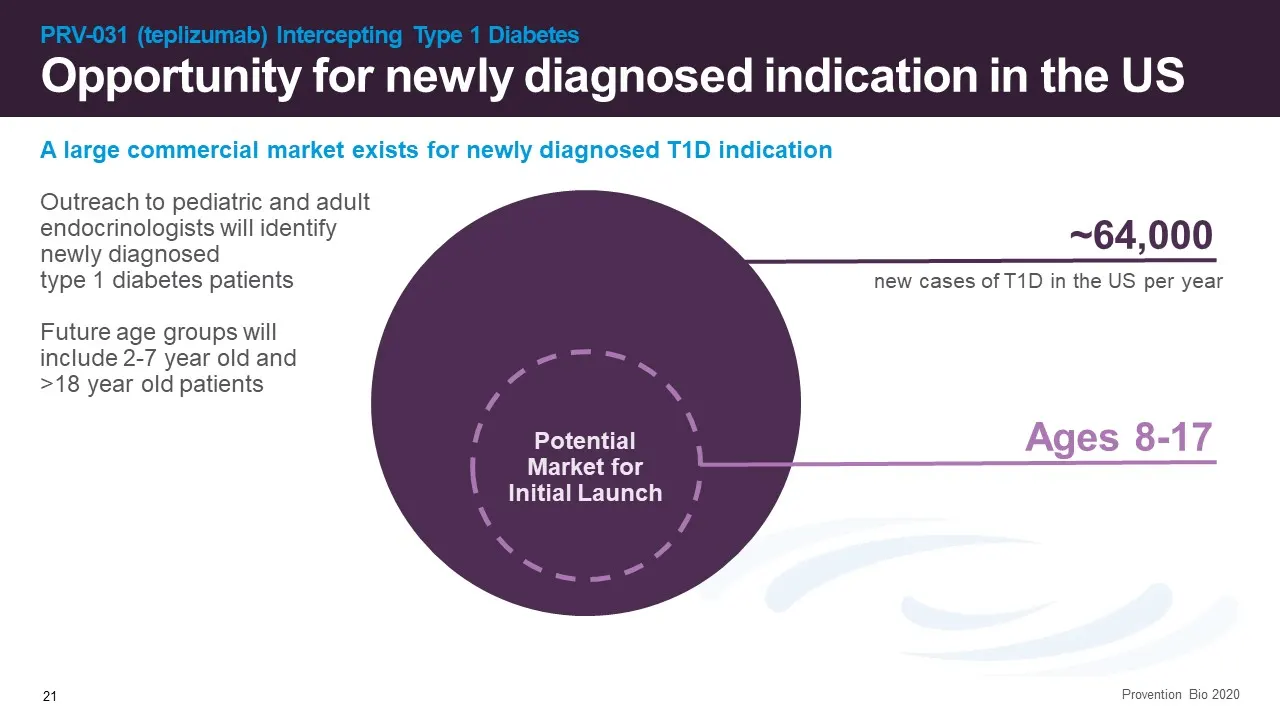
PRV-031 (teplizumab) Intercepting Type 1 Diabetes Opportunity for newly diagnosed indication in the US Outreach to pediatric and adult endocrinologists will identify newly diagnosed type 1 diabetes patients new cases of T1D in the US per year Future age groups will include 2-7 year old and >18 year
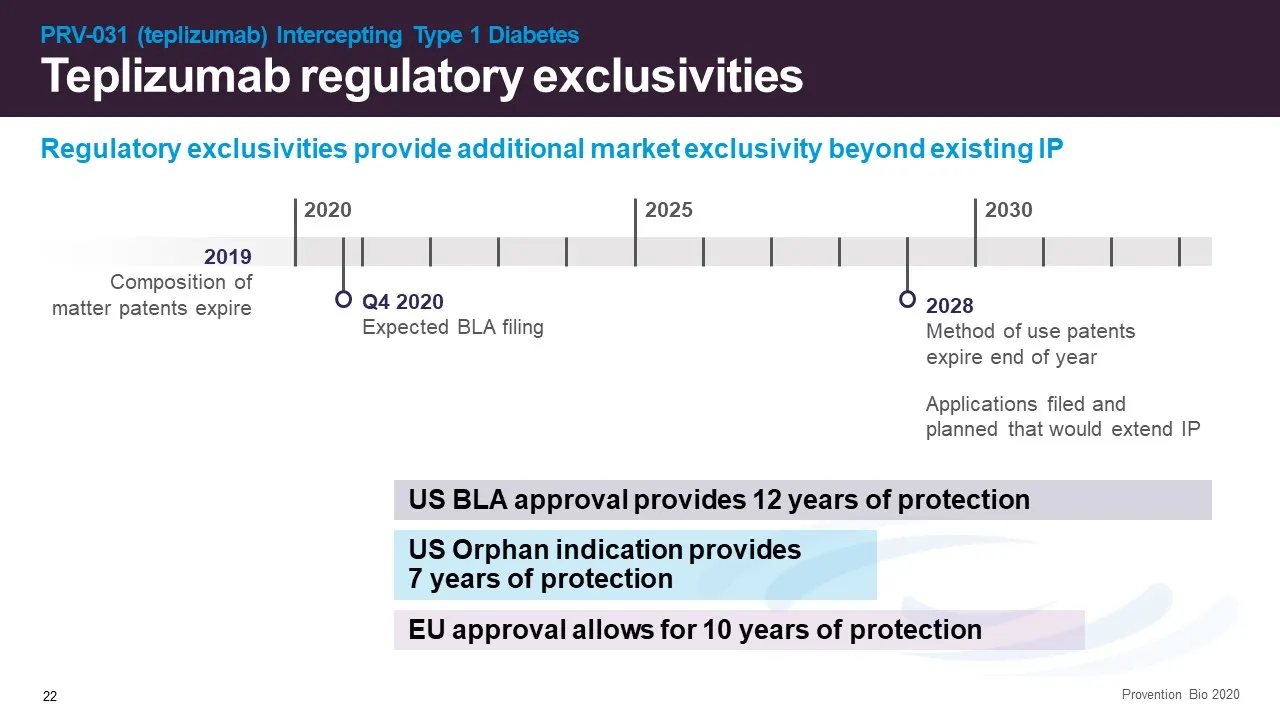
Slide 22: Teplizumab regulatory exclusivities
Teplizumab regulatory exclusivities Regulatory exclusivities provide additional market exclusivity beyond existing IP 2030 2020 2025 2019 | ee ee ee | ee | } Composition of Q4 2020 2028 matter patents expire Expected BLA filing Method of use patents expire end of year Applications filed and planned
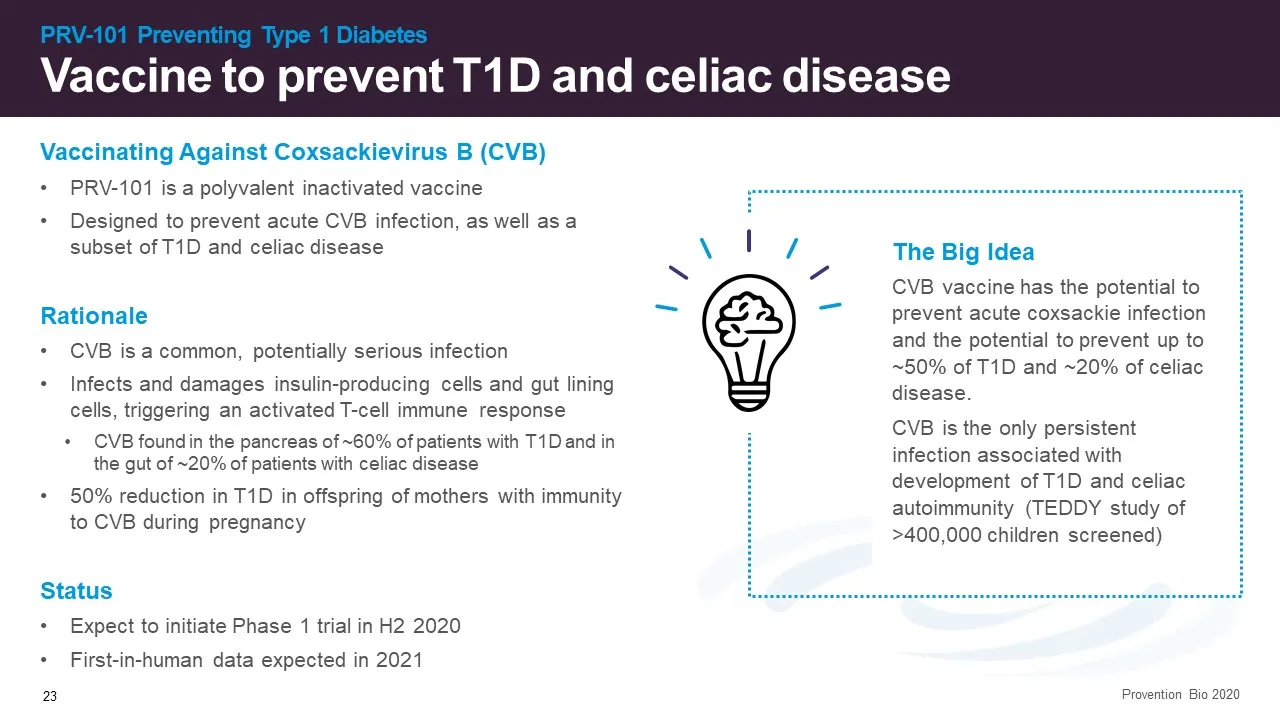
Slide 23: Vaccine to prevent T1D and celiac disease
Vaccine to prevent T1D and celiac disease Vaccinating Against Coxsackievirus B (CVB) + PRV-101 is a polyvalent inactivated vaccine + Designed to prevent acute CVB infection, as well asa subset of T1D and celiac disease \ I ‘A The Big Idea CVB vaccine has the potential to prevent acute coxsackie infe
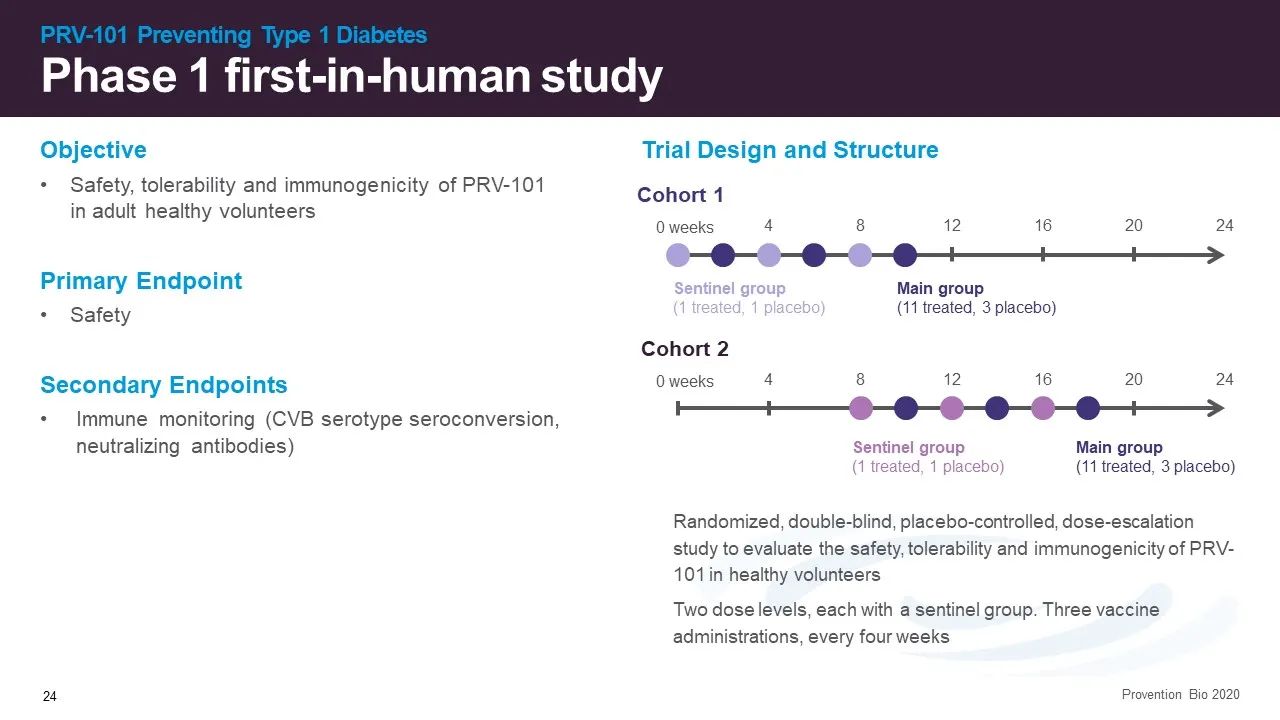
Slide 24: First-in-human study design
in-human st Objective Trial Design and Structure + Safety, tolerability and immunogenicity of PRV-101 Cohort 4 in adult healthy volunteers O weeks 4 8 12 16 20 24 Primary Endpoint Main group + Safety (11 treated, 3 placebo) Cohort 2 Secondary Endpoints O weeks 4 8 12 16 20 24 + Immune monitoring (CV
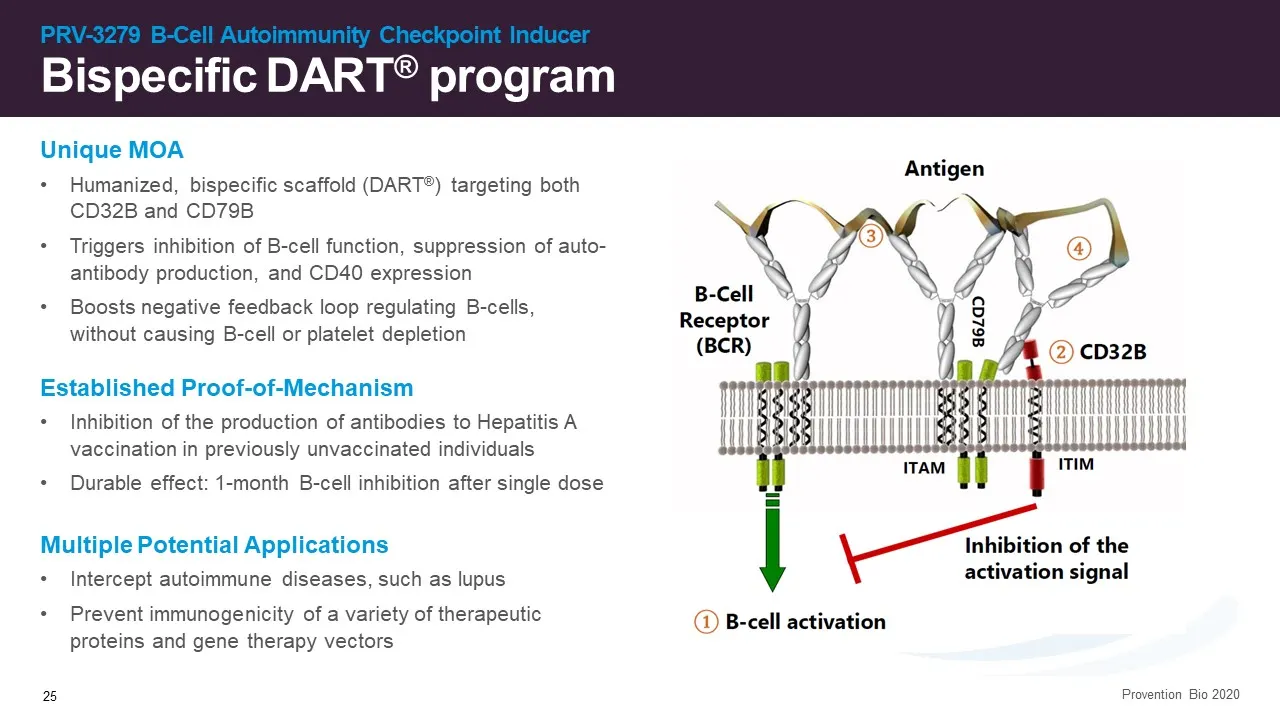
Slide 25: Bispecific DART program
Bispecific DART® program Unique MOA + Humanized, bispecific scaffold (DART®) targeting both CD32B and CD79B + Triggers inhibition of B-cell function, suppression of auto- antibody production, and CD40 expression + Boosts negative feedback loop regulating B-cells, without causing B-cell or platelet d
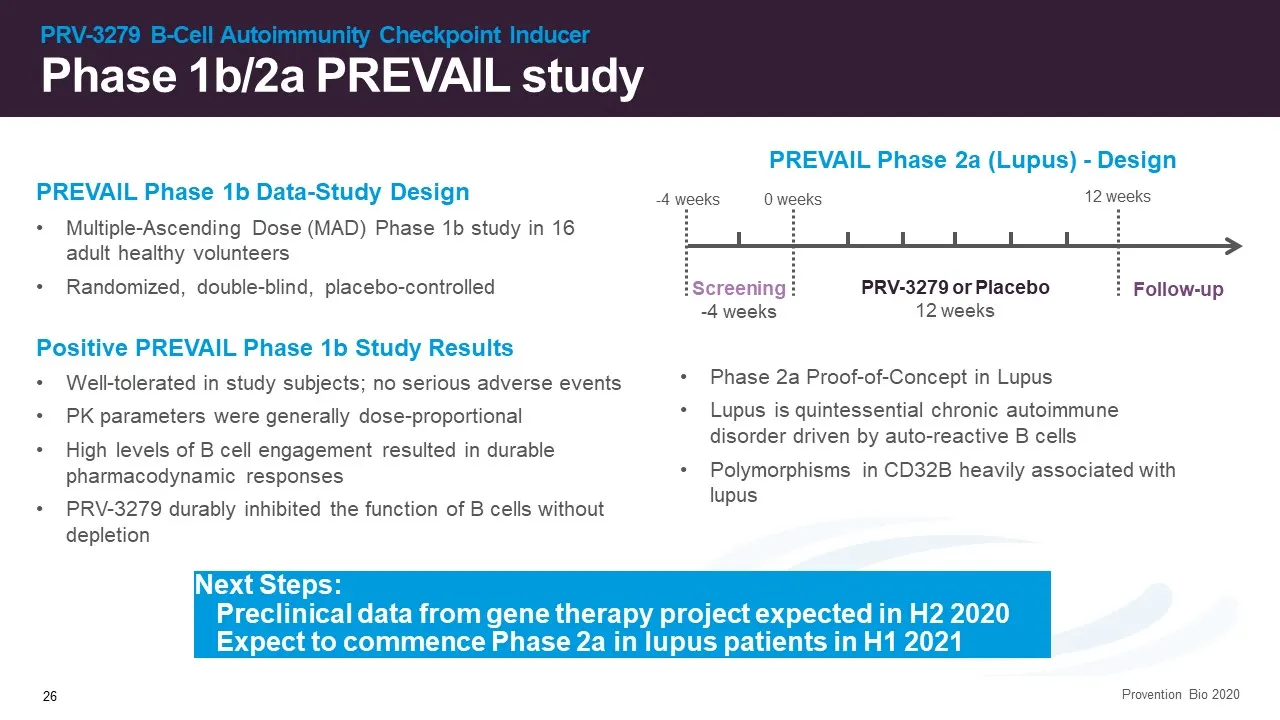
Slide 26: PRV-3279 B-Cell Autoimmunity Checkpoint Inducer
PRV-3279 B-Cell Autoimmunity Checkpoint Inducer Phase 1b/2a PREVAIL study 26 Multiple-Ascending Dose (MAD) Phase 1b study in 16 adult healthy volunteers Randomized, double-blind, placebo-controlled Well-tolerated in study subjects; no serious adverse events PK parameters were generally dose-proporti
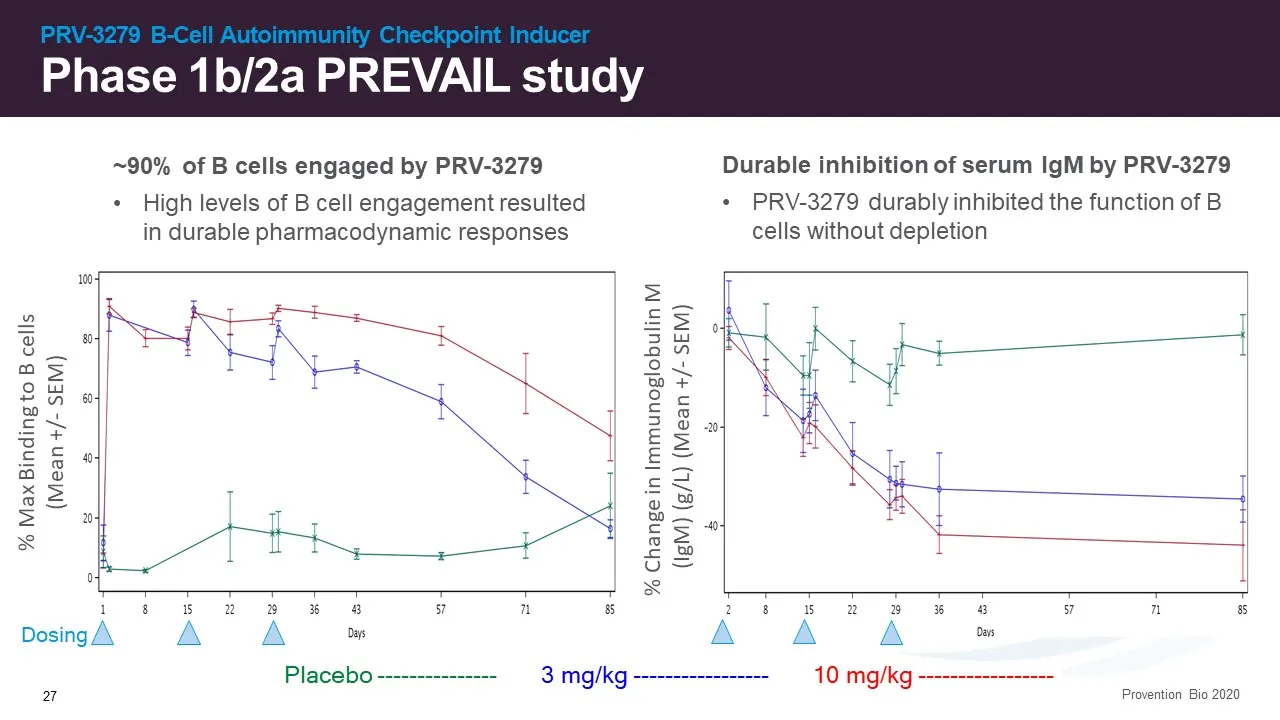
Slide 27: Phase 1b/2a PREVAIL study
Phase 1b/2a PREVAIL study ~90% of B cells engaged by PRV-3279 + High levels of B cell engagement resulted in durable pharmacodynamic responses Durable inhibition of serum IgM by PRV-3279 + PRV-3279 durably inhibited the function of B cells without depletion 1» F 2 — gS Bo fea) ou os 0 POH @ Oe wo $a
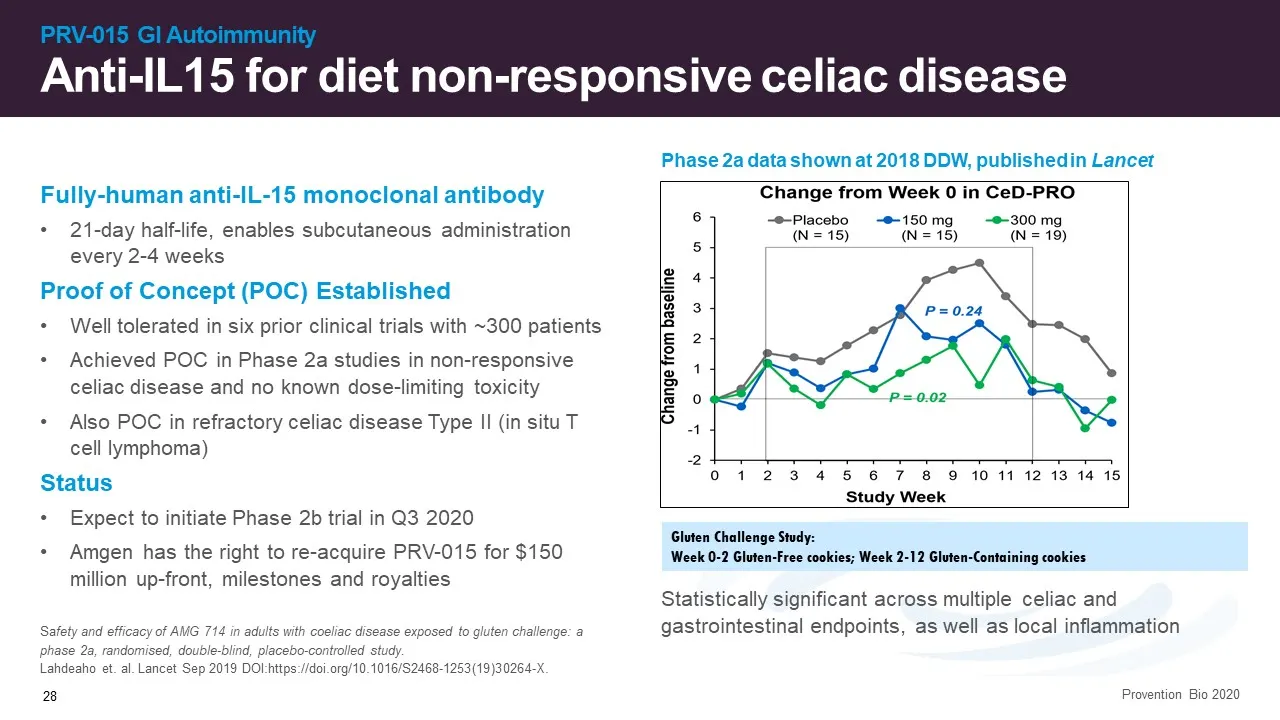
Slide 28: Anti-IL15 for diet non-responsive celiac disease
Anti-IL15 for diet non-responsive celiac disease Fully-human anti-IL-15 monoclonal antibody * 21-day half-life, enables subcutaneous administration every 2-4 weeks Proof of Concept (POC) Established + Well tolerated in six prior clinical trials with ~300 patients + Achieved POC in Phase 2a studies i
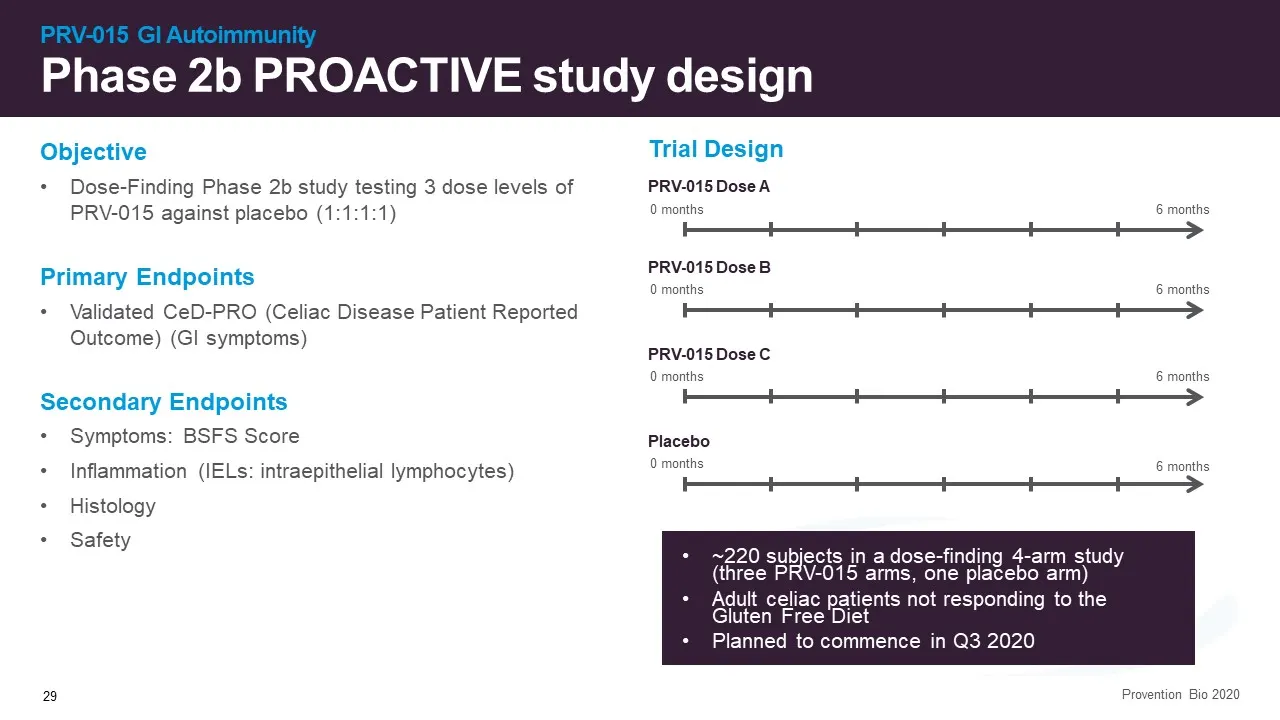
Slide 29: Phase 2b PROACTIVE study design
Phase utoimmunity Dose-Finding Phase 2b study testing 3 dose levels of PRV-015 against placebo (1:1:1:1) Validated CeD-PRO (Celiac Disease Patient Reported Outcome) (GI symptoms) 29 Symptoms: BSFS Score Inflammation (IELs: intraepithelial lymphocytes) Histology Safety 2b PROACTIVE study design PRV-0
Slide 30: Financing history
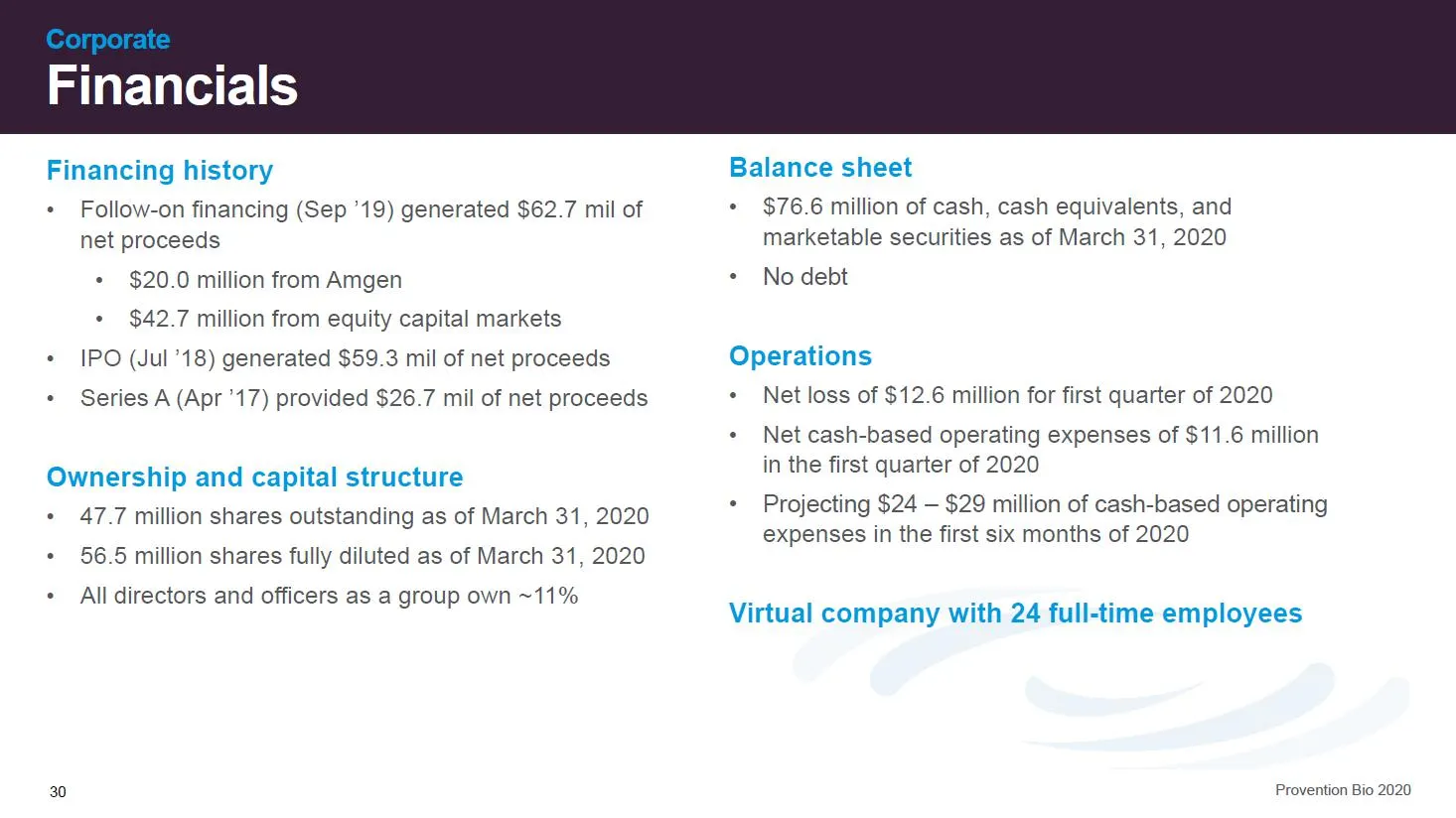
Financing history * Follow-on financing (Sep 19) generated $62.7 mil of net proceeds * $20.0 million from Amgen * $42.7 million from equity capital markets + IPO (Jul 18) generated $59.3 mil of net proceeds + Series A (Apr '17) provided $26.7 mil of net proceeds Ownership and capital structure + 47.
Slide 31: 2020 milestones
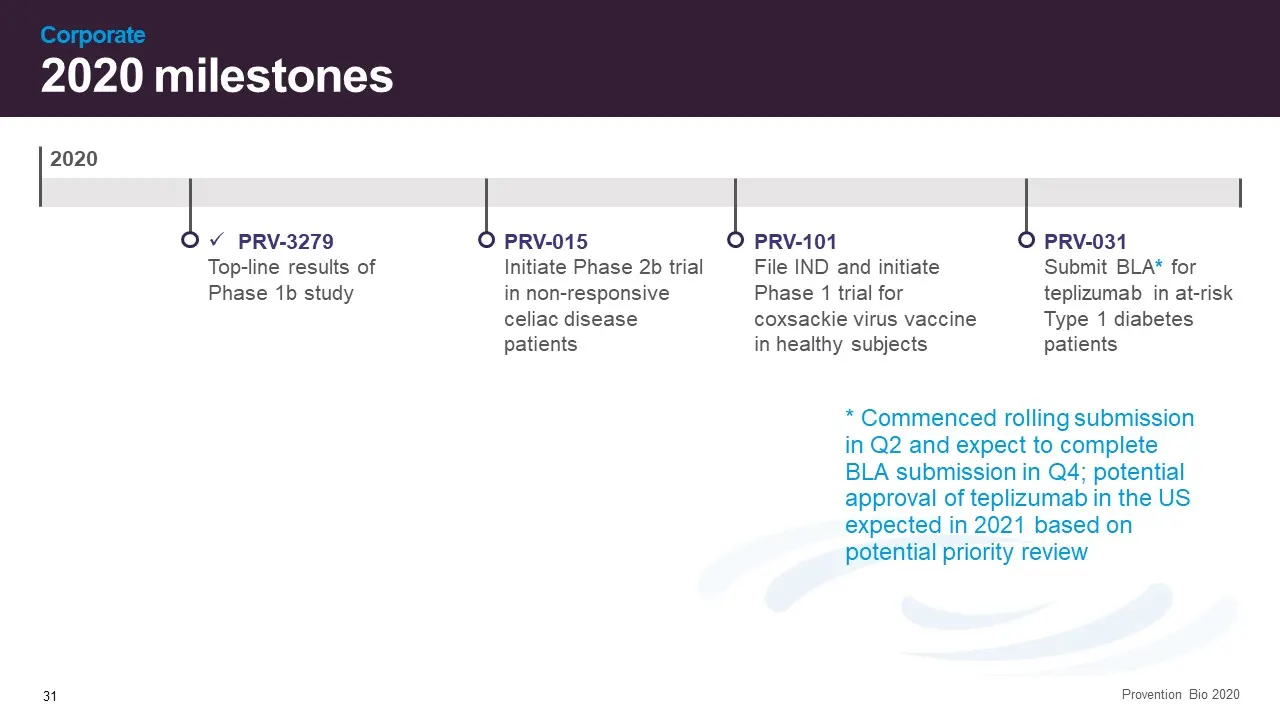
2020 milestones | 2020 } v PRV-3279 } PRV-015 } PRV-101 } PRV-031 Top-line results of Initiate Phase 2b trial File IND and initiate Submit BLA* for Phase 1b study in non-responsive Phase 1 trial for teplizumab in at-risk celiac disease coxsackie virus vaccine Type 1 diabetes patients in healthy subj
Slide 32: Team of experienced scientists and developers
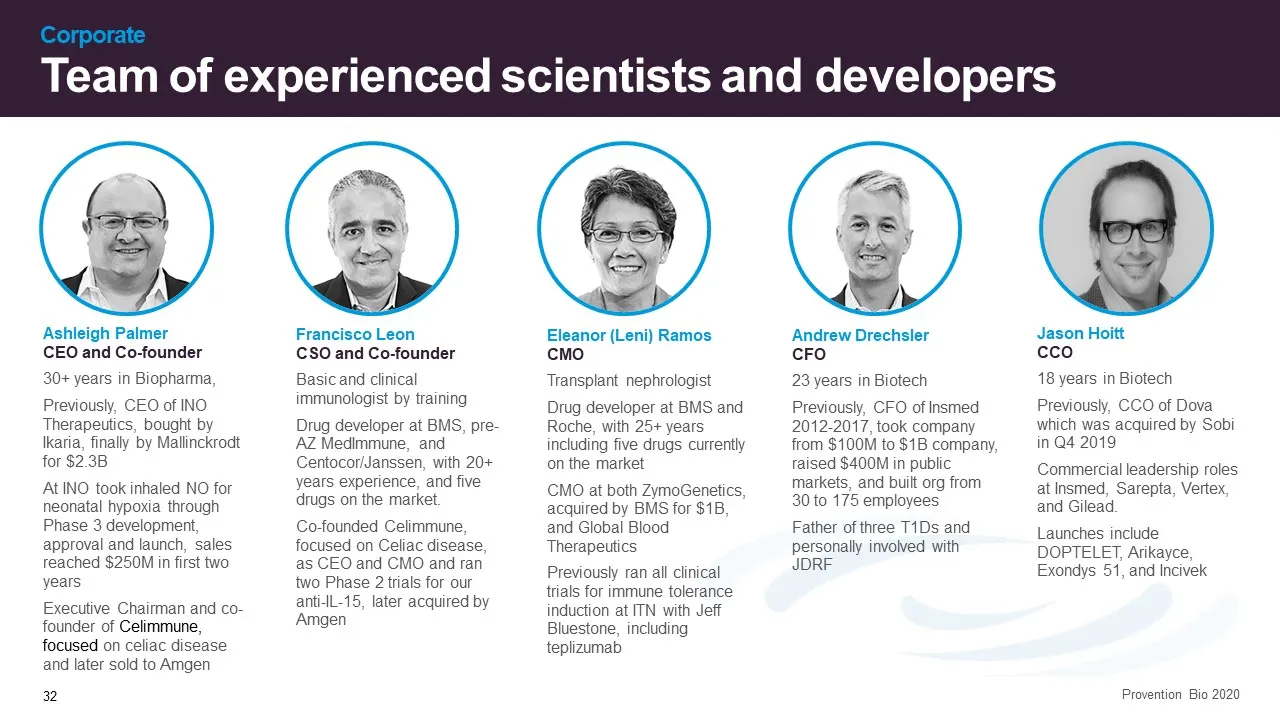
Team of experienced scientists and developers Ashleigh Palmer CEO and Co-founder 30+ years in Biopharma, Previously, CEO of INO Therapeutics, bought by ikatia, finally by Mallinckrodt for $2.3B At INO took inhaled NO for neonatal hypoxia through Phase 3 development, approval and launch, sales reache
Slide 33: Summary
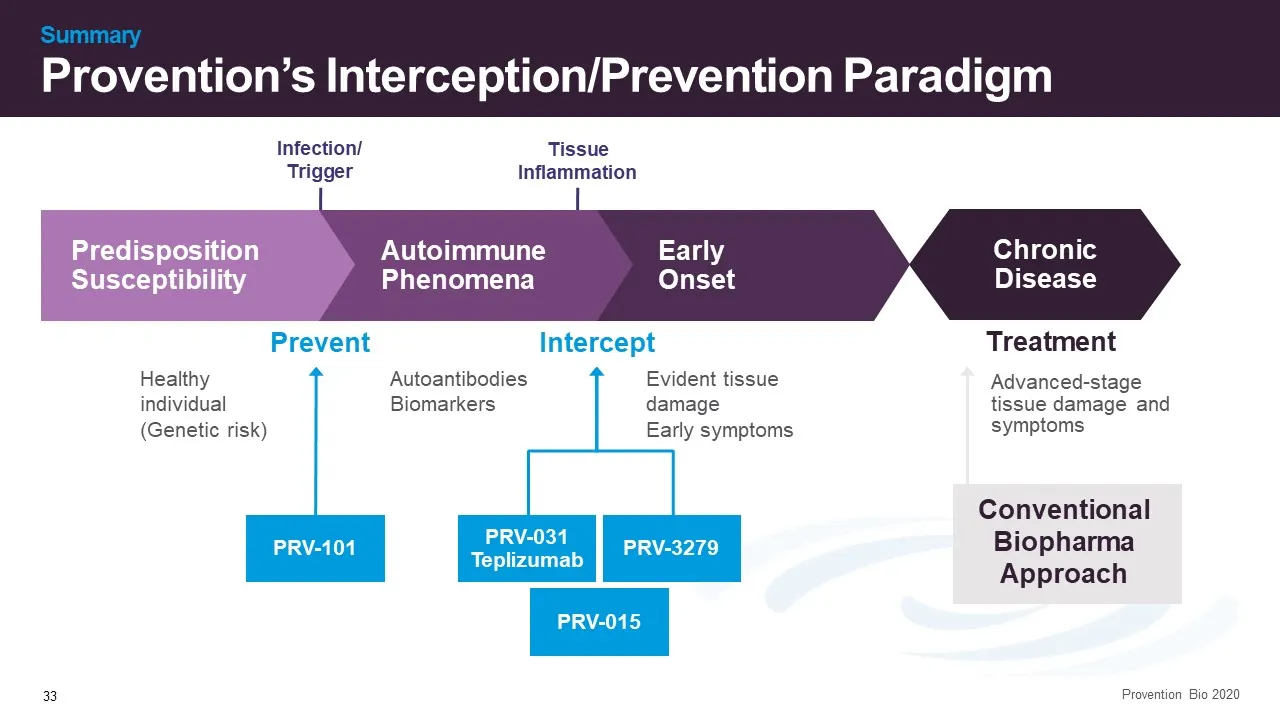
Summary Provention’s Interception/Prevention Paradigm Infection! Tissue Trigger Inflammation Autoimmune Chronic Phenomena Disease Treatment Healthy Autoantibodies Evident tissue Advanced-stage individual Biomarkers damage tissue damage and (Genetic risk) Early symptoms symptoms Conventional Biopharm
Slide 34: Intercepting autoimmunity to prevent disease
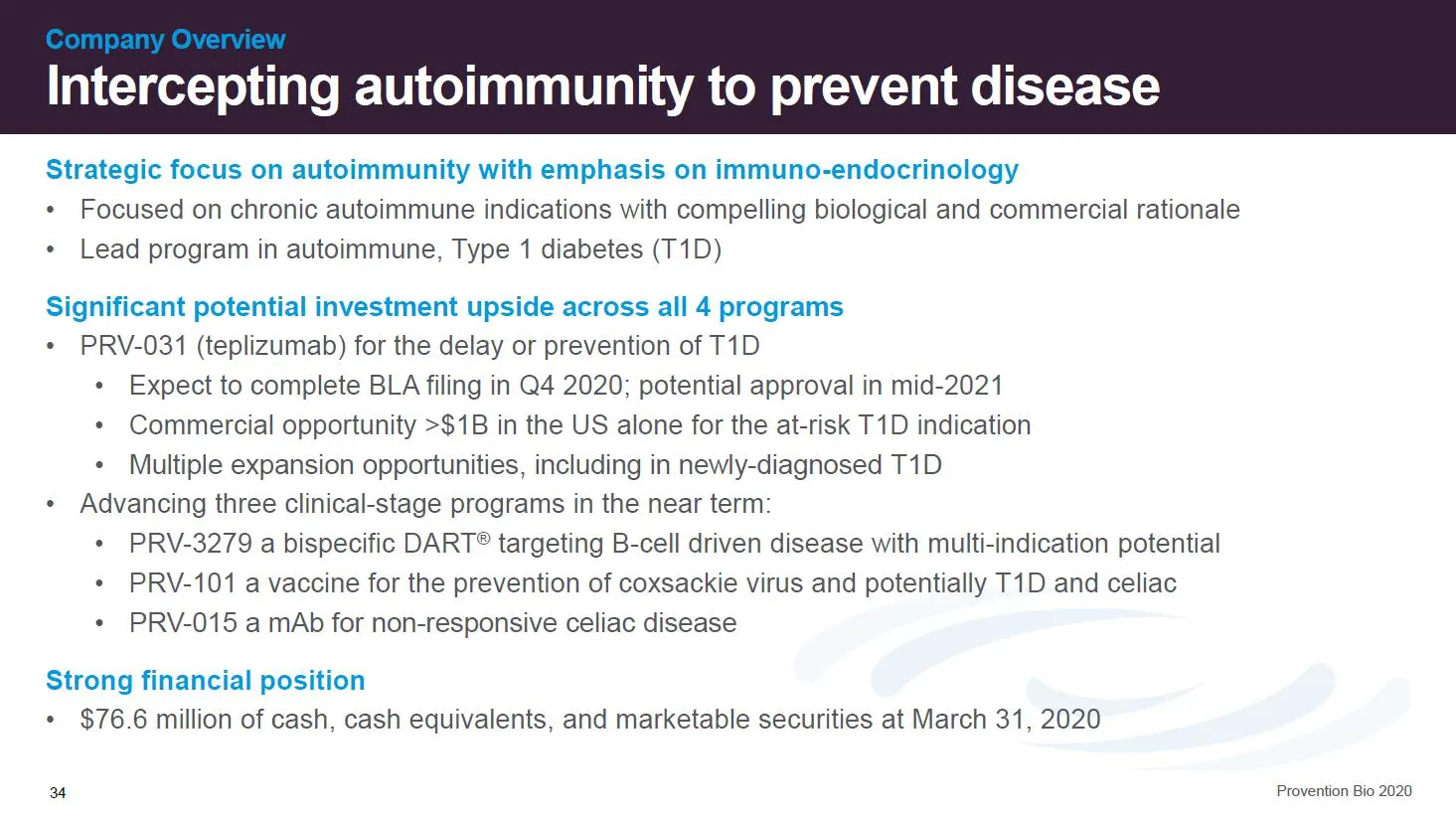
Intercepting autoimmunity to prevent disease Strategic focus on autoimmunity with emphasis on immuno-endocrinology ¢ Focused on chronic autoimmune indications with compelling biological and commercial rationale * Lead program in autoimmune, Type 1 diabetes (T1D) Significant potential investment upsi
Source: SEC EDGAR · 8-K filed Jun 15, 2020