IVERIC bio — Ophthotech — 37th Annual J.P. Morgan Healthcare Conference (January 2019)
37 slides from IVERIC bio's conference presentation, Jan 7, 2019
Slide 1: 37th Annual J.P. Morgan Healthcare Conference
vision is our mission 37th Annual J.P. Morgan Healthcare Conference Glenn P. Sblendorio Chief Executive Officer and President NASDAQ: OPHT January 2019
Slide 2: Forward-looking Statements
Forward-looking Statements Any statements in this presentation about Ophthotech’s future expectations, plans and prospects constitute forward-looking statements for purposes of the safe harbor provisions under the Private Securities Litigation Reform Act of 1995. Forward-looking statements include a
Slide 3: A Leader in Developing Gene Therapy and Novel Therapeutics for Retinal Diseases
A Leader in Developing Gene Therapy and Novel Therapeutics for the Treatment of Retinal Diseases 3 3
Slide 4: Well-Positioned as a Leader in Retinal Diseases
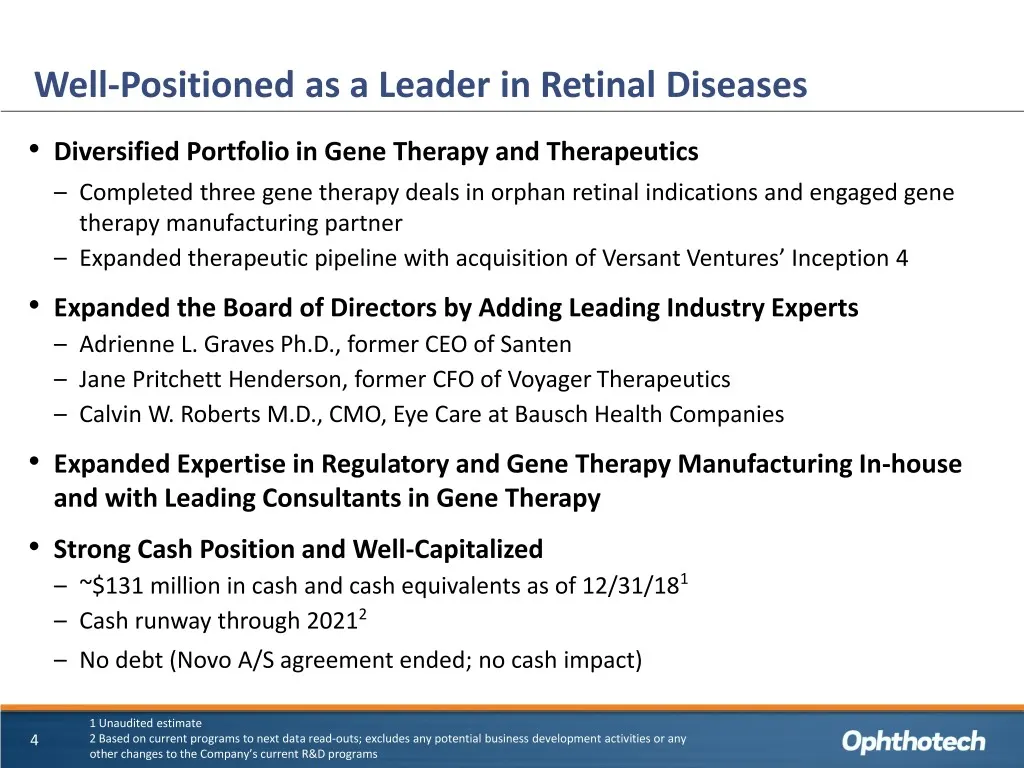
Well-Positioned as a Leader in Retinal Diseases • Diversified Portfolio in Gene Therapy and Therapeutics – Completed three gene therapy deals in orphan retinal indications and engaged gene therapy manufacturing partner – Expanded therapeutic pipeline with acquisition of Versant Ventures’ Inception 4
Slide 5: Pipeline Strategy: Build Sustainable Long-term Growth
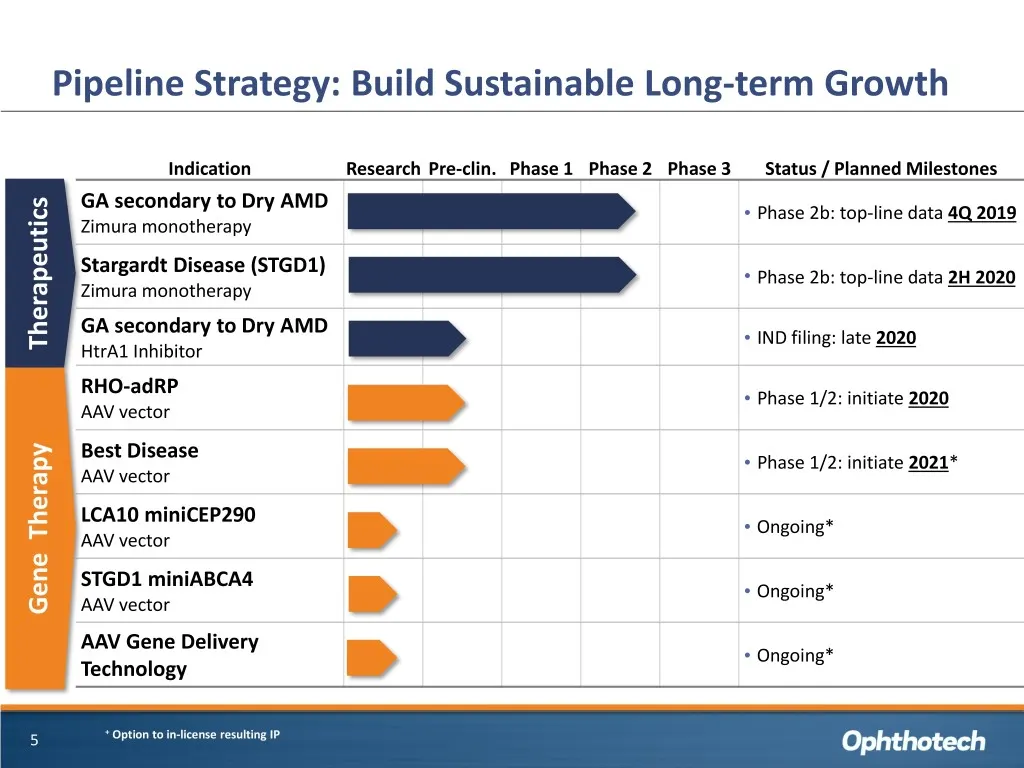
Pipeline Strategy: Build Sustainable Long-term Growth Indication Research Pre-clin. Phase 1 Phase 2 Phase 3 Status / Planned Milestones GA secondary to Dry AMD • Phase 2b: top-line data 4Q 2019 Zimura monotherapy Stargardt Disease (STGD1) • Phase 2b: top-line data 2H 2020 Zimura monotherapy GA secon
Slide 6: Gene Therapy for Retinal Diseases
Gene Therapy for Retinal Diseases 6 6
Slide 7: Strategic Scientific Collaborations with Leading Academic Gene Therapy Centers
Strategic Scientific Collaborations with Leading Academic Gene Therapy Centers 7 7
Slide 8: Gene Therapy Programs
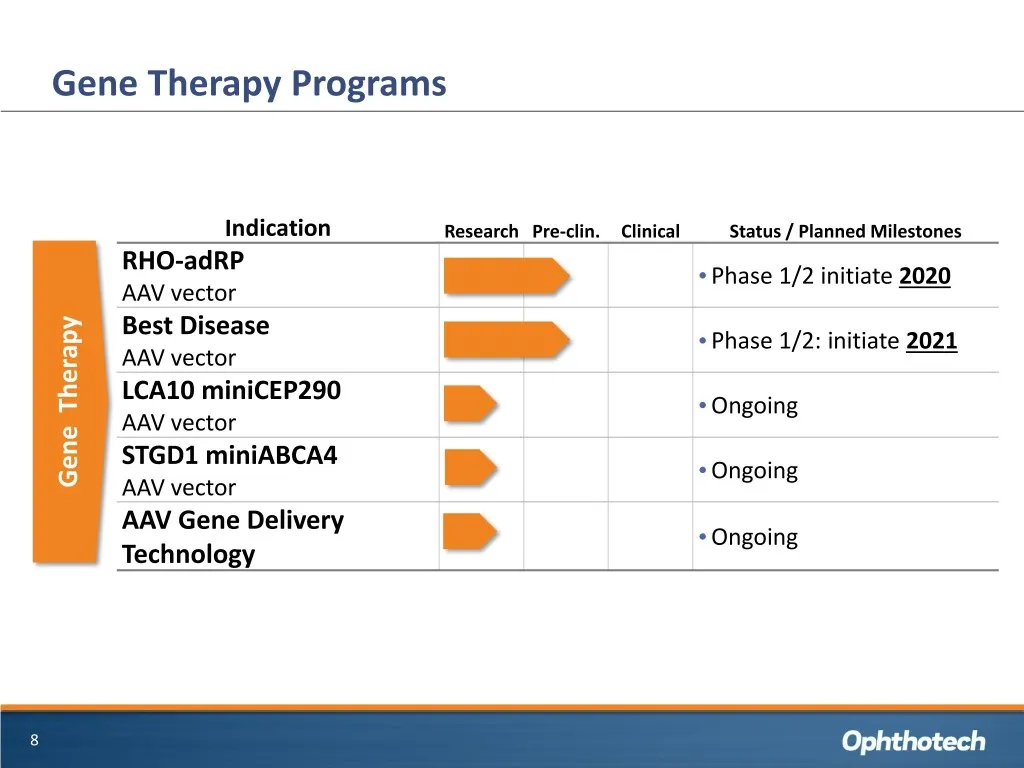
Gene Therapy Programs Indication Research Pre-clin. Clinical Status / Planned Milestones RHO-adRP • Phase 1/2 initiate 2020 AAV vector Best Disease • Phase 1/2: initiate 2021 AAV vector LCA10 miniCEP290 • Ongoing AAV vector STGD1 miniABCA4 • Ongoing Gene Therapy Gene AAV vector AAV Gene Delivery • O
Slide 9: Rhodopsin-Mediated Autosomal Dominant Retinitis Pigmentosa
Rhodopsin-Mediated Autosomal Dominant Retinitis Pigmentosa 9 9
Slide 10: Rhodopsin-Mediated Autosomal Dominant Retinitis Pigmentosa
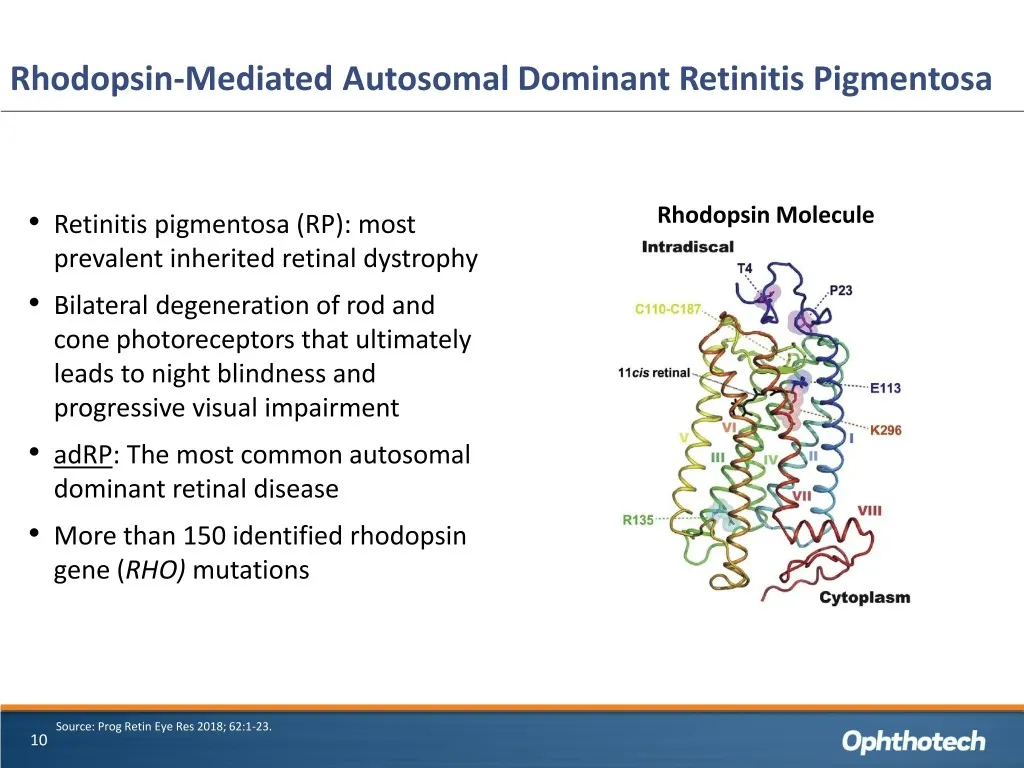
Rhodopsin-Mediated Autosomal Dominant Retinitis Pigmentosa • Retinitis pigmentosa (RP): most Rhodopsin Molecule prevalent inherited retinal dystrophy • Bilateral degeneration of rod and cone photoreceptors that ultimately leads to night blindness and progressive visual impairment • adRP: The most co
Slide 11: RHO-adRP: Phase 1/2 Clinical Trial Planned to Initiate in 2020
RHO-adRP: Phase 1/2 Clinical Trial Planned to Initiate in 2020 • Mutation independent strategy • Knockdown and replacement with a single AAV vector – Suppression of endogenouns mutated toxic rhodopsin protein – Replace with healthy rhodopsin protein • Proof-of-concept in two animal models (canine an
Slide 12: Proof-of-Concept: Preservation of Retinal Structure and Function in RHO Mutant Dogs
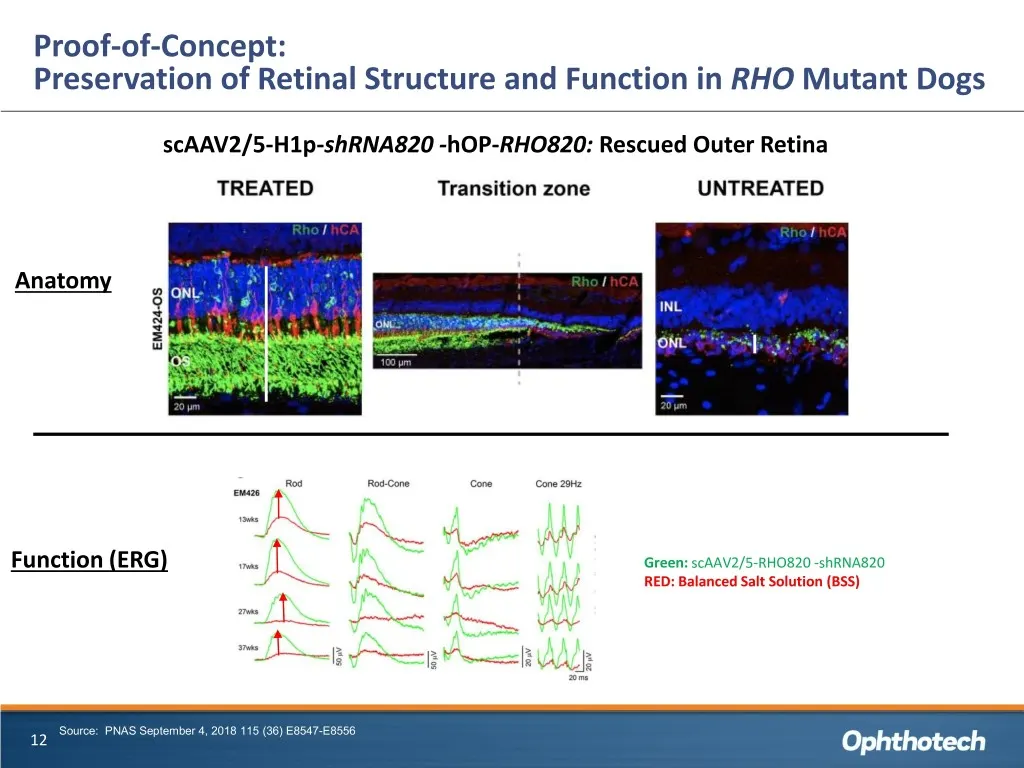
Proof-of-Concept: Preservation of Retinal Structure and Function in RHO Mutant Dogs scAAV2/5-H1p-shRNA820 -hOP-RHO820: Rescued Outer Retina OCT Anatomy Function (ERG) Green: scAAV2/5-RHO820 -shRNA820 RED: Balanced Salt Solution (BSS) Source: PNAS September 4, 2018 115 (36) E8547-E8556 12 12
Slide 13: Best Vitelliform Macular Dystrophy BVMD/Best Disease
Best Vitelliform Macular Dystrophy BVMD/Best Disease 13 13
Slide 14: Best Disease (Best Vitelliform Macular Dystrophy)
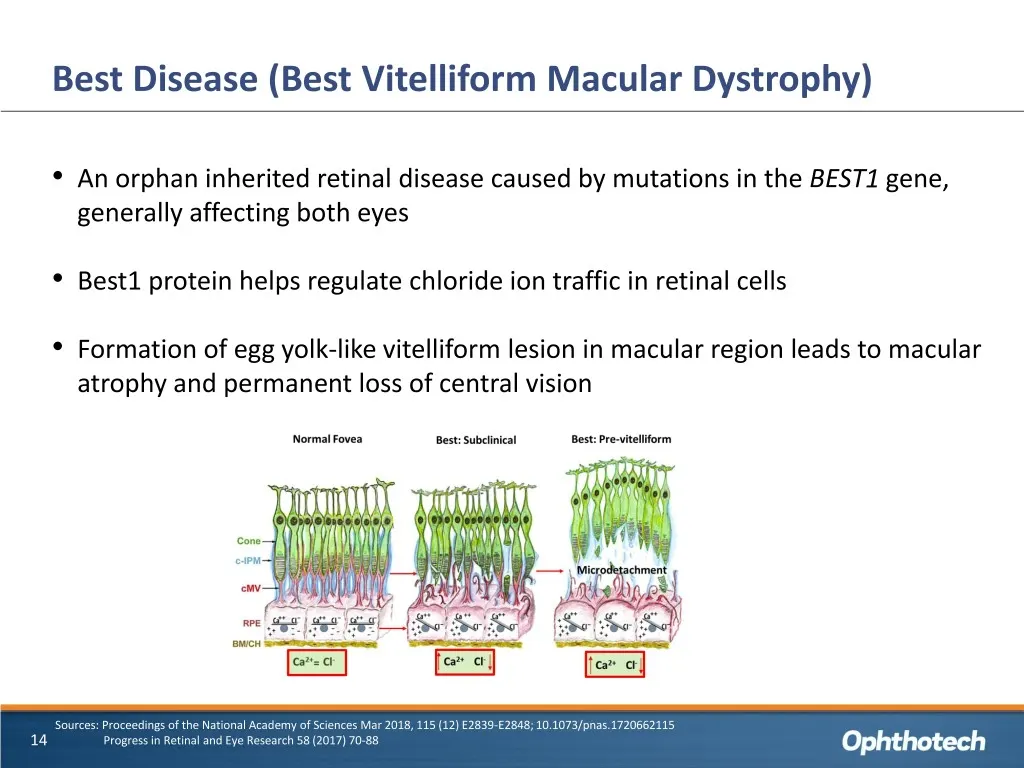
Best Disease (Best Vitelliform Macular Dystrophy) • An orphan inherited retinal disease caused by mutations in the BEST1 gene, generally affecting both eyes • Best1 protein helps regulate chloride ion traffic in retinal cells • Formation of egg yolk-like vitelliform lesion in macular region leads to
Slide 15: AAV2-hBest1 Gene Therapy: Resolution of Retinal Microdetachment
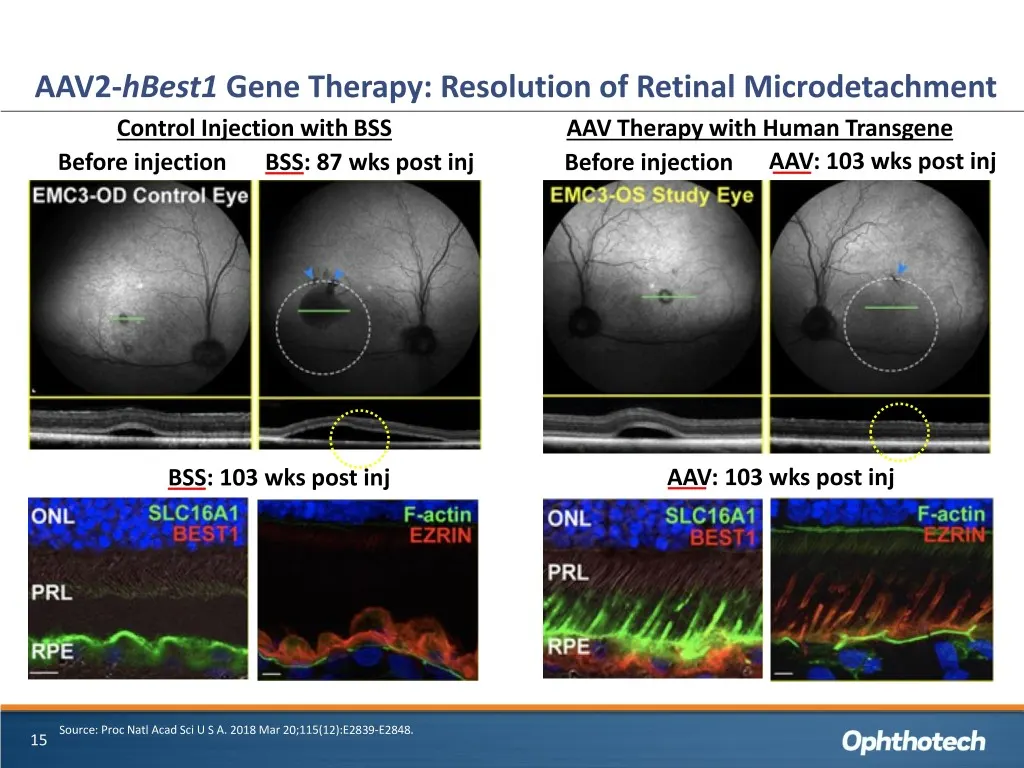
AAV2-hBest1 Gene Therapy: Resolution of Retinal Microdetachment Control Injection with BSS AAV Therapy with Human Transgene Before injection BSS: 87 wks post inj Before injection AAV: 103 wks post inj BSS: 103 wks post inj AAV: 103 wks post inj Source: Proc Natl Acad Sci U S A. 2018 Mar 20;115(12):E
Slide 16: BEST1: Phase 1/2 Clinical Trial Planned to Initiate by 2021
BEST1: Phase 1/2 Clinical Trial Planned to Initiate by 2021 • Proof of concept established in naturally occurring canine models • IND enabling studies planned • Natural history studies planned • CMC strategy in place; engaging gene therapy manufacturing partner 16 16
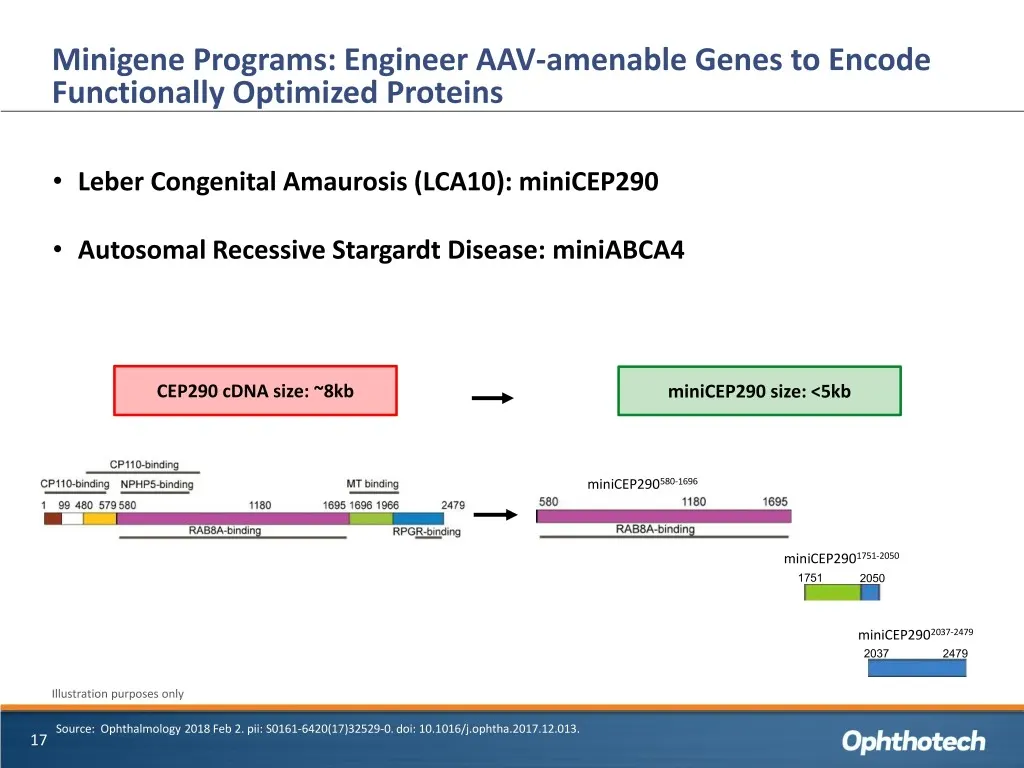
Slide 17: Minigene Programs: Engineer AAV-amenable Genes to Encode Functionally Optimized Proteins
Minigene Programs: Engineer AAV-amenable Genes to Encode Functionally Optimized Proteins • Leber Congenital Amaurosis (LCA10): miniCEP290 • Autosomal Recessive Stargardt Disease: miniABCA4 CEP290 cDNA size: ~8kb miniCEP290 size: <5kb miniCEP290580-1696 miniCEP2901751-2050 1751 2050 miniCEP2902037-24
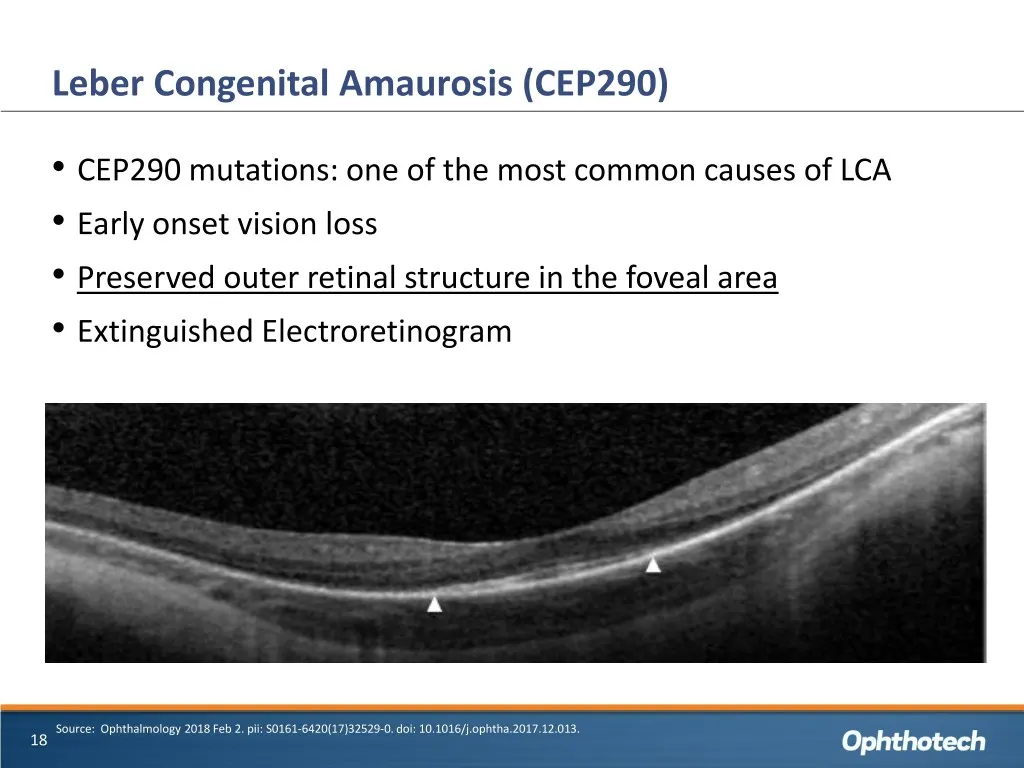
Slide 18: Leber Congenital Amaurosis (CEP290)
Leber Congenital Amaurosis (CEP290) • CEP290 mutations: one of the most common causes of LCA • Early onset vision loss • Preserved outer retinal structure in the foveal area • Extinguished Electroretinogram Preservation of foveal outer retinal architecture Source: Ophthalmology 2018 Feb 2. pii: S016
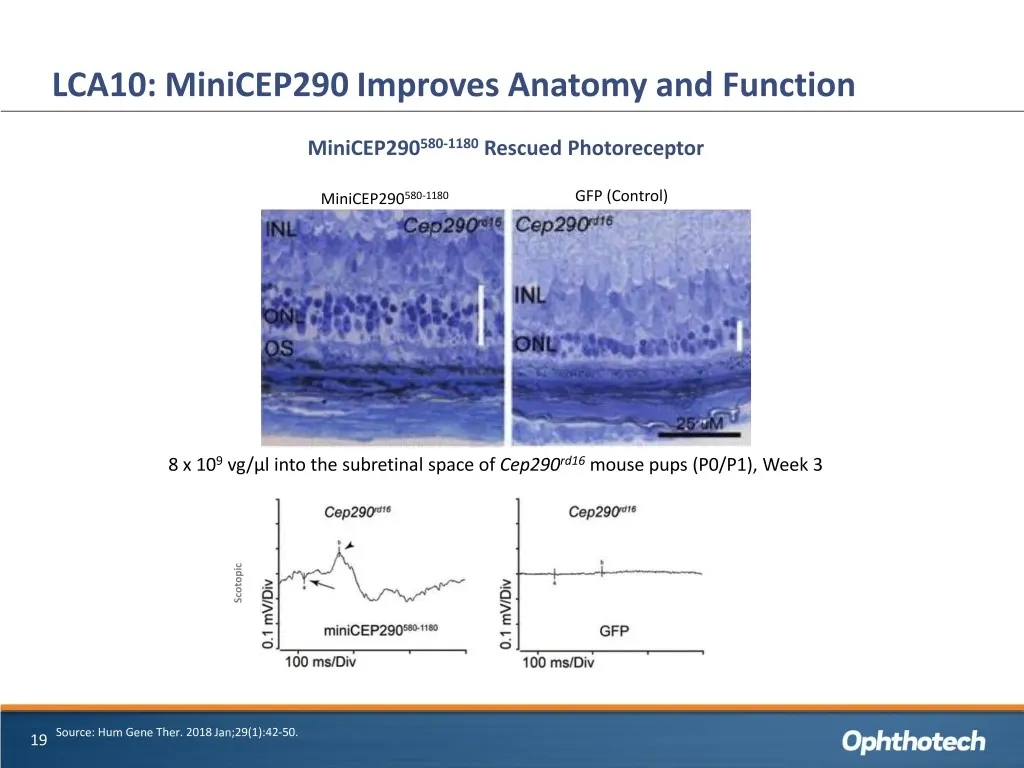
Slide 19: LCA10: MiniCEP290 Improves Anatomy and Function
LCA10: MiniCEP290 Improves Anatomy and Function MiniCEP290580-1180 Rescued Photoreceptor MiniCEP290580-1180 GFP (Control) 8 x 10⁹ vg/µl into the subretinal space of Cep290rd16 mouse pups (P0/P1), Week 3 Scotopic Source: Hum Gene Ther. 2018 Jan;29(1):42-50. 19 19
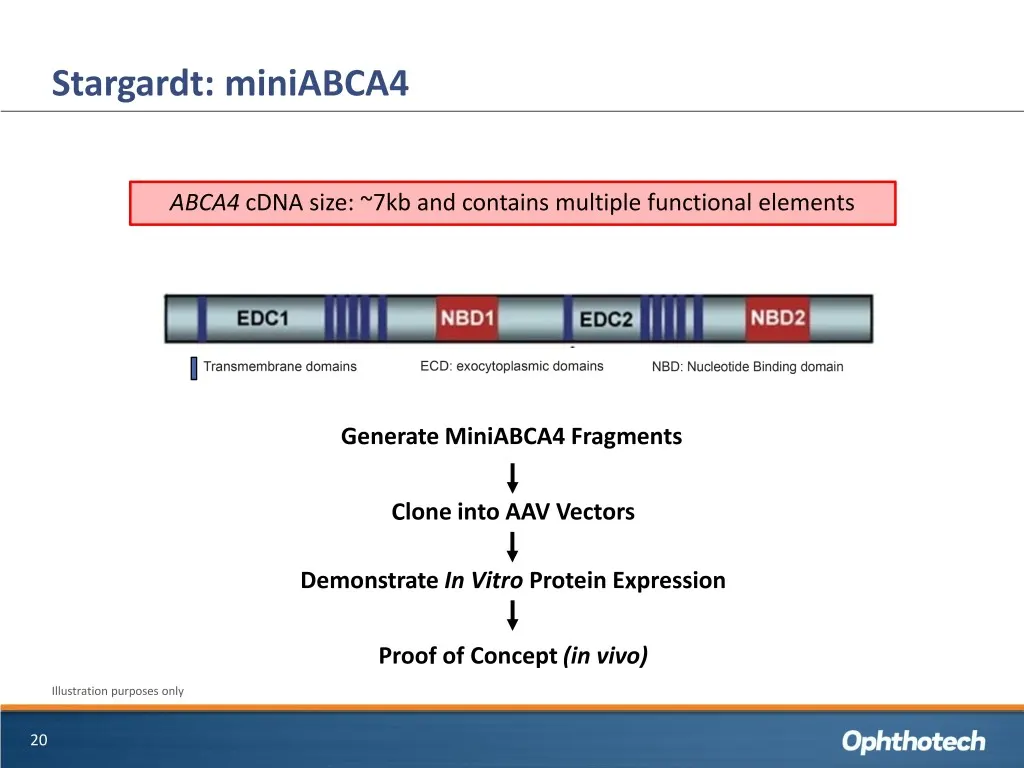
Slide 20: Stargardt: miniABCA4
Stargardt: miniABCA4 ABCA4 cDNA size: ~7kb and contains multiple functional elements Generate MiniABCA4 Fragments Clone into AAV Vectors Demonstrate In Vitro Protein Expression Proof of Concept (in vivo) Illustration purposes only 20 20
Slide 21: Therapeutics Program for Retinal Diseases
Therapeutics Program for Retinal Diseases 21 21
Slide 22: Novel Therapeutic Programs
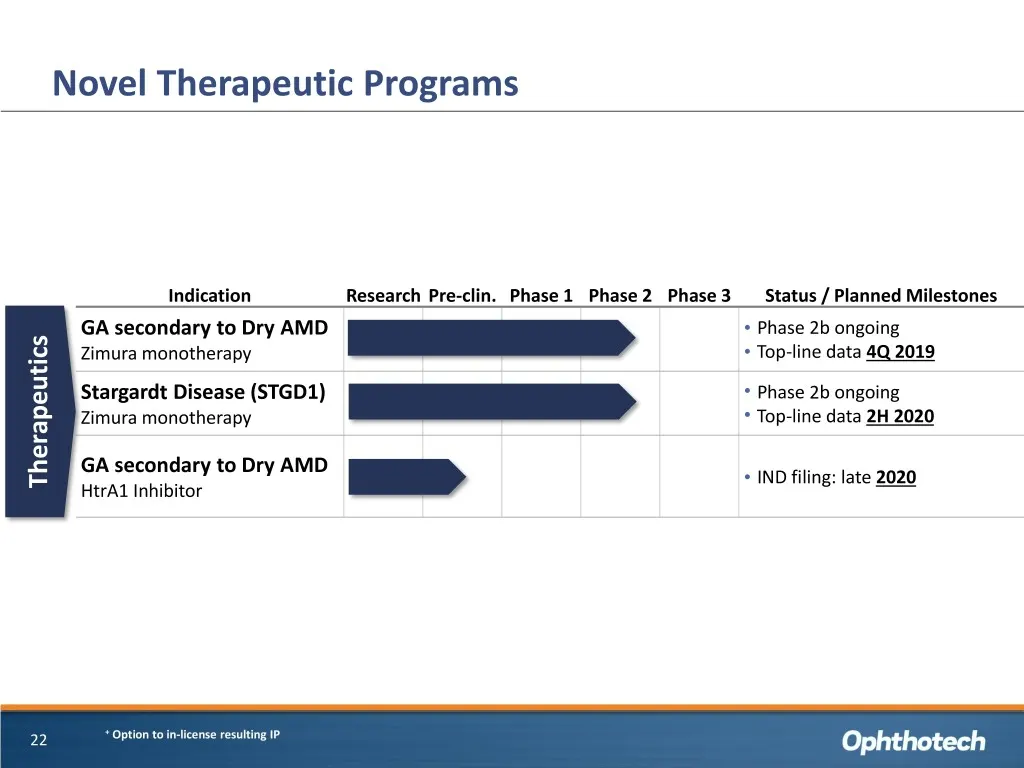
Novel Therapeutic Programs Indication Research Pre-clin. Phase 1 Phase 2 Phase 3 Status / Planned Milestones GA secondary to Dry AMD • Phase 2b ongoing Zimura monotherapy • Top-line data 4Q 2019 Stargardt Disease (STGD1) • Phase 2b ongoing Zimura monotherapy • Top-line data 2H 2020 GA secondary to D
Slide 23: Zimura, C5 Complement Inhibitor: Geographic Atrophy Secondary to Dry AMD
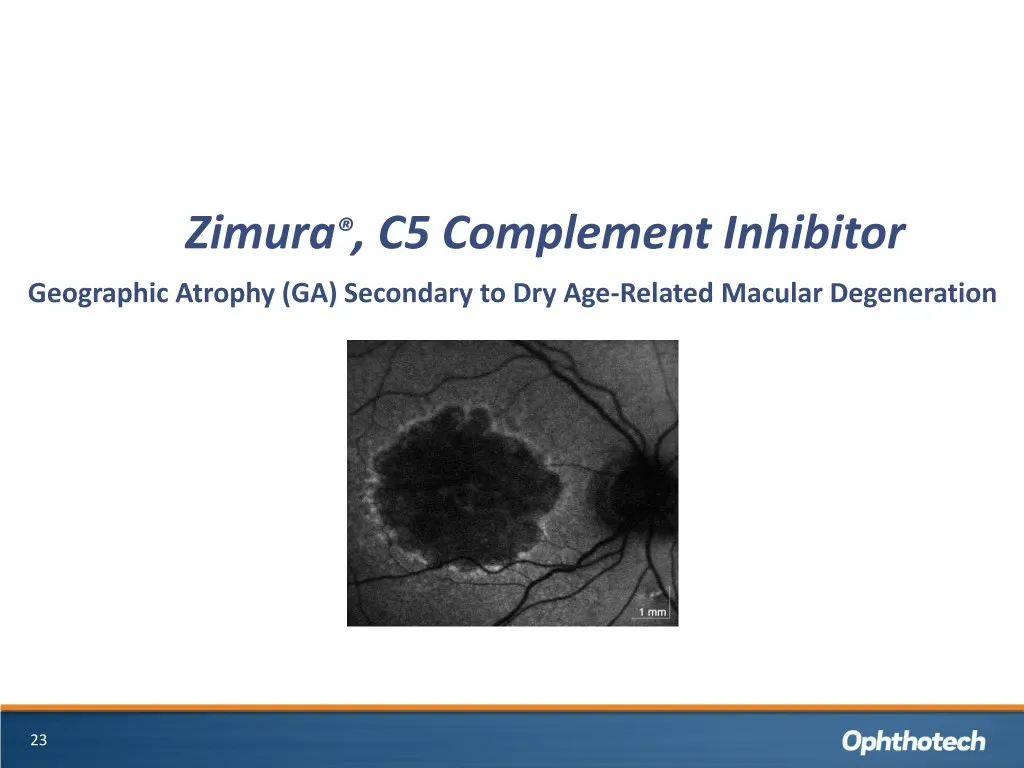
Zimura®, C5 Complement Inhibitor Geographic Atrophy (GA) Secondary to Dry Age-Related Macular Degeneration 23 23
Slide 24: Geographic Atrophy Secondary to Dry AMD
Geographic Atrophy Secondary to Dry AMD • Major market opportunity – Unmet medical need – No FDA/EMA approved treatment options – Multi-billion dollar opportunity – Growing market size as population ages longer • Role of complement in dry AMD – Genetic link between complement and AMD – With aging, c
Slide 25: Zimura Blocks C5 Cleavage: Potential to Block Inflammasome Formation & MAC Accumulation
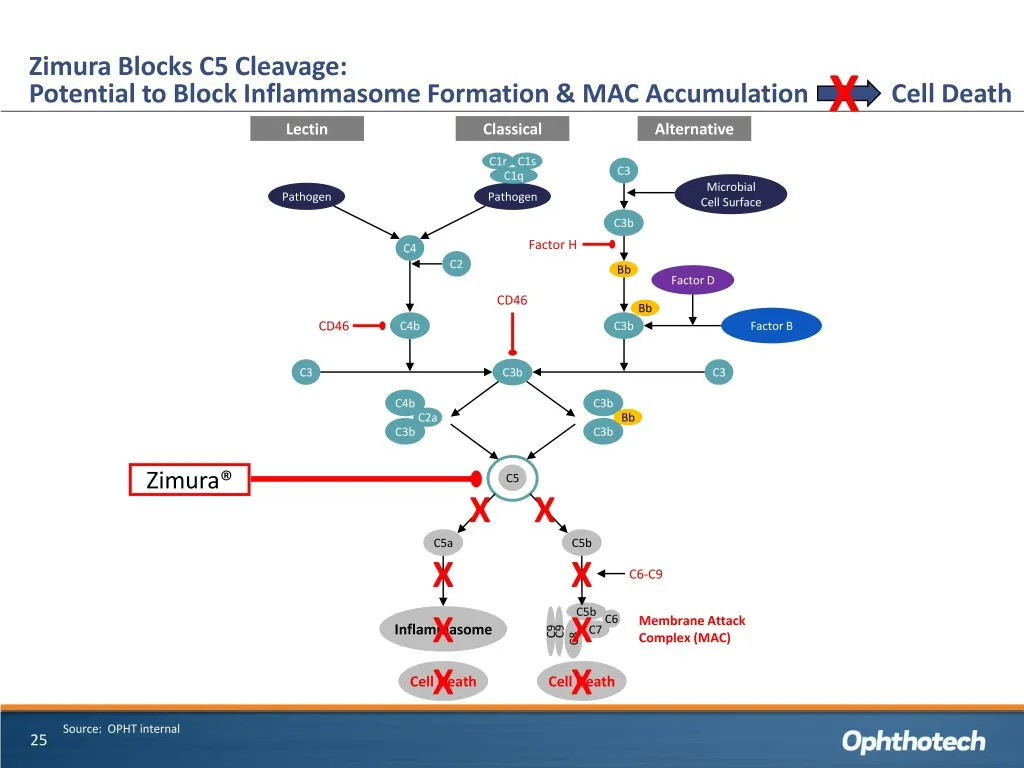
Zimura Blocks C5 Cleavage: Potential to Block Inflammasome Formation & MAC Accumulation X Cell Death Lectin Classical Alternative C1r C1s C1q C3 Microbial Pathogen Pathogen Cell Surface C3b C4 Factor H C2 Bb Factor D CD46 Bb CD46 C4b C3b Factor B C3 C3b C3 C4b C3b C2a Bb C3b C3b Zimura® C5 X X C5a C
Slide 26: Dry AMD (GA): Zimura Phase 1/2a Completed
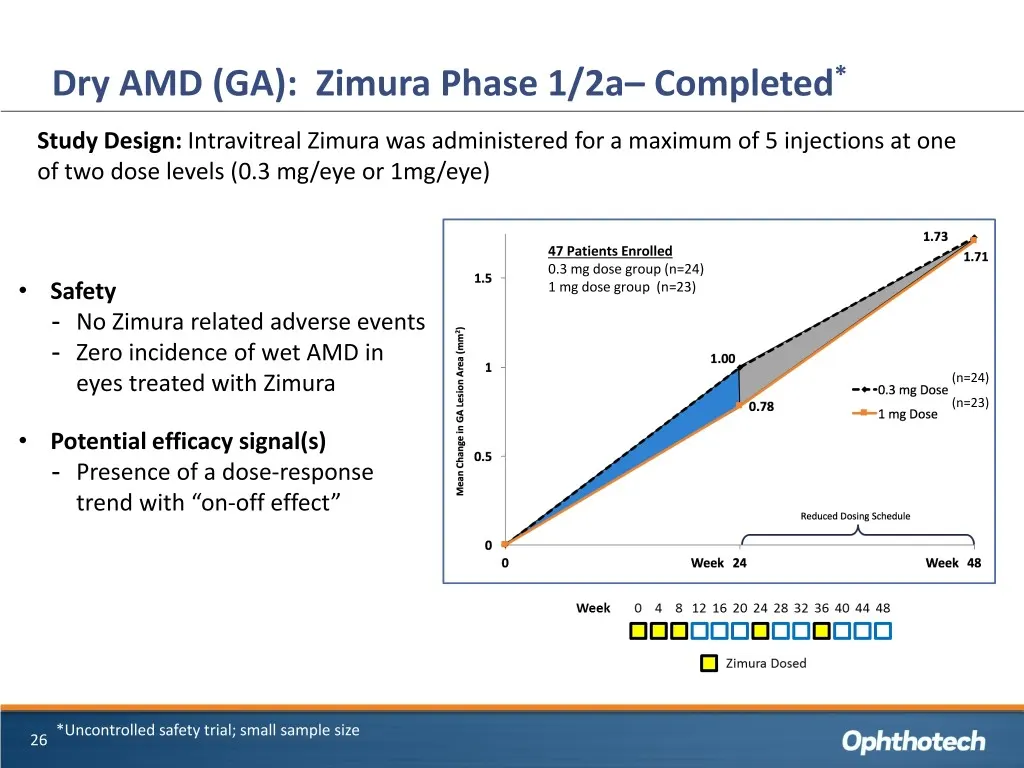
Dry AMD (GA): Zimura Phase 1/2a– Completed* Study Design: Intravitreal Zimura was administered for a maximum of 5 injections at one of two dose levels (0.3 mg/eye or 1mg/eye) 47 Patients Enrolled 0.3 mg dose group (n=24) • Safety 1 mg dose group (n=23) - No Zimura related adverse events - Zero incid
Slide 27: Geographic Atrophy: Zimura Phase 2b - Ongoing
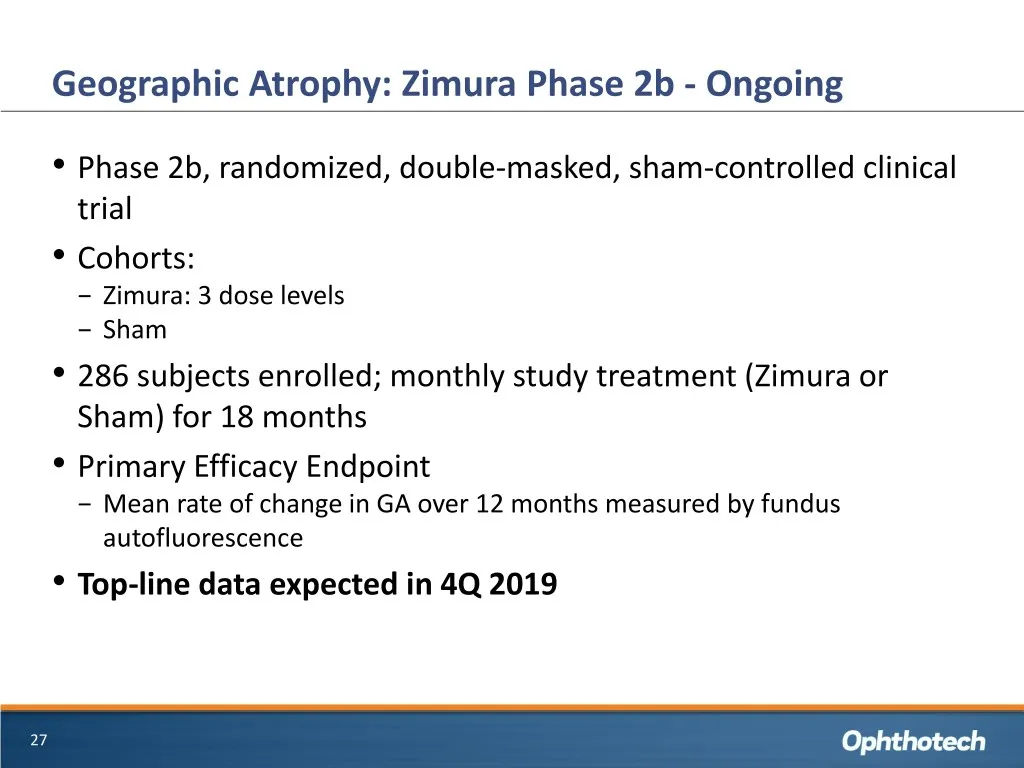
Geographic Atrophy: Zimura Phase 2b - Ongoing • Phase 2b, randomized, double-masked, sham-controlled clinical trial • Cohorts: − Zimura: 3 dose levels − Sham • 286 subjects enrolled; monthly study treatment (Zimura or Sham) for 18 months • Primary Efficacy Endpoint − Mean rate of change in GA over 1
Slide 28: Zimura, C5 Complement Inhibitor: Autosomal Recessive Stargardt Disease
Zimura, C5 Complement Inhibitor Autosomal Recessive Stargardt Disease (Orphan Indication) 28 28
Slide 29: Autosomal Recessive Stargardt Disease (STGD1)
Autosomal Recessive Stargardt Disease (STDG1) • Orphan disease – High unmet medical need – No FDA or EMA approved treatment available • Progressive damage to the macula and retina caused by mutations in the ABCA4 gene • ABCA4 gene makes a protein that normally helps clear away visual cycle byproduct
Slide 30: Complement Inhibition Rescues Photoreceptors
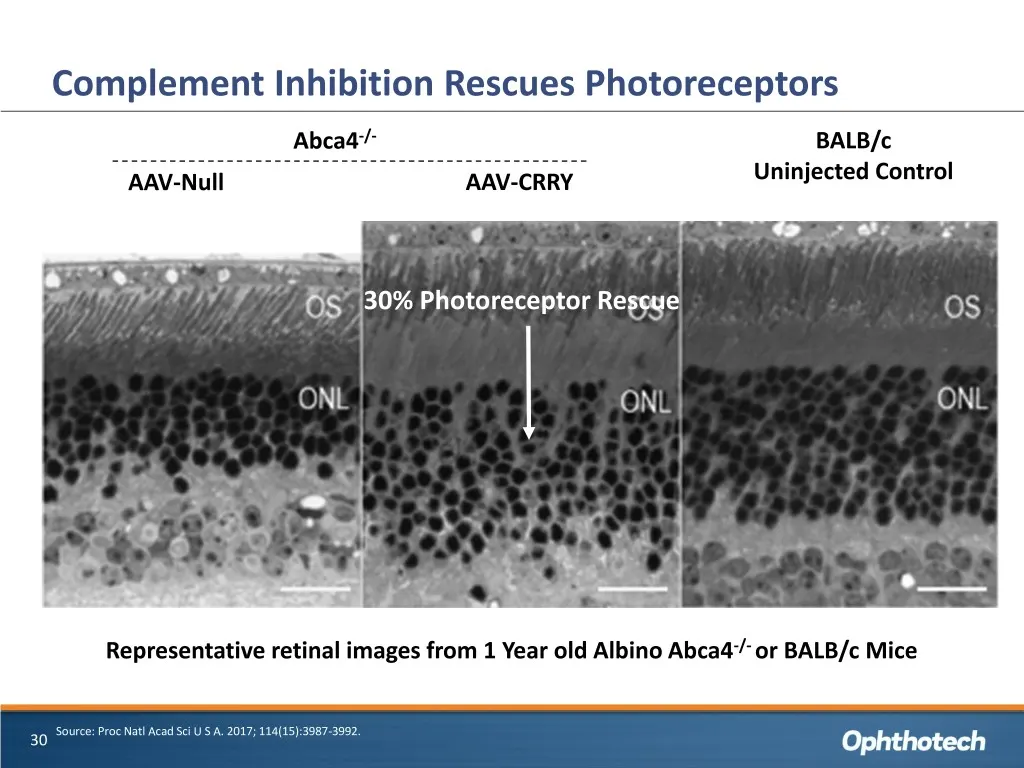
Complement Inhibition Rescues Photoreceptors Abca4-/- BALB/c AAV-Null AAV-CRRY Uninjected Control 30% Photoreceptor Rescue Representative retinal images from 1 Year old Albino Abca4-/- or BALB/c Mice Source: Proc Natl Acad Sci U S A. 2017; 114(15):3987-3992. 30 30
Slide 31: Stargardt Disease: Zimura Phase 2b – Ongoing
Stargardt Disease : Zimura Phase 2b – Ongoing • Phase 2b Clinical Trial – Randomized, double masked, sham controlled clinical trial – Enrollment to complete in Q1 2019 with ~65 subjects – Two arms: . Zimura . Sham – Duration of treatment: 18 months – Primary Endpoint: Mean rate of change in the area
Slide 32: HtrA1 Inhibitor Therapeutic Program (Acquisition of Inception 4)
HtrA1 Inhibitor Therapeutic Program (Acquisition of Inception 4 from Versant Ventures) 32 32
Slide 33: HtrA1 Inhibitor Program
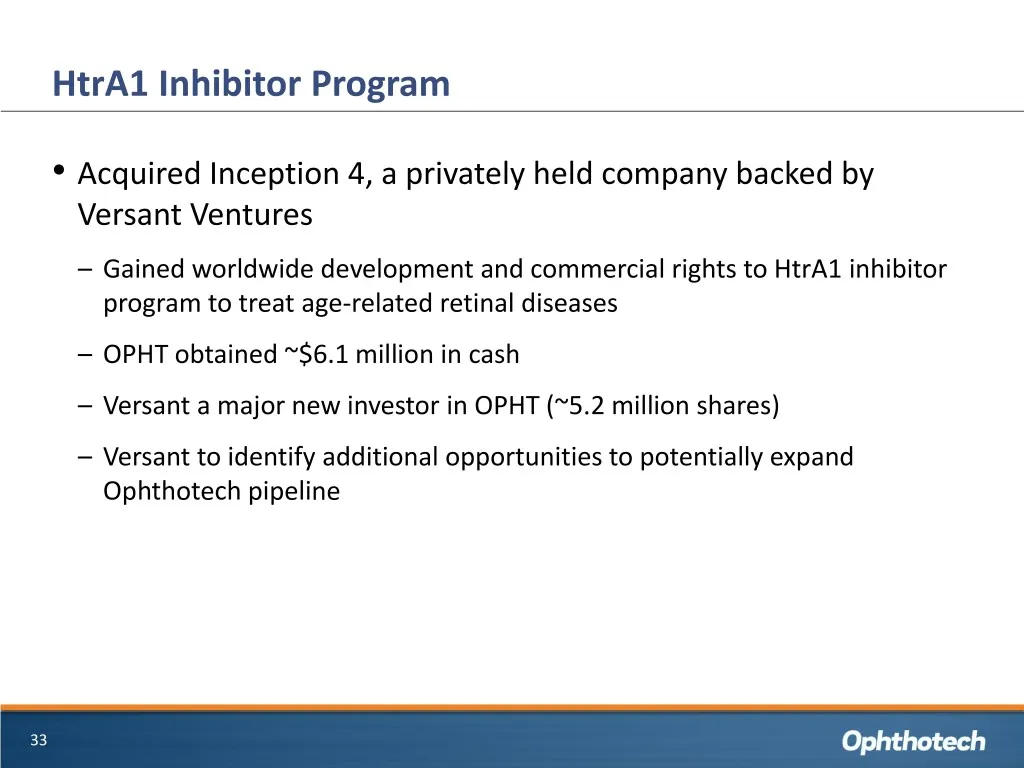
HtrA1 Inhibitor Program • Acquired Inception 4, a privately held company backed by Versant Ventures – Gained worldwide development and commercial rights to HtrA1 inhibitor program to treat age-related retinal diseases – OPHT obtained ~$6.1 million in cash – Versant a major new investor in OPHT (~5.2
Slide 34: HtrA1 Inhibitor Program: Small Molecules with High Affinity and Specificity for HtrA1
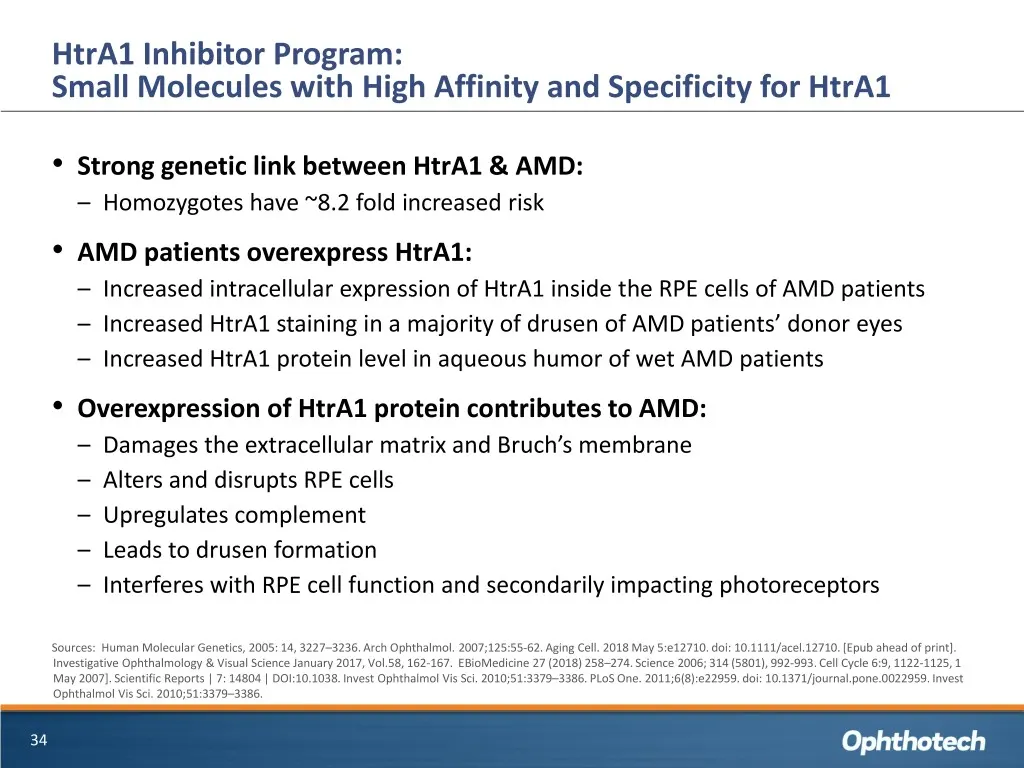
HtrA1 Inhibitor Program: Small Molecules with High Affinity and Specificity for HtrA1 • Strong genetic link between HtrA1 & AMD: – Homozygotes have ~8.2 fold increased risk • AMD patients overexpress HtrA1: – Increased intracellular expression of HtrA1 inside the RPE cells of AMD patients – Increase
Slide 35: Pipeline Strategy: Build Sustainable Long-term Growth
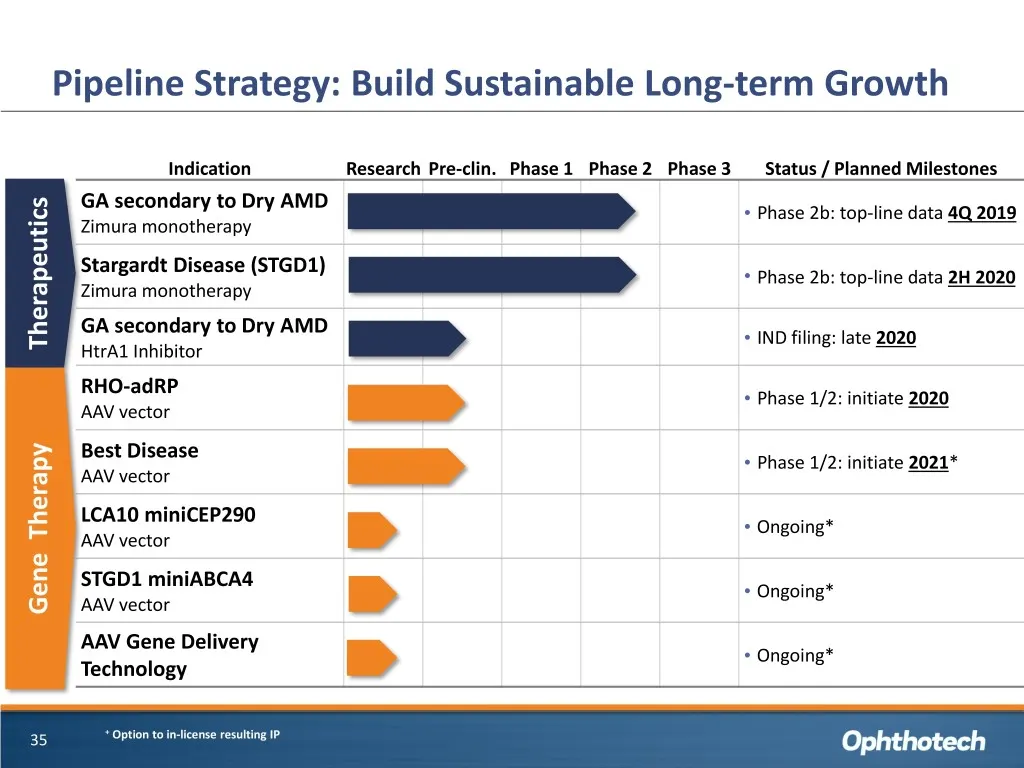
Pipeline Strategy: Build Sustainable Long-term Growth Indication Research Pre-clin. Phase 1 Phase 2 Phase 3 Status / Planned Milestones GA secondary to Dry AMD • Phase 2b: top-line data 4Q 2019 Zimura monotherapy Stargardt Disease (STGD1) • Phase 2b: top-line data 2H 2020 Zimura monotherapy GA secon
Slide 36: Business Development and Pipeline Expansion Strategy
Business Development and Pipeline Expansion Strategy Modality agnostic; key focus on gene therapy opportunities • Compelling science • Unmet medical need • Meaningful commercial opportunity 36 36
Slide 37: Focused on Execution and Value Creation
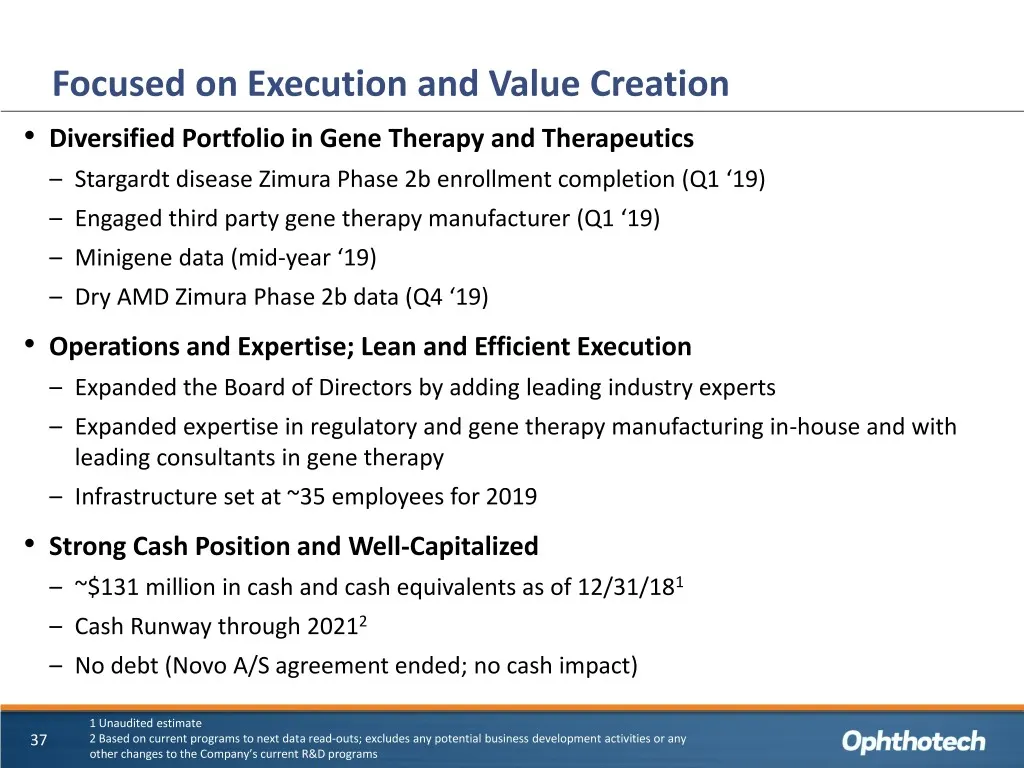
Focused on Execution and Value Creation • Diversified Portfolio in Gene Therapy and Therapeutics – Stargardt disease Zimura Phase 2b enrollment completion (Q1 ‘19) – Engaged third party gene therapy manufacturer (Q1 ‘19) – Minigene data (mid-year ‘19) – Dry AMD Zimura Phase 2b data (Q4 ‘19) • Operat
Source: SEC EDGAR · 8-K filed Jan 7, 2019