Arena Pharmaceuticals — J.P. Morgan Healthcare Conference 2018
26 slides from Arena Pharmaceuticals's conference presentation, Jan 5, 2018
Slide 1: J.P. Morgan Healthcare Conference, January 2018
January 2018 Non-Confidential J.P. Morgan Healthcare Conference Exhibit 99.1
Slide 2: Forward-Looking Statements
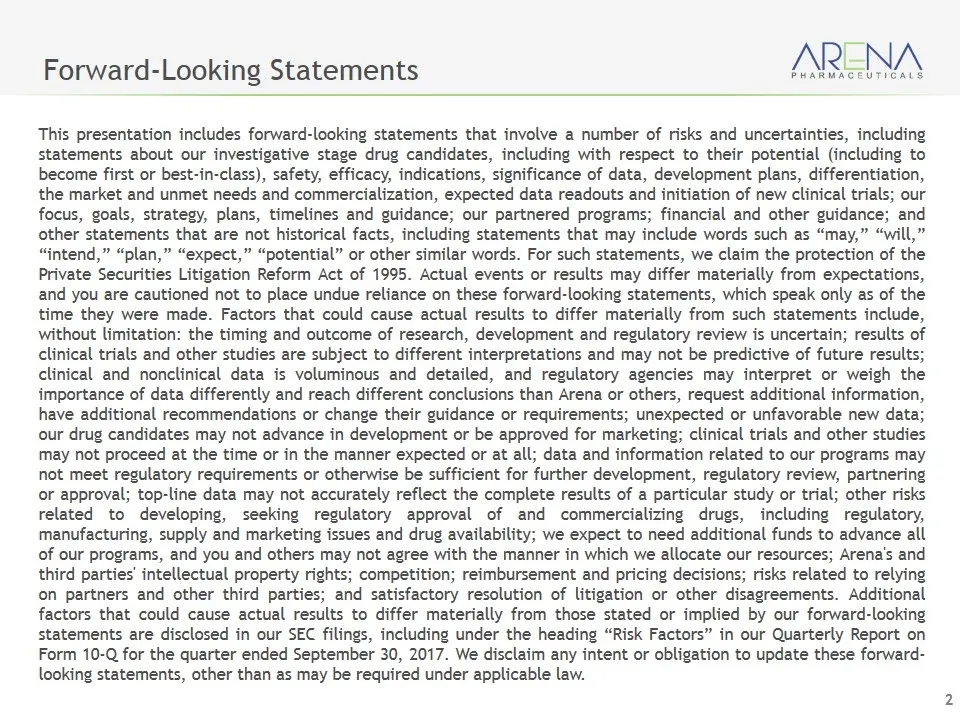
Forward-Looking Statements This presentation includes forward-looking statements that involve a number of risks and uncertainties, including statements about our investigative stage drug candidates, including with respect to their potential (including to become first or best-in-class), safety, effic
Slide 3: Executive Summary
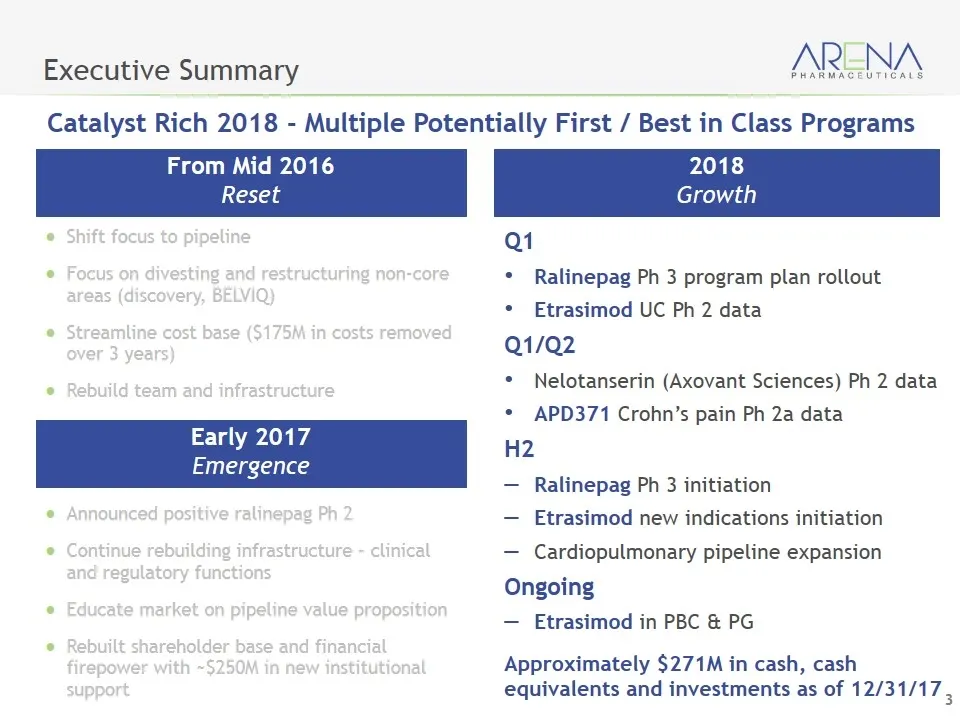
Executive Summary Shift focus to pipeline Focus on divesting and restructuring non-core areas (discovery, BELVIQ) Streamline cost base ($175M in costs removed over 3 years) Rebuild team and infrastructure From Mid 2016 Reset Q1 Ralinepag Ph 3 program plan rollout Etrasimod UC Ph 2 data Q1/Q2 Nelotan
Slide 4: Focus on Pipeline: Differentiated Assets with High-Value Potential
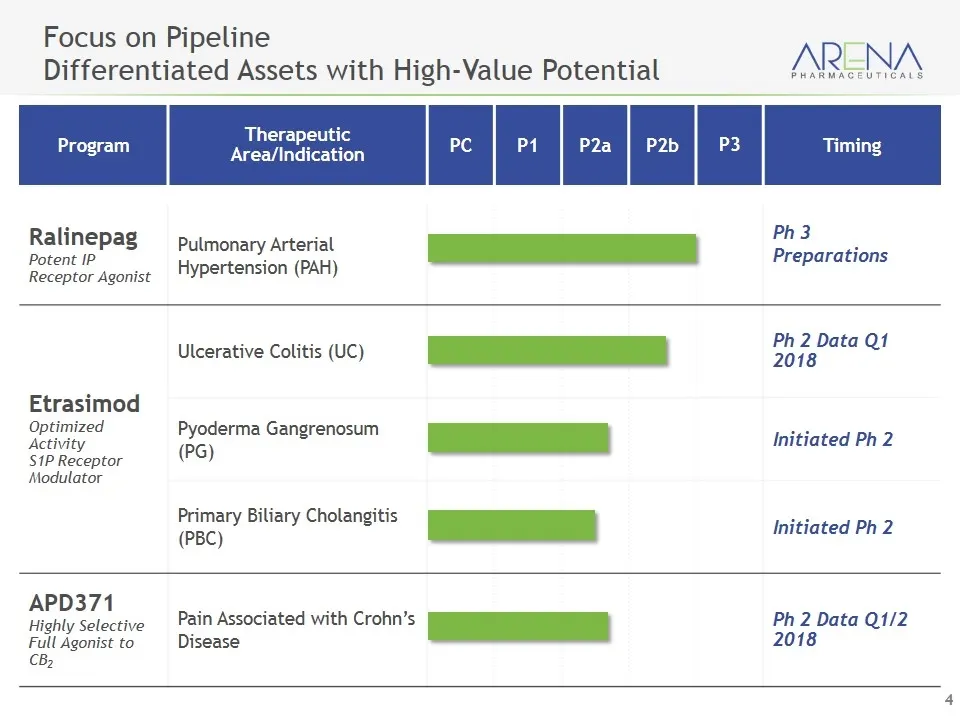
Program Therapeutic Area/Indication PC P1 P2a P2b P3 Timing Ralinepag Potent IP Receptor Agonist Pulmonary Arterial Hypertension (PAH) Ph 3 Preparations Etrasimod Optimized Activity S1P Receptor Modulator Ulcerative Colitis (UC) Ph 2 Data Q1 2018 Pyoderma Gangrenosum (PG) Initiated Ph 2 Primary Bili
Slide 5: Ralinepag
A Next-Generation, Oral, Selective Prostacyclin Receptor (IP) Agonist for the Treatment of Pulmonary Arterial Hypertension Ralinepag
Slide 6: Promise of Ralinepag
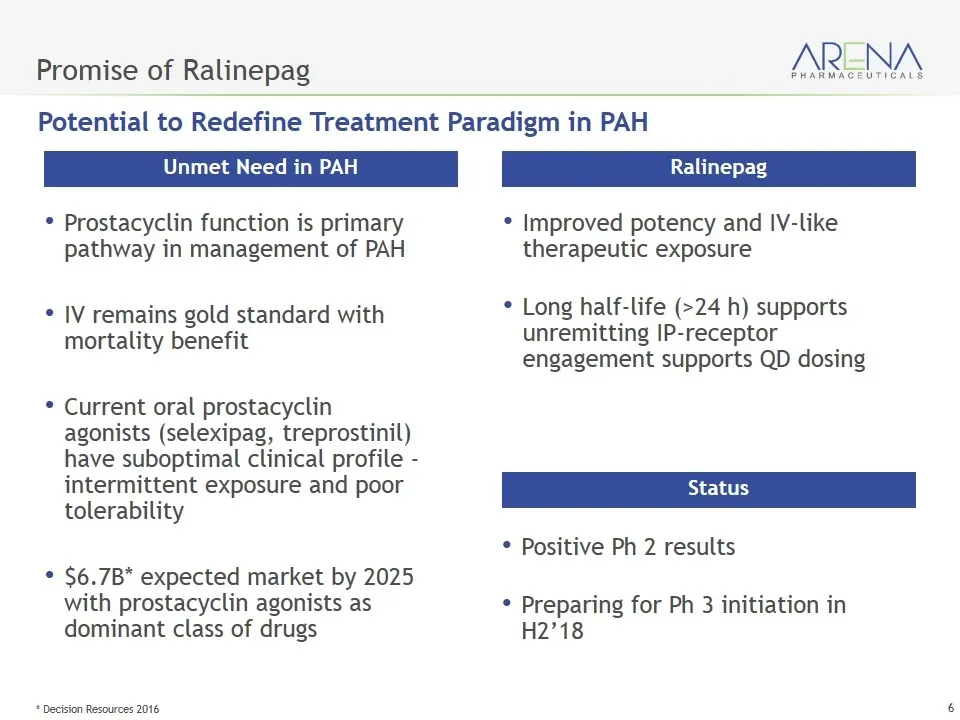
Promise of Ralinepag Prostacyclin function is primary pathway in management of PAH IV remains gold standard with mortality benefit Current oral prostacyclin agonists (selexipag, treprostinil) have suboptimal clinical profile - intermittent exposure and poor tolerability $6.7B* expected market by 202
Slide 7: Ralinepag's More Potent IP Agonism Translates to Improved Tissue Responses
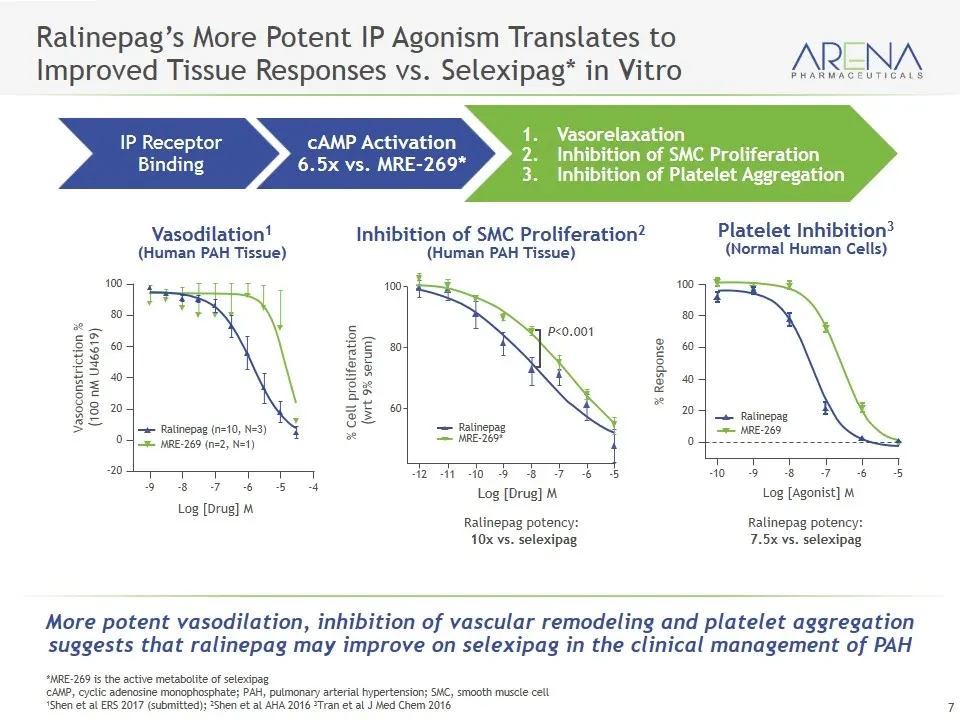
IP Receptor Binding cAMP Activation 6.5x vs. MRE-269* Ralinepag’s More Potent IP Agonism Translates to Improved Tissue Responses vs. Selexipag* in Vitro More potent vasodilation, inhibition of vascular remodeling and platelet aggregation suggests that ralinepag may improve on selexipag in the clinic
Slide 8: Ralinepag Has a Prolonged Half-Life
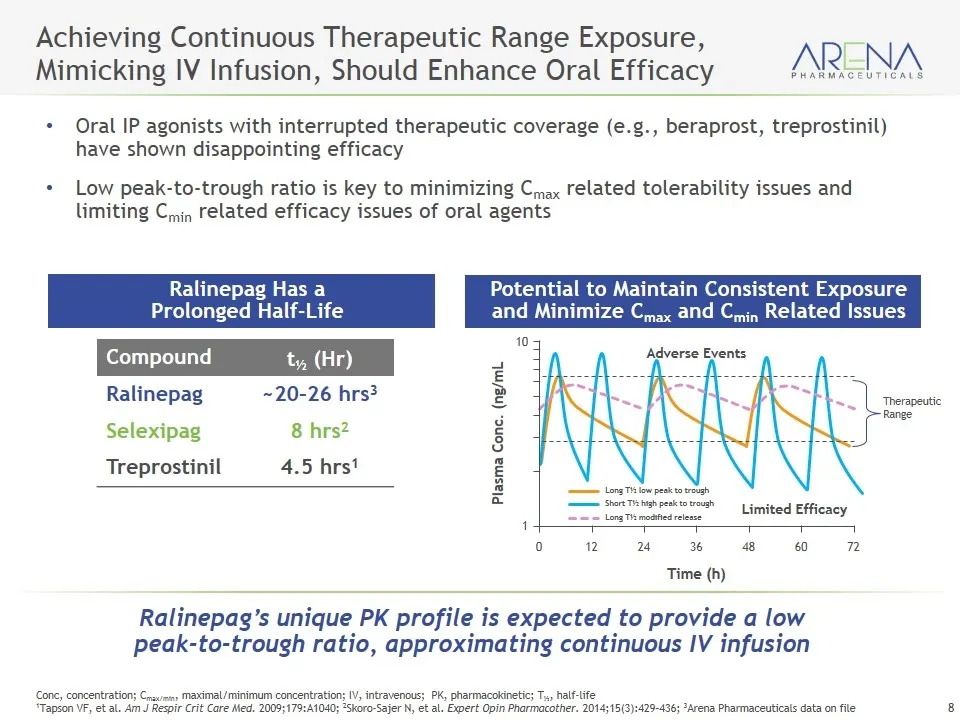
Achieving Continuous Therapeutic Range Exposure, Mimicking IV Infusion, Should Enhance Oral Efficacy Ralinepag Has a Prolonged Half-Life Ralinepag’s unique PK profile is expected to provide a low peak-to-trough ratio, approximating continuous IV infusion Conc, concentration; Cmax/min, maximal/minimu
Slide 9: Ralinepag Significantly Improved Pulmonary Vascular Resistance
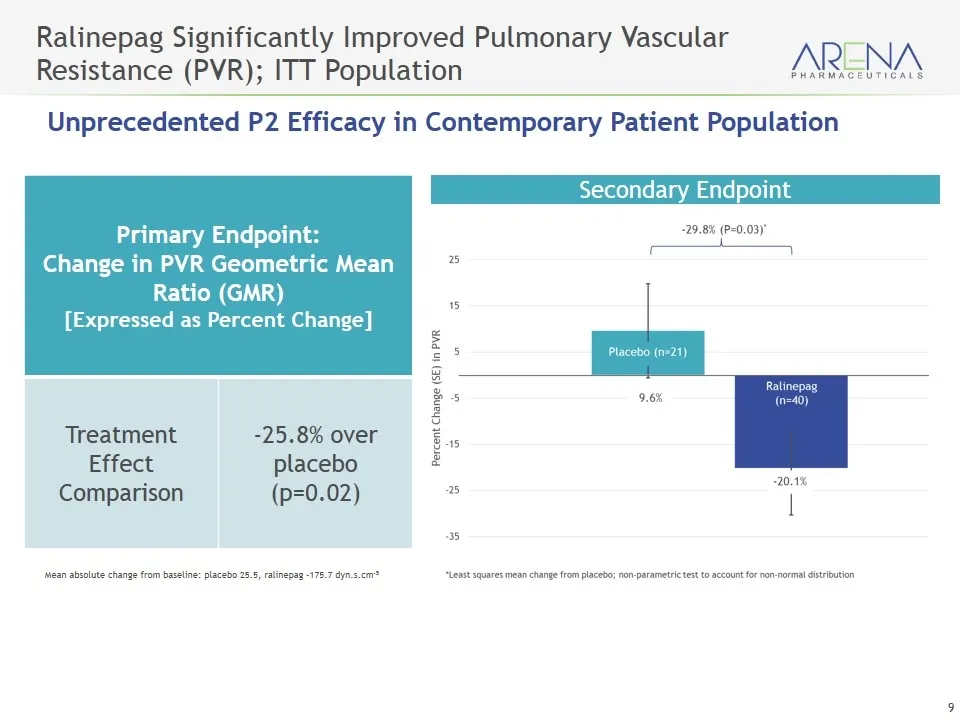
Ralinepag Significantly Improved Pulmonary Vascular Resistance (PVR); ITT Population Primary Endpoint: Change in PVR Geometric Mean Ratio (GMR) [Expressed as Percent Change] Treatment Effect Comparison -25.8% over placebo (p=0.02) Mean absolute change from baseline: placebo 25.5, ralinepag -175.7 dy
Slide 10: Safety and Tolerability
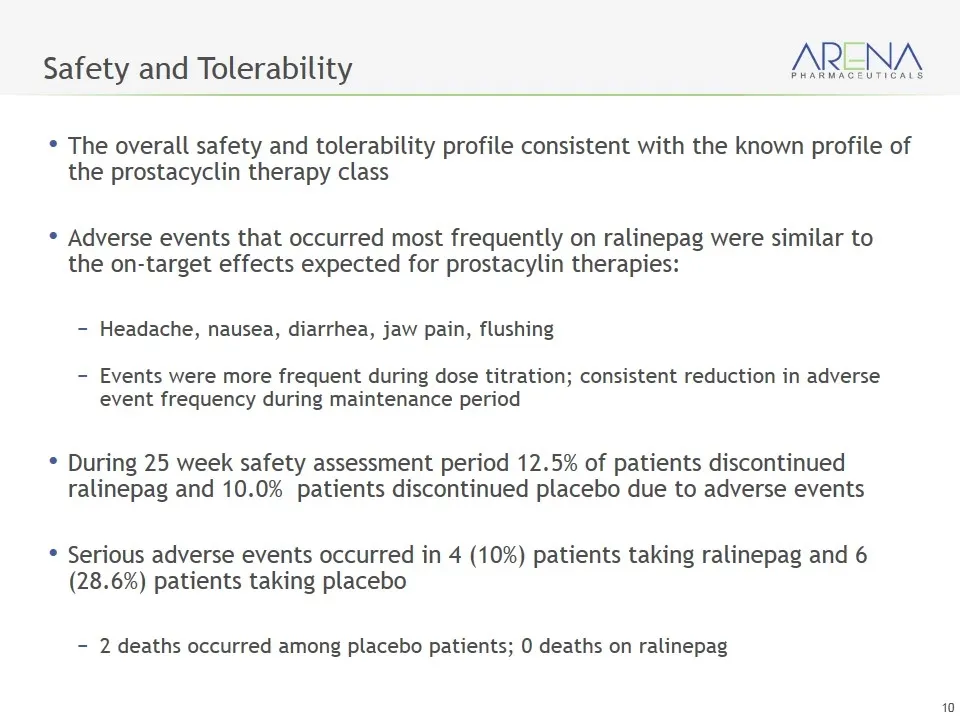
The overall safety and tolerability profile consistent with the known profile of the prostacyclin therapy class Adverse events that occurred most frequently on ralinepag were similar to the on-target effects expected for prostacylin therapies: Headache, nausea, diarrhea, jaw pain, flushing Events we
Slide 11: Ralinepag Phase 3 Clinical Program
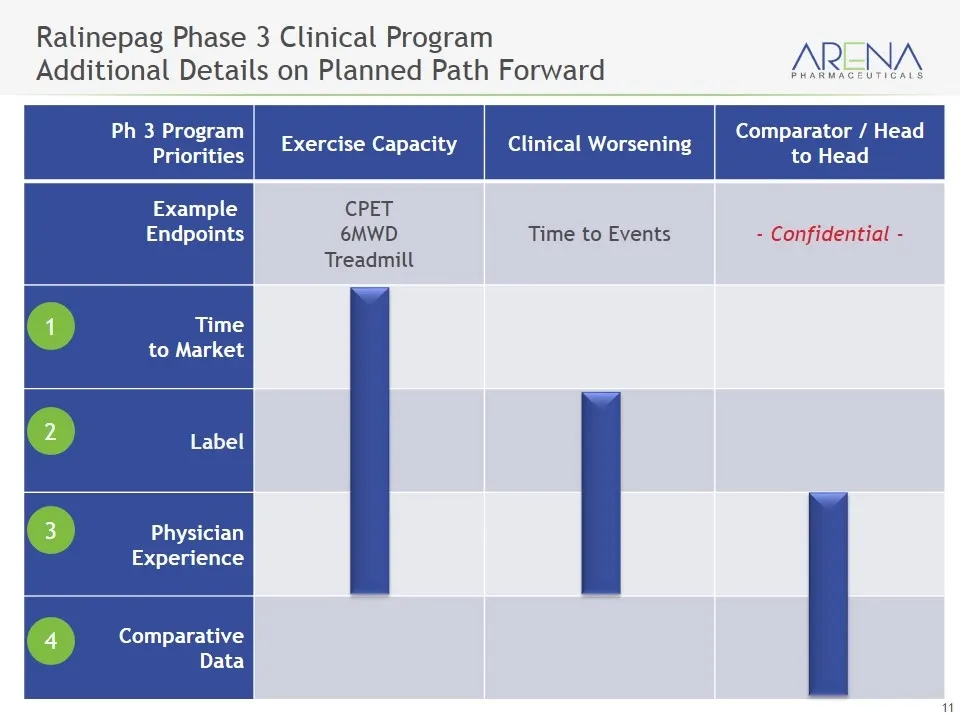
Ralinepag Phase 3 Clinical Program Additional Details on Planned Path Forward Ph 3 Program Priorities Exercise Capacity Clinical Worsening Comparator / Head to Head Example Endpoints CPET 6MWD Treadmill Time to Events - Confidential - Time to Market Label Physician Experience Comparative Data 1 2 3
Slide 12: Etrasimod
Oral, Next Generation, S1P Receptor Modulator Optimized Activity Being Evaluated for Multiple Autoimmune Diseases Etrasimod
Slide 13: Promise of Etrasimod
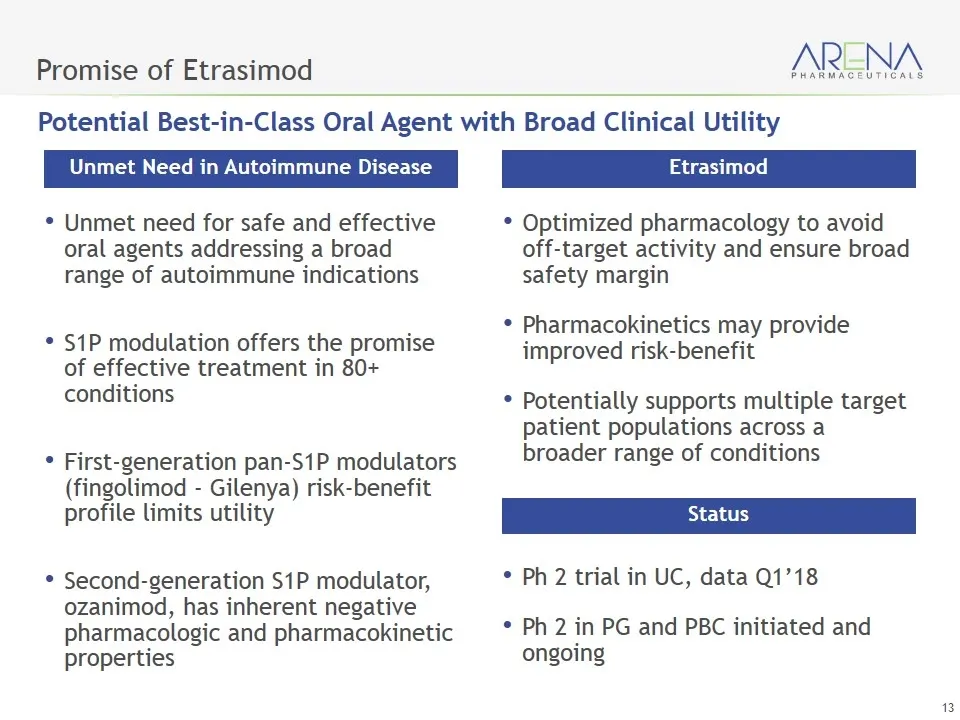
Promise of Etrasimod Unmet need for safe and effective oral agents addressing a broad range of autoimmune indications S1P modulation offers the promise of effective treatment in 80+ conditions First-generation pan-S1P modulators (fingolimod - Gilenya) risk-benefit profile limits utility Second-gener
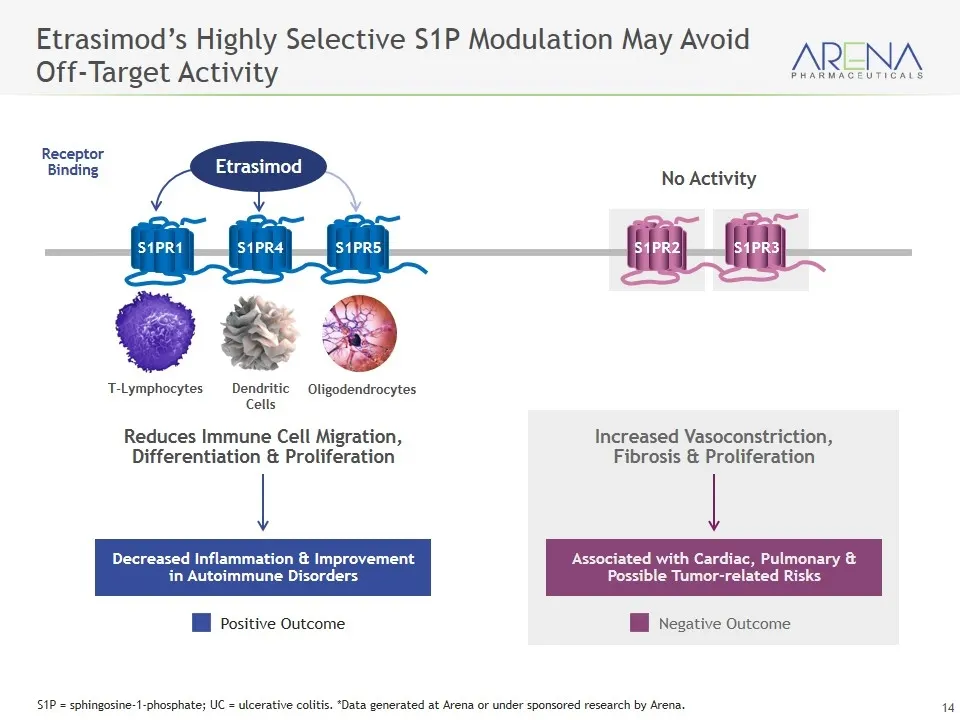
Slide 14: Etrasimod's Highly Selective S1P Modulation May Avoid Off-Target Activity
Associated with Cardiac, Pulmonary & Possible Tumor-related Risks Decreased Inflammation & Improvement in Autoimmune Disorders Positive Outcome Negative Outcome Dendritic Cells Reduces Immune Cell Migration, Differentiation & Proliferation Increased Vasoconstriction, Fibrosis & Proliferation T-Lymph
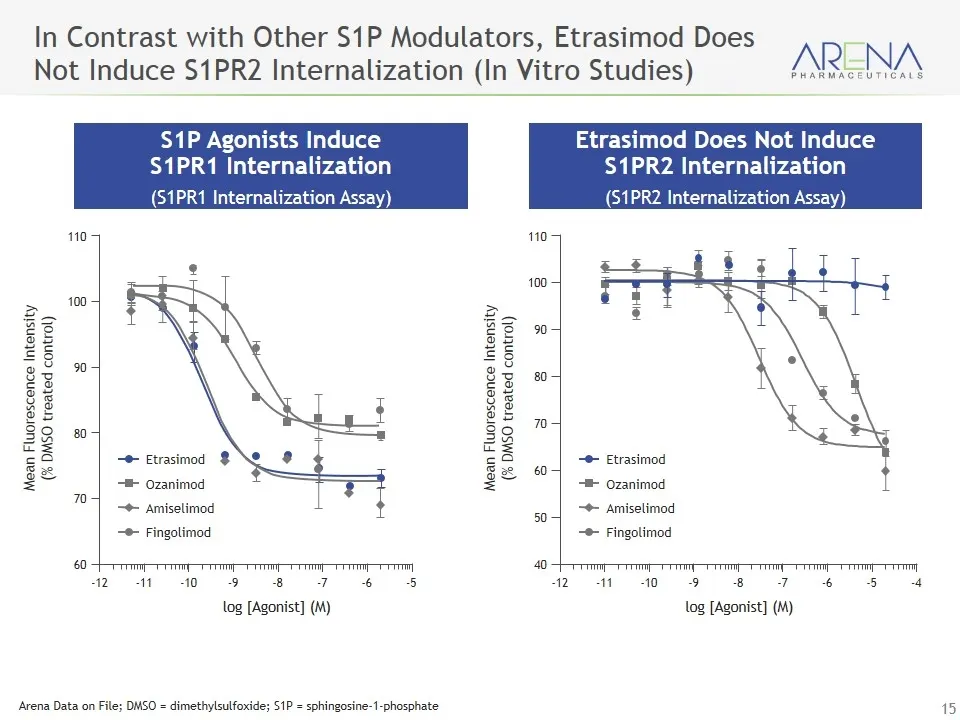
Slide 15: Etrasimod Does Not Induce S1PR2 Internalization
In Contrast with Other S1P Modulators, Etrasimod Does Not Induce S1PR2 Internalization (In Vitro Studies) S1P Agonists Induce S1PR1 Internalization (S1PR1 Internalization Assay) Etrasimod Does Not Induce S1PR2 Internalization (S1PR2 Internalization Assay) -12 -11 -10 -9 -8 -7 -6 -5 log [Agonist] (M)
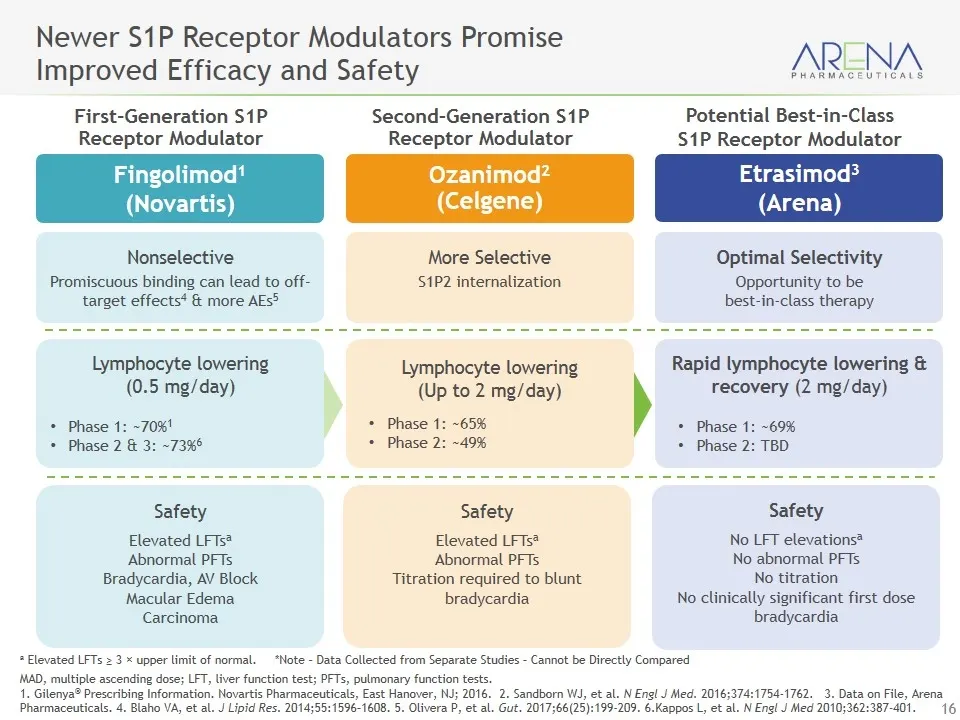
Slide 16: Optimal Selectivity
Optimal Selectivity Opportunity to be best-in-class therapy More Selective S1P2 internalization Ozanimod2 (Celgene) Nonselective Promiscuous binding can lead to off-target effects4 & more AEs5 a Elevated LFTs ≥ 3 × upper limit of normal. *Note – Data Collected from Separate Studies – Cannot be Direc
Slide 17: Etrasimod Has a Quick Onset of Action
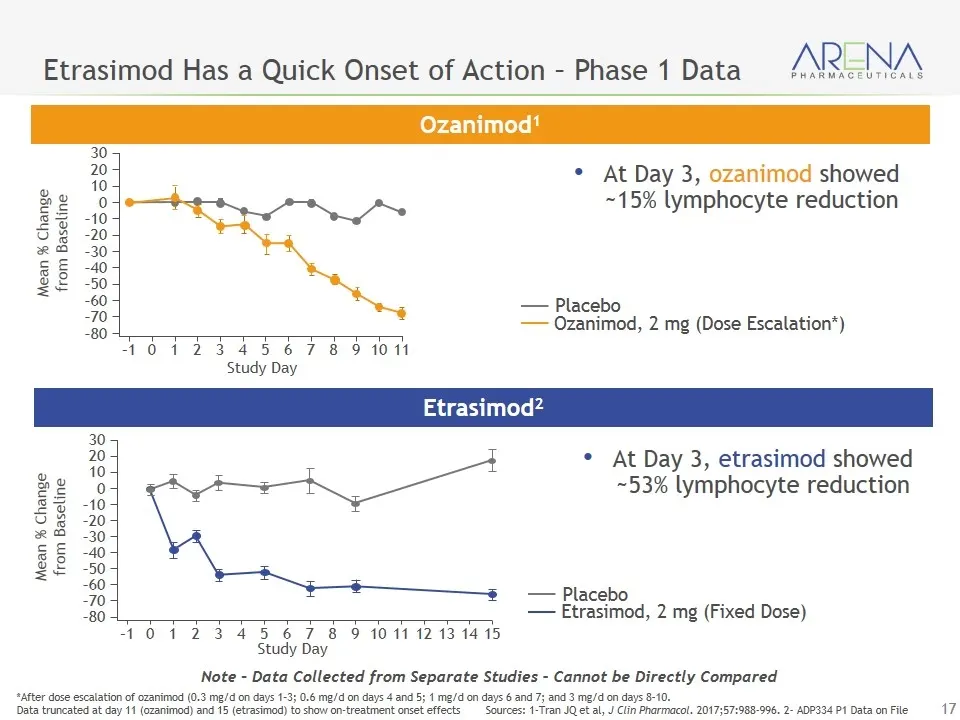
Etrasimod Has a Quick Onset of Action – Phase 1 Data *After dose escalation of ozanimod (0.3 mg/d on days 1–3; 0.6 mg/d on days 4 and 5; 1 mg/d on days 6 and 7; and 3 mg/d on days 8–10. Data truncated at day 11 (ozanimod) and 15 (etrasimod) to show on-treatment onset effects Sources: 1-Tran JQ et al
Slide 18: Etrasimod Has a Quick Offset of Action
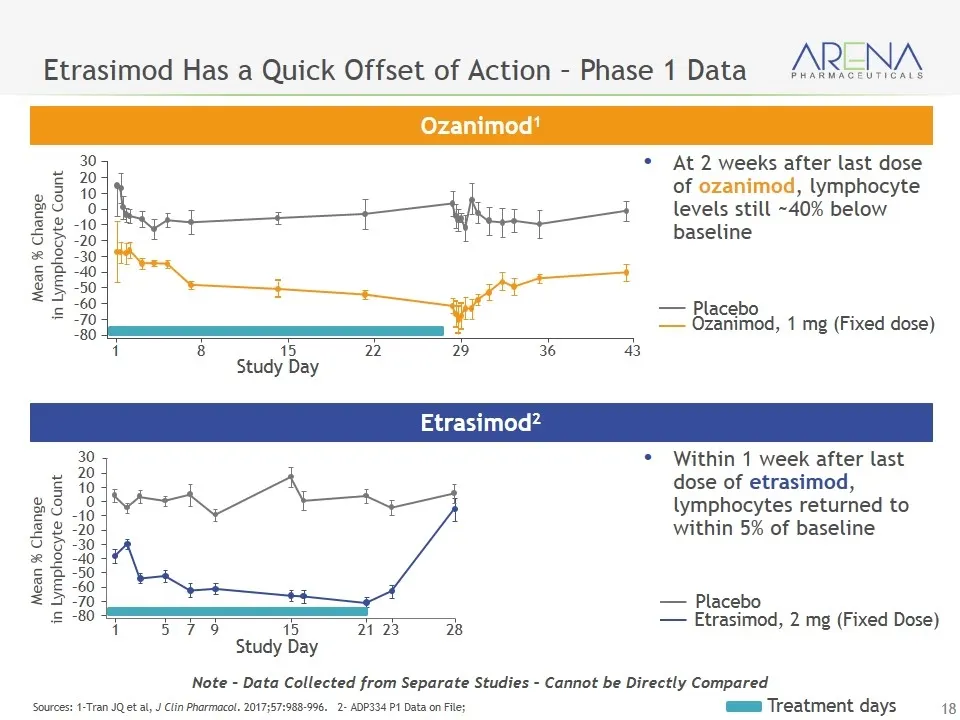
Etrasimod Has a Quick Offset of Action – Phase 1 Data Sources: 1-Tran JQ et al, J Clin Pharmacol. 2017;57:988-996. 2- ADP334 P1 Data on File; Ozanimod1 Etrasimod2 Ozanimod, 1 mg (Fixed dose) Placebo Etrasimod, 2 mg (Fixed Dose) Placebo Treatment days Within 1 week after last dose of etrasimod, lymph
Slide 19: Etrasimod First Dose Has Little Impact on Heart Rate
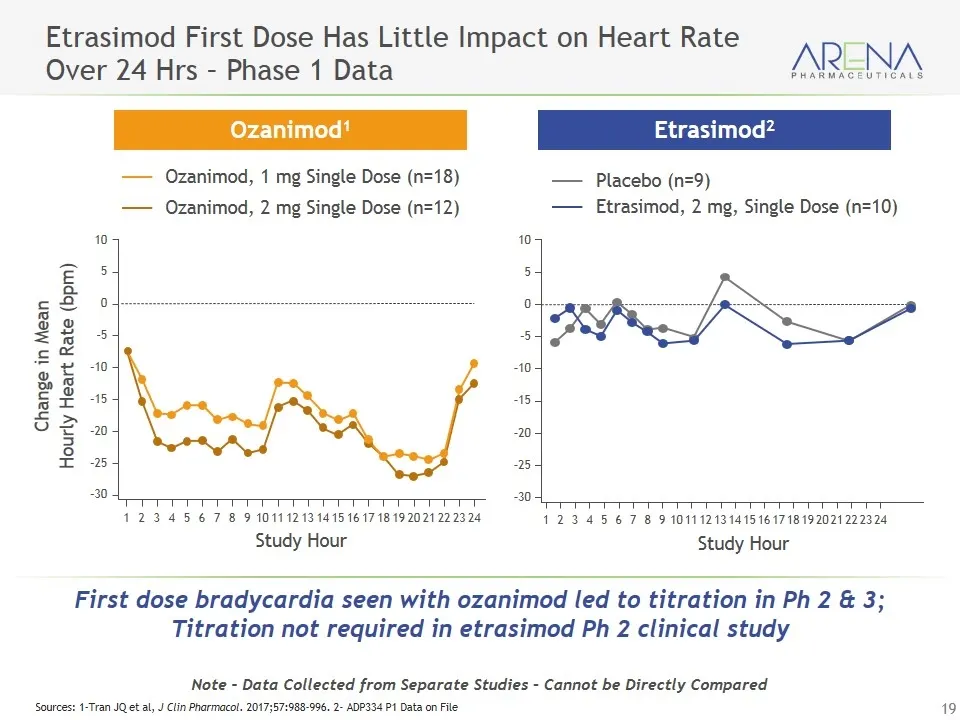
Etrasimod First Dose Has Little Impact on Heart Rate Over 24 Hrs – Phase 1 Data Ozanimod, 1 mg Single Dose (n=18) Ozanimod, 2 mg Single Dose (n=12) Placebo (n=9) Etrasimod, 2 mg, Single Dose (n=10) Ozanimod1 Etrasimod2 Note – Data Collected from Separate Studies – Cannot be Directly Compared Sources
Slide 20: Etrasimod Phase 2 Trial in UC
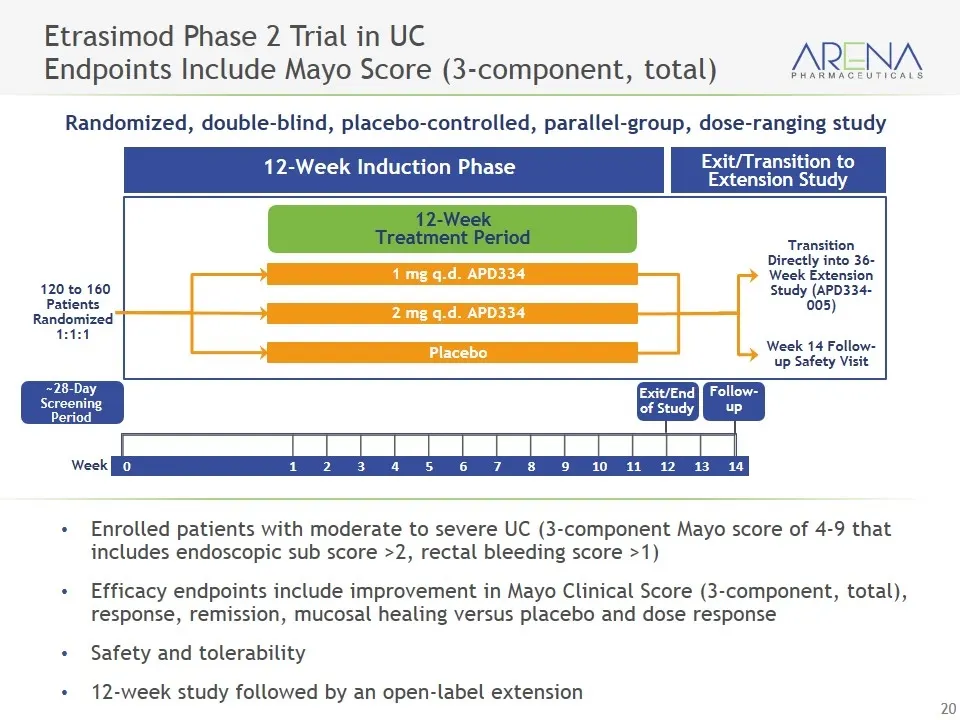
Enrolled patients with moderate to severe UC (3-component Mayo score of 4-9 that includes endoscopic sub score >2, rectal bleeding score >1) Efficacy endpoints include improvement in Mayo Clinical Score (3-component, total), response, remission, mucosal healing versus placebo and dose response Safet
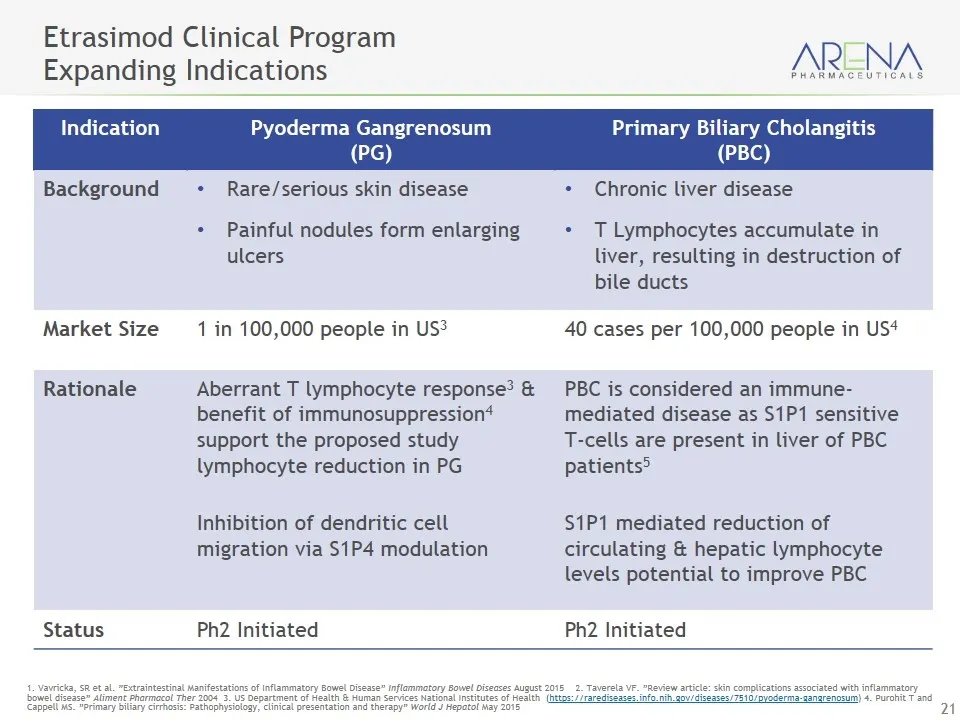
Slide 21: Etrasimod Clinical Program Expanding Indications
Etrasimod Clinical Program Expanding Indications 1. Vavricka, SR et al. ”Extraintestinal Manifestations of Inflammatory Bowel Disease” Inflammatory Bowel Diseases August 2015 2. Taverela VF. ”Review article: skin complications associated with inflammatory bowel disease” Aliment Pharmacol Ther 2004 3
Slide 22: APD371
APD371 Peripherally Restricted, Highly–Selective, Full Agonist to Cannabinoid 2 Receptor (CB2) Being Evaluated for Treatment of Pain Associated with Crohn’s Disease
Slide 23: Promise of APD371
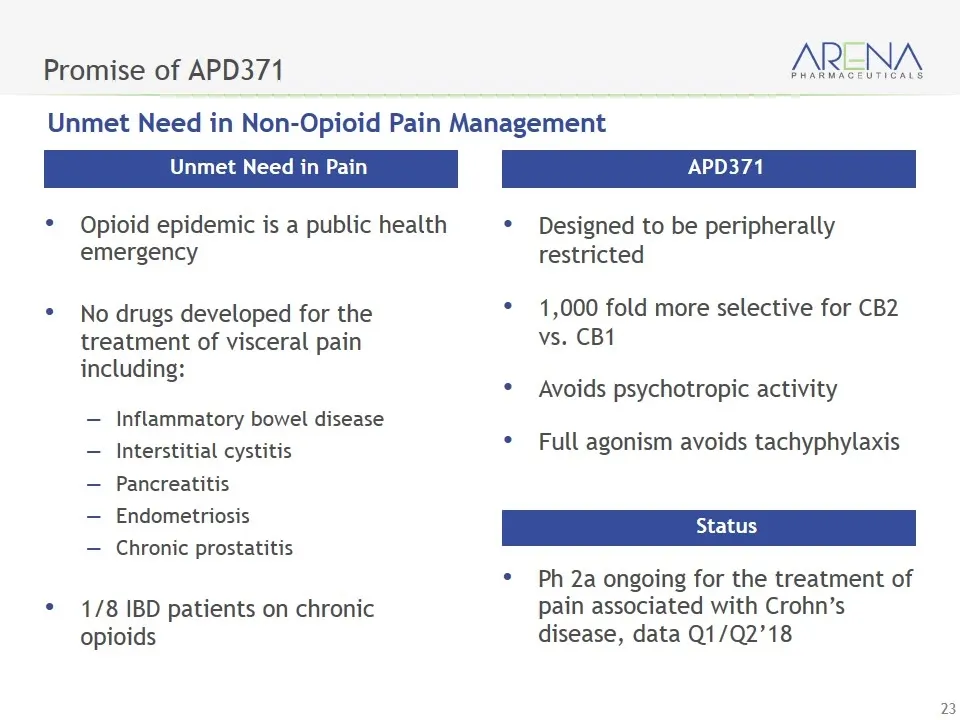
Promise of APD371 Opioid epidemic is a public health emergency No drugs developed for the treatment of visceral pain including: Inflammatory bowel disease Interstitial cystitis Pancreatitis Endometriosis Chronic prostatitis 1/8 IBD patients on chronic opioids Unmet Need in Pain Designed to be periph
Slide 24: CB2 Receptors Are Expressed in the GI Tract
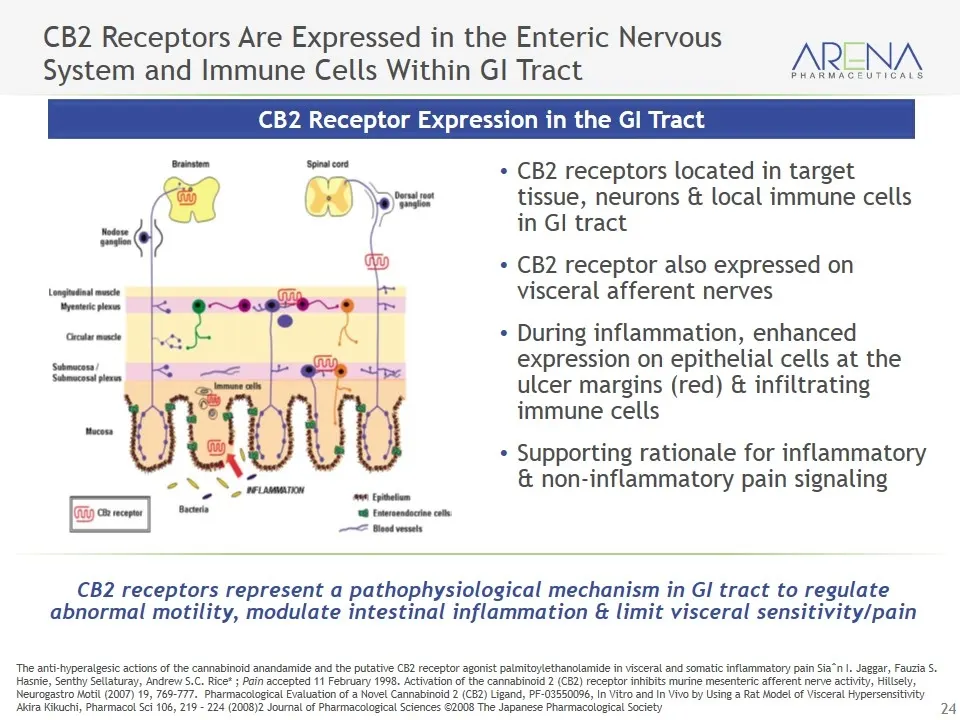
CB2 Receptors Are Expressed in the Enteric Nervous System and Immune Cells Within GI Tract CB2 receptors located in target tissue, neurons & local immune cells in GI tract CB2 receptor also expressed on visceral afferent nerves During inflammation, enhanced expression on epithelial cells at the ulce
Slide 25: Executive Summary
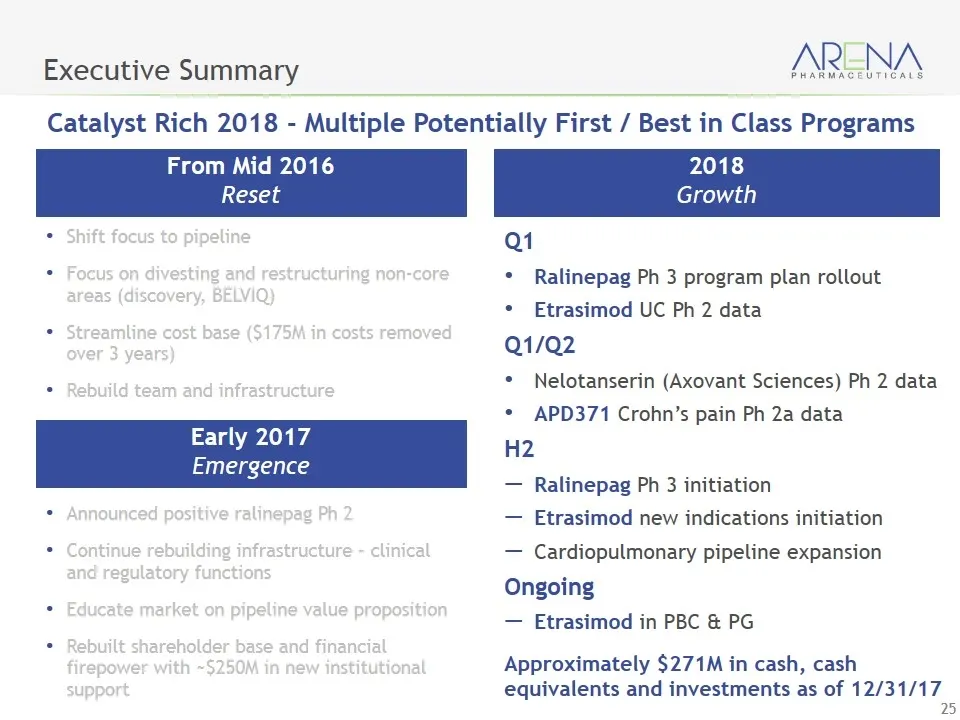
Executive Summary Shift focus to pipeline Focus on divesting and restructuring non-core areas (discovery, BELVIQ) Streamline cost base ($175M in costs removed over 3 years) Rebuild team and infrastructure From Mid 2016 Reset Q1 Ralinepag Ph 3 program plan rollout Etrasimod UC Ph 2 data Q1/Q2 Nelotan
Slide 26: Thank you
PHARMACEUTICALS Thank you NASDAQ: ARNA
Source: SEC EDGAR · 8-K filed Jan 5, 2018
More decks from Arena Pharmaceuticals Inc
 Merger or Acquisition (December 2021)14 slides · Dec 14, 2021
 Merger or Acquisition (December 2021)9 slides · Dec 13, 2021
 Investor Presentation (January 2021)21 slides · Jan 11, 2021
 Investor Presentation (November 2020)35 slides · Nov 18, 2020
 Investor Presentation (October 2020)32 slides · Oct 26, 2020
 Corporate Update (September 2020)13 slides · Sep 23, 2020